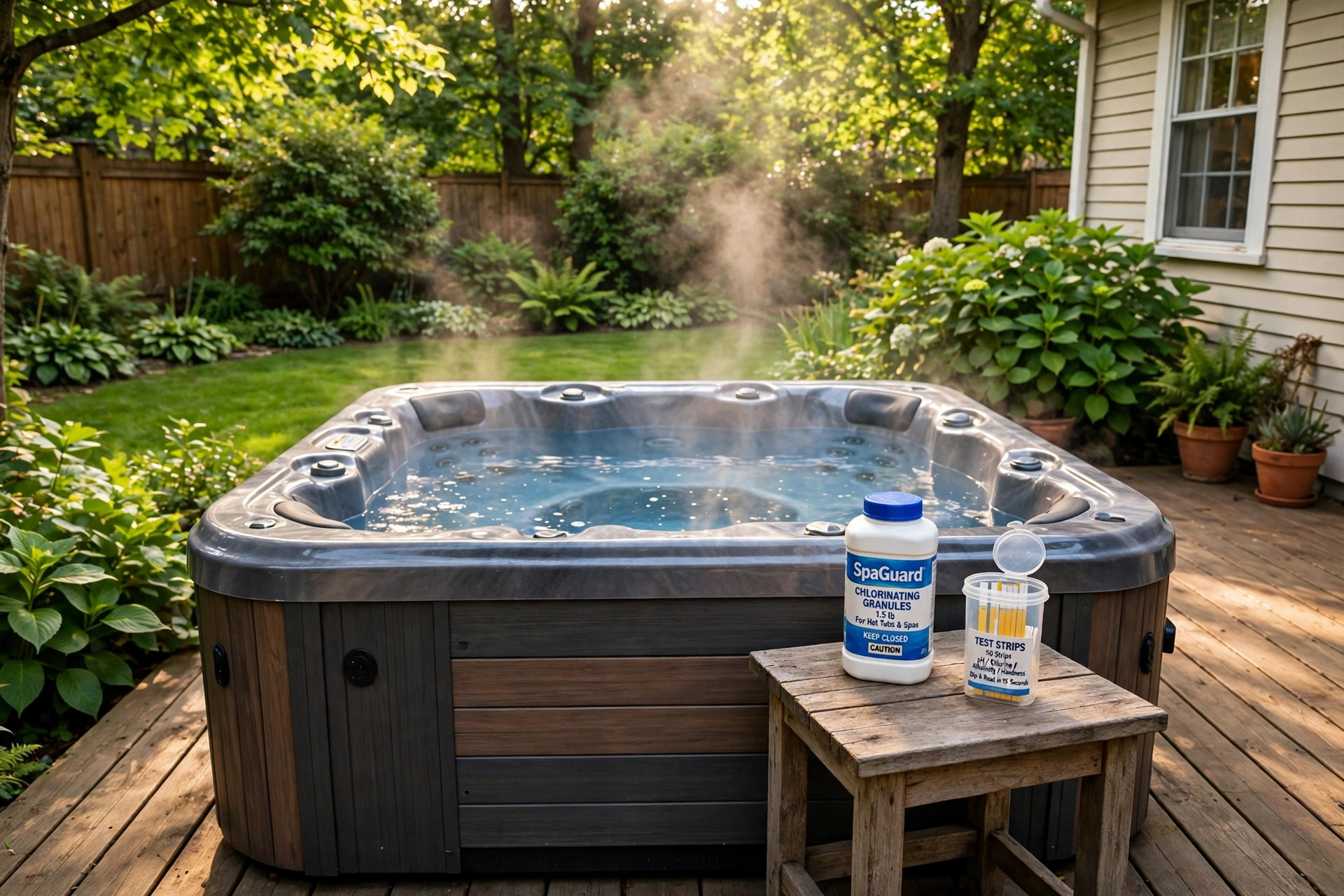

A hot tub should be a place of rest, not a source of worry. Clear water, a gentle warmth, and a clean surface are what most owners hope for. Learning how to maintain hot tub water chemistry is the surest way to reach that goal. It is not hard work. It takes a small kit, a few chemicals, and ten minutes each week. This guide explains the whole process in plain steps that any home owner can follow.
Why Water Chemistry Matters
A hot tub is small, warm, and used by several people at a time. Warmth and body oils make it easy for germs to grow. If the water is not treated, it can turn cloudy, grow mold, or smell bad. Dirty spa water can also cause skin rashes, itchy eyes, and ear infections. The federal guidance on hot tub and spa safety reminds owners that proper chemical care is part of keeping a spa safe for every user.
Good chemistry does more than keep the water clean. It protects the tub itself. Water that is too harsh can wear down seals, clog jets, and harm the heater. Water that is too weak lets scale and slime build up inside the pipes. A steady balance extends the life of the pump and the cover. It also saves money, since balanced water needs fewer shock treatments and fewer repairs. For owners of a rental property spa, where many guests use the tub, this steady care is even more valuable.
What to Test and How to Choose a Test Kit: How to Maintain Hot Tub Water Chemistry
The Main Readings
Three readings form the core of spa water care. Sanitizer level tells you whether germs are being killed. Chlorine or bromine is the usual choice. The pH reading tells you if the water is too acidic or too basic. Total alkalinity keeps the pH steady so it does not swing up and down. Many owners also check calcium hardness, which guards against scale and worn surfaces.
Strips Versus Liquid Kits
Test strips are the most common tool. You dip a strip, wait a few seconds, and match the colors to a chart. They are fast, cheap, and easy to learn. Liquid drop kits give a sharper reading, since you count drops until the color changes. They take more time but give steadier numbers. For a beginner, strips are a fine start. Owners who want tight control, or who run a spa that sees heavy use, may prefer the liquid kit. Guides to spa water care basics often show both methods side by side.
How Often to Test
Test the water two or three times a week with normal home use. Test after heavy use, such as a party or a long soak with several guests. Test again after a storm or heavy rain, since rain water can shift the balance. Keep a small notebook or a phone note with each reading. A simple log makes patterns easy to see, and it helps you spot trouble before the water turns cloudy.
Types of Sanitizers and Their Uses
Chlorine
Chlorine is the most widely used spa sanitizer. It kills germs fast and costs little. Granular chlorine made for spas dissolves quickly and does not add extra stabilizer to the water. Avoid household bleach or pool shock products meant for big pools, since they can be too strong for a small hot tub. Add chlorine after each soak and check the level with your strips.
Bromine
Bromine works well in hot water and keeps working even when the pH drifts. Many owners find it gentler on skin and eyes than chlorine, and it has less smell. Bromine comes as tablets that sit in a floater or a feeder, so it adds itself slowly over time. It costs more than chlorine, but the steady release suits owners who do not want to dose the tub by hand each day. Retailers like Leslie’s Pool Supplies carry both types and can help you compare them.
Mineral and Salt Systems
Mineral sticks use silver and copper to cut germ growth, but they do not replace a sanitizer on their own. You still need a small amount of chlorine or bromine with them. Salt systems turn salt into chlorine inside the tub. They soften the feel of the water and cut the daily work, though they cost more at the start. If your spa uses one, a guide to cleaning a salt water cell can help you keep the generator working well. Owners who want to balance pool water chemistry in a larger pool will find that the same basic ideas apply, with amounts scaled to the size of the body of water.
Step-by-Step Weekly Routine
Step 1: Test the Water
Dip a strip or run your liquid test. Write down the sanitizer level, pH, and total alkalinity. Compare the colors or drop counts with the chart that came with your kit.
Step 2: Adjust Alkalinity First
If total alkalinity is off, fix it before the pH. Add an alkalinity increaser if it is low, or a small dose of pH decreaser if it is high. Wait an hour with the jets running, then test again.
Step 3: Adjust the pH
With alkalinity in range, bring the pH to a mild level. High pH makes the water cloudy and the sanitizer weak. Low pH can sting eyes and corrode metal parts. Small doses work best. Retest before adding more.
Step 4: Set the Sanitizer
Add chlorine or bromine to reach the target range on your kit. Do this after each soak for chlorine, or keep the bromine floater full at all times. Never mix different sanitizers in the same container, and never add chemicals to the tub while people are in it.
Step 5: Shock the Water Weekly
A weekly shock burns off the waste that builds up from sweat, oils, and lotions. Use a non-chlorine shock if you plan to soak soon after, or a chlorine shock if you can wait a day. Run the jets for twenty minutes with the cover open so the gases can escape. Home centers such as The Home Depot and Lowe’s stock shock products made for spas.
Cost and Price of Spa Chemicals
A basic start-up set of chemicals costs about thirty to sixty dollars. It should include test strips, a sanitizer, pH up, pH down, and a shock product. After that, most owners spend ten to twenty dollars a month on refills, depending on how often the tub is used. A liquid test kit costs more than strips but lasts a long time. Bromine tablets cost more than granular chlorine but need less daily attention.
You can buy chemicals at pool supply stores, home centers, or from online shops like Pool Warehouse. Buying in larger sizes cuts the per-dose cost, but check the dates on the package. Old chemicals lose strength and give weak results. Store all chemicals in a cool, dry place with the lids closed tight, far from children and pets.
Care and Upkeep Beyond Chemicals
Filters
The filter catches hair, oils, and small dirt. Rinse it with a hose every week or two. Soak it in a filter cleaner once a month. Replace the filter once a year, or sooner if it looks worn. A clean filter lets the sanitizer do its job and keeps the water clear.
The Cover
Wipe the underside of the cover once a month to remove mold and mildew. Clean the top with a mild soap and water. A cover in good shape holds heat in and keeps rain and leaves out. Treat the vinyl with a protectant a few times a year to stop cracking.
Draining and Refilling
Drain and refill the tub every three to four months with normal use. Old water builds up dissolved solids that no chemical can fix. Use the change as a chance to wipe down the shell with a spa-safe cleaner and to rinse the filters. Fresh water is easier to balance and feels better on the skin.
Jets and Pipes
Run all the jets for a few minutes each week, even if no one soaks. Stale water in the lines can grow biofilm, a slimy layer that resists sanitizer. Once or twice a year, add a line-flush product before you drain the tub, and let the jets run to clean the pipes from the inside.
Safety Rules Every Owner Should Follow
Never handle chemicals with bare hands if the label says to wear gloves. Add chemicals to water, not water to chemicals, and follow the dose on the label. Keep the chemical store locked and away from the spa. Never mix products together unless the labels say they are made to be combined. Store chlorine and shock products apart, since some kinds can react with each other.
Keep the sanitizer at the target level whenever the tub is in use. Post a simple rule card near the tub: no glass, no soaps or oils before a soak, and no use while the water is being shocked. Children should use the tub only with an adult present, and the water should not be too hot for young users. Spa makers such as Hot Spring and Bullfrog Spas publish owner guides with safety checklists worth reading.
Frequently Asked Questions
How often should I test my hot tub water?
Test two or three times a week with normal use. Test after heavy use, after rain, or after adding fresh water. A quick test takes less than a minute and stops small problems from growing.
Why does my hot tub water turn cloudy?
Cloudy water usually means low sanitizer, high pH, or a dirty filter. Test the water, fix the chemistry, rinse the filter, and shock the tub. If the cloud does not clear in a day or two, the water may need to be drained and replaced.
Can I use pool chemicals in my hot tub?
Some chemicals cross over, but not all. Spa chlorine and spa shock are sized for small, hot bodies of water. Pool products can be too strong or add the wrong extras. Buy products labeled for spas and hot tubs, and check the label before each dose.
What is the right pH for a hot tub?
Aim for a mild, near-neutral pH, as shown on your test kit chart. If the pH runs high, the sanitizer works poorly and the water turns cloudy. If it runs low, the water can sting eyes and wear down metal parts.
How long should I wait after shocking before I soak?
With non-chlorine shock, many owners wait about twenty to thirty minutes with the cover open. With chlorine shock, wait until the sanitizer level falls back into the target range on your test strip, which can take several hours. When in doubt, test before you get in.
Do I need to drain my hot tub in winter?
No. A hot tub can run all winter, and many owners enjoy it most in cold months. Keep the water balanced, keep the cover in good shape, and make sure the heater and pump keep running so the pipes do not freeze. Drain and refill only on your normal three to four month schedule.
A Short Final Word
Learning how to maintain hot tub water chemistry comes down to a short list of habits. Test often, fix alkalinity first, keep the pH mild, keep the sanitizer steady, and shock once a week. Add clean filters, a sound cover, and fresh water every few months, and the tub will take care of you for years. Home guides such as The Spruce offer more reading for owners who want to go deeper. Start this week, write down your readings, and enjoy the warm, clear water you worked for.
References
Bullfrog Spas. (n.d.). Hot tubs and spas. https://www.bullfrogspas.com Hot Spring Spas. (n.d.). Hot tubs and spas. https://www.hotspring.com Leslie’s Pool Supplies. (n.d.). Pool supplies and equipment. https://www.lesliespool.com Lowe’s. (n.d.). Home improvement products. https://www.lowes.com Pool Warehouse. (n.d.). Pool equipment and supplies. https://www.poolwarehouse.com Swim University. (n.d.). Pool and hot tub care guides. https://www.swimuniversity.com The Home Depot. (n.d.). Home improvement products. https://www.homedepot.com The Spruce. (n.d.). Home and garden advice. https://www.thespruce.com U.S. Consumer Product Safety Commission. (n.d.). Product safety information. https://www.cpsc.gov
Was this guide helpful?

About Jennifer Lee
The My Garden US editorial team writes practical, in-depth home and garden guides for American homeowners — tested advice, no fluff.
You May Also Like
How to Patch Pool Liner Underwater: A Simple Guide for Pool Owners
February 3, 2026 0 views
Inground Pool Steps Replacement Cost: What Homeowners Should Expect to Pay
February 28, 2026 0 views
Pool Deck Resurfacing Cost Near Me: Prices, Options, and How to Hire
July 3, 2026 0 views