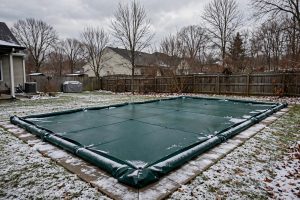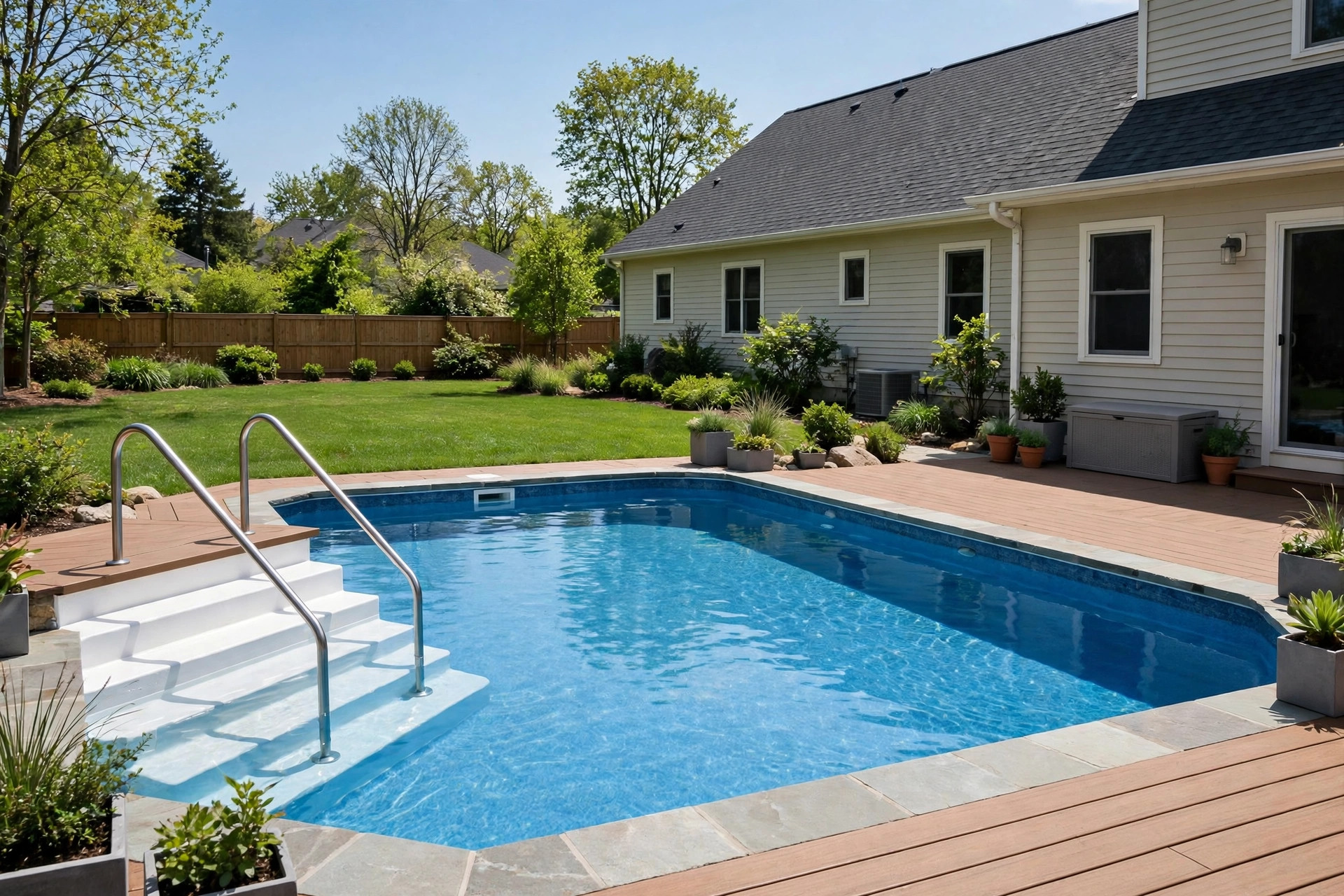

An inground pool steps replacement cost is one of the first things a pool owner checks when the old steps start to rust, crack, or come loose. Pool steps take a beating. Swimmers climb on them every day. Chemicals wash over them. The sun beats down on them. After fifteen or twenty years, many steps need to go. A homeowner who knows the real cost can plan the job with confidence and avoid a bad surprise when the bill arrives. This guide explains the full inground pool steps replacement cost in plain terms, from the price of the steps themselves to the labor, the parts, and the extras that can push the total up or down.
Why Replacing Old Pool Steps Matters
Pool steps are more than a way into the water. They are the part of the pool that gets touched most. Children sit on them. Older swimmers lean on the rails. Pets paddle near them. When steps wear out, small problems grow into big ones.
Rust is the most common trouble. Steel steps in vinyl-liner pools rust from the inside out. The railings and the step panels can bleed orange stains into the water and onto the liner. A cracked step is worse. Polymer and fiberglass steps can crack after years of freeze and thaw. A cracked tread can cut a foot or snap under weight. Loose rails are a fall hazard. A rail that wobbles when someone pulls up on it needs repair or full replacement.
Replacement also brings a chance to improve the pool. New steps can be wider, deeper, and easier to climb. Many new step units come with built-in benches and non-slip surfaces. For families with older adults, a new step design can make the pool safer and more pleasant. Knowing the inground pool steps replacement cost lets a family weigh these gains against the price.
Types of Inground Pool Steps: Inground Pool Steps Replacement Cost
There are three main kinds of steps used in inground pools. The kind already in the pool decides much of the cost.
Steel Steps
Steel steps are the old standard in vinyl-liner pools. The steps are formed from galvanized steel and are set into the pool wall. They hold the shape of the steps, and the vinyl liner covers them. When the steel rusts through, the liner can sag or tear at that spot. Steel steps are the cheapest to buy but the costliest to reach, because the liner often must be replaced or cut back to get at them. They are still common in pools built before the year 2000.
Polymer and Thermoplastic Steps
Polymer steps are molded plastic units that sit in the pool and are filled with sand or water to hold them down. Some are built into the pool during construction. Others are drop-in units that can be added later. Polymer resists rust and needs little care. A replacement polymer unit for an existing pool can cost more than a steel panel but less than a full rebuild of the steps area.
Fiberglass Steps
Fiberglass steps come as one molded piece. They are common in fiberglass pools and in some concrete pools. They have a smooth gel coat that resists stains and algae. Fiberglass steps last a long time. When they crack, repair is possible for small damage, but a large crack means replacement. A new fiberglass step unit is a custom or near-custom part, so the price runs higher than steel or standard polymer.
There are also drop-in plastic steps made for above ground pools. Those are not part of this topic. For a full view of what a liner job can add to the bill, read our pool liner replacement cost estimate guide.
What to Look For When You Choose Replacement Steps
A good choice starts with matching the steps to the pool. A vinyl-liner pool takes a different unit than a fiberglass shell or a concrete pool. Measure the width, the depth, and the number of treads. Note where the handrails mount. Photos of the old steps help a dealer or a contractor match the new unit.
Check the material. Galvanized steel is the old way and will rust again in time. Stainless steel rails last longer but cost more. Polymer and fiberglass resist rust and are kind to bare feet. Look for a non-slip texture on the treads. Ask how the steps drain and whether the unit fills with sand or water for weight.
Think about the railings too. Most codes call for a handrail at pool entry steps. Rails come in stainless steel, aluminum, or coated metal. The rail anchors must be solid. Loose anchors are a common fail point on old steps. When you price the inground pool steps replacement cost, make sure the rails are in the quote.
Ask about the warranty. Good step units carry a warranty of five years or more against defects. Read the fine print on freeze damage. In cold regions, water left inside a hollow step can freeze and crack the shell. A unit rated for winter use is worth the extra money in the northern states.
Inground Pool Steps Replacement Cost: The Price Ranges
Here is the heart of the matter. The inground pool steps replacement cost depends on the step material, the pool type, and the labor market in your area. The ranges below are based on common dealer and contractor prices in the United States.
The Step Unit Itself
– Simple drop-in polymer step unit: 300 to 900 dollars. – Built-in polymer step unit for vinyl pools: 800 to 2,500 dollars. – Steel step panel set for vinyl pools: 500 to 1,500 dollars for the parts. – Fiberglass step shell: 1,500 to 4,000 dollars.
These prices are for the unit alone. Freight can add 100 to 400 dollars for large fiberglass shells.
Labor
Labor is often the largest line on the bill. A simple drop-in replacement can take two to four hours and may cost 200 to 600 dollars in labor. A built-in replacement is a bigger job. The contractor must lower the water, pull back or remove the liner, cut out the old steps, set the new unit, seal it, and reset the liner. That work can take a full day or more. Labor for a built-in replacement often runs 1,000 to 3,000 dollars.
The Liner Problem
In vinyl-liner pools, the liner and the steps are tied together. Many liners are cut to fit the steps. When old steps come out, the old liner rarely goes back in cleanly. A new liner adds 1,500 to 4,500 dollars to the total. Some owners time step replacement with a planned liner change to save on the work. Others choose a drop-in unit that avoids touching the liner at all. Our guide to pool liner replacement cost estimate breaks that side of the bill down in full.
Rails, Anchors, and Hardware
New rails add 150 to 600 dollars for a pair. Rail anchors and escutcheons add 50 to 150 dollars. Stainless steel rails cost more than coated rails but last longer.
Total Inground Pool Steps Replacement Cost
Put it all together and the typical totals look like this:
– Drop-in unit replacement, no liner work: 500 to 1,500 dollars. – Built-in polymer steps, liner reused or patched: 1,800 to 4,000 dollars. – Built-in steps with a new liner: 3,500 to 8,000 dollars. – Fiberglass shell replacement: 3,000 to 7,000 dollars.
These are broad ranges. A simple job in a small town may land at the low end. A complex job with a new liner in a high-cost city may land at the high end. Get two or three written quotes before you decide.
Cost Factors That Move the Price
Several things push the inground pool steps replacement cost up or down.
Pool type matters most. A fiberglass pool has molded steps that are part of the shell. Repair or replacement calls for a specialist. A vinyl-liner pool gives more options, from drop-in units to full built-ins. A concrete pool with tile steps may need a mason, which adds cost.
Access matters. If the crew cannot get equipment to the pool easily, labor goes up. A pool behind a fence with no wide gate means more hand work.
Timing matters. Contractors are busiest in spring. A fall or winter job may get a lower bid. Ask about off-season rates.
Extras matter. Some owners add a handrail, a bench, or LED step lights while the steps are out. Lights add 200 to 500 dollars. A bench adds 300 to 800 dollars. These are nice upgrades but they raise the bill.
Permit fees are small but real. Some towns want a permit for pool structural work. Fees run 50 to 200 dollars in most places.
Saving Money Without Cutting Corners
There are honest ways to lower the inground pool steps replacement cost.
First, get the liner question answered early. If the liner is old, plan the steps and the liner together. Doing both at once saves a second drain and a second round of labor.
Second, consider a drop-in unit. A quality drop-in polymer unit costs less to buy and far less to install than a built-in replacement. It sits on the pool floor against the wall. It is not as sleek as a built-in, but it is safe and sound.
Third, reuse good rails. If the rails are solid stainless steel with good anchors, keep them. Replace only the step unit.
Fourth, do the simple work yourself. A handy owner can remove an old drop-in unit, clean the area, and set the new one. The savings are real for drop-in units. Leave built-in work and liner work to a pro. A torn liner costs more to fix than the labor you saved.
Fifth, compare quotes line by line. One quote may hide the liner work in a lump sum. Another may list it apart. Ask each bidder the same questions: does this include the liner, the rails, the water, and the chemicals to refill?
Care and Upkeep for New Steps
New steps last longer with simple care. Brush the steps each week when you brush the pool. Algae love the corners where steps meet the wall. Keep chlorine in range. High chlorine fades and pits some step surfaces over time.
Watch the water level in drop-in units. Many fill with water or sand. If the unit shifts, drain the water and reset it level. Check rail anchors each season. Tighten loose bolts before they strip.
In cold climates, close the pool right. Follow a sound winterizing plan. For owners who also convert their pool chemistry, our salt water pool conversion cost guide covers that project in detail. Salt systems are gentle on some step materials and hard on cheap steel, so the step material should guide that choice.
Keep metal parts dry when the pool is open for the season and coated when it is closed. A thin coat of rust on a rail can be cleaned and sealed before it spreads.
Safety Notes
Steps are the main entry and exit for most pools. Make that entry safe.
Keep rails firm. A rail should not move when an adult pulls on it. Replace worn rail anchors at once.
Keep treads non-slip. Algae makes steps slick. Brush often. Some owners add non-slip pads to older steps while they save for replacement.
Light the steps at night. A small pool light near the steps, or glow strips on the treads, cuts the risk of a missed step in the dark.
Teach children to use the steps, not the pool edge, to get out. Ladders and steps are the safe exit points.
For families with small children, a best pool alarm for child safety is a wise extra layer of protection alongside a fence and a locking gate.
Local codes may set rules for rails, step depth, and non-slip surfaces. Check with the town before a built-in replacement. A contractor who knows the local code saves you a second inspection.
FAQ
How much does inground pool steps replacement cost on average?
A simple drop-in replacement often costs 500 to 1,500 dollars. A built-in replacement with liner work often costs 3,500 to 8,000 dollars. The average built-in job with a new liner lands near 5,000 dollars in many markets.
Can I replace pool steps without replacing the liner?
Sometimes. A drop-in unit needs no liner work. A built-in replacement in a vinyl pool usually needs at least a patch and often needs a full new liner. A contractor can tell after seeing the pool.
How long do inground pool steps last?
Steel steps last 15 to 25 years before rust wins. Polymer steps last 15 to 20 years. Fiberglass steps last 20 years or more. Sun, chemicals, and freeze cycles decide the real life.
Can cracked fiberglass pool steps be repaired instead of replaced?
Small cracks can be repaired with fiberglass patch kits. The repair holds for years if done well. Large cracks, soft spots, or cracks at stress points call for replacement. A repair costs 200 to 800 dollars. Replacement costs much more.
Is it cheaper to repair or replace rusted steel steps?
Light surface rust can be cleaned, treated, and coated. Rust that has eaten through the steel cannot be fixed. Pitted or holed steel means replacement. A pro can judge the steel in one visit.
Do I need a permit to replace pool steps?
It depends on the town. A drop-in unit almost never needs one. A built-in replacement that changes the pool structure may need one. Call the building office before the work starts.
A Final Word
The inground pool steps replacement cost is not a single number. It is a range shaped by the pool type, the step material, the liner, and the labor. A drop-in unit can solve the problem for under a thousand dollars. A full built-in job with a new liner can run several thousand. The smart move is to learn what kind of steps the pool has, get the liner question answered, and take two or three written quotes. With that in hand, the cost is no mystery. The pool gets safe, solid steps, and the owner gets a fair price for the work.
For more background, see The Home Depot, U.S. Consumer Product Safety Commission, and Leslie’s Pool Supplies. For more background, see Pool Warehouse, Swim University, and Hot Spring Spas. Buying guides are also published by Bullfrog Spas and The Spruce.
References
Bullfrog Spas. (n.d.). Hot tubs and spas. https://www.bullfrogspas.com Hot Spring Spas. (n.d.). Hot tubs and spas. https://www.hotspring.com Leslie’s Pool Supplies. (n.d.). Pool supplies and equipment. https://www.lesliespool.com Pool Warehouse. (n.d.). Pool equipment and supplies. https://www.poolwarehouse.com Swim University. (n.d.). Pool and hot tub care guides. https://www.swimuniversity.com The Home Depot. (n.d.). Home improvement products. https://www.homedepot.com The Spruce. (n.d.). Home and garden advice. https://www.thespruce.com U.S. Consumer Product Safety Commission. (n.d.). Product safety information. https://www.cpsc.gov
Was this guide helpful?

About Robert Taylor
The My Garden US editorial team writes practical, in-depth home and garden guides for American homeowners — tested advice, no fluff.
You May Also Like

Finding the Best Hot Tub for Hydrotherapy Benefits
January 18, 2026 0 views
Salt Water Pool Conversion Cost Guide
January 14, 2026 0 views
How to Install a Pool Liner Yourself: A Complete Step-by-Step Guide
February 14, 2026 0 views