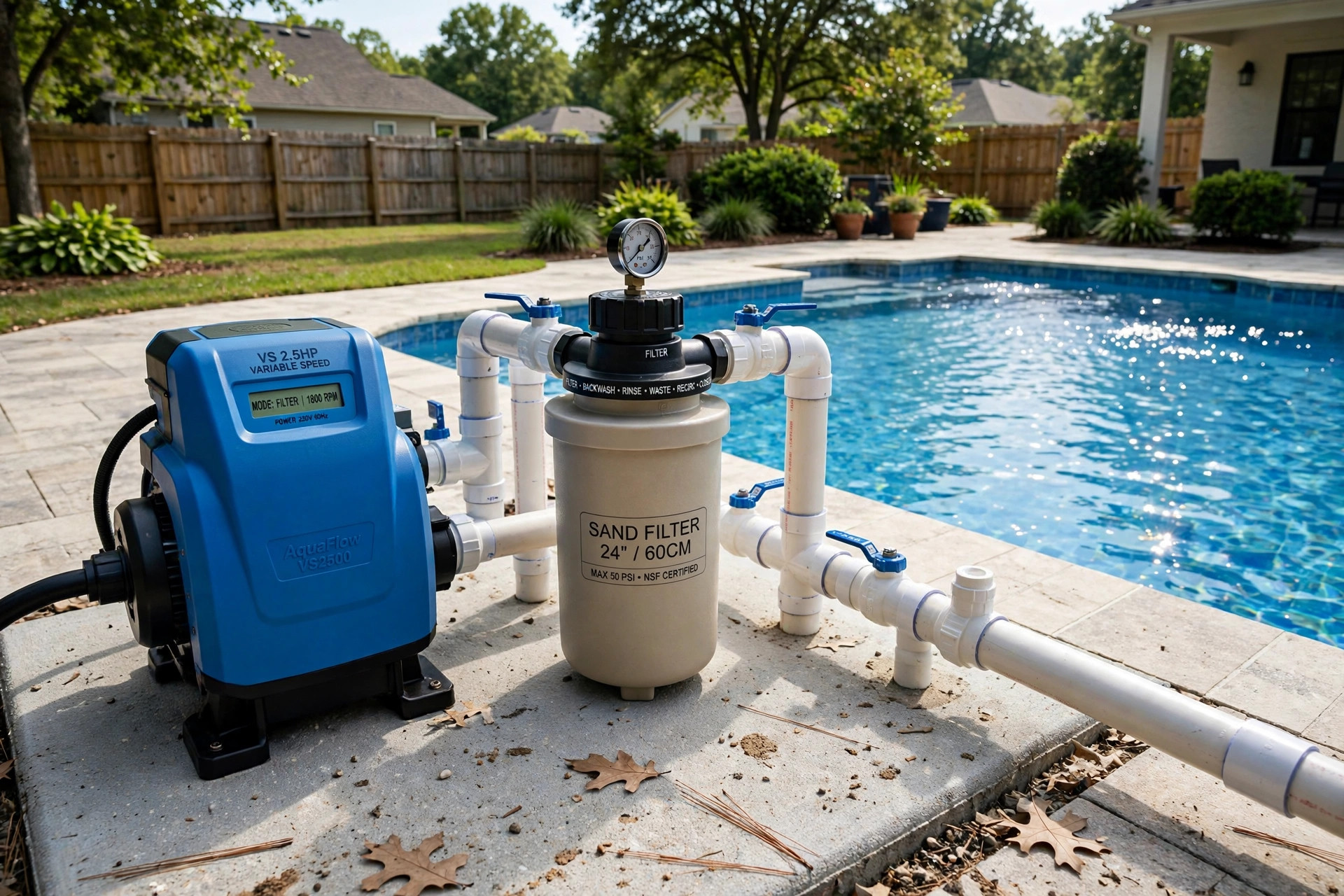

Every swimming pool needs a pump. It is the heart of the system. It moves water through the filter. It pushes water to the heater. It carries chemicals to every corner of the pool. When a pump fails, the water turns cloudy in days. Algae takes hold. The pool becomes unusable. A pool pump replacement cost estimate helps a homeowner plan for this day before it arrives.
A good estimate covers more than the price of a box on a shelf. It includes the pump itself, the labor to install it, and any extra parts that may be needed. It also includes the long-term cost of running the pump. An old pump may be cheap to replace but costly to run. A new model may cost more up front but save hundreds of dollars each year on electric bills.
This guide walks through the full picture. It explains pump types and their prices. It shows what labor costs. It lists the extras that can raise the bill. It also explains how to lower the cost and when a repair makes more sense than a full replacement.
Why the Pump Matters So Much
A pool pump runs for many hours each day. It pulls water from the skimmers and the main drain. It sends the water through the filter and back to the pool. Without this movement, chemicals do not mix. Dirt settles. The water turns green.
Most pumps last eight to twelve years. Heavy use, hard water, and poor care shorten that life. A pump that makes loud noises, leaks at the seals, or trips the breaker is telling its owner that the end is near. Planning a pool pump replacement cost estimate ahead of time removes the panic of a sudden failure in the middle of summer.
Replacement is also a chance to upgrade. Federal rules in the United States now require most new pool pumps to be variable-speed models. These pumps can run slow for daily filtering and fast only when needed. They use far less power than old single-speed pumps. A variable-speed pool pump installation guide from Swim University explains why these models have become the standard choice for pool owners who want lower bills.
What to Look for Before You Buy: Pool Pump Replacement Cost Estimate
A pump must match the pool. Size matters more than brand. A pump that is too small cannot turn the water over fast enough. A pump that is too large wastes power and can damage the filter. The right size depends on the pool volume and the plumbing.
Homeowners should check the old pump label first. It lists horsepower, voltage, and flow rate. A replacement should match these numbers or improve on them. Voltage is critical. Most home pool pumps run on 230 volts, but some run on 115 volts. Buying the wrong voltage means an extra service call.
Flow rate is measured in gallons per minute. A pool should turn over its full volume once every eight hours. A 20,000-gallon pool needs about 42 gallons per minute over an eight-hour cycle. A pool professional or a sizing chart from a supplier like Pool Warehouse can confirm the correct number for a given pool.
Noise is another factor. Older pumps can be loud enough to disturb neighbors. Newer variable-speed pumps run quietly at low speed. For pools near bedrooms or patios, a quiet model is worth the extra cost.
Finally, check the warranty. Most quality pumps carry one to three years of coverage. Some require professional installation for the warranty to hold. Keep the receipt and the warranty card in a safe place.
Types of Pool Pumps and Their Prices
There are three main types of pool pumps. Each has a different price and a different running cost.
Single-Speed Pumps
A single-speed pump runs at one speed, full power, all the time. It is the simplest design. It is also the cheapest to buy. A new single-speed pump costs between $250 and $600. However, it is the most expensive to run. It uses as much power as several household appliances at once.
Many states now limit the sale of single-speed pumps for residential pools. A homeowner replacing an old single-speed model will often be required to switch to a variable-speed pump. This raises the upfront cost but lowers the electric bill for years to come.
Dual-Speed Pumps
A dual-speed pump has two settings, high and low. The high speed handles vacuuming and backwashing. The low speed handles daily filtering at a fraction of the power. A dual-speed pump costs between $400 and $900.
These pumps save less than variable-speed models. They are a middle choice. They suit owners who want some savings without the highest price tag.
Variable-Speed Pumps
A variable-speed pump can run at many speeds. The owner programs it to run slow most of the day and fast for short tasks. This design cuts power use by up to 90 percent compared with a single-speed pump. A variable-speed pump costs between $700 and $1,500.
The price is higher. The payback is quick. Many owners save $300 to $500 per year on electricity. A rebate from the local power company may cut the purchase price further. When building a pool pump replacement cost estimate, the variable-speed model is the smart long-term choice for most pools.
What Labor Adds to the Bill
A pump replacement is not always a simple swap. Professional installation usually costs between $200 and $500. The range depends on the area and the complexity of the job.
A straight swap of the same model takes about two hours. The plumber disconnects the old pump, checks the seals, and connects the new one. If the new pump has a different size or pipe layout, the job takes longer. New plumbing, new wiring, or a new circuit breaker add to the cost.
Some jobs need an electrician as well. Upgrading from a single-speed to a variable-speed pump may require new wiring or a control panel change. This can add $150 to $400 to the total.
Homeowners with basic plumbing skills sometimes do the swap themselves. This saves the labor cost. It also ends the factory warranty on some brands, so it is worth reading the warranty terms first. Safety matters too. Pumps run on high voltage and sit near water. The breaker must be off, and the work must follow local electrical codes. Guidance on electrical safety around pools is available from the CPSC, the federal agency that sets pool safety rules.
Extra Parts That Raise the Estimate
The pump is only part of the equipment pad. Other parts often need attention during a replacement.
– Unions and fittings: New pumps may need new pipe unions. These cost $20 to $60. – Seals and gaskets: A full seal kit costs $30 to $80 and stops leaks. – Pump timer or controller: A new pool timer for pump automation costs $50 to $250 and runs the pump on a schedule. – Check valve: A new check valve costs $20 to $50 and keeps water from flowing backward. – Concrete pad or base: If the old pad is cracked, a new one costs $50 to $150.
Together, these extras can add $150 to $500 to the job. A careful pool pump replacement cost estimate includes them rather than being surprised later.
A Realistic Cost Breakdown
Here is how the numbers add up for a typical in-ground pool with professional installation:
| Item | Low End | High End | |—|—|—| | Single-speed pump | $250 | $600 | | Variable-speed pump | $700 | $1,500 | | Labor for installation | $200 | $500 | | Extra parts and fittings | $100 | $400 | | Total, single-speed swap | $550 | $1,500 | | Total, variable-speed upgrade | $1,000 | $2,400 |
An above-ground pool usually costs less. Its pumps are smaller and simpler to install. A full replacement for an above-ground pool often falls between $400 and $900 with labor.
For a simple motor-only replacement, the cost drops further. If the pump housing is sound, a new motor costs $150 to $400 plus one to two hours of labor. This option works when the seals and housing are in good shape.
Ways to Lower the Cost
A smart owner can trim the bill without cutting corners.
First, replace the pump in the off-season. Pool companies are less busy in fall and winter. Some offer discounts of ten to twenty percent. Scheduling early avoids the summer rush when prices peak.
Second, check for rebates. Many power companies pay $100 to $400 for installing an energy-efficient variable-speed pump. ENERGY STAR-style efficiency ratings help, and retailers like Home Depot often list rebate programs on product pages. A few minutes of research can save real money.
Third, compare quotes. Get three written estimates from licensed pool contractors. Ask each one to list the pump model, labor, and parts separately. This makes comparison easy.
Fourth, consider the total cost of ownership. A $1,200 variable-speed pump that saves $400 a year beats a $400 single-speed pump within two years. Cheap is not always cheap.
Fifth, keep up with maintenance. A clean filter and balanced water reduce strain on the pump. A pump that runs less hard lasts longer. Owners of saltwater pools should also budget for the salt cell replacement cost for pools, since a worn cell can force the pump to work harder.
Care and Upkeep After Replacement
A new pump deserves good care. The basics are simple.
Keep the pump basket empty. Leaves and debris block flow and strain the motor. Check the basket once or twice a week during swim season.
Clean or backwash the filter on schedule. A dirty filter raises pressure and makes the pump work harder. Watch the pressure gauge. When it rises eight to ten pounds above the clean reading, it is time to clean.
Protect the motor from water. Splashes and rain shorten motor life. Make sure the equipment pad drains well. Keep sprinklers aimed away from the pump.
Run the pump long enough each day. Most pools need eight to twelve hours of circulation. A variable-speed pump can run longer at low speed for the same or lower cost. Spas and hot tubs have their own needs; owners who also maintain a spa can read a hot tub cover lifter installation guide for related equipment tips, though spa pumps follow the same care rules.
Listen for change. New noises, vibration, or leaks are early warnings. Fixing a small seal leak early can save the motor from a costly burnout.
Safety Rules to Follow
Pool equipment combines water and electricity. Respect both.
Always turn off the breaker before touching the pump. Lock the breaker box if possible. Never open the pump lid while the pump is running. Trapped air can blow the lid off with force.
Keep children away from the equipment pad. The pump, filter, and heater are not toys. A fence or gate around the equipment area is a wise step.
Bonding and grounding matter. Pool pumps must be properly grounded to prevent shock. If there is any doubt about the wiring, call a licensed electrician. The pool supply retailer Leslie’s Pool and review sites like The Spruce both stress that electrical work around pools belongs to professionals.
Frequently Asked Questions
How long does a pool pump last?
Most pool pumps last eight to twelve years. Motors may wear out sooner in hot climates or with heavy use. Good care adds years. A pump basket that stays clean and a filter that stays clear reduce strain on the motor.
Can I replace just the motor instead of the whole pump?
Yes, if the pump housing, seals, and impeller are in good shape. A motor-only swap costs $150 to $400 for the part plus labor. If the housing is cracked or the pump is very old, a full replacement is the better deal.
Is a variable-speed pump worth the extra money?
For most owners, yes. The pump costs more up front but uses far less power. Savings of $300 to $500 per year are common. Federal rules also require variable-speed models for most new installations, so the choice may be made for you.
How much does it cost to have a professional install a pool pump?
Labor usually runs $200 to $500 for a standard swap. Complex jobs with new plumbing or wiring can cost more. Always get a written quote that separates parts from labor.
What size pump do I need for my pool?
Size depends on pool volume and plumbing. The pool should turn over its full volume every eight hours. Match or improve on the old pump’s horsepower, flow rate, and voltage. When in doubt, ask a pool professional or check a sizing guide from a manufacturer such as Hot Spring or Bullfrog Spas, which publish equipment sizing advice for backyard water systems.
Should I replace the pump myself to save money?
A skilled homeowner can do it and save $200 to $500. But the work involves 230-volt wiring near water. One mistake can cause shock or fire. Some warranties also require professional installation. If you are not fully confident, hire a pro.
Final Word
A pool pump replacement cost estimate is more than a price tag. It is a plan. The pump itself runs $250 to $1,500 depending on type. Labor adds $200 to $500. Parts and extras add $100 to $400. A full professional job lands between $550 and $2,400 for most in-ground pools.
The wise move is to look past the first number. A variable-speed pump costs more today and far less over time. Off-season scheduling, power company rebates, and honest quotes from three contractors keep the total fair. Plan the replacement before the old pump dies in July, and the pool will stay clear all season long.
References
Bullfrog Spas. (n.d.). Hot tubs and spas. https://www.bullfrogspas.com ENERGY STAR. (n.d.). Energy efficient products. https://www.energystar.gov Hot Spring Spas. (n.d.). Hot tubs and spas. https://www.hotspring.com Leslie’s Pool Supplies. (n.d.). Pool supplies and equipment. https://www.lesliespool.com Pool Warehouse. (n.d.). Pool equipment and supplies. https://www.poolwarehouse.com Swim University. (n.d.). Pool and hot tub care guides. https://www.swimuniversity.com The Home Depot. (n.d.). Home improvement products. https://www.homedepot.com The Spruce. (n.d.). Home and garden advice. https://www.thespruce.com U.S. Consumer Product Safety Commission. (n.d.). Product safety information. https://www.cpsc.gov
Was this guide helpful?

About Robert Taylor
The My Garden US editorial team writes practical, in-depth home and garden guides for American homeowners — tested advice, no fluff.
You May Also Like
Best Inflatable Hot Tub for Couples: A Practical Buying Guide
July 17, 2026 0 views
Salt Water Pool Problems Troubleshooting Guide
September 30, 2026 0 views
Fiberglass Pool Installation Cost in the USA: What to Expect
March 19, 2026 0 views