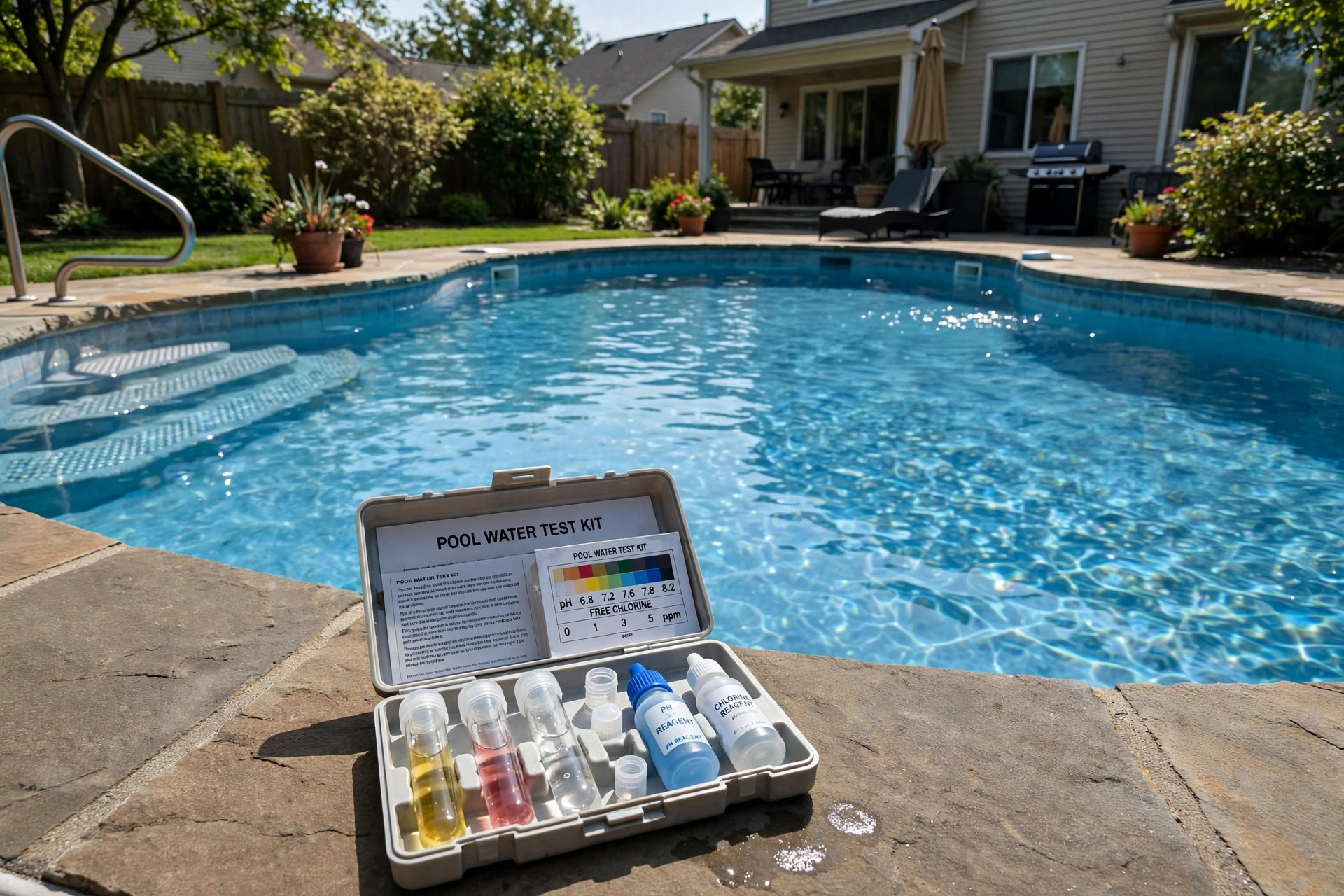

High alkalinity is one of the most common water problems in home pools. It makes the pH hard to control. It causes cloudy water. It leaves hard scale on pool walls and equipment. Many pool owners want to know how to lower pool alkalinity safely without harming the water or the people who swim in it. This guide gives you a clear and simple method. You need only basic pool tools, a good test kit, and common pool acid.
Why High Alkalinity Is a Problem
Total alkalinity acts like a buffer in pool water. It keeps the pH from moving up and down too fast. That is a good thing, but only when the level is in the right range. The normal range is 80 to 120 parts per million (ppm). Many pool care experts aim for 100 ppm as the best mark.
When alkalinity rises above 120 ppm, problems begin. The pH becomes hard to move. It often drifts up and stays high. Chlorine works less well when pH is high. That means germs and algae are harder to kill. The water may turn cloudy. A white crust called scale can form on walls, ladders, and pool heaters. Scale can shorten the life of a heater. It can also narrow pipes and strain the pump.
High alkalinity often comes from the fill water. Well water and some city water supplies are rich in minerals. They push alkalinity up from the start. Heavy use of certain pool chemicals can also raise it. Baking soda, for example, raises alkalinity a great deal. That is why you should test the water often and add chemicals with care.
What You Need to Get Started: How to Lower Pool Alkalinity Safely
You do not need special skills to do this job. You need the right tools and a careful plan. Gather these items before you begin.
– A reliable pool test kit. A good drop-based kit or accurate pool test strips will do the job. – A pool acid. You can use muriatic acid (liquid) or sodium bisulfate (dry acid). Both work well. – A plastic bucket for mixing and pouring. – A plastic measuring cup for acid. – Safety gear: chemical-resistant gloves, safety glasses, and long sleeves. – A garden hose or pool brush for stirring the water.
Keep children and pets away from the pool area while you work. Store all chemicals in a cool, dry place with the lids tight. Never store acid near chlorine products. That mix can give off dangerous gas.
Test the Water First
Before you add anything, you must know your numbers. Dip a test strip or fill your test vial with pool water taken from elbow depth. Test away from return jets and skimmers. That gives you a true reading.
Write down three numbers: total alkalinity, pH, and free chlorine. You need alkalinity most of all. But pH matters too, because the acid you add will lower pH as well as alkalinity. If your pH is already low, you must work in smaller steps.
Test at the same time of day each time you check. Morning is best. Sunlight and swimmer use change the readings later in the day. For more on water chemistry basics, the Swim University pool care guides offer plain-language lessons that are easy to follow.
The Two Ways to Lower Alkalinity
There are two common acids used in home pools. Both lower alkalinity and pH. Pick the one that fits your comfort and budget.
Muriatic Acid (Liquid Acid)
Muriatic acid is a strong liquid acid sold at pool stores and hardware outlets like Home Depot. It is the most common choice. It works fast and costs little. A gallon often sells for five to ten dollars.
The strength of this acid means you must handle it with care. Always pour acid into water, never water into acid. Wear gloves and glasses every time. Work in open air so fumes drift away from you.
Sodium Bisulfate (Dry Acid)
Sodium bisulfate is a dry, granular acid. Pool stores sell it under names like pH down or dry acid. It costs a bit more than muriatic acid. Many home owners prefer it because it is easier to store and pour.
Dry acid is still a strong chemical. It can burn skin and harm eyes. Wear the same safety gear as with liquid acid. It dissolves fast in water and gives steady results. Retailers such as Leslie’s pool supplies carry both liquid and dry forms all season.
Step-by-Step: How to Lower Pool Alkalinity Safely
Follow these steps in order. Do not rush. Small, careful doses work better than one large dose.
Step 1. Turn on the pump. Run the filter pump so the water moves. Moving water mixes the acid evenly. Keep the pump on for the whole job.
Step 2. Test and record your levels. Write down total alkalinity and pH. You need these numbers to figure out your dose.
Step 3. Figure out the dose. A common rule: to lower alkalinity by 10 ppm in 10,000 gallons of water, add about 25 ounces of muriatic acid, or about 1.5 pounds of dry acid. Adjust the dose for your pool size. If you do not know your pool size in gallons, check the pool manual or ask your pool builder.
Step 4. Add acid in small amounts. Never add the full dose at once. Add about half or three quarters of what you think you need. Pour the acid slowly near a return jet while the pump runs. The moving water will spread it fast.
Step 5. Wait and brush. Wait at least four hours with the pump running. Brush the pool floor and walls lightly. This keeps the acid from sitting in one spot.
Step 6. Retest. Test alkalinity and pH again. If alkalinity is still above 120 ppm, repeat with a smaller dose. Most pools need two or three rounds. That is normal and safe.
Step 7. Fix the pH if needed. Acid lowers pH too. After alkalinity is in range, check pH. It should sit between 7.2 and 7.8. If pH is too low, raise it with soda ash or by aerating the water. A fountain or waterfall feature adds air and lifts pH without raising alkalinity much.
This same slow method works when you need to lower pool pH safely. Patience is the key in both jobs.
How Much Acid to Add
Dosing sounds hard at first, but it is simple math. Start with your pool size in gallons. Then use the guide below.
For muriatic acid (about 31 percent strength):
– 10,000 gallons: 25 fluid ounces lowers alkalinity by about 10 ppm. – 20,000 gallons: 50 fluid ounces lowers alkalinity by about 10 ppm. – 30,000 gallons: 75 fluid ounces lowers alkalinity by about 10 ppm.
For dry acid (sodium bisulfate):
– 10,000 gallons: 1.5 pounds lowers alkalinity by about 10 ppm. – 20,000 gallons: 3 pounds lowers alkalinity by about 10 ppm. – 30,000 gallons: 4.5 pounds lowers alkalinity by about 10 ppm.
Example: your pool holds 20,000 gallons and your alkalinity reads 150 ppm. You want to reach 100 ppm. That is a drop of 50 ppm. The chart says 50 ounces of muriatic acid lowers 20,000 gallons by 10 ppm. For 50 ppm you would need about 250 ounces, or close to two gallons. Add only half of that first. Then retest.
Numbers on test kits are not perfect. That is why you add less than the math says, then test again. This habit keeps you from overshooting. Overshooting means a long job to bring levels back up.
Cost and Price
Lowering alkalinity is one of the cheapest pool jobs. A gallon of muriatic acid costs five to ten dollars at most stores. Dry acid costs ten to twenty dollars for a five-pound bucket. A basic test kit costs fifteen to thirty dollars and lasts a full season.
Most home owners spend less than thirty dollars on chemicals for a full correction. Compare that to the cost of scale damage. A new pool heater can cost two thousand dollars or more. A pump repair can run several hundred. Keeping alkalinity in range protects this equipment. It is cheap insurance.
Buy chemicals in sizes you will use within a season or two. Old acid can lose strength. Old test reagents can give false readings. Fresh products give true numbers.
Care and Upkeep After You Lower Alkalinity
Getting alkalinity into range is only the first win. Keeping it there takes small, steady habits.
Test the water two or three times per week in swim season. Test once a week in the off season. Write your results in a small notebook or on a phone app. Over time you will see patterns. You will learn how fast your pool uses chemicals.
Top up the pool with care. Fill water is the main source of new minerals. If your fill water is high in alkalinity, each top-up pushes levels back up. Test after you add fresh water.
Keep the pH steady. When pH drifts up, fix it soon with a small acid dose. Small fixes stop big problems. Clean the filter on schedule. A clean filter moves water well and helps chemicals mix.
Watch the water. Cloudy water is often the first sign that chemistry is off. If you need to fix cloudy pool water, start with a full test. Alkalinity is often part of the cause.
Safety Rules You Must Follow
Pool acid is safe when you respect it. Follow these rules every time.
– Wear gloves, safety glasses, and long sleeves. Acid can burn skin and harm eyes. – Work in open air. Do not breathe the fumes. Stand upwind when you pour. – Always add acid to water. Never pour water into acid. The mix can splash and burn. – Keep the product label with the chemical. The label tells you what to do if acid touches skin or eyes. – Store acid away from chlorine and shock products. Keep it in a cool, dry spot out of reach of children. – Never mix acid with other chemicals in the same bucket. – Wash your hands and rinse tools after the job.
Pool safety goes beyond chemistry. The Consumer Product Safety Commission offers free guides on pool barriers, alarms, and safe swim habits. Every pool owner should read them.
Frequently Asked Questions
How fast can I lower pool alkalinity? You can lower it over one to three days. Each round of acid needs about four hours to mix and show a true reading. Most pools need two or three rounds. Do not try to fix it all in one hour.
Can I swim right after adding acid? Wait until the acid has mixed well. Give it at least four hours with the pump running. Then retest. Swim only when alkalinity is between 80 and 120 ppm and pH is between 7.2 and 7.8.
Will lowering alkalinity lower my pH too? Yes. Acid lowers both. That is why you test pH after each round. If pH drops too low, raise it with aeration or soda ash. The Hot Spring Spas hot tub care pages explain how pH and alkalinity move together in spas too.
What if I add too much acid? Test the water. If alkalinity fell below 80 ppm, raise it with baking soda (sodium bicarbonate). Add it slowly and retest. The water will come back into balance.
Does high alkalinity harm swimmers? High alkalinity alone does not burn skin. But it makes chlorine weak. Weak chlorine means germs can live in the water. That is the real risk. Balanced water keeps chlorine strong and swimmers safe.
Can I use vinegar instead of pool acid? Vinegar is too weak for pool use. You would need huge amounts. It can also feed algae and stain surfaces. Stick with muriatic acid or dry acid made for pools. Guides at Pool Warehouse list the right products for each pool type.
A Final Word
Learning how to lower pool alkalinity safely is a skill every pool owner should have. Test first. Add acid in small doses. Wait and retest. Keep up with weekly testing. These simple habits keep water clear, equipment safe, and swimmers happy.
Pool care does not have to be hard. It only has to be steady. With the right tools and a careful method, you can keep your pool in fine shape all season long. For more plain-language pool help, The Spruce home guides and Bullfrog Spas spa resources are worth a visit.
References
Bullfrog Spas. (n.d.). Hot tubs and spas. https://www.bullfrogspas.com Hot Spring Spas. (n.d.). Hot tubs and spas. https://www.hotspring.com Leslie’s Pool Supplies. (n.d.). Pool supplies and equipment. https://www.lesliespool.com Pool Warehouse. (n.d.). Pool equipment and supplies. https://www.poolwarehouse.com Swim University. (n.d.). Pool and hot tub care guides. https://www.swimuniversity.com The Home Depot. (n.d.). Home improvement products. https://www.homedepot.com The Spruce. (n.d.). Home and garden advice. https://www.thespruce.com U.S. Consumer Product Safety Commission. (n.d.). Product safety information. https://www.cpsc.gov
Was this guide helpful?

About Sarah Mitchell
The My Garden US editorial team writes practical, in-depth home and garden guides for American homeowners — tested advice, no fluff.
You May Also Like
How to Shock Hot Tub After Use: A Clear Guide
September 9, 2026 0 views
Best Pool Heater for Saltwater Pools: What Owners Should Know
March 16, 2026 0 views
Best Pool Skimmer Basket Replacement: A Complete Guide
July 25, 2026 0 views