
A warm soak under the stars does not have to cost a fortune. The best hot tub under 5000 dollars can give you years of comfort, provided you shop with care and know what your money is really buying. Many families assume a home spa is out of reach, yet the market now holds a solid middle ground between the cheap inflatable models and the ten-thousand-dollar showroom tubs. This guide walks through that middle ground in plain terms.
Five thousand dollars is a useful ceiling. It rules out the entry-level toys that break in a year, but it opens the door to genuine acrylic spas with real pumps, real heaters, and real insulation. The trick is to tell the difference between a fair value and a dressed-up disappointment. What follows will help you do exactly that.
Why It Matters
A hot tub is one of the few home purchases that pays you back every single day. After a long shift on your feet, twenty minutes in warm water can loosen stiff muscles and quiet a busy mind. Doctors have long noted that heat and gentle jet pressure help tired joints, and anyone who has soaked on a cold evening knows the feeling well. An affordable hot tub for home use brings that relief to your own backyard, without the cost of a health club or the drive across town.
There is also the question of company. A spa seats three to six people, which makes it a natural gathering spot. In that sense the purchase is not only about water and heat. It is about the evenings you will spend in it.
Cost matters too, and that is where the under-5000-dollar price range earns its keep. A spa in this bracket can deliver most of what a pricier model offers, if you choose wisely. The shell may be thinner, the cabinet simpler, and the jet count lower, but the core experience remains warm water, moving water, and a quiet yard. Shoppers who want the best hot tub under 5000 dollars are really shopping for that core experience without paying for extras they will never notice.
What to Look For: Best Hot Tub under 5000 Dollars
Buying a budget spa takes a steady eye. Here are the points that matter most.
The shell. Most spas under five thousand dollars use a molded plastic or thin acrylic shell. Acrylic holds heat better and resists stains, while basic plastic costs less. Look for a shell that feels thick at the rim and shows no thin spots. A good dealer will let you press your hand against it. If it flexes like a toy, walk away.
The pumps and jets. The number of jets matters less than the pump behind them. One strong pump beats two weak ones. Ask how many horsepower the pump carries and whether the jets can be adjusted one by one. Rotating jets soothe backs; fixed jets target shoulders and feet. The best hot tub for cold climates often pairs strong pumps with full-foam insulation, and that same rule helps any budget buyer.
Insulation and cover. Heat loss is the hidden tax on a cheap spa. A tub that bleeds heat will raise your electric bill month after month until the bargain vanishes. Ask about full-foam insulation in the cabinet and check the cover. It should be at least four inches thick at the center, tapering to the edge, with a tight vapor seal. A flimsy cover is a warning sign.
Electrical needs. Most full-size spas in this range need a 220-volt line wired by an electrician. That work can add several hundred dollars, so plan for it. A few budget models run on a standard 110-volt outlet, which is handy but means slower heating. If you choose a 110-volt tub, expect it to take longer to warm up after a cold night.
Warranty and service. A warranty is only as good as the dealer behind it. Ask who will come to your home if the pump fails in year two. A one-year parts warranty from a maker with no local dealer is thin comfort. Two to three years on parts, and at least a year on labor, is a fair standard at this price. The experts at Swim University offer clear advice on what a solid spa warranty should cover, and their guidance is worth reading before you sign anything.
The brand name behind the tub. Big makers such as the ones found at Hot Spring and Bullfrog Spas sell their top lines well above five thousand dollars, but their smaller or simpler models, and their rivals in the value tier, often dip into this range. A known brand usually means parts will still exist in five years. An unknown brand with a strange name may leave you hunting for a replacement pump that no longer exists.
Types and Options
Three kinds of spa dominate the under-5000-dollar market. Each suits a different buyer.
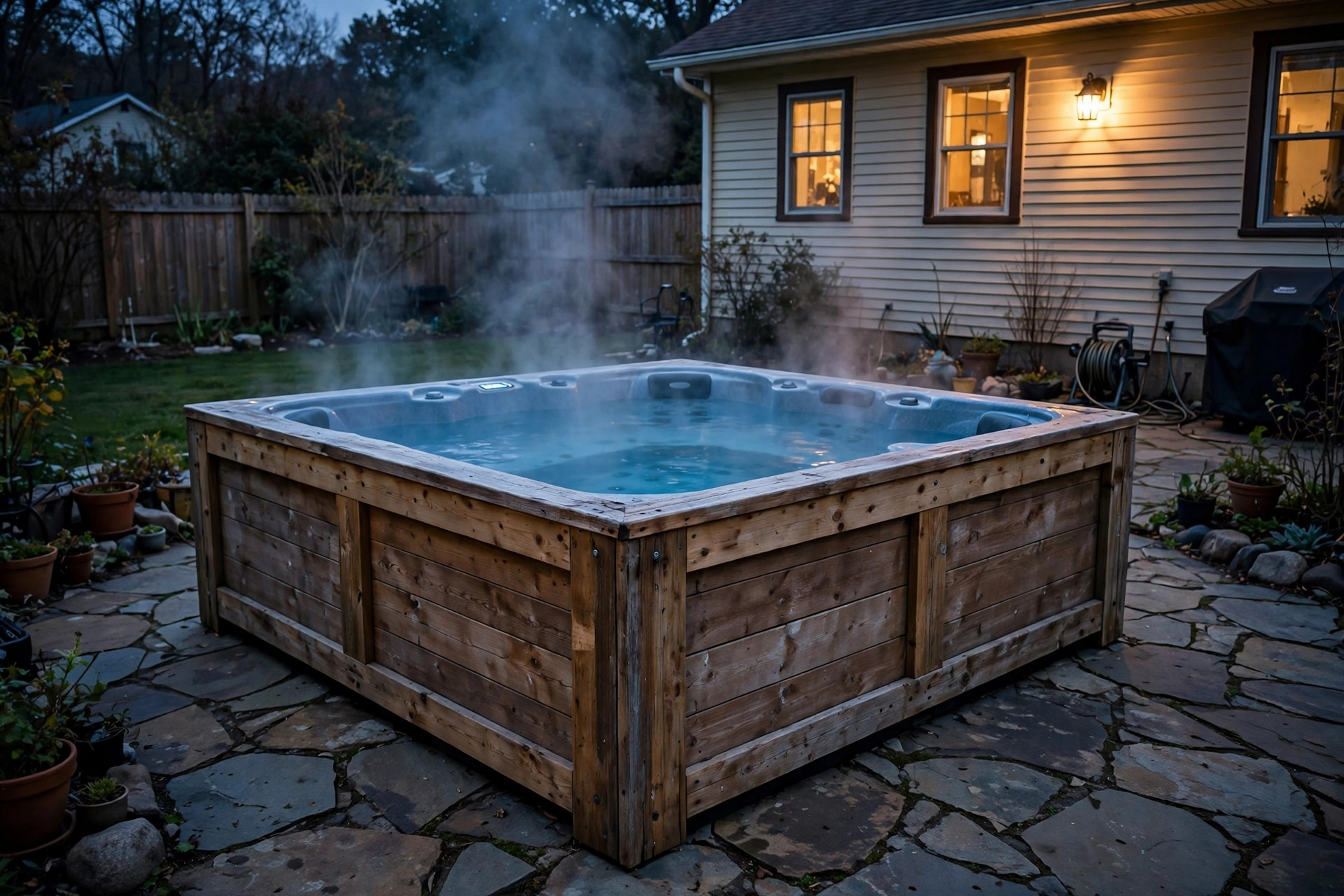
Rotomolded plug-and-play spas. These one-piece plastic tubs are the backbone of the budget market. They ship as a single unit, often run on 110 volts, and can be carried into the yard by three or four adults. They seat two to five people and weigh far less than acrylic models. Their weak point is heat retention, so they suit mild climates best. A cheap spa for small backyard spaces often falls into this group.
Mid-range acrylic spas. Step up a little and you find thin acrylic shells with real 220-volt heating. These hold temperature better, usually seat four to six people, and look more like their expensive cousins. They need a poured pad and an electrician, but the daily running cost is lower than the plug-and-play kind. For many buyers, this is the sweet spot of the whole market.
Inflatable spas. These cost well under the ceiling, sometimes under a thousand dollars, and set up in an afternoon. They are fun and easy, but they are not the same product. Heat escapes quickly, the vinyl wears out in a few seasons, and the jets are gentle at best. An inflatable hot tub for couples is a fine trial run if you want to test whether your family will actually use a spa before spending real money. Do not judge the whole category by it.
Whichever type you favor, compare models side by side when you can. Sit in the dry tub at the store. Note the seat depth, the footwell room, and whether the lounger fits your height. Retailers such as Home Depot display several models in one place, which makes this comparison easy, and reviewers at Consumer Reports test spas for noise, heat retention, and build quality.
Cost and Price
The sticker price is only the first number. A wise buyer counts the full cost of the first year.
Delivery and setup. A spa weighs hundreds of pounds. Delivery often costs 200 to 500 dollars, and a concrete pad or reinforced deck adds more. If your yard needs a crane to lift the tub over a fence, add that too. Ask for the delivered, installed total in writing.
Electrical work. A licensed electrician charges 300 to 1,000 dollars to run a 220-volt line, depending on distance from the panel. Get a quote before you buy, not after. Nothing sours a purchase like a surprise bill before the first soak.
Running costs. Expect 20 to 60 dollars a month in electricity for a well-insulated tub, and more for a poorly insulated one. Water and chemicals add another 20 to 40 dollars a month. Budget hot tub owners who keep the cover on and the temperature steady spend far less than those who let the tub cool between uses. The Energy Department publishes plain tips on cutting hot water heating costs that apply directly to spa ownership.
Chemicals and parts. A hot tub chemicals starter kit costs 50 to 100 dollars and covers the first months. Filters need replacing once or twice a year at 30 to 80 dollars each. A cover lasts three to five years and costs 300 to 500 dollars to replace. None of these are surprises if you plan for them.
The used market. A used spa from a known brand can be a fine buy, sometimes far under your ceiling. Have it inspected while it is full of water and running, check every jet and listen to the pump, and confirm that parts are still sold before you pay.
Care and Upkeep
A hot tub asks little of you, but it asks it regularly. Fifteen minutes a week keeps the water clear and the equipment alive.
Test the water two or three times a week with strips or a liquid kit. Keep the sanitizer level steady, and balance the pH so the water stays gentle on skin and equipment. Drain and refill the tub every three to four months, more often if it sees heavy use. Wipe the waterline as it fills to stop the ring of grime that builds up over time.
Clean the filter every two to four weeks with a hose, and soak it in filter cleaner every few months. A dirty filter makes the pump work harder and the water cloudy. Keep the cover clean and conditioned so it stays flexible; a cracked cover lets heat escape and rainwater in. The team at Leslie’s stocks the testing supplies and filter cleaners you will need, and their staff can walk a beginner through the routine.
In winter, never let the water freeze. If you must shut the tub down, drain it fully and blow out the lines, or keep it running with the cover locked. Frozen pipes burst, and that repair costs more than a year of heating. Pool Warehouse sells winter covers and insulation add-ons that help cold-weather owners protect their investment.
Safety
Warm water is relaxing, but it demands respect. The federal safety agency CPSC has clear rules for spa barriers and covers, and every owner should know them.
Keep the water at or below 104 degrees Fahrenheit. Children, pregnant women, and anyone with a heart condition should check with a doctor first and soak for shorter periods. Never let children use the tub alone, and never leave the cover unlocked when the tub is not in use. A locking cover is not optional; it is the single most important safety item you own.
Keep glass out of the spa area. One dropped glass means draining the tub to find every shard. Use plastic cups. Keep the path to the tub well lit and free of ice in winter, and keep electrical devices away from the water. A ground-fault outlet is required by code for a reason.
Frequently Asked Questions
Can you really get a good hot tub for under 5000 dollars? Yes, with care. The best hot tub under 5000 dollars is usually a rotomolded or entry-level acrylic model from a known maker. You give up some jet count and cabinet luxury, but the soak itself is genuine.
How much does it cost to run a budget hot tub each month? Most owners spend 40 to 100 dollars a month on electricity, water, and chemicals combined. A well-insulated tub with a good cover sits at the low end. A thin tub in a cold climate sits at the high end. Keeping the temperature steady costs less than reheating from cold.
Do I need an electrician to install a hot tub? For most full-size models, yes. A 220-volt circuit must be installed by a licensed electrician to meet code and keep the warranty valid. Plug-and-play 110-volt models avoid this, but they heat slowly and suit mild weather best.
How long will a 5000-dollar hot tub last? A fair-quality tub lasts seven to twelve years with steady care. The shell usually outlives the pumps and heater, which can be replaced. Cheap inflatable models last two to four seasons. Regular water care and a good cover add years to any spa.
Is a used hot tub a better deal than a new budget model? It can be. A used premium tub at half price often beats a new bargain tub on build quality. The risk is hidden damage and dead parts. Always inspect it full and running, and confirm that replacement parts are still sold before you pay.
What size hot tub should a family of four buy? Look for a five- or six-person model. A “four-person” tub fits four adults tightly, and guests make it tighter. The extra seat room costs little and gets used more than you expect. Measure your patio first; a six-person tub needs about seven feet square.
A Short Final Word
The best hot tub under 5000 dollars is not the cheapest tub with the most jets. It is the sturdiest tub with the best insulation, bought from a dealer who will stand behind it. Count the full first-year cost, keep up the simple weekly care, and lock the cover every night. Do that, and your modest spa will give you a decade of quiet evenings, warm water, and good company. That is a fine return on five thousand dollars.
The Spruce’s home editors at The Spruce keep updated buying guides for budget spas, which are worth a look as prices shift from season to season. Start your search there, and trust your own judgment over any sales pitch.
References
Bullfrog Spas. (n.d.). Hot tubs and spas. https://www.bullfrogspas.com Consumer Reports. (n.d.). Product reviews and ratings. https://www.consumerreports.org Hot Spring Spas. (n.d.). Hot tubs and spas. https://www.hotspring.com Leslie’s Pool Supplies. (n.d.). Pool supplies and equipment. https://www.lesliespool.com Pool Warehouse. (n.d.). Pool equipment and supplies. https://www.poolwarehouse.com Swim University. (n.d.). Pool and hot tub care guides. https://www.swimuniversity.com The Home Depot. (n.d.). Home improvement products. https://www.homedepot.com The Spruce. (n.d.). Home and garden advice. https://www.thespruce.com U.S. Consumer Product Safety Commission. (n.d.). Product safety information. https://www.cpsc.gov U.S. Department of Energy. (n.d.). Energy efficiency and renewable energy. https://www.energy.gov
Was this guide helpful?

About James Carter
The My Garden US editorial team writes practical, in-depth home and garden guides for American homeowners — tested advice, no fluff.
You May Also Like
Best Inflatable Hot Tub for Couples: A Practical Buying Guide
July 17, 2026 0 views
Hot Tub Jet Replacement Guide for Homeowners
January 23, 2026 0 views
Above Ground Pool Liner Replacement Cost: A Plain Guide
September 10, 2026 0 views