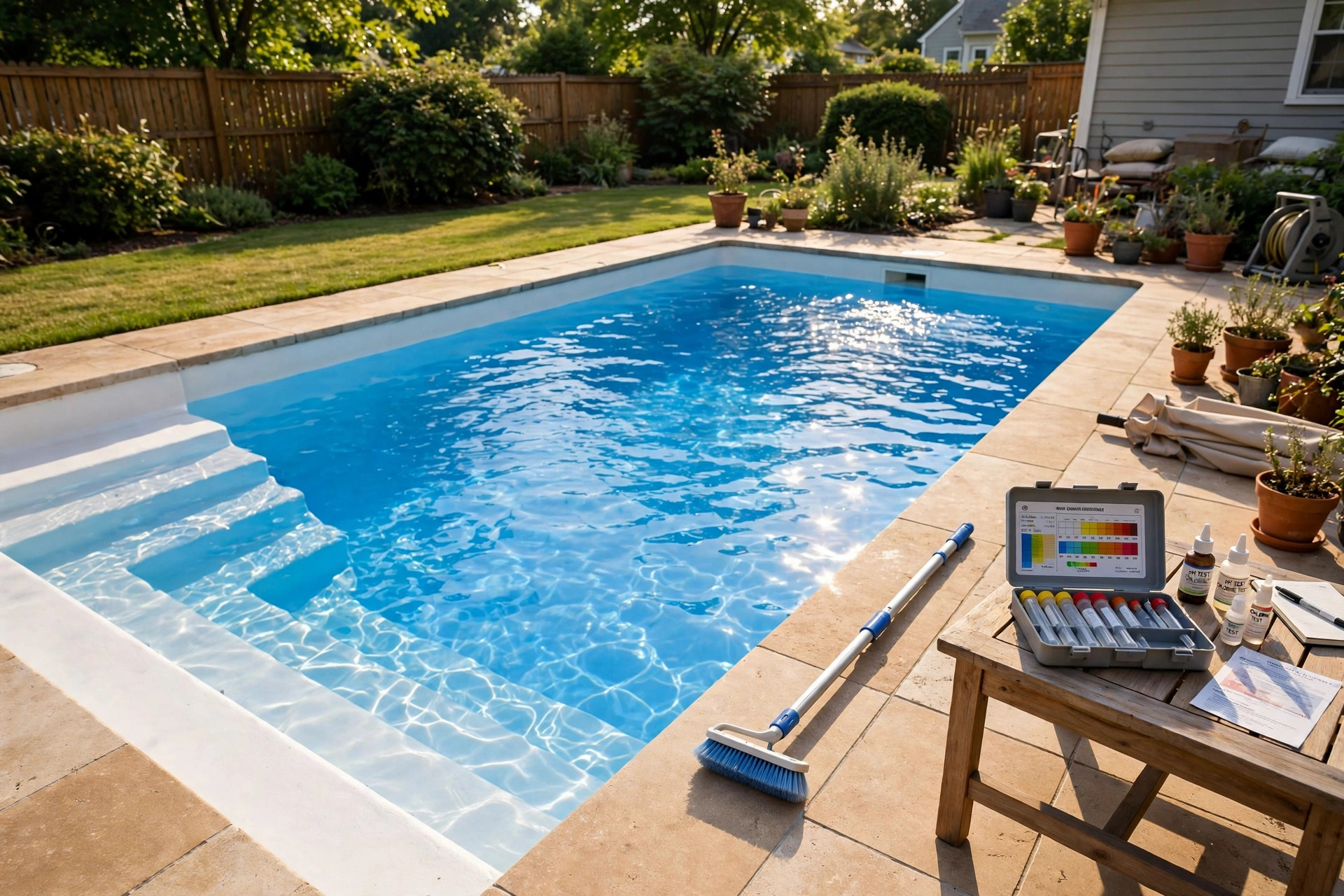

Pool stains can spoil the look of even the cleanest water. A brown mark along the steps, a green patch on the wall, or rust spots near the return jets all point to the same problem: stains on the plaster. This guide explains how to remove stains from pool plaster in a safe and simple way. You will learn how to find the cause of the stain, how to choose the right treatment, and how to keep new stains from coming back. Every step below is written in plain language for the home pool owner.
Why Pool Plaster Stains Matter
Pool plaster is slightly porous. Minerals, metals, and organic matter can settle into its surface over time, and a faint shadow may grow into a deep stain if left alone.
Stains do more than hurt the look of the pool. Metal stains from iron or copper can hint at water chemistry that is out of balance. Algae stains can mean that the sanitizer level has dropped too low. Organic stains from leaves and berries show that debris has been sitting too long in one place. When you know how to remove stains from pool plaster early, you protect both the finish and the life of the pool surface. A plaster finish that is cleaned and kept in balance can last many years. One that is left to stain and etch may need costly resurfacing far sooner.
Common Types of Pool Plaster Stains: How to Remove Stains From Pool Plaster
Before you pick a treatment, you must know what kind of stain you are dealing with. Different stains need different cures. The three main groups are metal stains, organic stains, and algae stains.
Metal Stains
Metal stains are among the most common on pool plaster. Iron often leaves brown or orange-red marks, while copper can leave green or blue-green spots. Manganese leaves dark purple or black marks. These metals can come from the fill water itself, from old plumbing, or from heater parts. When the water chemistry shifts, dissolved metals drop out of the water and settle onto the plaster. A simple vitamin C test can confirm iron stains: press a vitamin C tablet against the stain for a minute, and if the mark fades, iron is the cause. Copper stains can be checked with a similar spot test using a small amount of a copper-specific stain product.
Organic Stains
Organic stains come from leaves, berries, nuts, and other plant matter that rests on the plaster. They often show as yellow, tan, or light brown marks in the shape of the leaf or seed that caused them. These stains are usually shallow and respond well to a chlorine shock treatment. If you let leaves sit on the steps or the floor for weeks, the stain may go deeper. Regular skimming and brushing are the best defense. A leaf that is removed the same day it falls will not have time to stain.
Algae Stains
Algae stains show as green, black, or mustard-yellow marks. Black algae is the hardest of all, because its roots grow into the plaster itself. Green algae is easier and often clears with proper shock treatment and brushing. If your pool has had a long stretch of cloudy water or low chlorine, algae may have left behind stains even after the water clears. For more on restoring water clarity, see our guide on how to fix cloudy pool water. Mustard algae leaves yellow spots that need a special algaecide plus strong shock. You can find poolside testing help and product advice from retailers such as Leslie’s Pool Supplies.
What You Need Before You Start
Gather your tools and supplies before you drain any water or add any chemical. You will need a pool test kit or test strips, a good stiff brush (nylon for fresh plaster, wire for older plaster), a telescopic pole, and rubber gloves. For chemicals, keep on hand a stain-specific product matched to your stain type: a metal stain remover with a sequestering agent for metal stains, chlorine shock for organic and algae stains, and a black-spot algaecide for black algae. You may also want a bucket, a measuring cup, and a garden hose.
Always test your water first. Note the pH, total alkalinity, free chlorine, and calcium hardness. Write the numbers down. Many stain products work best when the pH is slightly lowered, often to around 7.2. Never mix different chemicals in the same bucket, and never add chemicals through the skimmer unless the label says so. Keep all products stored in a cool, dry place away from children and pets, a point stressed by safety resources like the U.S. Consumer Product Safety Commission.
How to Remove Stains From Pool Plaster Step by Step
The method below is the standard spot-treatment approach used by pool owners across the country. It is gentle on the plaster and works for most stain types when they are caught early.
Step 1: Brush and Vacuum
Brush the stained area well with your pool brush. This removes loose material and lets the treatment reach the plaster. Vacuum the pool after brushing so the loosened debris does not settle back down. A full cleaning also makes it easier to see whether the stain is truly gone after treatment.
Step 2: Balance the Water
Bring your water chemistry into line before you treat. Adjust pH to the range the stain product label calls for, and make sure chlorine is at a normal level. Treatment products can fail if the pH is too high. If you are unsure how your chemistry got off track, a good test kit and a careful record of readings will help you learn your pool’s habits over time.
Step 3: Apply the Stain Treatment
For metal stains, add the metal stain remover at the dose shown on the label, usually poured around the pool edge with the pump running. For organic stains, shock the pool with chlorine and brush the stained spots daily until they fade. For black algae spots, turn off the pump, apply a trichlor tablet or black-spot product directly to the spot with a cloth, and scrub hard with a wire brush. Repeat each day until the stain is gone. Advice on pool product use and care can also be found at The Home Depot and Pool Warehouse.
Step 4: Add a Sequestering Agent
After a metal stain treatment, add a sequestering agent. This product holds dissolved metals in the water so they do not settle back onto the plaster. It is not a one-time fix. Most pool owners add a small maintenance dose each month during the swim season. Without it, the metals that caused the stain will simply return to the same spots.
Step 5: Run the Pump and Re-Test
Run the pump without stop for 24 hours after treatment. Then re-test the water and bring everything back into the normal range. Brush the whole pool one more time. If a faint shadow remains, repeat the treatment. Some deep stains need two or three rounds.
Spot Treatments for Tough Stains
Some stains resist the general method above and need a direct attack. The vitamin C tablet test doubles as a small-scale treatment for iron: crush a handful of vitamin C tablets into a sock, press it against the stain, and rub gently. The stain will often fade within minutes. For copper spots, a similar spot test with a copper stain product works the same way.
For black algae embedded in the plaster, you may need to sand the spot lightly with a pumice stone while wearing gloves. Use a light hand. Plaster is hard, but too much force will wear it thin. Deep purple or black manganese stains sometimes need an acid-based treatment applied by a professional, because acid wash removes a thin layer of plaster along with the stain. If your stain survives three rounds of treatment, call a pool service company for an in-person look. General pool care education from Swim University can help you judge when a stain is beyond do-it-yourself methods.
Cost of Removing Pool Plaster Stains
Most do-it-yourself stain jobs are cheap. A bottle of metal stain remover costs between $15 and $40. Chlorine shock for an organic stain job costs about $10 to $25 per treatment. A black-spot algaecide runs $20 to $50. A good nylon or wire brush costs $15 to $35 if you do not own one. In total, a home stain removal project often falls between $30 and $100. An acid wash by a professional costs $300 to $600 and is only done every few years, since it wears down the plaster. Full replastering is the last resort and costs $4,000 to $10,000 or more. This is why learning how to remove stains from pool plaster early is one of the best ways to protect your investment. You can compare pool products and prices at major retailers like The Home Depot, and read independent pool care guides at The Spruce.
Care and Upkeep After Stain Removal
A stain-free pool stays that way only with steady care. Brush the pool walls and floor once a week, even when the water looks clear. Brushing keeps fine material from settling into the plaster. Keep the water chemistry balanced at all times. Test the water at least twice a week in the summer, and adjust pH and chlorine as needed.
Add a maintenance dose of sequestering agent each month if your fill water has metals. Keep leaves and debris out of the pool with a cover when the pool is not in use, and empty the skimmer baskets often. If your water turns green from an algae bloom, act fast: shock the pool and clean it fully. Our article on how to clean green pool water fast walks through that process step by step. Stains from algae rarely form in water that is tested and treated on a regular schedule.
Safety Tips for Stain Removal
Pool chemicals are useful but must be handled with care. Wear rubber gloves and eye protection when you handle any stain product or shock. Work in the open air and stand upwind of dust or fumes. Never mix chlorine products with acid or with each other. Keep children and pets away from the pool until the chemicals have fully mixed and the water is safe to enter.
Store all pool chemicals in their original containers, in a cool and dry place, locked away from children. The U.S. Consumer Product Safety Commission warns that pool chemicals can cause serious burns and fumes if they are mixed or stored the wrong way. If a stain treatment calls for a lower pH, bring the pH back to normal before swimming. Never swim in water that is cloudy or smells strongly of chemicals.
Hot tub and spa owners should note that plaster-like finishes in spas stain in much the same way. If you care for a spa as well as a pool, quality spa brands such as Hot Spring and Bullfrog Spas offer care guides that cover water balance and stain prevention for heated water, where stains can form even faster.
Frequently Asked Questions
Can I remove pool plaster stains without draining the pool?
Yes. Most stain treatments are designed to work with the water in the pool. Metal stain removers, chlorine shock, and spot treatments all work underwater. Draining is almost never needed for stains. A full drain is only done for an acid wash or for replastering, and even then it is best left to professionals.
How long does stain removal take?
Light organic stains may clear in one to three days with shock and brushing. Metal stain treatments often show results within 24 to 48 hours. Deep black algae spots can take one to two weeks of daily scrubbing. If a stain shows no change after three full treatment rounds, it may be too deep for home methods.
Will stain treatment damage my plaster?
When used as the label directs, standard stain products are safe for plaster. Wire brushing and pumice stones should be used with a light hand on older plaster. Acid wash does remove a thin layer of plaster, so it should be done only when needed and usually by a professional. Over-acidifying the water can etch plaster, so always follow the product directions.
Why do stains keep coming back in the same spots?
Return stains almost always come from metals that are still in the water. The treatment removed the mark from the plaster, but the metal is still dissolved in the pool. A monthly dose of sequestering agent holds those metals in the water so they cannot settle again. Check your fill water for iron and copper, since the source is often the garden hose or the well.
Is it safe to swim right after stain treatment?
Wait until the pump has run for the time the label calls for and the water is clear. Re-test before swimming. Free chlorine should be back in the normal range and pH should be between 7.2 and 7.8. If the label gives a waiting time, follow it exactly. When in doubt, wait one more day.
What about algae stains on the plaster walls?
Algae stains on walls need the same basic treatment: shock, brush, and patience. Mustard algae needs a special algaecide in addition to shock. Our guide to how to remove algae from pool walls covers the wall-scrubbing method in detail, including how to treat black algae roots that grow into the plaster.
A Short Final Word
Knowing how to remove stains from pool plaster is a skill every pool owner should have. Most stains come from metals, plant matter, or algae, and most can be treated without draining the pool. Start by naming the stain, gather the right products, treat it step by step, and follow up with a sequestering agent and steady water care. A bright, stain-free plaster finish is not a matter of luck. It is the reward of regular testing, prompt brushing, and quick action when the first mark appears.
References
Bullfrog Spas. (n.d.). Hot tubs and spas. https://www.bullfrogspas.com Hot Spring Spas. (n.d.). Hot tubs and spas. https://www.hotspring.com Leslie’s Pool Supplies. (n.d.). Pool supplies and equipment. https://www.lesliespool.com Pool Warehouse. (n.d.). Pool equipment and supplies. https://www.poolwarehouse.com Swim University. (n.d.). Pool and hot tub care guides. https://www.swimuniversity.com The Home Depot. (n.d.). Home improvement products. https://www.homedepot.com The Spruce. (n.d.). Home and garden advice. https://www.thespruce.com U.S. Consumer Product Safety Commission. (n.d.). Product safety information. https://www.cpsc.gov
Was this guide helpful?

About James Carter
The My Garden US editorial team writes practical, in-depth home and garden guides for American homeowners — tested advice, no fluff.
You May Also Like

Best Pool Cover for Winter Reviews: A Plain Guide to Keeping Your Pool Safe All Winter
October 5, 2026 0 views
Best Hot Tub for Tall People: How to Find One That Truly Fits
May 26, 2026 0 views
How to Choose the Best Above Ground Pool for Families
September 5, 2026 0 views