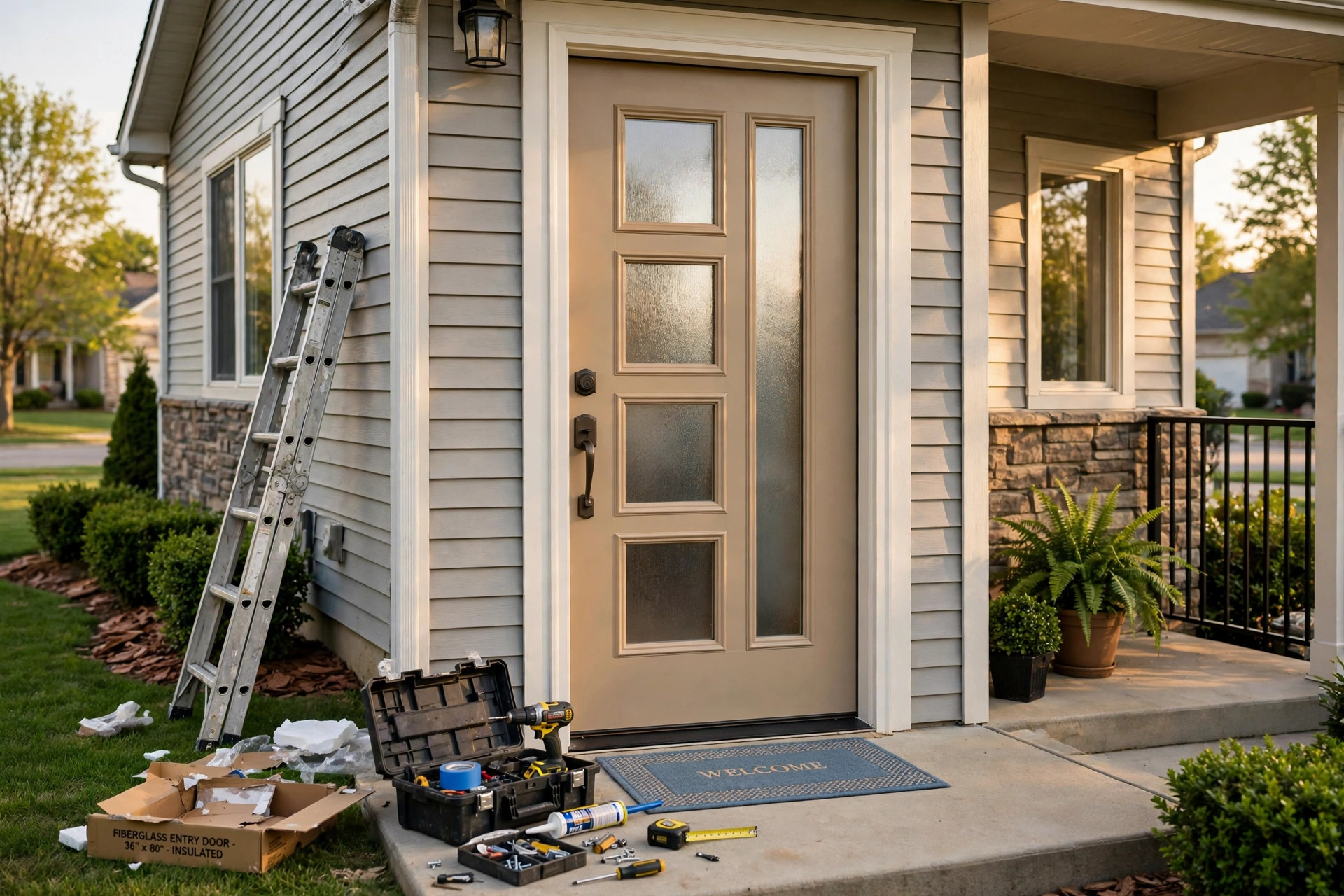

When you search for professional grade exterior door replacement near me, you want more than a new slab of wood. You want a door that locks tight, keeps out drafts, and looks right for years. This guide explains what professional-grade means, which doors are worth your money, what the job should cost, and how to find a skilled installer in your town.
Why a Professional Grade Door Matters
Your front door works harder than any other door in the house. It faces rain, wind, sun, and ice. It greets guests. It stands between your family and the street. A cheap door can warp in one summer. A professional-grade door will hold its shape for decades.
Professional grade means the door meets high standards for build, insulation, and hardware. The core is solid. The skin resists dents and rot. The weatherstripping is thick and even. The lock bore is drilled for a strong deadbolt. These details are what set a jobsite-quality door apart from the budget models that sell at the low end of the shelf.
Energy savings are another reason. Old doors leak air around the frame. The U.S. Department of Energy has long advised homeowners to seal such leaks, and a tight new door can cut heating and cooling waste in a real way. Retailers such as Home Depot and Lowe’s both note that insulated entry doors rank among the best small projects for energy payback.
Security matters too. Most break-ins happen through a door. A professional-grade door with a solid frame and a good deadbolt slows an intruder down. Many installers will also reinforce the strike plate with long screws that bite into the stud, a simple step that adds real strength.
What “Near Me” Really Means: Professional Grade Exterior Door Replacement near Me
Typing professional grade exterior door replacement near me into a search box gives you a list. It does not tell you who is good. Local matters for doors because the installer must see the opening in person. Photos can mislead. A warped jamb or a rotted sill only shows up when a trained eye looks at it.
A local installer also knows your climate. In wet regions, he will stress rot-proof frames. In cold regions, he will stress insulation values. In hurricane zones, he will know the impact ratings that local codes demand. This is the quiet value of hiring close to home.
Start with firms that show a real address, a real phone number, and real reviews. Ask neighbors who had work done. Check the installer’s license and insurance. A true professional will measure twice and explain the price before he starts.
How to Choose the Right Door
Material: Steel, Fiberglass, or Wood
Steel doors are the most common choice in America. They cost less than wood, they take paint well, and they resist forced entry. Their weak point is rust. If the paint chips and bare steel shows, rust can start. For many homes, a good steel door is the smart buy.
Fiberglass doors cost more, but they win on looks and life. They can be molded to look like real wood grain. They do not dent the way steel does. They do not rot. They shrug off rain and sun. If you plan to stay in your home for ten years or more, fiberglass is worth the extra cost.
Wood doors are the classic choice. A solid oak or mahogany door has a warmth that no other material can match. But wood needs care. It must be sealed on all six sides, top and bottom included. It must be refinished every few years. In harsh sun or heavy rain, wood will move and crack unless you keep up with it.
Size and Fit
Most entry doors are 36 inches wide and 80 inches tall. But older homes often have odd sizes. A professional installer will measure the rough opening, not just the old door. He checks that the opening is square and plumb. If the house has settled, he may need to shim and adjust the frame so the door swings true and latches clean.
Glass and Style
Glass inserts add light and beauty. They also add risk if the glass is thin. Look for tempered or laminated glass, and for grilles set between the panes rather than on the surface. Sidelights and transom windows can dress up a plain entry, but each glass panel must be sealed well to keep drafts out.
Insulation Values
Door makers rate insulation with U-factor or R-value. A lower U-factor means less heat loss. A higher R-value means more resistance to heat flow. Ask for the numbers. A professional-grade door should beat the cheap hollow-core models by a wide margin. Advice on reading these ratings appears regularly in guides from This Old House and The Spruce.
Types of Exterior Doors
Single entry doors. The standard front door. Simple, strong, and easy to fit.
Double entry doors. Two doors that meet in the middle. They make a grand entry and allow wide furniture to pass. They need good astragal seals where the doors meet.
Patio doors. Sliding or French-style doors that open to the back yard. Sliding models save space. French models look fine but need careful weatherstripping at the meeting stiles.
Storm doors. A second outer door that shields the main door from weather. A good storm door can extend the life of a wood entry door by years.
What the Replacement Job Includes
A full professional-grade exterior door replacement is more than hanging a slab. A good crew will:
1. Remove the old door, frame, and trim with care. 2. Inspect the rough opening for rot, mold, or insect damage. 3. Repair or replace any damaged framing or sill. 4. Set the new pre-hung door level, plumb, and square. 5. Insulate gaps with low-expansion foam, never packed fiberglass alone. 6. Install exterior trim, caulk, and flashing to shed water. 7. Hang the lockset and deadbolt, and test every latch. 8. Paint or stain as agreed, and clean the work area.
Ask for this list in writing. If a bid is much lower than the rest, check what steps were left out. Skipping the foam or the flashing is how a cheap job fails in two years.
Cost and Price
Prices vary by region, door material, and the state of the old opening. As a rough guide for 2026:
– Steel entry door, installed: $800 to $1,800 – Fiberglass entry door, installed: $1,500 to $3,500 – Solid wood entry door, installed: $2,500 to $5,000 or more – Patio door, installed: $1,200 to $4,000 – Storm door, installed: $300 to $800
Labor alone often runs $300 to $800 for a simple swap. If the frame is rotted or the opening must be resized, labor can climb past $1,000. Get three written bids. Make sure each bid lists the same scope so you can compare fairly. Price reports and buying guides from Consumer Reports can help you judge whether a quote is fair.
Be wary of any bid that is far below the rest. It usually means thin materials, rushed labor, or steps left out. A door is not the place to hunt for the cheapest price.
Finding a Trusted Installer Near You
Start with personal referrals. A neighbor who is happy with her new door is the best ad an installer can have. Next, read online reviews, but read them with care. Look for reviews that mention doors by name, not just general praise.
Call three firms. Ask each one:
– How long have you installed doors? – Are you licensed and insured in this state? – What brand and model do you recommend, and why? – Do you replace the frame and sill, or only the slab? – What is your warranty on labor? – Can I see photos of recent door jobs?
A pro will answer plainly. He will show up on time for the estimate. He will measure with a tape, not guess from the curb. He will put the price, the door model, and the warranty in writing.
While you plan the project, you may also want to refresh the yard around the new entry. Many homeowners pair a door job with budget-friendly pressure treated lumber decking for sale for the steps or porch, or hire the best deck building contractors near me for a larger porch rebuild. If the siding around the door is worn, check top rated wood siding replacement reviews before you choose a finish. When a door opening ties into fiber-cement or vinyl siding, product lines from makers such as James Hardie and CertainTeed are worth a look for matching trim and weatherproof details.
Care and Upkeep
A professional-grade door still needs care. Wash painted steel and fiberglass doors once or twice a year with mild soap and water. Check the weatherstripping each fall. If you see daylight around the edges, the strip may be worn or the door may have shifted.
Wood doors need more love. Inspect the finish every spring. If water no longer beads on the surface, it is time to sand and recoat. Never let bare wood sit exposed through a rainy season.
Oil the hinges once a year with a light machine oil. Tighten any loose screws. Check the deadbolt strike plate. If the door drags on the sill, call the installer before the finish wears through. Small fixes now prevent big bills later. Step-by-step upkeep guides appear often on Family Handyman and Bob Vila.
Safety During and After Installation
Door replacement involves heavy lifting, sharp tools, and power saws. Keep children and pets away from the work area. The old door may have lead paint if the home was built before 1978. A certified pro will test for lead and follow safe work practices.
After the install, check that the deadbolt throws fully into the strike. Test the door from both sides. Make sure the sweep at the bottom seals against the threshold but does not drag hard. If the door has glass near the lock, consider laminated glass or a double-cylinder deadbolt, keeping in mind local fire codes about keyed locks on exit doors.
For general product safety recalls and guidance, the U.S. Consumer Product Safety Commission keeps a public database worth checking before you buy hardware or power tools for the job.
Frequently Asked Questions
How long does a professional grade exterior door replacement take? A simple swap of a pre-hung door takes three to five hours. If the frame is rotted or the opening must be rebuilt, the job can take a full day. Custom doors with sidelights may need two visits.
Can I replace just the door slab and keep the old frame? Sometimes. If the frame is solid, square, and free of rot, a new slab can be hung in it. But most pros prefer a full pre-hung unit because it seals better and carries a full warranty. Ask the installer to show you why he recommends one or the other.
What is the best material for an exterior door? There is no single best. Fiberglass leads for low upkeep and long life. Steel leads for strength at a fair price. Wood leads for beauty but demands care. Match the material to your climate, your budget, and how long you plan to stay.
Do I need a permit to replace an exterior door? In most towns, a like-for-like swap needs no permit. If you widen the opening, change the structure, or add a new door where none stood, you likely need one. Call your local building office before work starts.
How much should I budget for professional grade exterior door installers? Plan $1,000 to $3,500 for most homes, including a good door and skilled labor. High-end wood or full-frame rebuilds can pass $5,000. Always get the scope in writing.
Will a new door really lower my energy bills? It can. An old, leaky door is a steady drain on heat and cooling. A tight, insulated door with good weatherstripping cuts that loss. The savings add up most in very hot or very cold climates.
A Short Final Word
A door is a small part of a house, but it works every day. When you look for professional grade exterior door replacement near me, look past the price tag. Look at the material, the frame, the seal, and the hands that will set it. Hire a local pro, demand the work in writing, and keep up with simple care. Do that, and your new door will serve you well for a very long time.
References
Bob Vila. (n.d.). Home improvement advice. https://www.bobvila.com CertainTeed. (n.d.). Building materials and exterior products. https://www.certainteed.com Consumer Reports. (n.d.). Product reviews and ratings. https://www.consumerreports.org Family Handyman. (n.d.). DIY home repair and maintenance. https://www.familyhandyman.com James Hardie. (n.d.). Fiber cement siding and exterior products. https://www.jameshardie.com Lowe’s. (n.d.). Home improvement products. https://www.lowes.com The Home Depot. (n.d.). Home improvement products. https://www.homedepot.com The Spruce. (n.d.). Home and garden advice. https://www.thespruce.com This Old House. (n.d.). Home renovation guidance. https://www.thisoldhouse.com U.S. Consumer Product Safety Commission. (n.d.). Product safety information. https://www.cpsc.gov
Was this guide helpful?

About Sarah Mitchell
The My Garden US editorial team writes practical, in-depth home and garden guides for American homeowners — tested advice, no fluff.
You May Also Like
Home Exterior Design Services Cost Guide USA
January 30, 2026 0 views
Best Concrete Driveway Resurfacing Near Me: A Plain Guide for Homeowners
February 3, 2026 0 views
Top Rated Curb Appeal Makeover Services Reviews: A Plain Guide
January 14, 2026 0 views