
Coping stones form the edge of an inground pool. They sit on top of the pool wall and meet the deck. Over time they can loosen, crack, or shift. When that happens, it helps to know how to repair pool coping stones before small damage turns into a large bill. This guide gives plain steps for common repairs. It also covers costs, safety, and upkeep.
Why Coping Repair Matters
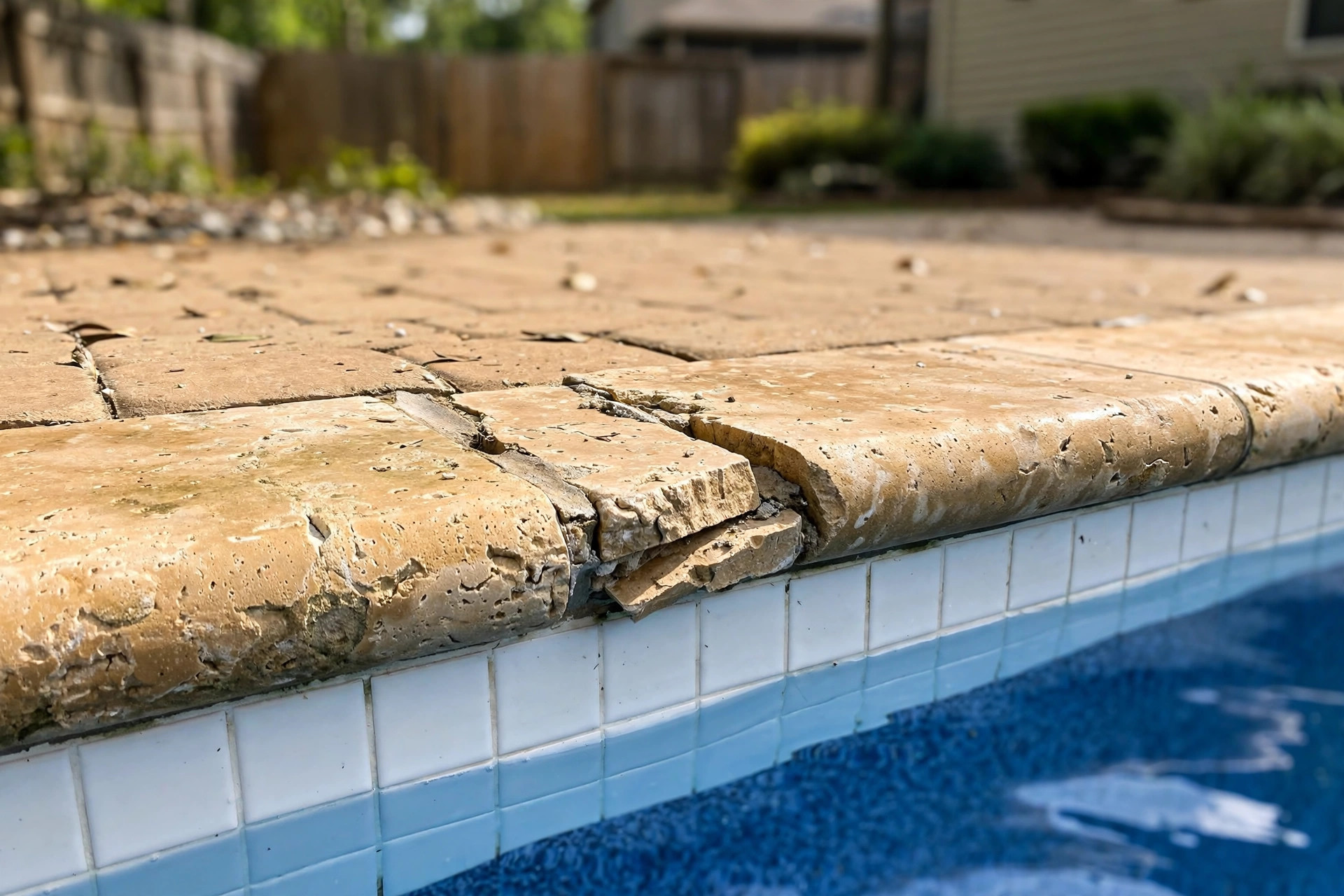
Coping does more than look neat. It caps the pool wall. It keeps water from seeping behind the shell. It gives swimmers a smooth edge to grip and sit on. When mortar cracks or a stone moves, water gets into the joint. Freeze and thaw widen the gap. In warm states, sun and pool chemicals wear down old mortar.
A loose stone is a hazard. A sharp edge can cut a foot or a hand. A raised stone can trip a child. A missing stone lets the deck shift and lets dirt fall in the water. Repair keeps the pool safe and holds up the deck. It also protects the bond beam, the thick concrete top of the pool wall. Fixing one or two stones is a small job. Waiting until ten stones move makes it a large one.
What to Look For Before You Start: How to Repair Pool Coping Stones
Walk the pool edge in spring or fall. Look at each stone and each joint.
Signs of Damage
– Hairline cracks in the mortar between stones. – Stones that rock when you press them. – Mortar that crumbles when you poke it with a screwdriver. – Stains on the pool wall just below the coping, which can mean water is passing through. – Gaps where the coping meets the deck. – A hollow sound when you tap a stone with a rubber mallet.
Mark loose stones with chalk. Count how many need work. One or two stones is a do-it-yourself job. If more than a third of the coping is loose, or the pool wall itself is cracked, call a pool builder. The pool care experts at Swim University note that steady leaks and shifting decks often point to deeper trouble that needs a pro.
Tools and Materials
You can find most of these at a home center like Home Depot or Lowe’s:
– Safety glasses, work gloves, and a dust mask. – Cold chisel and a small hammer, or an oscillating tool with a grout blade. – Wire brush and a stiff broom. – Rubber mallet. – Margin trowel and a pointing trowel. – Bucket for mixing. – Mortar mix made for outdoor use, or a polymer-modified thinset for resetting stones. – Concrete bonding agent. – Replacement coping stones that match the size and color of the old ones. – Backer rod or foam strips for wide joints, if your pool uses them. – A garden hose for rinsing. – Masking tape to protect the tile line.
Pool supply stores such as Leslie’s Pool Supplies and Pool Warehouse also carry pool-safe adhesives and replacement stone for common coping styles.
Types of Repairs and Options
Not every coping problem needs the same fix. Match the method to the damage.
Repointing Mortar Joints
Repointing means digging out bad mortar and packing in new mortar. It suits joints that are cracked or crumbling while the stones sit firm. It is the simplest repair. It costs the least. It can add many years to the coping.
Resetting Loose Stones
A stone that rocks but is whole can be reset. You lift the stone, clean the old mortar off its base, spread a fresh mortar bed, and set the stone back in place. This fix works well for two or three loose stones. It does not work if the stone itself is cracked through.
Replacing Broken Stones
A stone split in two or with a chipped face must come out. You fit a new stone of the same size and finish. Many pools use bullnose, square edge, or cantilever coping. Take a photo of the old stone to the store so the match is right. Natural stone, brick, and precast concrete are the common coping types. Precast units are the easiest to match. Natural stone needs care with color and thickness.
Some owners also use a two-part epoxy adhesive for small chip repairs. Epoxy holds fast in wet areas. It is best for tiny chips, not for full resets. For large areas, mortar is the right choice.
How to Repair Pool Coping Stones Step by Step
Work in mild weather. Mortar sets best between 50 and 90 degrees. Keep the pool pump running so dust does not settle in the water.
1. Mark and clear the area. Mark each loose stone with chalk. Brush off leaves and dirt. Lay masking tape along the tile line below the coping to protect it.
2. Remove bad mortar. Put on safety glasses and a dust mask. Use the cold chisel or grout blade to cut out loose mortar to a depth of about half an inch. Do not cut into the pool tile. Brush out dust with the wire brush and rinse the joint with the hose. Let it dry to a damp state, not soaking wet.
3. Lift loose stones. Slide a thin trowel under the stone edge and lift it free. Set the stone aside. Scrape the old mortar from the pool wall top and the stone base. Brush both clean. If the base is dusty, paint on a thin coat of bonding agent.
4. Mix the mortar. Mix small batches in the bucket. It should hold its shape like soft clay. If it is soupy, it will shrink and crack. If it is too dry, it will not bond. Use clean water and follow the bag directions.
5. Set the stone. Spread a full bed of mortar on the pool wall top, about as thick as the old bed. Press the stone into place. Tap it down with the rubber mallet. Check that it is level with its neighbors and that the nose lines up with the pool edge. Add or remove mortar to fix the height.
6. Fill the joints. Pack mortar into the joints around the stone with the pointing trowel. Push it in deep. Scrape off extra mortar so the joint sits just below the stone face. A slightly recessed joint sheds water well.
7. Tool and clean. Smooth the joints with a damp sponge or a joint tool. Wipe mortar haze off the stone faces before it sets. Remove the masking tape.
8. Cure the work. Keep the new mortar damp for two to three days. Cover it with damp burlap or mist it with the hose a few times a day. Do not let swimmers stand on the new stones for a full week. Do not drain the pool to do this work; the water braces the pool walls.
For a step-by-step photo reference of similar masonry work, This Old House and Family Handyman publish clear repair guides for outdoor stone and brick.
Cost and Price
Small repairs cost little in materials. A bag of mortar mix runs a few dollars. A tube of bonding agent and a trowel add a small sum. Most do-it-yourself repointing jobs cost under one hundred dollars in supplies, plus the cost of any new stones. A single precast coping stone may cost a few dollars. A natural stone unit can cost much more, depending on type.
Hired work costs more. A mason may charge a few hundred dollars to reset a short run of coping. A full coping replacement on an average pool can run into the thousands. Prices move with labor rates in your area and with the stone type. Get two or three written quotes for large jobs. Ask if the quote covers the joint sealant and the deck edge, not just the stones.
Keep in mind that waiting raises the cost. Water that enters loose joints can rot the bond beam and stain the pool shell. Early repair is the cheap repair.
Care and Upkeep
Once the repair is done, simple habits keep the coping sound.
– Rinse the coping edge when you brush the pool. Salt and chemicals wear down mortar over time. A quick rinse with the hose helps. – Keep the pool water level right. Low water lets sun bake the tile line and the coping base. – Watch the joints each spring. Touch up small cracks before they grow. – Keep the deck caulked where it meets the coping. A sound seal keeps rain from running under the stones. – Trim plants whose roots push against the deck. Roots can lift the deck and pull the coping out of line.
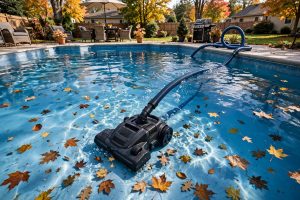
Owners who keep the rest of the pool clean save the coping too. A pool kept clear with a good automatic pool vacuum stays cleaner, and less grit and chemistry stress lands on the edge. The same steady care that keeps a hot tub for a small backyard running well applies to pool edges: check often and fix small faults fast. In cold months, proper hot tub insulation for winter is a reminder that freeze and thaw is the enemy of all outdoor masonry, coping included. Spa makers like Hot Spring stress winter prep for the same reason, and guides on The Spruce note that ice is the top killer of mortar joints. If you live where winters bite, make sure the coping drains freely and no water pools on the stones.
Safety
Pool coping work calls for basic care.
– Wear safety glasses when chipping mortar. Chips fly far. – Wear a dust mask when cutting or mixing dry mortar. – Wear gloves. Wet mortar burns skin over time. Rinse hands at once if mortar touches them. – Keep children and pets away from the work area. Loose stones can slip. – Keep tools off the pool deck edge so no one trips. – The U.S. Consumer Product Safety Commission reminds pool owners that sharp or broken edges around pools can injure swimmers, so treat any jagged stone as urgent.
Work from the deck side when you can. Do not lean far over the water with power tools. Unplug tools when you change blades.
Frequently Asked Questions
Can I repair pool coping stones myself? Yes, for small jobs. Repointing a few joints or resetting one or two stones is well within the reach of a careful homeowner. You need basic tools and a free weekend. Large jobs, many loose stones, or a cracked pool wall call for a pool builder.
How long does coping mortar take to cure? Mortar firms up in a day but cures over a week. Keep it damp for two to three days. Keep foot traffic off the new stones for seven days. Full strength comes at about 28 days, but the pool is safe to use after the first week if the stones are set.
What mortar should I use for pool coping? Use an outdoor-rated mortar mix or a polymer-modified thinset. It must stand up to water, sun, and pool chemicals. Ask the store for a mix rated for pool or exterior masonry use. Plain indoor mortar will fail fast.
Why do coping stones come loose? Water is the main cause. Rain and pool water enter cracked joints. Freeze and thaw widen the cracks. Ground movement, tree roots, and poor drainage add force. Old age alone also breaks down mortar after many years.
Can I fix coping without draining the pool? Yes. Never drain an inground pool just to fix coping. The water holds the walls in place. All the steps above are done with the pool full. Keep the pump running so dust and debris move to the filter.
How do I match an old coping stone? Take a clear photo and, if you can, a broken piece to the supplier. Note the size, thickness, edge shape, and color. Precast coping often has a brand stamp on the underside. Natural stone matches are harder; bring a sample and expect some color shift.
A Final Word
Learning how to repair pool coping stones is a skill that pays for itself. The work is plain. The tools are few. The cost is small when you act early. Walk your pool edge each season. Fix the loose joint when it is small. Your pool will look better, feel safer, and last longer. And when the damage is past a simple fix, bring in a pro with confidence, because you will know just what the job needs.
References
Family Handyman. (n.d.). DIY home repair and maintenance. https://www.familyhandyman.com Hot Spring Spas. (n.d.). Hot tubs and spas. https://www.hotspring.com Leslie’s Pool Supplies. (n.d.). Pool supplies and equipment. https://www.lesliespool.com Lowe’s. (n.d.). Home improvement products. https://www.lowes.com Pool Warehouse. (n.d.). Pool equipment and supplies. https://www.poolwarehouse.com Swim University. (n.d.). Pool and hot tub care guides. https://www.swimuniversity.com The Home Depot. (n.d.). Home improvement products. https://www.homedepot.com The Spruce. (n.d.). Home and garden advice. https://www.thespruce.com This Old House. (n.d.). Home renovation guidance. https://www.thisoldhouse.com U.S. Consumer Product Safety Commission. (n.d.). Product safety information. https://www.cpsc.gov
Was this guide helpful?

About Jennifer Lee
The My Garden US editorial team writes practical, in-depth home and garden guides for American homeowners — tested advice, no fluff.
You May Also Like
Pool Fence Installation Cost Near Me: A 2026 Homeowner Guide
June 3, 2026 0 views
Best Pool Heater for Inground Pools: A Complete Buyer Guide
July 2, 2026 0 views
The Best Pool for Dogs to Swim: A Simple Guide
March 7, 2026 0 views