
Introduction
This under counter wine fridges american homes guide will help you pick a wine fridge that fits under your counter. Many American homes now keep a small wine fridge in the kitchen or bar area. The unit slides under the counter like a drawer. It keeps reds and whites at the right coolness. It also saves space on the counter top. Before you buy, it helps to know the basics. Size, cooling type, and fit all matter. So does the price. This guide walks through what matters most.
Why It Matters: Under Counter Wine Fridges American Homes Guide
Wine tastes best when it stays at a steady coolness. Heat and light can harm a bottle fast. A kitchen gets warm when you cook. An under counter unit guards against that. It holds a set temperature day and night. Your wine stays ready to pour. You do not need to run to a store for a chilled bottle. Guests can be served in a minute. That is the main joy of the unit.
Space is another reason. Counter space in an American kitchen is precious. A tall wine cabinet eats floor space. A rack on the wall collects heat from the room. An under counter fridge hides inside dead space under the counter. It turns that space into useful storage. Most models hold 24 to 50 bottles. Some hold more. For a home, that range is fine. You keep your favorites on hand without a large cellar.
A third reason is order. Wine bottles roll in a closet. They fall off a shelf. An under counter fridge holds each bottle in a rack. Corks stay wet. Labels stay dry. You can find the bottle you want at a glance.
What to Look For When You Buy
Start with size. Measure the space under your counter. Write down width, height, and depth. Most units are 24 inches wide. Some are 15 inches wide for a narrow spot. Height is often 34 to 35 inches. That fits under a standard 36 inch counter. Depth runs 22 to 24 inches. Leave room at the back for the power cord. Leave room in front so the door opens full. Bring your tape measure to the store. Do not guess.
Next, look at cooling zones. A single zone keeps one temperature. That suits homes that drink mostly red or mostly white. A dual zone keeps two temperatures. The top can hold whites at 45 degrees. The bottom can hold reds at 60 degrees. Dual zone units cost more. They suit homes that enjoy both kinds of wine. Decide what your home drinks most. For help with cooling basics, the Energy Star program has guidance on efficient refrigeration at ENERGY STAR.
Check the noise level. The unit sits where you cook and talk. A loud hum will bother you. Look for a rating under 40 decibels. That is about the sound of a quiet room. Compressor models cool well but make more noise. Thermoelectric models run silent but cool less hard. In a warm kitchen, a compressor model is the safer pick. If quiet matters most, read reviews about noise before you buy. Independent test labs like Consumer Reports publish ratings on home appliances.
Look at the shelving. Wood racks look fine and hold bottles soft. Metal racks last long and slide smooth. Make sure the racks fit your bottle sizes. Fat champagne bottles may not fit a standard slot. Some racks can be pulled out for tall bottles. That is a nice touch for a home bar.
Check the door. A glass door shows your wine. It also lets in some light. Pick tinted glass with UV block. A solid door blocks all light. It keeps wine safer. It hides the bottles from view. Pick the style that suits your kitchen. A lock is useful if you have young children in the home.
Ventilation matters for built in units. A front vent lets the unit sit flush in cabinetry. A rear vent needs open space behind it. For an under counter slot, you need a front vent model. If you place a rear vent model under a counter, it will overheat. The motor will die early. Check the manual before you buy. This detail is easy to miss.
Types and Options
Under counter wine fridges come in a few main types. Each suits a different home.
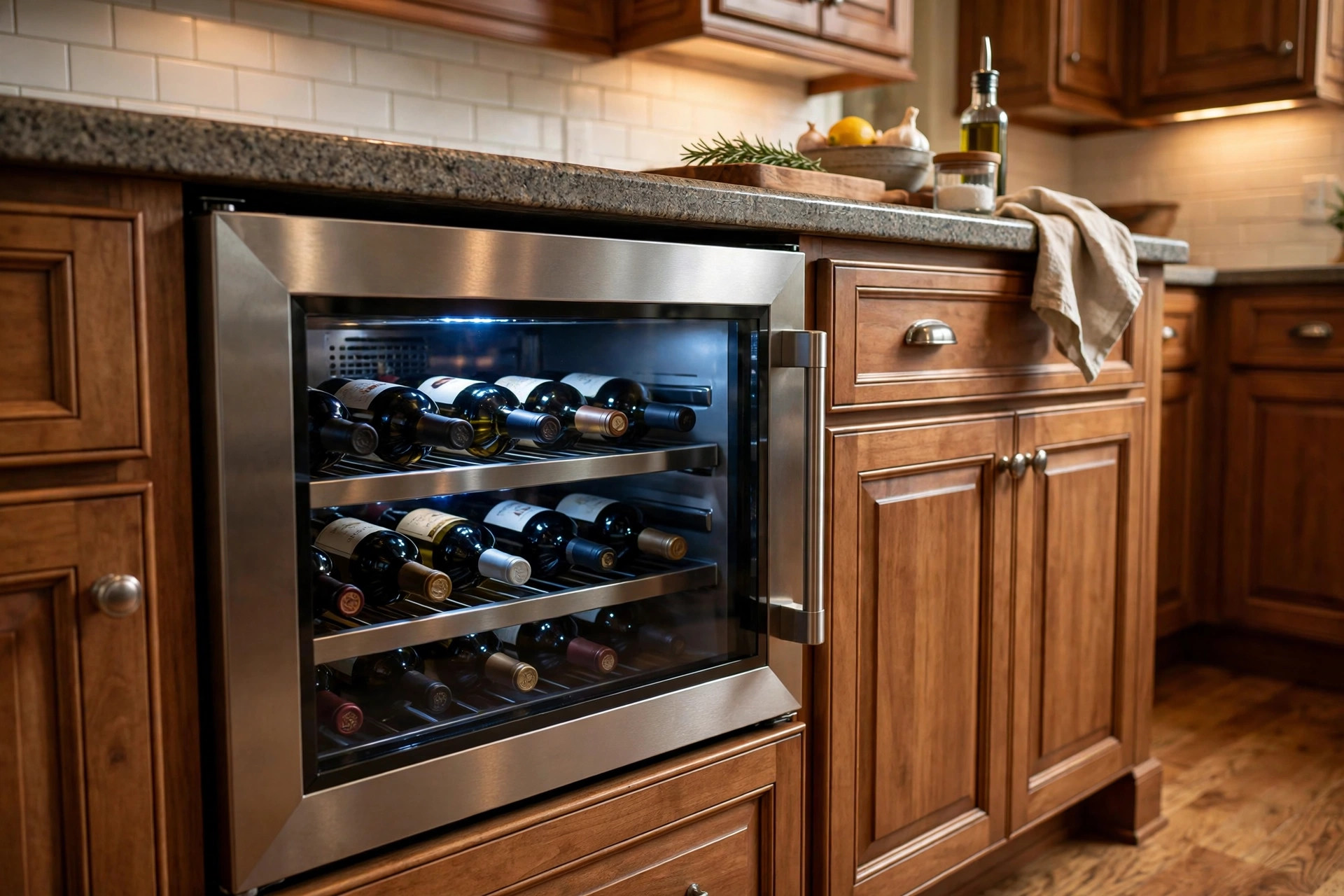
Built in models are made to sit under a counter. They have a front vent. The door can sit flush with your cabinets. Many take a custom panel on the door. The panel matches your cabinets. The unit hides in plain sight. These cost more than free standing models. They look best in a finished kitchen.
Free standing models need open air around them. They cost less. You can place one at the end of a counter or in a bar nook. You cannot push it tight under a counter unless it vents from the front. Some free standing models look like a small bar fridge. They work fine in a game room or a den.
Single zone models hold one set temperature. They are simple and often cheaper. They suit a home that keeps one kind of wine.
Dual zone models hold two set temperatures. They have two doors or a split inside. They suit homes that keep both red and white. They take more power. They cost more up front. For a couple that drinks both, the extra cost is worth it.
Tall slim models fit a 15 inch space. They hold 20 to 30 bottles. They suit small kitchens and apartments. Standard 24 inch models hold 40 to 60 bottles. They suit most family kitchens. Large models can hold 80 or more. They suit a home with a real wine hobby.
Finish options run wide. Stainless steel is the most common. It matches modern kitchens. Black fits a dark bar. Some brands offer panel ready fronts. Those take your own cabinet door. Large appliance makers such as GE Appliances and Whirlpool offer built in options worth a look. Bosch also sells compact under counter cooling units with a clean look.
Cost and Price
Price runs from low to high. A small free standing unit may cost 200 to 350 dollars. A standard built in 24 inch model may cost 500 to 1,200 dollars. A high end dual zone model with wood racks may cost 1,500 to 3,000 dollars. Panel ready and custom sizes cost the most.
What drives the price? Capacity is one driver. More bottles means more cost. Dual zones add cost. Compressor quality adds cost. Brand name adds cost. A well known brand may charge more for the same size. Service and warranty also add value. A five year compressor warranty is worth real money.
Running cost is low. A small wine fridge uses about 100 to 300 watts when it runs. It does not run all day. Most homes add 5 to 15 dollars a month to the power bill. Energy efficient models use less. A model with a good seal keeps costs down. Home improvement stores like Lowe’s and The Home Depot list running cost facts on many product pages.
Shop for sales. Kitchen remodel seasons bring deals. Holiday weekends bring deals. Floor models can be a good buy if the unit is new. Check the warranty before you take a floor model. Ask for the manual. Make sure all racks are in the box.
Do not skip the warranty. A wine fridge should last 8 to 12 years. A one year parts warranty is the least to accept. Three to five years on the compressor is better.
Care and Upkeep
Care is simple. Keep the outside clean with a soft cloth. Wipe the glass door now and then. Do not use harsh sprays on the seal. A torn seal lets warm air in. That makes the motor run too much. Check the seal once a year. Press it with your finger. It should spring back.
Clean the inside twice a year. Take out the bottles and racks. Wipe the walls with a soft cloth and warm water. Dry all parts before you put them back. Do not use bleach inside the unit. Let the unit air out for an hour with the door open.
Keep the front vent clear. Dust builds up in the grill. Vacuum it with a brush tool twice a year. A blocked vent makes the unit run hot. That shortens its life.
Mind the temperature. Do not open the door all day. Each open door lets warm air in. Put bottles back right after you pour. In summer, check the display once a week. Make sure it holds the set point. If it drifts more than 3 degrees, call for service.
Do not pack the unit tight. Air must move around the bottles. Leave a small gap between rows. If you buy new wine, add it a few bottles at a time. A warm bottle placed in the unit will raise the temp for a few hours. That is normal. The unit will cool back down.
Store bottles on their sides. The wine must touch the cork. A dry cork shrinks. Air gets in. The wine spoils.
For care tips on home appliances in general, This Old House offers clear guides written for home owners.
Safety
Safety starts with the outlet. Plug the unit into its own outlet if you can. Do not plug it into a power strip with other large machines. Push the plug in all the way. If the cord feels hot, unplug the unit and call for help.
Keep the unit level. A tipped unit can tip over. Small feet under most models let you level it. Use a small level tool. A level unit also keeps the door seal tight.
Water and power do not mix. Do not place the unit where a sink can splash it. Wipe spills at once. If water pools under the unit, unplug it and dry the floor.
Keep the unit away from heat. Do not place it next to an oven or a stove. Heat makes it work too hard. The back of the unit gives off warm air. Give that air room to leave.
A lock keeps children out. Wine is not for children. Some units come with a small key lock. Use it if young ones live in the home. Teach older children that the unit is not a toy.
If the unit stops cooling, move the wine to a cool dark spot. Do not leave wine in a dead unit for days. Call a service shop. Most repairs take a day or two. Do not try to fix the coolant lines yourself.
Frequently Asked Questions
How cold should I set an under counter wine fridge? Set whites near 45 to 50 degrees. Set reds near 55 to 62 degrees. If you have a single zone, pick a middle point near 55 degrees. That is a safe home setting for most wines. Sparkling wine likes it colder, near 42 degrees.
Can I put a free standing wine fridge under my counter? Only if it vents from the front. Most free standing models vent from the back or sides. They need open air. Pushing one under a counter will trap heat. The unit will fail early. Buy a built in model for under counter use.
How many bottles fit in a standard under counter wine fridge? A 24 inch unit holds about 40 to 60 standard bottles. The count drops if you store fat champagne bottles. A 15 inch slim unit holds about 20 to 30 bottles. Count your collection before you buy.
Is a dual zone wine fridge worth the extra cost? It is worth it if your home drinks both red and white wine. Two zones keep each kind at its best coolness. If you drink only one kind, a single zone saves money and power.
Will a wine fridge make my power bill rise much? Most homes see a rise of 5 to 15 dollars a month. Energy efficient models use less. Keep the door shut and the vent clear. That keeps the bill low.
How long do under counter wine fridges last? Most last 8 to 12 years with basic care. The compressor is the part that fails first. A good warranty on the compressor adds peace of mind. Clean the vent and check the seal each year to get the most years out of the unit.
A Short Final Word
An under counter wine fridge is a small luxury that pays off each week. It keeps your wine at the right coolness. It saves counter space. It keeps your collection in good order. Measure your space first. Pick single or dual zone with care. Check the noise level and the vent type. Buy from a maker that stands behind its warranty. Then keep it clean and let it do its quiet work.
For more kitchen planning ideas, see our guides on stainless range hoods, gas kitchen ranges, and french door refrigerators. If you want style notes for your kitchen remodel, The Spruce has clear photo guides for home owners.
References
Bosch. (n.d.). Home appliances. https://www.bosch-home.com Consumer Reports. (n.d.). Product reviews and ratings. https://www.consumerreports.org ENERGY STAR. (n.d.). Energy efficient products. https://www.energystar.gov GE Appliances. (n.d.). Kitchen and home appliances. https://www.geappliances.com Lowe’s. (n.d.). Home improvement products. https://www.lowes.com The Home Depot. (n.d.). Home improvement products. https://www.homedepot.com The Spruce. (n.d.). Home and garden advice. https://www.thespruce.com This Old House. (n.d.). Home renovation guidance. https://www.thisoldhouse.com Whirlpool. (n.d.). Home appliances. https://www.whirlpool.com
Was this guide helpful?

About Emily Rodriguez
The My Garden US editorial team writes practical, in-depth home and garden guides for American homeowners — tested advice, no fluff.
You May Also Like

Garbage Disposal Installation in Florida Homes USA: A Full Guide
May 11, 2026 0 views
Undermount Stainless Sinks: A Guide for American Homes
April 23, 2026 0 views
Gas Kitchen Ranges Buying Guide USA: What to Know Before You Buy
May 27, 2026 0 views