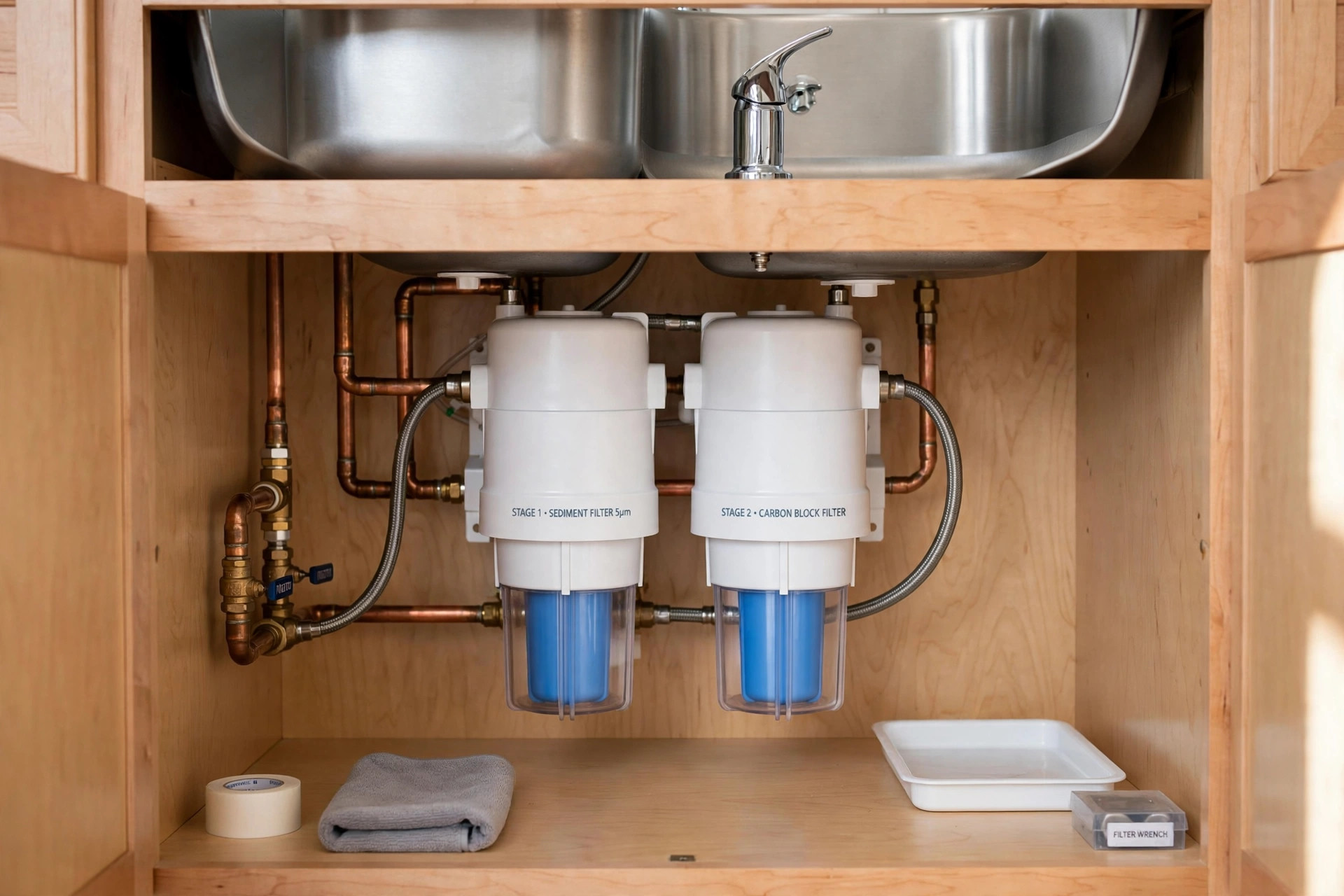

Many families across the country ask the same question: under sink filters where to buy usa shoppers trust, and which stores carry the right model at a fair price. The answer is not hard, but it takes a little care. An under sink water filter sits inside the cabinet below your kitchen sink. It connects to the cold water line and feeds clean water to a small separate faucet. The unit stays out of sight. It does not take counter space. It improves taste and cuts down on many common impurities found in tap water. This guide walks through the main types, what to look for, where to buy, what to pay, and how to keep the unit in good working order.
Why Clean Tap Water Matters
Tap water in the United States is treated and tested by law. Even so, it is not the same everywhere. Some city supplies carry chlorine taste and odor. Some older homes have lead in pipes or fittings. Well water can carry sediment, iron, and sulfur. A point-of-use filter under the sink is one simple way to improve the water your family drinks and cooks with. It costs less than bottled water over time. It also cuts down on plastic waste from bottles and jugs.
Health is the first reason people buy these units. Taste is the second. A good carbon filter removes the flat chemical taste of chlorine. It leaves water clean and mild. For families with small children, certified lead reduction brings peace of mind. Many homeowners report that they drink more water once it tastes better. That small change adds up over the years.
What to Look for Before You Buy: Under Sink Filters Where to Buy Usa
The market holds many models. A few facts matter more than brand names. Read them before you spend.
Filter Type and What It Removes
Carbon block filters are the most common choice. They reduce chlorine taste and odor and many chemicals. Reverse osmosis units go further. They push water through a fine membrane and remove a wide range of dissolved solids, including lead, fluoride, and many metals. Dual-stage units pair a pre-filter with a carbon block for stronger protection. Pick the type that matches your water test results, not the one with the biggest box.
Certification Marks
Look for the NSF mark. NSF International tests filters to set standards. Standard 42 covers taste and odor. Standard 53 covers health effects, including lead. Standard 58 covers reverse osmosis units. A unit with a listed standard was tested in a lab. A unit without one was not. Reviewers at Consumer Reports test water filters in their own labs and publish ratings that help shoppers compare models side by side.
Size and Fit Under Your Cabinet
Measure the space under your sink. Note the height, width, and depth. Leave room for filter changes. Some cartridges twist off from below. They need a few inches of clear space. Others slide out from the front. Take a tape measure with you to the store, or write down the numbers before you shop online. A unit that does not fit the cabinet is a unit you will return.
Flow Rate and Daily Use
Flow rate tells you how fast filtered water comes out of the faucet. A rate near half a gallon per minute feels fine for filling a glass. Lower rates feel slow and test patience. Homes that cook a lot or fill large pots may want a unit with a storage tank, which is common with reverse osmosis systems. Tank models deliver a quick burst of water, then refill on their own.
Types of Under Sink Water Filters
Four main types cover most homes. Each has a place.
Single-stage carbon filters are simple and low cost. One cartridge does the work. They handle chlorine taste and odor well. They suit renters and small homes where the water is already safe but tastes off.
Dual-stage and multi-stage filters add layers. A sediment pre-filter catches rust and sand. A carbon block finishes the job. These suit homes on well water or older city lines.
Reverse osmosis systems give the strongest treatment. They use several stages and a membrane. They remove a broad list of contaminants. They cost more up front and need more space. They also waste some water in the process. Homes with known problems, such as high lead or heavy metals, often choose this type. Guides at The Spruce explain the trade-offs in plain terms for first-time buyers.
Inline filters are small units that sit on a single line, such as the cold feed to a refrigerator ice maker. They are not full drinking systems. They are a cheap add-on for one appliance.
Where to Buy Under Sink Filters in the USA
Now the core question: under sink filters where to buy usa stores and sites that carry real stock and fair prices. You have three solid paths. Each works well for a different kind of buyer.
Home Improvement Stores
Large home improvement chains carry the widest shelf stock. You can see the box, read the specs, and take the unit home the same day. Staff in the plumbing aisle can answer basic questions. Both The Home Depot and Lowe’s stock major filter brands in store and online. Prices on their sites often match the shelf. Check the store locator before you drive over, since stock varies by location.
Appliance Brand Stores
Major appliance makers sell filtration through their own sites. You can buy direct and get factory parts for future cartridge changes. Whirlpool offers filtration products alongside its appliance lines. Bosch sells home water products through its own channels as well. Buying from the brand site makes warranty claims simple. Keep the order number and model number in a safe place.
Advice and Reviews Before You Decide
Before you buy, read at least one trusted review source. This Old House publishes hands-on guides to plumbing projects, including water filtration, written in clear language for homeowners. Energy Star covers the efficient home from the federal side and is worth a visit when you are planning any kitchen upgrade. When you plan a larger project, you may also want to read our guides to stainless range hoods, french door refrigerators, and undermount stainless sinks to keep the whole kitchen in step.
Cost and Price
Prices run wide. A basic single-stage carbon unit costs about 40 to 80 dollars. A good dual-stage system runs 100 to 200 dollars. A reverse osmosis unit with a tank runs 180 to 400 dollars. High-end multi-stage models can pass 500 dollars. The purchase price is only half the story. Cartridges must be replaced. A carbon cartridge lasts six to twelve months and costs 20 to 60 dollars. Reverse osmosis membranes last two to three years and cost 40 to 100 dollars. Add up five years of cartridges before you pick. A cheap unit with costly cartridges is no bargain.
Installation adds cost if you hire help. A plumber charges 100 to 250 dollars for a basic under sink install in most areas. Many homeowners do it themselves in under two hours with a wrench and a bucket. Most kits include the parts and a plain instruction sheet.
Care and Upkeep
A filter only works if you change the cartridge on time. Old cartridges lose power. Some grow bacteria if left too long. Mark the change date on a calendar. Many units have a small timer or a sticker to remind you. Write the model number of the cartridge inside the cabinet door with a marker. That makes reordering easy.
Once a year, look under the sink with a flashlight. Check for slow drips at the connections. Feel the fittings with a dry finger. Tighten any joint that weeps. If a reverse osmosis unit slows down, the membrane may be due for change. If water tastes off again, the carbon cartridge is spent. Do not wait. A spent filter can release trapped material back into the water.
Keep spare cartridges in a dry closet, not under the sink where they can get wet. Buy cartridges from the same maker as the unit when you can. Off-brand cartridges may fit but may not carry the same certification.
Safety
Water filters are safe when used right. A few rules keep them that way. First, buy only certified units for health claims. A unit that says it removes lead should carry NSF Standard 53. Take no claim at face value without the mark. Second, follow the install steps in order. Shut off the cold water valve before you cut into a line. Open the faucet to release pressure. Keep a towel and a bucket ready. Third, flush the new cartridge as the manual says. New carbon sheds fine dust. Run water for five minutes before you drink it.
If your home was built before 1986, ask your water utility about lead testing. Some cities test for free. A filter helps, but it is not a fix for bad pipes. A licensed plumber should check the whole line if lead levels are high. When in doubt, call one.
FAQ
How long does an under sink filter last? The housing lasts many years. The cartridges do the work and need change on schedule. Carbon cartridges last six to twelve months. Reverse osmosis membranes last two to three years. Always follow the maker’s schedule, not your memory.
Can I install an under sink filter myself? Most homeowners can. The kit includes fittings and steps. You need basic tools and about one to two hours. If you have never worked with water lines, watch a guide first or hire a plumber. A bad joint leaks.
Do under sink filters remove lead? Some do. Look for NSF Standard 53 on the box or spec sheet. That mark means the unit was tested for lead reduction. Units without it may not remove lead at all. Test your water first so you buy the right type.
What is better, carbon or reverse osmosis? Carbon costs less and keeps minerals in the water. Reverse osmosis cleans more deeply but costs more and needs more space. For taste and odor, carbon is enough. For known contamination, reverse osmosis is the stronger choice.
How much do replacement cartridges cost? Carbon cartridges cost 20 to 60 dollars. Reverse osmosis membrane sets cost 40 to 100 dollars. Budget one to two cartridge changes per year for carbon units. Over five years, cartridges often cost more than the unit itself. Set a small yearly budget for cartridges when you plan the purchase. It keeps the true cost in plain sight and stops surprises later.
Where is the best place to buy replacement cartridges? Buy from the same store or brand site where you bought the unit. Both The Home Depot and Lowe’s stock common cartridges. The brand’s own site, such as Whirlpool, carries exact-fit parts. Keep the model number handy when you order.
A Short Final Word
An under sink filter is a quiet upgrade. It hides in the cabinet and works every day. Take time to test your water, measure your space, and check the certification marks. Then buy from a store you trust, whether that is a home improvement chain, a brand site, or a local shop. Change the cartridges on time. Do that much, and your kitchen will pour clean, good-tasting water for years to come.
References
Bosch. (n.d.). Home appliances. https://www.bosch-home.com Consumer Reports. (n.d.). Product reviews and ratings. https://www.consumerreports.org ENERGY STAR. (n.d.). Energy efficient products. https://www.energystar.gov Lowe’s. (n.d.). Home improvement products. https://www.lowes.com The Home Depot. (n.d.). Home improvement products. https://www.homedepot.com The Spruce. (n.d.). Home and garden advice. https://www.thespruce.com This Old House. (n.d.). Home renovation guidance. https://www.thisoldhouse.com Whirlpool. (n.d.). Home appliances. https://www.whirlpool.com
Was this guide helpful?

About Lisa Anderson
The My Garden US editorial team writes practical, in-depth home and garden guides for American homeowners — tested advice, no fluff.
You May Also Like
Dishwasher Third Rack Buying Guide for American Homes
April 2, 2026 0 views
French Door Refrigerators for Sale USA: A Complete Buyer’s Guide
August 22, 2026 0 views
Undermount Stainless Sinks: A Guide for American Homes
April 23, 2026 0 views