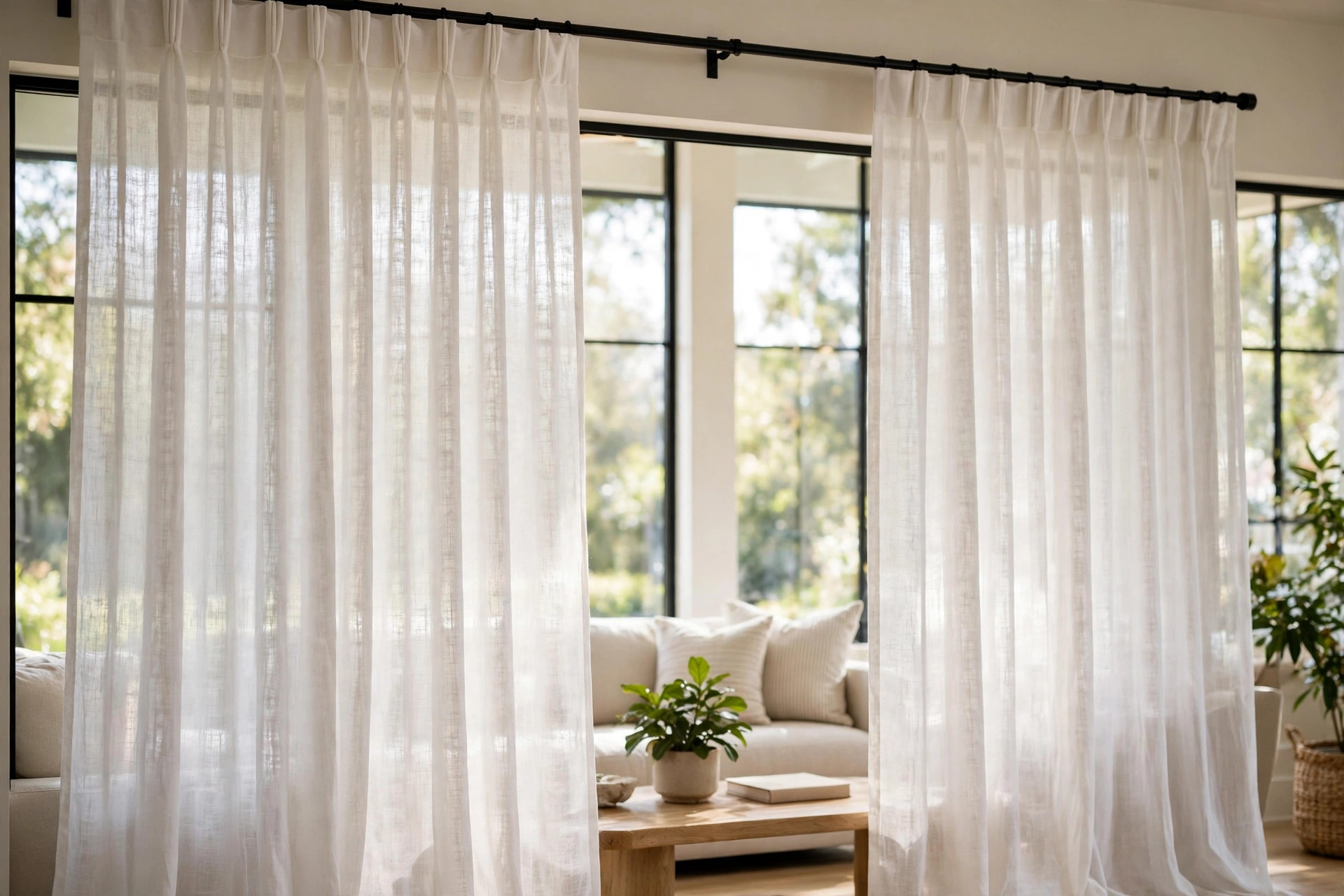
This luxury white linen curtain panels buying guide is written for the homeowner who wants soft, natural window dressing with a timeless look. White linen is one of the oldest fabrics in home furnishing, and it remains one of the most loved. It filters light, moves gently in a breeze, and gives a room a quiet, finished feel. But not all linen panels are equal. Fabric weight, weave, lining, and finish vary a great deal from one brand to another, and these details decide how the curtains hang, how they wash, and how long they last. This guide walks through every point worth checking before you buy.
Why White Linen Curtains Matter
White is the most forgiving color in window treatment. It suits almost every paint color, every wood tone, and every style of furniture. Unlike bold patterns that age fast, white linen keeps its charm year after year. Linen itself is made from flax, a plant fiber that is strong and breathable. The fabric has a slight natural texture that catches light in a pleasant way, so the curtains never look flat or dull.
White linen panels also shape the light in a room. They soften harsh morning sun and spread it evenly across the floor and walls. Rooms with east or south facing windows benefit most, since these panels cut glare without making the space dark. In small rooms, white curtains make the walls feel farther apart, which is why decorators often suggest them for apartments and guest bedrooms. Homeowners who want a full survey of window options often begin with window covering guides before narrowing their choice to linen.
What to Look For Before You Buy: Luxury White Linen Curtain Panels Buying Guide
Fabric Weight
Linen is sold in different weights, usually listed in ounces per square yard or in grams per square meter. Lightweight linen, around 5 to 6 ounces, drapes loosely and lets a fair amount of light through. Medium weight, near 8 ounces, is the most common for ready-made curtain panels and gives a fuller fold. Heavyweight linen, 10 ounces and above, falls in deep, straight pleats and blocks more light. The home project library notes that heavier natural fabrics also resist wrinkling better than thin ones.
True Linen vs. Linen Blend
True linen is 100 percent flax fiber. It has the classic nubby texture and gets softer with each wash. Linen blends mix flax with cotton, rayon, or polyester. Blends are usually cheaper and wrinkle less, but they may pill sooner and can look less rich. Labels in the United States must state the fiber content, so read the fine print before you order. Advice on reading product labels from federal consumer resources can help you tell marketing claims from real facts.
Weave and Finish
An open, loose weave gives a sheer, airy look. A tighter weave gives more privacy and better sun control. Some panels are stonewashed or enzyme washed for a soft, broken-in feel. This softening process is harmless to the fabric and is often a mark of a quality maker. Avoid panels with a stiff sizing that smells strongly of chemicals, since that coating usually washes out and leaves the fabric limp.
Types and Options
Unlined Panels
Unlined white linen panels are the classic choice. They let light pass freely and show the texture of the weave on both sides. They work best in rooms where privacy is not a concern, such as high windows or windows facing a garden. They are also the easiest to wash at home.
Lined Panels
Lined panels have a thin cotton or polyester backing sewn to the linen. The lining adds body, improves drape, and protects the linen from sun damage. Lined panels also give better privacy in the evening. In bedrooms, a blackout lining is worth the extra cost, since linen alone will not keep a room dark at night. Many curtain hardware guides remind buyers to choose a rod strong enough for the added weight of lining.
Pleated, Tab-Top, and Grommet Styles
Rod pocket panels gather softly and give a casual look. Pinch pleats look tailored and formal. Back tabs hide the rod for a clean line. Grommets, the metal rings along the top, make the panels easy to slide open and shut, which suits windows that are used every day. Each style changes the amount of fabric needed, so check the maker’s fullness guidance before ordering.
Custom vs. Ready-Made
Ready-made panels come in standard sizes, most often 52 inches wide by 84, 96, or 108 inches long. Custom panels are cut to your exact window and give a perfect finish, but they cost two to three times more and take weeks to make. For most rooms, ready-made panels in a slightly longer length work well if the rod is hung high. If your windows are unusual in width or height, custom may be the only answer. Style ideas from room design articles can help you decide whether custom details are worth the price in your space.
How to Measure and Hang
Good measurement matters more than the brand you choose. Measure the window width, then double it to get the total panel width for a full, gathered look. For a calm, flat look, one and a half times the width is enough. Mount the rod 4 to 6 inches above the window frame and extend it 3 to 6 inches past each side so the panels stack on the wall when open. This trick makes windows look larger and lets in the most light.
Panel length is a matter of taste. Panels that just kiss the floor look neat and modern. Panels that puddle slightly on the floor look romantic but collect dust and can trip children and pets. For homes with small children, panels that end just above the sill are the safest choice. Step-by-step measuring instructions from home guides walk through both inside and outside mount methods.
Cost and Price
Ready-made luxury white linen curtain panels sell for about 40 to 150 dollars per panel, depending on length, weight, and brand. A full window with two panels usually costs 80 to 300 dollars. Lined versions add 20 to 60 dollars per panel. Custom panels start near 150 dollars per panel and can pass 400 dollars for wide or lined versions.
Price is not always a guide to quality, so compare the fabric weight and the return policy before you judge a deal. A 40 dollar panel in 100 percent washed linen may beat a 120 dollar panel in a thin polyester blend. Sale seasons in late winter and early fall often bring the best prices on home textiles. Shoppers comparing costs across brands may find online home store catalogs useful for a broad price overview, and furniture retailer pages often list budget friendly linen options.
Remember that hardware adds to the total. A sturdy rod, brackets, rings, and finials for a wide window can add 30 to 80 dollars. Plan the full budget, not just the panels.
Care and Upkeep
Linen is washable, but it needs a gentle touch. Wash panels in cold water on a gentle cycle with a mild soap. Never use bleach, since it weakens flax fiber and can yellow the white over time. Line drying is best for linen, since high dryer heat causes shrinkage. If you use a dryer, choose low heat and remove the panels while they are slightly damp.
Wrinkles are part of linen’s character, but you can reduce them. Shake the panels out right after washing and hang them at once. A light press with a steam iron on the reverse side smooths stubborn creases. Some owners prefer the lived-in look of light wrinkles, which is a fair choice for a casual room. For deeper cleaning advice, fabric care references from home improvement stores cover linen and other natural fibers.
Sun can fade and weaken white linen over years. Rotating panels between windows, or adding a sheer lining, slows this damage. In very sunny rooms, plan to replace the panels every five to seven years, or choose lined versions from the start.
Safety Notes
Curtain cords are a known danger to young children and pets. Choose cordless styles, wand-operated panels, or tie cords high out of reach. Safety alerts on window cord hazards from the Consumer Product Safety Commission explain the risks in plain terms. Even with cordless panels, keep cribs, beds, and climbable furniture away from windows, since a child can pull on the fabric itself. Check mounting hardware twice a year and tighten any loose brackets.
White fabric also shows dirt sooner than darker colors, so homes near busy roads or in dusty climates should wash panels more often. None of this is a reason to avoid white linen. It is only a reason to care for it well.
Related Buying Guides
If you are comparing different window coverings for your home, these guides may help:
– Zebra Dual Layer Shades Price Comparison USA – Outdoor Patio Curtains Reviews and Buying Guide – Affordable Light Filtering Roller Shades Buying Guide
If you decide that linen is not the right fabric for your needs, expert curtain advice can walk you through cotton, velvet, and synthetic options.
Frequently Asked Questions
Do white linen curtains give privacy during the day?
Yes, for most rooms. Medium weight white linen blocks the view from outside during daylight while still letting light in. At night, when indoor lights are on, the panels turn somewhat see-through. If evening privacy matters, add a lining or use a separate blind behind the panels.
Will white linen turn yellow over time?
It can, if washed in hot water or with bleach, or if left in strong sun for years. Washing in cold water with a gentle soap keeps the white bright. A cup of white vinegar in the rinse cycle can also help hold the color. Linings that face the sun take the damage instead of the linen.
Is 100 percent linen better than a linen blend?
For a luxury look and feel, yes. Pure linen has a richer texture and softens with age. Blends resist wrinkles better and cost less, which suits busy homes. Neither is wrong. Match the choice to your budget and how much ironing you are willing to do.
How many panels do I need for one window?
Two panels are standard for most windows, giving a balanced look on each side. Very wide windows or sliding doors may need three or four panels. Narrow windows can work with a single panel pulled to one side, though the look is less formal.
Can I hang linen curtains in a humid bathroom?
It is not the best choice. Linen absorbs moisture and dries slowly, so a steamy bathroom can lead to mildew on the fabric. If you love the look, choose a short café style panel kept away from the shower, or use a synthetic linen-look fabric instead. Other window treatments for humid rooms handle moisture better.
Do linen curtains need to be ironed after every wash?
Not always. If you hang them while damp and smooth them by hand, most wrinkles fall out as the fabric dries. A quick pass with a hand steamer finishes the job. Deep creases from tight folding may need an iron, used on the back of the fabric.
A Final Word
White linen curtain panels reward the buyer who checks the details. Weigh the fabric, read the fiber label, measure twice, and hang the rod high. Done well, these panels bring light, calm, and quiet luxury to any room, and they do it without shouting for attention. That is the whole point of linen: simple material, honest texture, and a look that never feels out of date.
References
Blinds.com. (n.d.). Window blinds, shades, and shutters. https://www.blinds.com Bob Vila. (n.d.). Home improvement advice. https://www.bobvila.com HGTV. (n.d.). Home and garden ideas. https://www.hgtv.com IKEA. (n.d.). Home furnishings. https://www.ikea.com Lowe’s. (n.d.). Home improvement products. https://www.lowes.com The Home Depot. (n.d.). Home improvement products. https://www.homedepot.com The Spruce. (n.d.). Home and garden advice. https://www.thespruce.com This Old House. (n.d.). Home renovation guidance. https://www.thisoldhouse.com U.S. Consumer Product Safety Commission. (n.d.). Product safety information. https://www.cpsc.gov Wayfair. (n.d.). Furniture and home goods. https://www.wayfair.com
Was this guide helpful?

About Jennifer Lee
The My Garden US editorial team writes practical, in-depth home and garden guides for American homeowners — tested advice, no fluff.