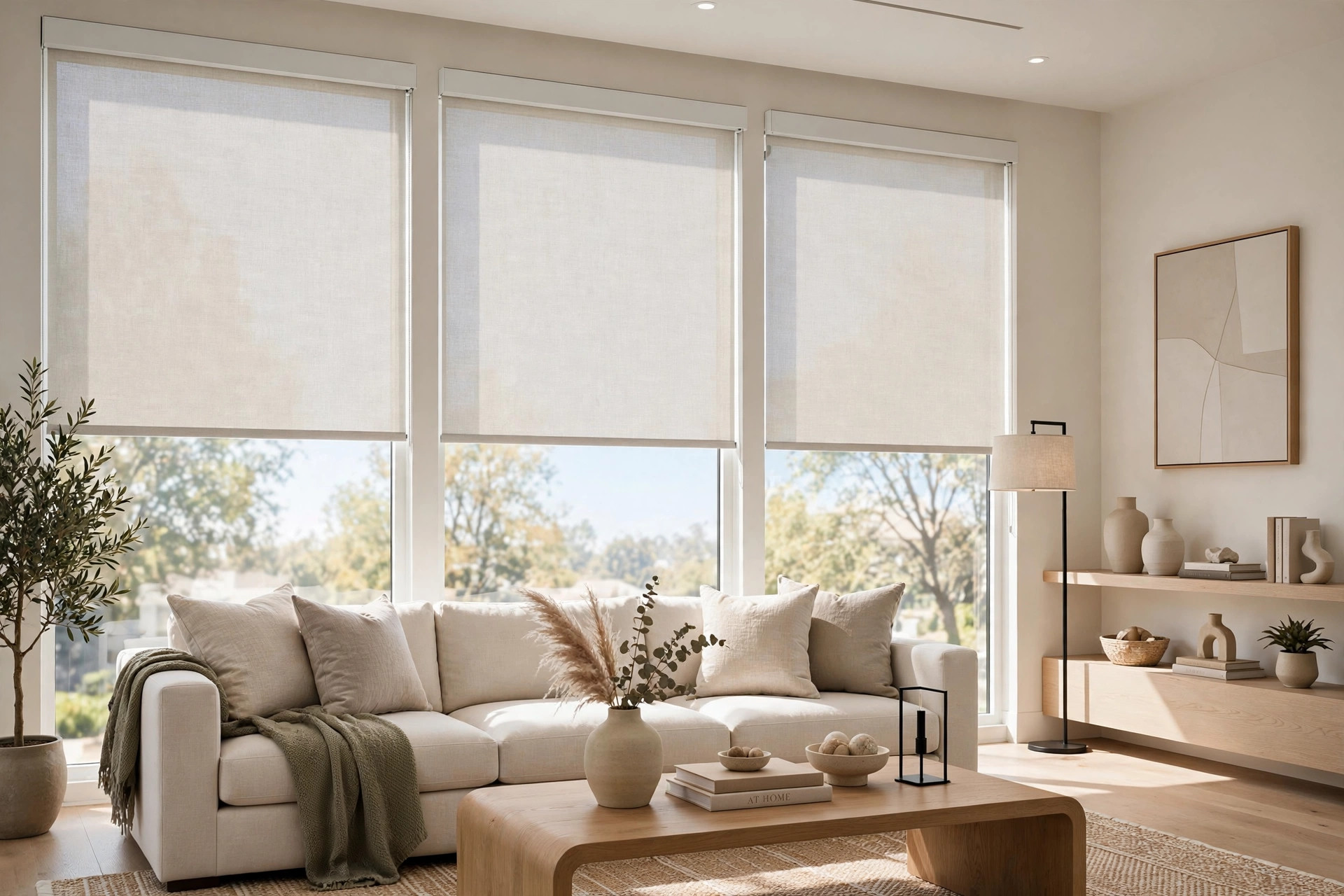

This luxury motorized roller shades buying guide will help you shop with a clear head. A motorized roller shade rolls up and down with a small electric motor. You press a button on a remote, a wall switch, or a phone app, and the shade moves by itself. The luxury models add quiet motors, fine fabrics, and clean finishes that look right in a well-kept home. They cost more than plain shades, but they save daily effort and they last for many years. Before you spend, it helps to know what sets the good ones apart.
Why Motorized Roller Shades Are Worth the Cost
A window shade has one basic job: control light. A luxury motorized shade does that job without you touching it. You can lower every shade in the room at once while you sit on the sofa. You can raise the shades on a tall stairwell window that you could never reach by hand. You can set a timer so shades close at noon in summer, which keeps rooms cool and cuts the load on the air conditioner.
There is also a safety gain. Standard shades use cords or bead chains. Those cords can wrap around the neck of a small child or a pet. Motorized shades have no cords at all. Safety agencies have warned about corded window coverings for many years, and you can read their guidance on the CPSC window covering safety pages. A cordless motorized shade removes the hazard by design, not by a tie-down clip that someone might forget to use.
A third reason is looks. A roller shade has a flat, plain face. When it is up, it hides in a small roll at the top of the window. Nothing hangs down. Nothing swings. In a room with clean lines and simple furniture, that quiet profile suits the space. Many design writers praise this spare look for modern rooms, and you will find ideas for it in the home coverage at HGTV.
Finally, there is the daily comfort of it. Light is one of the strongest forces in a room. Morning glare on a television screen, late sun on a desk, a bedroom that never gets dark enough to sleep: a motorized shade solves each of these with one press. Once you live with it, the manual pull of an old shade feels like a chore you no longer have to do.
What to Look For When You Choose: Luxury Motorized Roller Shades Buying Guide
Shopping is easier when you know the four parts that matter: fabric, motor, power, and control. Judge every shade on these four, and you will not go wrong.
Fabric and Opacity
Fabric decides how much light passes through. Sheer fabrics soften daylight and keep the view. Light-filtering fabrics glow softly and give daytime privacy. Blackout fabrics block nearly all light and are the right pick for bedrooms and media rooms. If you need full darkness for sleep, compare options in a blackout roller shades price comparison before you buy, since blackout fabrics and liners vary widely in price.
Look at the fabric up close before you order. Luxury lines use woven textiles with a tight, even weave and a clean edge. Cheap fabrics can wave or curl at the sides after a season of sun. Ask whether the fabric is treated for sun fade. South and west windows take heavy ultraviolet light, and a shade that fades in two years is no bargain. Neutral tones hide dust and match most rooms.
The Motor
The motor is the heart of the shade. Luxury motors are quiet. You should hear only a low hum when the shade moves. Loud, grinding motors belong on cheap shades. Ask for the sound rating in decibels if the maker gives one. A good motor moves at a steady speed and holds its stop points for years without drifting.
Power Source
Most luxury motorized shades run on one of three power types. Rechargeable battery wands are the most common. A slim tube battery hides behind the shade headrail and can run six to twelve months on one charge, depending on shade size and daily use. You charge it with a cord a few times a year. This is the best choice when you cannot run new wires.
Hardwired shades connect to the home electrical system. An electrician runs low-voltage wire to each window during a remodel. There are no batteries to charge, and the shades always have power. This is the cleanest long-term setup, but it needs planning before walls are closed.
Solar chargers are a third option. A small solar panel sits on the window glass behind the shade and trickles charge into the battery. It works best on windows that get direct sun. In a shaded north room, it may not keep up.
Controls
At minimum you get a handheld remote. Better systems add a wall switch that looks like a light switch, a phone app, and voice control through a smart speaker. The strongest setups tie the shades into a whole-home system so one scene command dims the lights, starts the music, and lowers the shades together. Think about how you will actually use the room. A remote on the coffee table is enough for a living room. A bedroom benefits from a timer that opens the shades with the sunrise.
Types and Options
Not every motorized roller shade is built the same. These are the main choices you will meet.
Standard roller with exposed roll. The fabric rolls around a tube at the top of the window. Simple and least costly. The roll shows, but many makers offer fabric-wrapped tubes that look neat.
Cassette and fascia shades. The roll hides inside a rounded cassette or a flat fascia panel. The panel can be covered in the same fabric as the shade or finished in metal. This gives the most polished look and is common in luxury lines.
Dual roller shades. Two fabrics share one bracket: often a sheer for day and a blackout for night. You switch between them with the remote.
Smart-home shades. These connect to Wi-Fi, Zigbee, or Z-Wave networks and join platforms like Alexa, Google Home, or Apple HomeKit. You can say “close the living room shades” and it happens. Independent testers rate smart features carefully, and the product reviews at Consumer Reports are a good place to check how well a given system holds up over time.
Top-down styles for odd windows. True roller shades move bottom-up only. If you want a top-down view with privacy below, look at top rated cordless cellular shades for American homes, which stack from the top and suit bathrooms and street-level windows. For round or half-round windows, motorized rollers will not fit the curve, so see how to buy arched window shades online in the USA for shapes that need custom work.
Cost and Price
Price is where luxury shows. A standard manual roller shade for a normal window may cost under one hundred dollars. A luxury motorized roller shade for the same window often costs three hundred to eight hundred dollars, and large or custom units can pass one thousand dollars. The motor, the fabric, and the control system drive the cost.
Three things raise the price most. First, size: a shade for a wide sliding door needs a stronger motor and heavier fabric, so it costs more than a shade for a small bedroom window. Second, fabric grade: designer textiles and true blackout weaves cost more than basic vinyl-coated cloth. Third, the control system: a simple remote adds a modest sum, while full smart-home integration with a hub and professional setup adds real money.
Installation is a separate cost. A handy homeowner can mount many battery shades with a drill, a level, and the included brackets. Hardwired shades need an electrician, and whole-room smart setups may need a dealer visit for programming. Get the full quote in writing: shade, motor, controls, delivery, and labor. Big-box stores such as The Home Depot and Lowe’s sell both ready-made and custom motorized shades, and their sites list current prices so you can set a budget. Specialty retailers like Wayfair and IKEA also carry motorized and smart shade lines worth comparing.
Measuring and Installation
Good measuring matters more than brand. Measure each window in three places: top, middle, and bottom for width; left, center, and right for height. Windows are rarely perfectly square. Use the smallest width and the largest height for an inside mount. For an outside mount, add two to three inches on each side so the shade covers the trim and blocks side light gaps.
Decide inside mount or outside mount before you order. Inside mount sits within the window frame and shows the trim. It needs enough depth in the frame for the brackets and the roll. Outside mount hangs on the wall or trim above the window. It covers the whole opening and blocks more light at the edges, but it hides the trim.
Mounting is straightforward. Mark bracket spots with a pencil, check they are level, drill pilot holes, and screw the brackets in. Set the shade into the brackets until it clicks. Then set the upper and lower limits with the remote, following the maker instructions. Test the shade three or four times. It should stop at the same points each time. Practical how-to writers cover this process well, and you can find step-by-step guidance from the editors at Bob Vila and This Old House. For a broad overview of styles and mounting tips, The Spruce keeps clear guides on window treatments.
Care and Upkeep
Motorized roller shades need little care. Dust the fabric monthly with a soft cloth or a vacuum with a brush head. Work from top to bottom so dust falls off the shade instead of into the roll. For spots, dab with a damp cloth and mild soap. Do not soak the fabric and do not use harsh cleaners. They can stain or weaken the coating.
Check the batteries on a schedule. Put a note on the calendar every six months to check the charge indicator on each shade. A shade that moves slowly or stops halfway usually needs a charge, not a repair.
Keep remotes working. Replace remote batteries once a year. If a shade stops answering, re-pair the remote to the motor using the maker steps. This fixes most “dead shade” complaints. If the shade still will not move after charging and re-pairing, call the dealer before you force anything. Forcing a stuck shade can strip the motor gears.
Sun and heat are the long-term enemies. In rooms with strong afternoon sun, lower the shades during the hottest hours. This protects both the fabric and the furniture behind it. A shade that is raised all day in a hot window ages faster than one that works as intended.
Safety
Cordless design already removes the main hazard, but a few safety points remain. Mount brackets into solid wood or use proper wall anchors. A shade that falls can injure a child or a pet below. Keep small button batteries from remotes away from children; if a remote uses a coin battery, make sure the battery door screws shut.
Batteries need sane handling. Use only the charger that came with the shade. Do not leave a charging battery on a soft surface like a bed. Unplug the charger when the charge is done. Rechargeable lithium batteries are safe when used as directed, and trouble almost always comes from wrong chargers or damage.
Keep fabric away from heat sources such as hot radiators and open candle flames.
Frequently Asked Questions
How long do luxury motorized roller shades last? With normal use, ten to fifteen years is a fair expectation. The fabric may need replacement before the motor. Quality motors often outlast two sets of fabric. Keep the shade clean and charged, and it will serve a long time.
Can I add a motor to a shade I already own? Some makers sell retrofit motor kits that fit standard roller tubes. They work best on simple roller shades with straight tubes. They rarely fit specialty shapes or very wide units. In most cases, buying a shade built with its motor from the start gives quieter, more reliable motion.
Do motorized shades work during a power outage? Battery-powered shades keep working, since they do not draw from the wall. Hardwired shades stop until power returns unless they have battery backup. Smart-home control through Wi-Fi will also drop if the router loses power, though the handheld remote still works on most systems.
Are motorized shades hard to install myself? Battery shades are a fair do-it-yourself job if you can hang a curtain rod level. Hardwired shades need a licensed electrician, and whole-home smart setups may need a dealer.
What is the difference between luxury and standard motorized shades? Three things: quieter motors, finer fabrics, and better finish details like fabric-wrapped cassettes and hidden batteries. Standard motorized shades move the same way, but they hum louder, use plainer cloth, and show more hardware. Luxury is about refinement, not basic function.
Can I control the shades when I am away from home? Yes, if the system has a hub or Wi-Fi bridge. You can close the shades from your phone or set schedules that run while you travel.
A Final Word
A luxury motorized roller shade is one of those upgrades you notice every single day. It is not showy. It simply makes light obey. Choose a quiet motor, a fabric suited to the room, and a power source that fits your house. Measure twice, mount with care, and keep the batteries charged. Do that, and your windows will work for you for many years to come.
References
Bob Vila. (n.d.). Home improvement advice. https://www.bobvila.com Consumer Reports. (n.d.). Product reviews and ratings. https://www.consumerreports.org HGTV. (n.d.). Home and garden ideas. https://www.hgtv.com IKEA. (n.d.). Home furnishings. https://www.ikea.com Lowe’s. (n.d.). Home improvement products. https://www.lowes.com The Home Depot. (n.d.). Home improvement products. https://www.homedepot.com The Spruce. (n.d.). Home and garden advice. https://www.thespruce.com This Old House. (n.d.). Home renovation guidance. https://www.thisoldhouse.com U.S. Consumer Product Safety Commission. (n.d.). Product safety information. https://www.cpsc.gov Wayfair. (n.d.). Furniture and home goods. https://www.wayfair.com
Was this guide helpful?

About James Carter
The My Garden US editorial team writes practical, in-depth home and garden guides for American homeowners — tested advice, no fluff.
You May Also Like

Machine Washable Bay Window Curtain Rods for Sale: A Full Buying Guide
July 28, 2026 0 views
Premium Valances for Windows for Sale: A Buyer Guide
January 14, 2026 0 views
Top Rated Arched Window Shades for American Homes
April 28, 2026 0 views