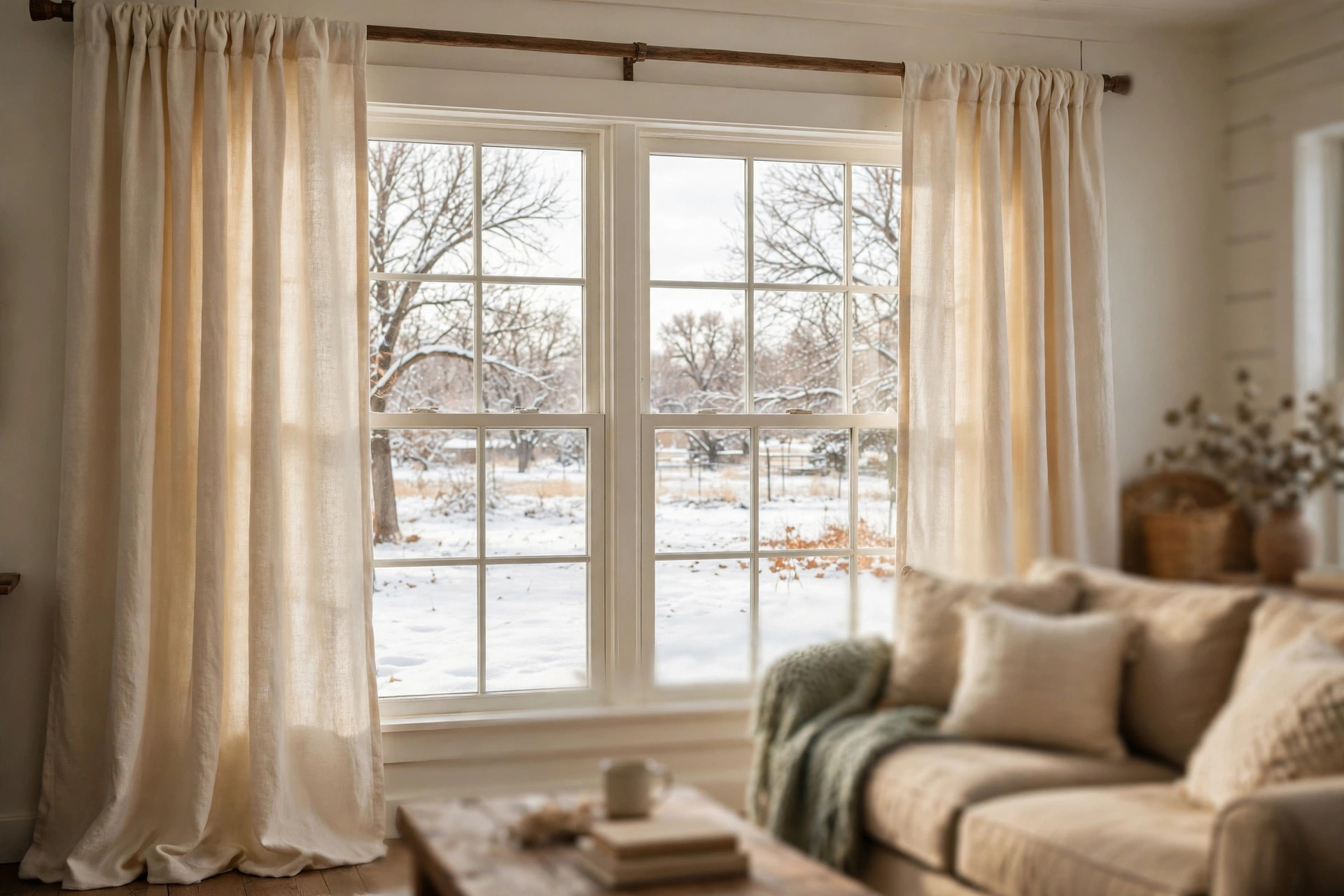

Shopping for the best rod pocket curtains for midwest homes takes more thought than many buyers expect. A rod pocket curtain is the simple panel with a sewn sleeve at the top that slides straight onto a curtain rod. It is one of the oldest styles of window covering in America, and it is still one of the most popular. In the Midwest, though, curtains have to do real work. Winters in states like Ohio, Illinois, Iowa, Minnesota, and Wisconsin bring bitter wind and long cold spells. Summers can be hot and humid, with strong afternoon sun. The right curtain can help a home hold heat in January and block glare in July, while the wrong one is little more than decoration.
This guide walks through what matters: fabric, lining, sizing, style, price, care, and safety. By the end, you should be able to choose panels that fit your windows, suit your home, and stand up to the Midwest climate.
Why Rod Pocket Curtains Suit Midwest Homes
The Midwest is a region of big swings. A home in Kansas City can see a January low near zero and a July high near one hundred. Older farmhouses and postwar bungalows, which are common across the region, often have drafty single-pane or aging double-pane windows. A well-chosen curtain adds a soft layer of insulation between the glass and the room. Curtains will never replace proper window insulation, but they can cut the chill you feel standing near a window on a winter night.
Rod pocket styles are a natural fit for the region for several reasons. First, they are simple to hang. There are no rings or clips to buy, and the curtain rod does all the work. Second, they give a gathered, homey look that fits farmhouse, country, and traditional rooms, which are common across the Midwest. Third, they are sold in a wide range of fabrics, from sheer voile for a summer cottage feel to heavy lined drapes that help hold warmth in winter.
Homeowners should be honest about what they need. If the goal is light and airiness, a sheer or semi-sheer rod pocket panel is a fine choice. If the goal is privacy at night and warmth in winter, a lined or insulated panel is the better pick. Many Midwest families use two layers: sheers for the day and heavier curtains drawn at night. The U.S. Department of Energy notes that heat loss through windows is a real part of a home’s energy load, and window treatments are one of the simplest ways a homeowner can respond to it.
What to Look For When You Shop: Best Rod Pocket Curtains for Midwest Homes
Fabric
Fabric is the first decision. Cotton and cotton blends are the most common choices for rod pocket curtains, and for good reason. They are easy to wash, they hold dye well, and they look at home in almost any room.
Polyester and polyester blends are popular too. They resist wrinkles and shrinking, and they are often sold at a lower price.
For cold weather, look at weight. A heavy cotton duck, a thick linen, or a velvet panel will block more light and hold back more draft than a thin muslin. Shoppers looking at rod pocket curtains for cold weather will see many panels described as insulated or thermal. These usually have a foam backing or a separate insulated lining sewn inside. They are heavier, and they need a strong rod, but they do a noticeably better job at cutting the winter chill.
Lining and Insulation
The lining is what separates a decorative curtain from a working one. An unlined panel filters light and adds color. A lined panel adds body, blocks more light, and helps with temperature. The most common linings are:
– Cotton or polyester lining. Adds weight and blocks some light. A good middle choice for living rooms. – Blackout lining. Blocks nearly all light. Popular in bedrooms, especially near streetlights. – Thermal or insulated lining. Has a foam or acrylic backing that slows heat movement through the fabric. This is the lining to look for in insulated rod pocket curtains for midwest winters.
Read the label before you buy. Some panels say “insulated” but have only a thin coating. A true thermal curtain feels heavy in the hand and has a lining that looks like a separate fabric layer.
Size and Fit
Measure before you shop. This step matters more than any other, and it is the step most often skipped. Measure the width of the window frame, then the height from the top of the rod to the spot where you want the curtain to end.
For width, the finished panels should be one and a half to two times the width of the window. This extra fabric creates the gathers that give rod pocket curtains their classic look.
For length, there are three common choices. A sill-length curtain ends at the window sill. An apron-length curtain falls a few inches below the sill. A floor-length curtain reaches the floor or pools slightly on it, and it is the usual choice for living rooms and bedrooms.
Rod pocket panels do not slide easily on the rod, so they are not the best choice for windows where you open and close the curtains every day. A rod that is smooth and slightly smaller than the pocket makes the job easier.
Color and Style
Style is a matter of taste, but a few rules of thumb help. In small rooms, light colors make the room feel larger. In large farmhouse rooms, deep colors like navy, forest green, or rust add warmth. Plaids and small prints hide dust and pet hair better than solid white panels.
The classic Midwest looks are farmhouse, country, prairie, and traditional. A simple gingham check, a toile print, a plaid, or a plain natural linen all fit these styles. Many large retailers carry wide ranges of both traditional and modern styles, and browsing a big home goods site such as IKEA or Target can help you settle on a direction before you spend.
Types and Options
Rod pocket curtains come in several broad types. Knowing the types makes shopping faster.
Sheer panels. Lightweight voile or gauze that lets light through. Best for privacy during the day without blocking the sun. Many Midwest buyers use them on porches and in kitchens.
Semi-sheer panels. Thicker than sheer, with a soft weave. They filter light and give partial privacy. A good everyday choice for living rooms.
Light-filtering panels. Woven tightly enough to soften bright light and give full daytime privacy, but they still let the room feel bright.
Room-darkening panels. Block most light with a dense weave or a light lining. Good for bedrooms and media rooms.
Blackout panels. Block nearly all light with a special lining. The top pick for bedrooms, nurseries, and anyone who sleeps during the day.
Thermal or insulated panels. Have an insulated lining for cold climates, and they are the panels Midwest buyers ask for most in fall and winter. Shoppers reading about where to buy rod pocket curtains in florida get the opposite advice, toward sheers and airflow.
Cafe curtains. Short panels that cover only the lower half of a window. They slide onto a rod at mid-window and are classic in kitchens and breakfast nooks.
Some panels are sold in pairs and some as single panels. Always check. A “curtain” listing can mean one panel, and you may need two for one window. Pairs are the more common sale unit in stores, but online listings vary.
Cost and Price
Rod pocket curtains are among the least expensive window treatments, which is part of their appeal. Prices vary widely with fabric, size, lining, and brand.
– Budget panels run about eight to twenty dollars per panel. These are usually thin polyester or light cotton. They look fine but offer little insulation. – Mid-range panels run about twenty to fifty dollars per panel. This is the sweet spot for most Midwest buyers, and you can get a good cotton or linen panel with a real lining in this range. – Premium panels run fifty dollars and up per panel. These include heavy velvets, thick lined drapes, and true thermal curtains.
Buying in pairs or sets of four lowers the per-panel cost. Watch for seasonal sales in late summer and early fall, when stores bring in heavier fall curtains. Large home stores like Lowe’s and The Home Depot run regular promotions, and price-comparison shopping across a few stores is worth the time for a whole house of windows.
Remember the rod and hardware in the budget. A heavy insulated curtain needs a strong metal rod and solid brackets. Budget ten to thirty dollars per window for a decent rod, brackets, and finials. Specialty blind retailers such as Blinds.com sell sturdy rods as well as measuring guides. If you are also considering other window styles, our notes on custom thermal insulated curtains for small apartments cover hardware questions in more detail.
Care and Upkeep
Curtains collect dust. In the Midwest, where furnaces run for months, dust builds up faster in winter. A simple routine keeps curtains looking fresh.
Vacuum panels once a month with an upholstery brush attachment. For a deeper clean, check the care label. Most cotton and polyester panels are machine washable on a gentle cycle with cold water. Wash them alone or with like colors, and take them out of the dryer while they are still slightly damp. Hang them back on the rod right away, and the weight of the damp fabric pulls out most wrinkles.
Velvet, silk, and lined thermal panels often need dry cleaning. Washing a foam-backed thermal curtain at home can crack the backing, so read the label and follow it. If a panel says dry clean only, believe it.
Sun is hard on curtains. South-facing windows get strong sun in summer, and the sun will fade fabric over time. Lined curtains last longer because the lining takes the worst of it.
Safety
Curtains seem harmless, but there are a few safety points worth knowing.
The biggest one is cord safety, though rod pocket curtains have an advantage here: they have no cords at all. Corded blinds and shades have caused child strangulation injuries, which is why the U.S. Consumer Product Safety Commission urges families to use cordless window coverings. Rod pocket curtains are naturally cordless, so they are a safe pick for homes with small children and pets.
Fire safety matters too. Keep curtains away from open flames, candles, space heaters, and radiators. In winter, Midwest homes often use space heaters near drafty windows, so keep the heater well away from the panels and never let fabric touch it.
Make sure rods and brackets are anchored well. Use wall anchors in drywall, and screw into studs when you can.
If anyone in the home has allergies, wash curtains regularly. Fabric traps dust and pollen. Sheers that wash often are kinder to allergy sufferers than heavy drapes that go years between cleanings. Advice columns on home care sites like The Spruce and HGTV often cover dust control for window treatments in detail.
Frequently Asked Questions
Do rod pocket curtains keep out the cold? They help, but the effect depends on the panel. A thin unlined sheer does almost nothing for cold. A heavy lined or thermal panel makes a real difference by trapping a layer of still air between the fabric and the glass. For the best result, choose a lined panel that covers the full window and reaches the floor, and close the curtains at night.
What size rod pocket do I need? Measure the diameter of your rod, then buy a panel with a pocket at least half an inch wider. A one-and-a-half-inch rod works well with a two-inch pocket. If the pocket is too tight, the panel will bunch and stick. If it is much too loose, the gathers will look sloppy.
Can I use rod pocket curtains on a sliding glass door? You can, but they are not ideal. Rod pocket panels do not glide easily, and a sliding door is used many times a day. Many homeowners prefer custom sliding panel track blinds for midwest homes for patio doors, since those are made to move.
How do I keep rod pocket curtains from fading? Choose a lined panel, since the lining shields the face fabric from the sun. Close south-facing curtains during the strongest afternoon sun if you can. Wash them gently and avoid bleach, which weakens fibers and speeds fading. Rotating panels between windows spreads sun wear evenly.
Are rod pocket curtains out of style? No. They are one of the longest-running styles in American homes. They suit farmhouse, country, traditional, and even modern rooms when the fabric is right. What looks dated is not the rod pocket itself but thin, faded panels that no longer fit the window.
Where can I read independent reviews before I buy? Independent testing organizations publish curtain and window treatment reviews that can help you compare. Consumer Reports covers home products with lab testing, and its buying guides are a solid starting point when you want facts rather than sales copy.
A Short Final Word
The best rod pocket curtains for Midwest homes are the ones that fit the window, suit the room, and match the season. Measure first. Pick a fabric and lining that fit the job you need done, whether that is light and airy or warm and dark. With those basics covered, a simple rod pocket curtain will serve a Midwest home well for years.
References
Blinds.com. (n.d.). Window blinds, shades, and shutters. https://www.blinds.com Consumer Reports. (n.d.). Product reviews and ratings. https://www.consumerreports.org HGTV. (n.d.). Home and garden ideas. https://www.hgtv.com IKEA. (n.d.). Home furnishings. https://www.ikea.com Lowe’s. (n.d.). Home improvement products. https://www.lowes.com Target. (n.d.). Retail store. https://www.target.com The Home Depot. (n.d.). Home improvement products. https://www.homedepot.com The Spruce. (n.d.). Home and garden advice. https://www.thespruce.com U.S. Consumer Product Safety Commission. (n.d.). Product safety information. https://www.cpsc.gov U.S. Department of Energy. (n.d.). Energy efficiency and renewable energy. https://www.energy.gov Wayfair. (n.d.). Furniture and home goods. https://www.wayfair.com
Was this guide helpful?

About Michael Thompson
The My Garden US editorial team writes practical, in-depth home and garden guides for American homeowners — tested advice, no fluff.
You May Also Like
Premium Energy Efficient Window Treatments With Free Shipping: A Buyer Guide
March 20, 2026 0 views
Luxury Sheer Voile Panels for Florida Homes: A Complete Guide
July 27, 2026 0 views
Buy Nursery Room Darkening Shades Online in Colorado: A Parent’s Guide
February 21, 2026 0 views