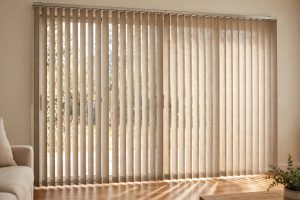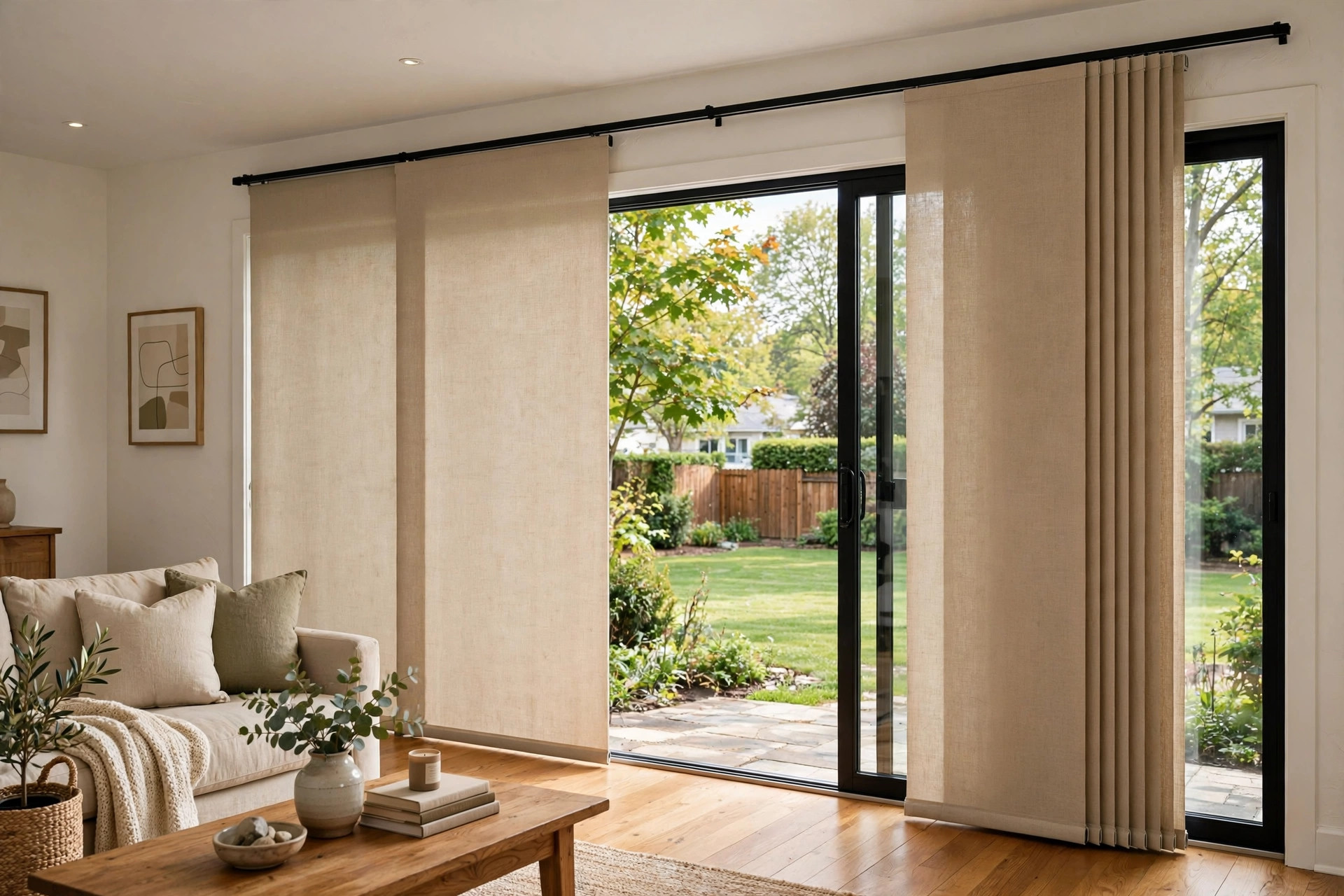

Homes in the Midwest often have wide sliding glass doors, tall windows, and open floor plans. These features let in light, but they also let in glare, heat, and the eyes of neighbors. Custom sliding panel track blinds for midwest homes solve this problem in a simple way. Wide fabric panels slide along a track at the top of the window. They move from side to side with a gentle pull. They cover large glass areas that ordinary blinds cannot cover well.
Why It Matters for Midwest Homes
The Midwest has a wide swing of seasons. Summers are hot and humid. Winters are cold and gray. Windows play a big part in how a home feels in each season. Large glass doors face the back yard, the patio, or the deck. In July, strong sun pours through the glass and heats the living room. In January, cold air presses against the same glass, and the room feels drafty near the door.
Panel track blinds give a homeowner control over both problems. In summer, the panels block direct sun and cut glare. The room stays cooler. The air conditioner does not work as hard. In winter, a lined panel adds a layer between the room and the cold glass. The room holds its heat better. According to Energy Star, the right window coverings can reduce unwanted heat gain and improve comfort across seasons, which is worth knowing in a climate like this one.
Midwest homes also deal with storms. Spring brings high winds and heavy rain. Late summer brings hail. Homes here often sit on open lots with little shade. A panel track system is built to stay put. The panels hang straight from a strong track. They do not rattle the way loose vertical blinds rattle in a draft. This steady design suits the gusty weather of the plains states.
Privacy matters too. Many Midwest neighborhoods have homes set close together. The back of one house faces the back of the next. Sliding glass doors open the living room to the view of the whole block. Panel blinds close with a simple motion. They give full privacy at night. They open partway during the day for a clear view of the yard.
How Panel Track Blinds Work: Custom Sliding Panel Track Blinds for Midwest Homes
A panel track blind is a set of flat fabric panels. Each panel is wide, often 17 to 30 inches across. The panels hang from a track mounted at the top of the window or door. Rollers inside the track carry each panel. A cord or a wand moves the panels from side to side. Some open from one side; others open from both sides and meet in the middle.
When open, the panels stack behind one another, so most of the glass stays clear and the view remains wide. When closed, the panels overlap slightly. Light leaks are small. The look is flat and clean, like a wall of soft fabric.
The word custom means the panels are made to fit. A worker measures the width and height of the opening. The panels are cut to that exact size. The track is cut to the exact width. Off the shelf panels come in fixed sizes and may leave gaps at the edges. Custom panels fit edge to edge. For a sliding glass door that is six feet wide, this exact fit makes a real difference in both looks and light control.
Types and Options
Buyers can choose from several kinds of panel track blinds. Each kind suits a different need.
Light filtering panels. These fabrics soften sunlight without blocking it fully. The room stays bright but free of hard glare. They suit living rooms and kitchens where the homeowner wants daylight during the day.
Room darkening panels. These fabrics block most light. They suit bedrooms and media rooms. A sleeping room with a west facing door stays dark in the evening. Many brands offer these styles through retailers such as Blinds.com.
Solar screen panels. These fabrics cut heat and glare while keeping the view. The weave is tight enough to stop most of the sun but open enough to see through. They suit sunrooms and great rooms with large glass walls.
Natural woven panels. Bamboo, grasses, and reeds give a warm, earthy look. They suit homes with wood floors and rustic decor. Guides on The Spruce show how natural textures pair with panel systems.
Patterned and solid fabrics. Panels come in solid colors, subtle textures, and bold prints. A solid neutral panel blends with any wall color. A bold pattern turns the window into a focal point. Fabric choices at Wayfair show how wide the range runs.
Track options matter as well. A one way draw stacks all panels on one side. A split draw stacks half on each side. The split draw looks balanced on very wide openings. Track depth varies too. Most tracks hold three to five panels. Wider tracks hold more panels and give better coverage on extra wide doors.
Valances finish the top of the system. A fabric covered valance hides the track. An aluminum valance gives a slim modern edge. Some homeowners skip the valance and let the clean track show. This works well in modern and minimal rooms.
What to Look For When You Choose
Start with the opening itself. Measure the width at the top, middle, and bottom. Walls are not always straight. Use the smallest width for an inside mount and add several inches on each side for an outside mount. Measure the height in two or three spots as well. Write every number down.
Think about how the door is used. A sliding glass door is a path in and out of the house. The panels must stack clear of the door that opens. If the door slides to the left, stack the panels on the right.
Think about light goals for each room. A south facing door gets harsh afternoon sun. A solar screen or light filtering panel cuts the glare but keeps the room bright. A north facing window gets soft light all day. A sheer or light panel may be all that is needed. Match the fabric to the direction the glass faces.
Think about pets and children. Dogs and cats often press against patio doors to look outside. Sturdy fabrics hold up better than thin sheers. The Consumer Product Safety Commission warns that cords on window coverings can pose a strangulation risk to young children, and it urges families to choose cordless products where possible.
Think about the look of the whole room. Panel blinds have a modern, flat profile. They suit clean lined furniture and open spaces. They can also work in a traditional room if the fabric is soft and the color is warm. Bring home swatches. Hold them against the wall in daylight and at night. Colors shift under different light.
Finally, think about who installs the system. A simple track on a standard door is a fair do it yourself job for a handy homeowner. A wide or tall opening is harder. A professional installer measures with care and sets the track level. Big box stores like Home Depot and Lowe’s offer measuring and installation services in most Midwest towns.
Cost and Price
Custom panel track blinds cost more than ready made blinds, but they cost less than full custom drapery. As a rough guide, a custom system for one standard sliding glass door often runs from about 200 to 600 dollars. Wider openings, premium fabrics, and motorized controls push the price higher. A large wall of glass with five or six panels can reach 800 to 1,200 dollars or more.
Several factors move the price up or down. Fabric grade is the biggest one. Basic polyester panels cost the least. Natural woven materials and designer prints cost more. Track width matters too. A wider track with more panels uses more material. Motorization adds a few hundred dollars but gives push button or remote control. Installation adds a service fee, often 75 to 150 dollars per window.
To get a fair price, get at least two quotes. Ask each seller to break down the cost of the panels, the track, the valance, and the labor. Check what the warranty covers. A good warranty covers the track mechanism for several years. Fabric warranties vary by brand. Design programs on HGTV show what custom treatments cost in real home projects.
Remember that price is only part of the value. A well made panel system lasts ten years or more with light care. A cheap system with a weak track may stick or sag within a few years. Paying a bit more for a solid track and a trusted maker often saves money over time.
Care and Upkeep
Panel track blinds are easy to care for. The flat panels collect dust, but the dust comes off fast. Run a vacuum with a brush attachment over each panel once a month. Work from top to bottom. For spots, dab with a damp cloth and mild soap. Do not soak the fabric. Do not use bleach.
Check the track once or twice a year. Dust and pet hair can build up in the channel. A dry cloth or a small brush clears it out. If a panel moves stiffly, a drop of silicone spray on the roller helps. Do not use oil. Oil attracts dust and makes the problem worse.
Sun fades fabric over time. South and west facing panels fade first. Rotating which panels sit in the strongest sun can even out the wear. Some fabrics carry a UV rating. Ask the seller about fade resistance before you buy. Guidance from the U.S. Department of Energy on window coverings explains how different materials respond to sun exposure, which helps set expectations.
If a panel tears or stains badly, many makers sell single replacement panels. The new panel slides into the same carrier on the track. This is cheaper than replacing the whole system. Keep the order record with the fabric name and color code so a match is easy later.
Safety in the Home
Window coverings deserve a safety check in every home with small children or pets. Cords and loops are the main risk. Choose cordless or wand operated panel systems. If an older system has cords, keep cribs and beds away from the window. Cut looped cords or fit them with safety tassels.
Mount the track firmly. A track that pulls loose can fall. Use the right anchors for the wall type: drywall needs anchors, and a wood header holds screws directly. If the opening is very wide, a center support bracket keeps the track from bowing.
Fire safety matters as well. Keep panels clear of space heaters and radiators. Fabric near a heat source can scorch. Leave a few inches of space between the panels and any heat vent on the floor below the door.
Frequently Asked Questions
Do panel track blinds work on windows other than sliding doors? Yes. They work on any wide or tall opening. They suit picture windows, wide bedroom windows, and room dividers. They are less suited to small standard windows, where a simple shade is often a better fit. Homeowners exploring other wide window options may also read about top rated cordless cellular shades for american homes, which suit a different style of coverage.
How long do custom panel track blinds last? With normal use and light care, they last eight to twelve years. The track mechanism usually outlasts the fabric. Sun facing panels may need replacement sooner. Quality of the track and the fabric grade are the two factors that matter most.
Can I install panel track blinds myself? Many homeowners can. The job needs a drill, a level, and a tape measure. The track screws into the wall or the ceiling. Panels then clip or hook onto the carriers. Wide openings are harder to set level, and a tall ladder may be needed. If the fit must be exact, a professional installer is worth the fee. Design and shopping inspiration can be found at retailers such as IKEA, which also carries simple track style systems.
Are panel track blinds good for insulation? They help, but they are not the strongest insulators. A lined or room darkening panel adds a useful layer of still air against the glass. For maximum insulation, pair the panels with a thermal liner or choose a heavier fabric. Readers who want the warmest window coverings can compare thermal energy efficient window treatments for sale before they decide.
Do panel track blinds block noise? They reduce some sound, but they are not soundproof. Heavy fabrics absorb more sound than thin ones. A full wall of panels softens echoes in a room with hard floors. For rooms near a busy street, heavier options help more. Those who want stronger sound control may look into noise reducing bamboo roman shades for texas homes as a related idea, though results vary by home.
How do I clean fabric panels without damage? Vacuum gently with a brush attachment. Spot clean with a damp cloth and mild soap. Never machine wash unless the maker says it is safe. Never use bleach or harsh cleaners. Let the panel dry fully before closing it against the next panel.
A Final Word
Custom sliding panel track blinds for midwest homes bring order to the hardest windows in the house. They tame the glare of a summer afternoon. They soften the cold press of a January night. They give privacy with one smooth motion. Measure with care, pick the fabric for the direction the glass faces, choose cordless controls for safety, and buy a track built to last.
References
Blinds.com. (n.d.). Window blinds, shades, and shutters. https://www.blinds.com ENERGY STAR. (n.d.). Energy efficient products. https://www.energystar.gov HGTV. (n.d.). Home and garden ideas. https://www.hgtv.com IKEA. (n.d.). Home furnishings. https://www.ikea.com Lowe’s. (n.d.). Home improvement products. https://www.lowes.com The Home Depot. (n.d.). Home improvement products. https://www.homedepot.com The Spruce. (n.d.). Home and garden advice. https://www.thespruce.com U.S. Consumer Product Safety Commission. (n.d.). Product safety information. https://www.cpsc.gov U.S. Department of Energy. (n.d.). Energy efficiency and renewable energy. https://www.energy.gov Wayfair. (n.d.). Furniture and home goods. https://www.wayfair.com
Was this guide helpful?

About Jennifer Lee
The My Garden US editorial team writes practical, in-depth home and garden guides for American homeowners — tested advice, no fluff.
You May Also Like
Affordable Stained Glass Window Film for Southern States: A Practical Guide
June 16, 2026 0 views
Top Rated Curtain Cleaning Services Reviews: How to Read Them and Choose Well
March 25, 2026 0 views
Window Film Privacy Tint Price Comparison USA
April 1, 2026 0 views