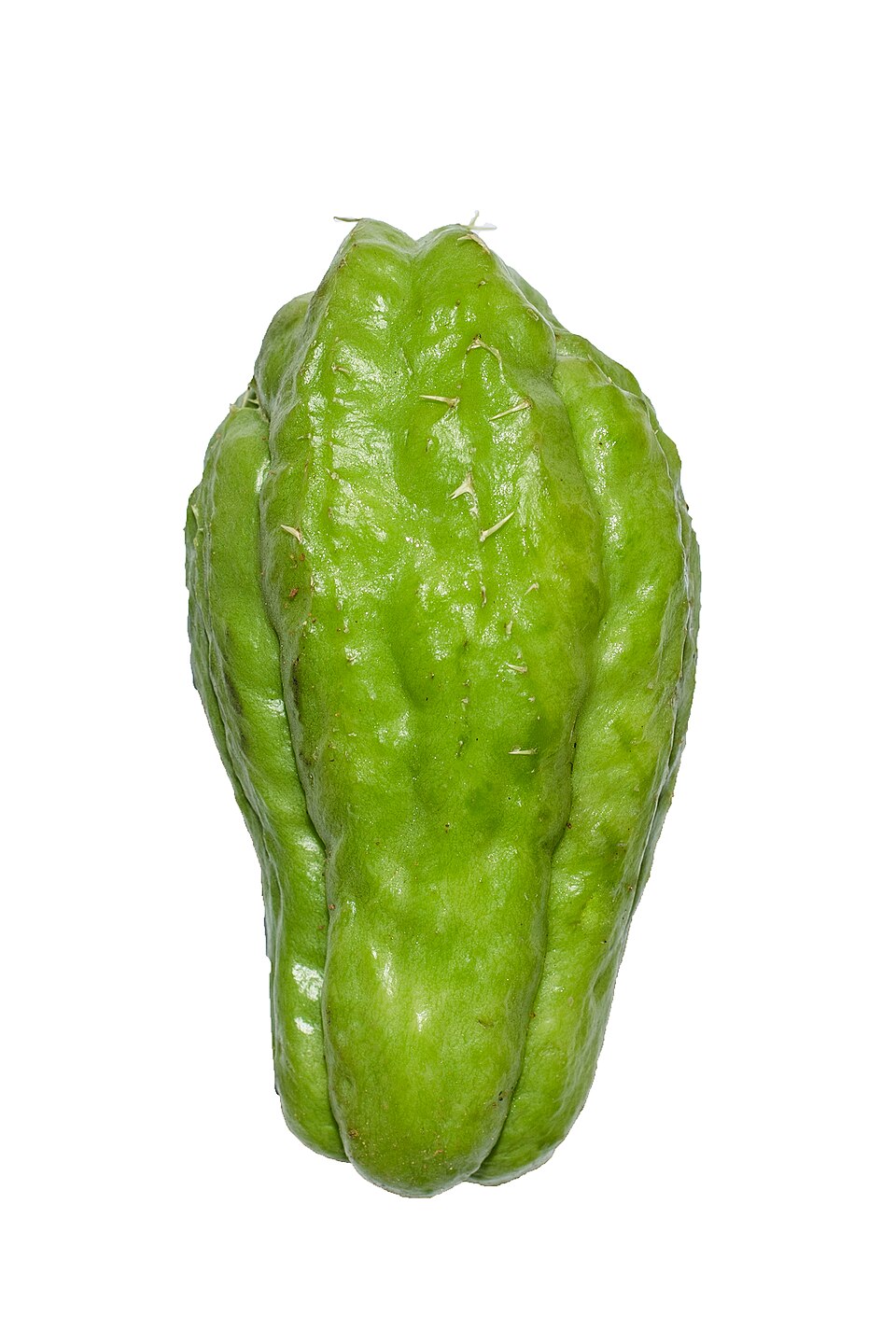
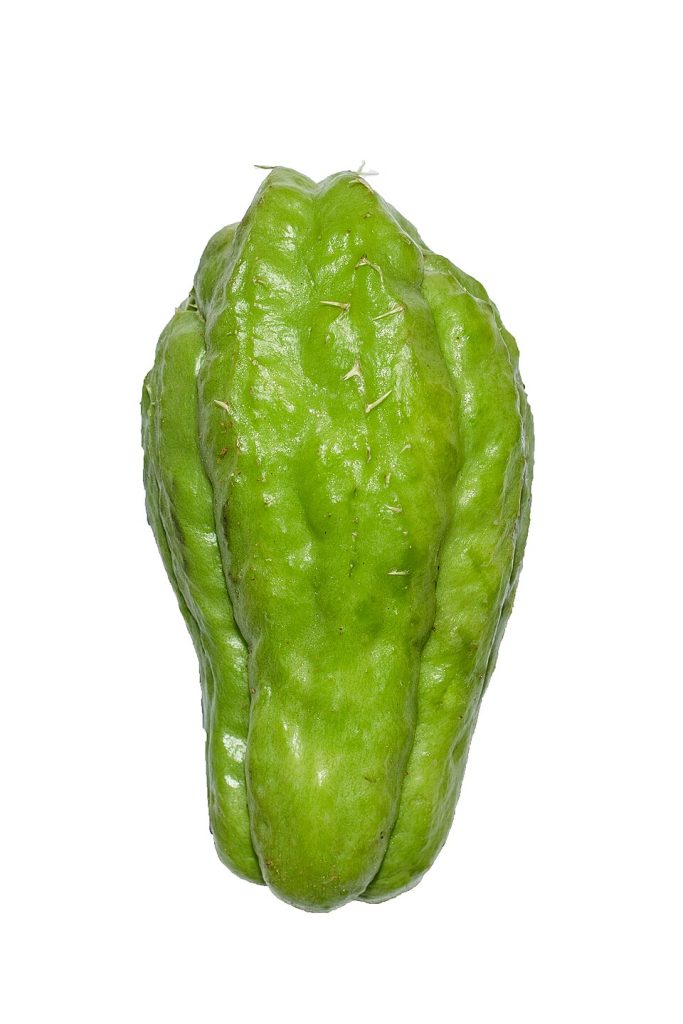
Chayote - Sechium edule - is the vegetable that makes other vegetables look lazy. A single vine, given a strong trellis and a long warm season, can produce a hundred or more pear-shaped green fruits, each one mild, crisp, and endlessly useful in the kitchen. It is a staple across Latin America and the Gulf South, and it deserves far wider planting wherever the season is long enough. Learning how to grow chayote starts with one wonderfully odd fact: you do not plant a seed. You plant the whole fruit.
Table of Contents
Table of Contents
That is the charm of it. Buy a chayote at the market, let it sprout on the counter, and bury the sprouted fruit in the garden. Months later you are harvesting by the basket. It is about as close to magic as vegetable gardening gets, and the vine itself - vigorous, handsome, shade-casting - is ornamental enough to earn its place on an arbor even before the harvest begins.

Photo: Wikimedia Commons
Getting Started: One Fruit, One Vine, One Family Fed
When it comes to how to grow chayote, getting the details right makes all the difference.

Many homeowners find that how to grow chayote is easier than they expected once they know the basics.
Chayote is a tender perennial vine in zones 8 through 11, where the roots survive winter and resprout each spring to make ever-bigger plants. Everywhere else, grow it as a warm-season annual - it needs 120 to 180 frost-free days to produce well, which rules out short-season northern gardens but suits the South, the Southwest, and the Pacific coast beautifully. The USDA PLANTS database shows its adaptation to the warmest American regions.
Start with a fruit, not a packet of seed. Choose a firm, unblemished chayote from the market - the smooth green kind most stores carry - and set it on the counter in a warm spot. In a week or two a sprout emerges from the broad end. That sprouted fruit is your "seed." Plant it whole, on its side, with the sprout pointing up, buried about two-thirds deep in rich soil. The fruit feeds the young plant as it establishes, like a packed lunch.
One vigorous vine on a strong trellis genuinely feeds a family. Do not plant four vines unless you plan to supply the neighborhood. Give each plant at least 10 feet of space - spacing of 48 inches is the minimum, and more is better - because a happy chayote vine will cover a small arbor by late summer.
When and How to Plant
Many homeowners find that how to grow chayote is easier than they expected once they know the basics.
The key to how to grow chayote is choosing the right approach for your space and budget.
Wait until all danger of frost has passed and the soil is thoroughly warm. Chayote is tropical in its soul; cold soil rots the fruit before it can sprout roots. Transplant sprouted fruits about two weeks after your last spring frost, or direct-set them in place at the same time - there is no advantage to starting earlier indoors since the fruit itself is the starter pot. If you want to check your USDA zone planting dates, our planting calendar will help you find that frost date.
Dig a generous hole and work in several shovelfuls of compost - chayote is a heavy feeder over its long season and rewards rich soil visibly. Set the sprouted fruit on its side, sprout up, burying it about two-thirds deep. Water it in well and mulch heavily. Then stand back. Early growth is slow while the roots establish, which worries beginners, but once summer heat arrives the vine explodes.
In zones 8 through 11, the plant is perennial: after frost kills the top growth, mulch the crown heavily and it resprouts in spring, bigger and earlier each year. The Almanac planting calendar helps you confirm your frost-free window is long enough before committing to this long-season vine. In colder zones, treat it as an annual and enjoy the single-season show. The Old Farmer's Almanac frost-date tables are essential planning tools for timing this heat-lover.
Soil and Sun
The key to how to grow chayote is choosing the right approach for your space and budget.
With a little planning, how to grow chayote can fit even a busy schedule.
Full sun is the rule - eight hours minimum for the heavy yields chayote is famous for. The vine will grow in part shade but fruits sparsely, which defeats the purpose. Give it the sunniest, warmest spot you have, ideally against a south-facing fence or wall that radiates heat.
Rich, well-drained soil is essential. This is a plant that grows 20 feet of vine and a hundred fruits in a season; it cannot do that on poor soil. Dig in generous compost at planting and plan to feed through the season. Good drainage matters too - the buried fruit rots in waterlogged soil. If your ground stays wet, plant on a mound. A slightly acidic to neutral pH suits it, though it is not fussy about exact numbers.
The trellis deserves its own paragraph because it is structural, not decorative. A mature chayote vine is enormously heavy - dozens of fruits plus yards of foliage. Flimsy tomato cages and decorative obelisks will collapse. Build or buy something serious: a stout arbor, a heavy-duty cattle-panel arch, or a strong fence. Like winter squash vines, chayote needs support engineered for real weight.
Watering and Feeding
With a little planning, how to grow chayote can fit even a busy schedule.
Before you start, it helps to understand how how to grow chayote works in real homes.
Water deeply and consistently through the whole season. Chayote has shallow, spreading roots that dry out fast in summer heat, and drought stress drops flowers and young fruits. A deep soaking once or twice a week, plus a thick mulch to hold moisture and feed the roots as it breaks down, is the program. Drip irrigation or a soaker hose under the mulch is ideal - it keeps water at the roots and foliage dry.
Feed heavily. That initial compost is just the start. Side-dress with compost or balanced fertilizer every month through the growing season, because a vine this productive eats constantly. Pale leaves or slowing growth in midsummer usually mean hunger, not disease. UF/IFAS Gardening Solutions has feeding schedules for vigorous tropical vegetables that fit chayote well.
Keep the mulch topped up. As it decomposes it feeds the shallow roots, holds moisture, and keeps developing fruits clean where vines sprawl near the ground. Straw, shredded leaves, or wood chips all work.
Care Through the Season
Before you start, it helps to understand how how to grow chayote works in real homes.
A good plan for how to grow chayote saves time, money, and frustration.
Prune wandering vines back to the trellis. Chayote sends out exploratory tendrils in every direction, and left alone it will colonize the fence, the shed, and the neighbor's yard. Clemson Cooperative Extension covers trellis crops and vine management for southern gardens. A weekly walk with the pruning shears keeps it on its support and directs energy into fruiting wood rather than wandering vines. This is pleasant work on a summer evening - the vines are easy to cut and the plant does not mind.
Watch for fruit flies where they are a local problem. They sting young fruits, causing scars and drop. Bagging developing fruits in small paper or mesh bags is the organic fix - tedious on a hundred fruits, but worthwhile for the ones you will eat fresh. In most of the mainland South this is a minor issue; in subtropical zones take it seriously. The Clemson Home and Garden Information Center covers fruit-fly management for home gardens.
Guide young fruits to hang straight down where you can. Fruits that develop resting on a branch or the ground grow crooked - still edible, but harder to peel and less pretty. A vine trained cleanly on its trellis, like cucumbers grown vertically, gives you straight, clean fruits.
In cool climates, grow it as an annual and do not mourn the frost-killed vine - compost it and start fresh next year. In borderline zones, a heavy mulch over the crown sometimes carries the roots through a mild winter for an earlier start next spring.
Harvest
A good plan for how to grow chayote saves time, money, and frustration.
For most people, how to grow chayote comes down to a few smart choices.
Pick fruits when they are 4 to 6 inches long and still tender, before the seed inside hardens. Young chayote peels easily, cooks in minutes, and has a delicate flavor somewhere between summer squash and cucumber. Overmature fruits get fibrous and the seed grows large and hard - still usable, but not the prize. Harvest regularly, every few days at peak season, because the vine keeps setting fruit as long as you keep picking.
In the kitchen, chayote is wonderfully versatile: slice and sauté it, stuff and bake it, cube it into soups and stews, or eat it raw in salads where its crisp texture shines. It does not have a strong flavor of its own, which makes it a team player - it carries seasonings beautifully. Store harvested fruits cool and dry and they keep for weeks, far longer than summer squash.
Here is the bonus most gardeners do not know: at season's end, dig the large, starchy tuberous roots. They cook up like a cross between potato and jicama - a second harvest from the same plant. In zones where the vine is perennial, harvest roots only from plants you are removing, since digging kills the crown. Gardenia.net plant profiles mention this overlooked edible root.
Troubleshooting
For most people, how to grow chayote comes down to a few smart choices.
If you are new to how to grow chayote, start with the simplest option and build from there.
The fruit rotted instead of sprouting. You planted into cold or waterlogged soil. Wait for real warmth, plant on a mound if drainage is doubtful, and make sure the fruit itself was firm and fresh - a tired market chayote may already be declining.
Lots of vine, no fruit. Usually immaturity - chayote fruits heaviest in late summer and fall as days shorten - or drought stress dropping the young fruits. Keep watering steadily and be patient; the harvest often arrives all at once in early fall. Excess nitrogen can also push vine at the expense of fruit; ease off the high-nitrogen feeding once flowering begins.
Fruits are scarred or dropping. Fruit fly damage is the likely cause in subtropical areas. Bag developing fruits and clean up fallen ones promptly to break the cycle.
Vine collapsed the trellis. It happens to everyone once. Rebuild stronger - cattle panels, 4x4 posts set in concrete, a proper arbor - and prune more aggressively to reduce the load. A chayote vine is a structural engineering project that happens to make dinner.
Frost killed it in fall with fruits still on. In short-season areas, this is the gamble. Start with the earliest-sprouting fruit you can, give the vine maximum sun and heat, and in a pinch, cover the vine with fabric on the first light frost nights to buy extra weeks. The University of Minnesota Extension season-extension guides apply even to tropical vines.
Chayote is the vegetable for gardeners with space, sun, and a long season - and a sturdy trellis. The USDA National Agricultural Library documents its long journey from Mesoamerican staple to Gulf South garden favorite. Plant the whole fruit, build the arbor strong, and prepare for abundance.
References
If you are new to how to grow chayote, start with the simplest option and build from there.
When it comes to how to grow chayote, getting the details right makes all the difference.
- Clemson University Cooperative Extension. (n.d.). Home & garden information center. https://hgic.clemson.edu/
- Gardenia. (n.d.). Chayote growing guide. https://www.gardenia.net/
- U.S. Department of Agriculture. (n.d.). PLANTS database. https://plants.usda.gov/home
- UF/IFAS Extension. (n.d.). Gardening solutions. https://gardeningsolutions.ifas.ufl.edu/
- University of Minnesota Extension. (n.d.). Season extension techniques. https://extension.umn.edu/
Many homeowners find that how to grow chayote is easier than they expected once they know the basics.
The key to how to grow chayote is choosing the right approach for your space and budget.
When it comes to how to grow chayote, getting the details right makes all the difference.
Many homeowners find that how to grow chayote is easier than they expected once they know the basics.
The key to how to grow chayote is choosing the right approach for your space and budget.
Was this guide helpful?

About My Garden US
The My Garden US editorial team writes practical, in-depth home and garden guides for American homeowners — tested advice, no fluff.