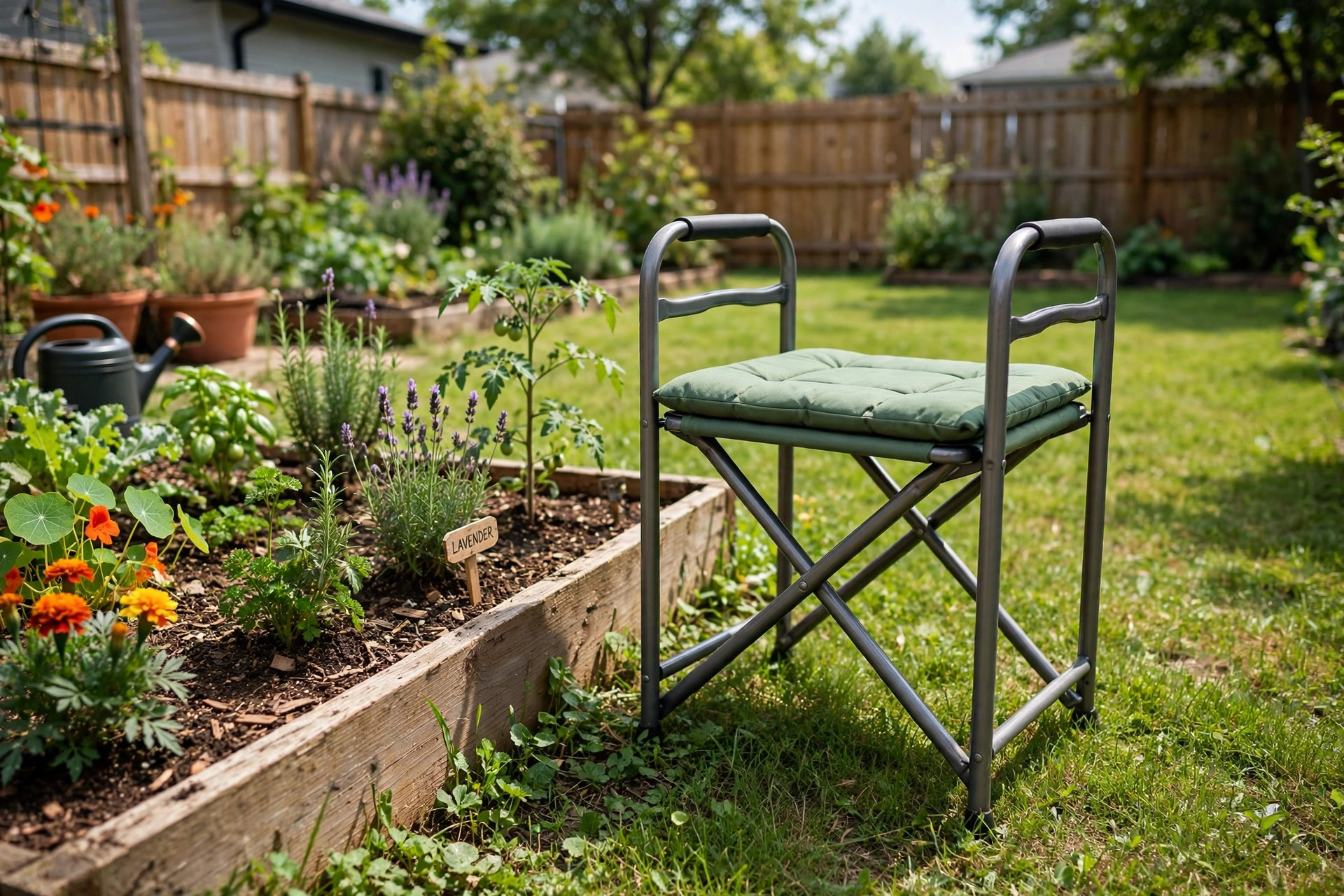

Gardening is one of the finest pleasures of later life. It keeps the body moving, the mind calm, and the table full of fresh food. But as the years pass, kneeling in the dirt and getting back up can turn a pleasant hour into a painful chore. The best garden stool for elderly gardeners solves this problem in a simple way. It gives you a safe seat at the right height, close to your plants, so you can weed, plant, and prune without strain.
Why a Garden Stool Matters for Older Gardeners
The knees, hips, and lower back carry the load when you work at ground level. Bending over a flower bed for an hour puts pressure on the spine. Kneeling on hard soil bruises the knees. Getting up from the ground after weeding can make a person feel dizzy or unsteady. A good stool changes all of that. It lifts your seat to a comfortable height, usually 15 to 21 inches off the ground. Your hands reach the plants with ease. Your feet stay flat and firm.
Doctors and therapists have long advised older adults to avoid deep knee bends and long stretches of kneeling. A stool is the tool that makes that advice practical in the garden. It also helps you keep your balance. Many models come with strong side handles that you grip when you sit down and when you rise. This small detail prevents many falls.
A stool also lets you work longer. When you are comfortable, you do not tire as fast. The garden looks better, and you feel better.
What to Look for When You Choose a Stool: Best Garden Stool for Elderly Gardeners
The market offers many stools, and they are not all alike. Before you buy, study these points. They decide whether the stool will help you or gather dust in the shed.
Seat Height
Seat height is the first thing to check. A seat that is too low will not help you much. A seat that is too high will leave your feet dangling. For most older gardeners, a height between 16 and 20 inches works well. Shorter gardeners do well near 15 or 16 inches. Taller gardeners prefer 19 to 21 inches. If you can, sit on the stool in the store before you buy it. Your feet should rest flat on the ground. Your knees should bend at a comfortable angle, close to a right angle.
Weight Capacity
Every stool has a rated weight capacity. Common ratings run from 220 to 300 pounds. Heavy duty models hold 330 pounds or more. Choose a stool rated well above your body weight. The extra margin gives you strength in reserve when you lean to one side to reach a plant. It also means the frame will last longer.
Handles and Arms
Handles matter more than almost anything else. The best garden stool for elderly gardeners has wide, sturdy handles on both sides. You use them to lower yourself down and to push yourself up. The handles should be easy to grip, even with garden gloves on, and should not flex under your full weight.
Seat Comfort
You may sit on this stool for an hour or more. A seat 12 to 14 inches across with thick foam padding suits most people. Waterproof padding is wise, since garden work is damp work. Vinyl or thick polyester covers wipe clean. Avoid thin cloth seats that soak up water and wear out fast.
Legs and Stability
Look at the legs. Four solid legs give the most stable base. Legs that splay outward resist tipping. Wide feet or rubber caps keep the stool from sinking into soft soil. Some stools have adjustable legs so you can set them level on uneven ground. Press down hard on the seat and rock it. A good stool barely moves.
Folding and Portability
A folding stool is easy to carry to the garden and easy to store. Many folding models weigh 5 to 9 pounds, which most adults can manage with one hand. Look for a stool that folds flat and has a carry handle. Rolling stools with wheels move along the row with you, which is a fine feature in a large vegetable garden. If storage space is tight, a model that hangs on a shed hook will serve you well.
Materials and Weather Resistance
Frames are usually steel, aluminum, or heavy plastic resin. Steel is strong but heavy. Aluminum is light and will not rust. Resin is cheap but can crack in cold weather. For most buyers, an aluminum or steel frame with a waterproof padded seat is the best balance.
Types of Garden Stools
There are four main types on the market. Each has its strengths. The right one for you depends on your garden, your body, and the work you do.
The Folding Garden Stool With Handles
This is the most popular type, and for good reason. It folds flat, weighs little, and costs less than most alternatives. The best models have a padded seat and long side handles. Many reviewers call it the best garden stool for elderly gardeners because it is simple, light, and safe.
The Rolling Garden Scoot
A rolling scoot is a low seat on four caster wheels. You sit and roll along the row as you weed or harvest. The wide seat often includes a small tray for tools. Scoots suit long vegetable rows, but the small wheels can catch in rough grass. Choose one with locking wheels for slopes.
The Kneeler That Flips Into a Stool
This clever tool serves two purposes. One side is a padded kneeler for low work. Flip it over, and it becomes a stool with a higher seat, and the frame doubles as handles for standing up. It is heavier than a simple folding stool, but it gives you both options in one piece of gear, like a garden kneeler with handles.
The Stationary Garden Bench
A fixed garden bench stays in one place, often near the potting area. It is strong and roomy, but it does not move with you. It suits the gardener whose main work happens in one spot.
Cost and Price
Garden stools for older gardeners sell at a wide range of prices. A basic folding stool with a padded seat costs about 25 to 40 dollars. These models are light and simple, and many last for years with care. Mid-range stools, from 40 to 75 dollars, add better padding, stronger handles, and sturdier frames. Heavy duty models and rolling scoots run 75 to 120 dollars or more. Kneeler-stool combinations usually sell between 35 and 60 dollars.
Price is not the whole story. A cheap stool with thin handles and a wobbly frame is no bargain if it tips over. Spend a little more for solid construction and a comfortable seat. Read the reviews, especially from older buyers. A stool you trust is worth twice the price of one you fear. The team at Consumer Reports regularly tests garden and outdoor gear, and their ratings are a steady guide when you compare models.
Small extras add real value: a waterproof cover, a tool pouch, and spare rubber feet. If you do heavy work, thorn-proof garden gloves and a garden cart for heavy loads will round out your kit.
Care and Upkeep
A garden stool is a simple tool, and it asks little in return. Wipe the seat clean after each use. This keeps soil and moisture from soaking into the padding. Check the bolts and screws once a month during the growing season. Tighten anything that has worked loose. A dab of light oil on folding joints keeps them moving smoothly.
Store the stool in a dry place. A shed or garage is ideal. If it must stay outside, cover it with a tarp or use a model with weatherproof materials. Steel frames can rust if the paint chips, so touch up bare spots with a little outdoor paint. Rubber feet wear down over time. When they do, replace them.
At the end of the season, wash the frame, dry it well, and check every joint. A few minutes of care each year will keep the stool safe for many seasons. The guides at Family Handyman offer sound step-by-step advice on maintaining outdoor tools of all kinds.
Safety Tips
A stool only helps you if you use it safely. Follow these rules every time you go out to the garden.
First, set the stool on firm, level ground. Soft mud, wet leaves, and slopes can let it tip. If the legs are adjustable, level them before you sit. Second, face the work and keep your weight centered. Leaning far to one side to reach a weed is a common cause of tips. It is safer to stand up and move the stool. Third, use the handles. Grip both handles when you sit down and when you rise. Never drop down into the seat or jump up from it.
Fourth, respect the weight rating. Do not pile bags of soil on the seat or let a grandchild stand on it. Fifth, check the stool before each season. Look for cracked plastic, bent legs, torn fabric, and loose bolts. Retire a stool that shows real wear. A new stool costs far less than a fall. The safety pages at AARP carry excellent advice on preventing falls at home and in the garden, which is worth reading as the years advance.
Finally, take breaks. In hot weather, drink water often and rest in the shade. Gardening should refresh you, not wear you out.
Choosing the Right Stool for Your Garden
Think about the garden you have, not the garden you wish you had. A small flower border near the porch needs only a light folding stool. A large vegetable plot calls for a rolling scoot that moves along the rows. Raised beds suit a taller stool so your hands clear the bed walls. A wild cottage garden with rough paths needs a stool with wide feet and strong legs.
Consider your own body, too. If your knees ache, a taller seat and strong handles matter most. If your back is the trouble spot, a seat at the right height keeps your spine straight. If your hands are weak from arthritis, choose handles with thick grips that are easy to hold.
Shop where you can try before you buy when possible. Sit on the stool. Fold it. Carry it a few steps. Grip the handles as if you were standing up. If you buy online, read the reviews from buyers over sixty. They describe exactly the things that matter to you. Both Lowe’s and Home Depot carry a wide selection with plenty of honest customer reviews to study. For honest buying advice, the planting experts at Burpee and the tool makers at Corona Tools both publish helpful guides for gardeners of every age.
Frequently Asked Questions
What is the best height for a garden stool for an older gardener?
Most older gardeners do best with a seat height of 16 to 20 inches. Measure a chair you sit in comfortably at home. The right stool seat should be close to that height. Taller people need taller stools. When your feet rest flat on the ground and your knees bend easily, the height is right.
Are garden stools with wheels safe for seniors?
Rolling scoots are safe when used on flat, firm ground. They are fine on patios, garden paths, and level lawn. They are less safe on slopes or rough, bumpy ground, where a wheel can catch and tip the seat. If you buy a scoot, choose one with locking wheels so it stays put when you want it to.
How much weight should a garden stool hold?
Choose a stool rated at least 50 pounds above your body weight. A 250 pound rating suits most adults. A 300 pound rating gives extra strength and a longer life. Heavy duty models hold 330 pounds or more. Never trust a stool that gives no weight rating.
Can a garden stool help with back pain?
A stool at the right height keeps your spine straighter than bending over the bed. This reduces strain on the lower back. It will not cure back problems, but it makes garden work much kinder to the back.
What is better for elderly gardeners, a stool or a kneeler?
It depends on your joints. If kneeling hurts your knees, a stool is better. If you kneel comfortably but struggle to stand up, a kneeler with tall handles is better. Many gardeners over sixty prefer a combination tool that flips from kneeler to stool. That way they have both options in one piece of gear.
How long does a garden stool last?
A well made stool lasts five to ten years with ordinary care. Aluminum frames last longest because they do not rust. Steel frames last well if you touch up paint chips. The padded seat usually wears out first. Many brands sell replacement pads, so you can refresh the seat without buying a whole new stool. Store it dry over the winter and it will serve you for many seasons.
A Short Final Word
The garden only asks for care, patience, and a little time each week. The best garden stool for elderly gardeners gives you a safe, comfortable seat from which to do that work. Choose a sturdy frame, strong handles, a comfortable seat at the right height, and a weight rating you can trust. Take care of the stool, use it safely, and it will repay you with years of pleasant hours among the plants. There is no better place to spend a morning.
For more ideas on setting up a comfortable and safe garden, the practical articles at The Spruce and Bob Vila are well worth your time. The gardeners at Gardener’s Supply Company and the tool crafters at Fiskars also share steady, honest guidance for gardeners of every age.
References
AARP. (n.d.). Home, family, and caregiving resources. https://www.aarp.org Bob Vila. (n.d.). Home improvement advice. https://www.bobvila.com Burpee. (n.d.). Seeds, plants, and gardening supplies. https://www.burpee.com Consumer Reports. (n.d.). Product reviews and ratings. https://www.consumerreports.org Corona Tools. (n.d.). Garden and landscape tools. https://www.corona-tools.com Family Handyman. (n.d.). DIY home repair and maintenance. https://www.familyhandyman.com Fiskars. (n.d.). Garden and cutting tools. https://www.fiskars.com Gardener’s Supply Company. (n.d.). Gardening tools and supplies. https://www.gardeners.com Lowe’s. (n.d.). Home improvement products. https://www.lowes.com The Home Depot. (n.d.). Home improvement products. https://www.homedepot.com The Spruce. (n.d.). Home and garden advice. https://www.thespruce.com
Was this guide helpful?

About Lisa Anderson
The My Garden US editorial team writes practical, in-depth home and garden guides for American homeowners — tested advice, no fluff.
You May Also Like
Best Garden Trellis for Cucumbers Reviews
August 30, 2026 0 views
Best Garden Hose Quick Connect Fittings for a Leak-Free Yard
February 15, 2026 0 views
Best Garden Scissors for Floral Work: A Complete Buying Guide
May 29, 2026 0 views