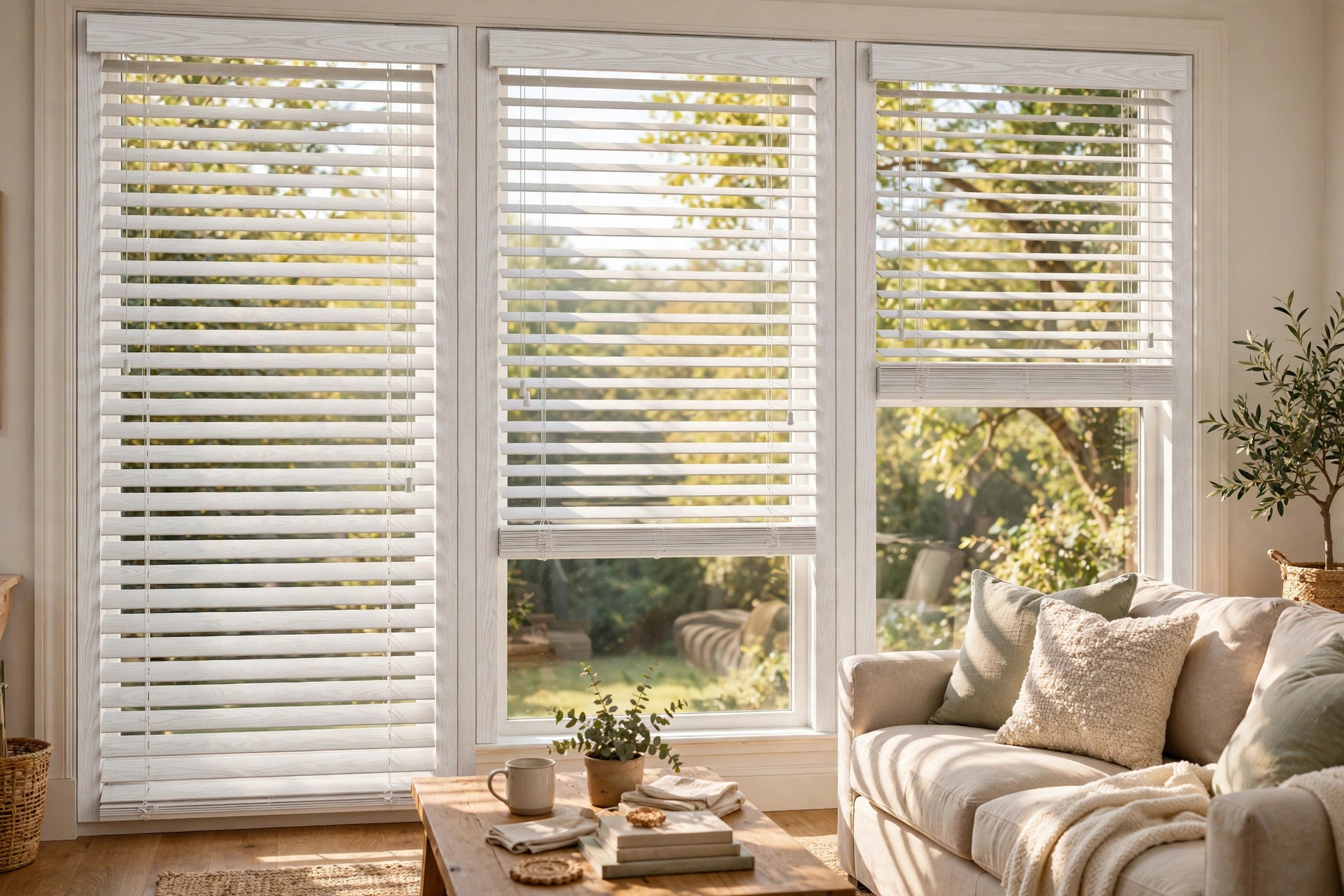
Window blinds shape the feel of a room. They control light, add privacy, and frame the view outside. Real wood blinds look warm and rich. But they cost a great deal of money. They also suffer in damp rooms. Kitchens and bathrooms can warp them over time. This is why many home owners now shop for affordable faux wood blinds for sale. These blinds look like real wood. They cost far less. They stand up to steam, splashes, and bright sun.
Faux wood blinds are made from PVC, vinyl, or a wood composite. The slats carry a grain print that copies natural wood. From a few feet away, most guests cannot tell the difference. Prices often run half of real wood, sometimes less. That makes them one of the most common picks in American homes. In this guide, you will learn why they matter, how to pick the right size and color, what types exist, what they cost, how to care for them, and how to keep them safe. You will also find answers to common questions at the end.
Why Affordable Faux Wood Blinds Matter
Light control is the main reason people buy blinds. A south facing window can flood a room with glare at midday. Television screens wash out. Wood floors fade. The slats of faux wood blinds tilt with a wand or cord. You can close them for full privacy at night. You can tilt them for soft light in the afternoon. You can raise them to open the whole view.
Price is the second reason. Real wood blinds for one large window can cost several hundred dollars. Faux wood blinds for the same window often sell for a fraction of that. When a home has twelve or more windows, the savings grow fast. Many buyers outfit a whole house for the price of a few real wood blinds.
Moisture is the third reason. Real wood swells and warps near water. Faux wood does not. This makes faux wood the better pick for kitchens, laundry rooms, and bathrooms. Steam from a shower or a boiling pot will not ruin the slats. They will not bow, crack, or grow mold as real wood can.
Looks matter too. Faux wood blinds come in white, cream, oak tones, and dark walnut shades. The grain print has grown much better in recent years. Many lines use an embossed finish that feels like wood under the fingers. Paired with the right curtain, they fit farmhouse, coastal, and modern rooms alike. Guides like the affordable bamboo roman shades buying guide show other natural looks, but few match the wood look at this price.
How to Choose the Right Size: Affordable Faux Wood Blinds for Sale
A poor fit ruins the look. Measure each window twice before you order. Faux wood blinds are sold as inside mount and outside mount. Inside mount sits within the window frame. Outside mount covers the frame and wall around it. Most buyers pick inside mount for a clean look.
Measure the width of the inside frame at the top, middle, and bottom. Write down the smallest number. Measure the height at the left, center, and right. Write down the longest number. Many home guides explain this in more depth, such as the measuring advice at The Spruce. For outside mount, add several inches of width and height so the blind covers the trim.
Slat size changes the look. Faux wood blinds come in two common slat widths: two inch and two and one half inch. Two inch slats are the classic pick. They work well in small to medium windows. Two and one half inch slats look bolder. They suit large windows and great rooms. Wider slats also need fewer slats to cover a window, which gives a cleaner view when open.
Color choice should match the trim of the room. White blinds with white trim give a bright, fresh look. Wood tone blinds match wood trim or wood floors. If your home has mixed trim, pick white. White blinds fit almost every style. Dark walnut blinds look rich in studies and libraries. They can darken a small room, so use them with care.
Types and Options on the Market
Not all faux wood blinds are the same. Builders use different cores and finishes. Here are the main types you will see when you shop for affordable faux wood blinds for sale.
PVC and Vinyl Faux Wood Blinds
These are the most common and the cheapest. The slats are solid vinyl with a printed wood grain. They resist water fully. They are heavy, which helps them hang flat. Their color goes all the way through the slat in better lines. In cheaper lines, a scratch can show white underneath. Check product details before you buy.
Composite Faux Wood Blinds
Composite blinds mix wood fibers with man made resins. They feel lighter than vinyl. They look closer to real wood because the grain is pressed into the slat. They handle heat well and resist warping. Prices run a bit higher than vinyl, but still far below real wood.
Cordless Faux Wood Blinds
Cordless blinds have no lift cords. You push the bottom rail up or pull it down by hand. This removes looped cords, which makes them safer for homes with small children and pets. The U.S. Consumer Product Safety Commission has warned about corded window coverings for years. Cordless models cost more, but the safety gain is real. Many states and retailers now push cordless as the default choice.
Smart and Motorized Blinds
Some lines now offer motorized faux wood blinds. A small motor tilts and lifts the slats. You control them with a remote or a phone app. They cost more than hand operated blinds. But they suit tall windows that are hard to reach. Stores like Home Depot and Lowe’s carry both manual and motorized options.
Real Wood Blinds as an Alternative
If you love true wood, it is worth a look before you decide. Real wood blinds are lighter and feel warmer to the touch. The machine washable real wood blinds buying guide covers their care and limits. For most rooms, though, faux wood gives you the look at a much lower price.
Cost and Price: What You Should Expect
Price is the main draw of faux wood blinds. Still, prices vary by size, brand, and features. A small stock blind for a standard window can sell for twenty to forty dollars at big box stores. A custom cut blind for a wide window can run eighty to one hundred fifty dollars. Motorized models cost the most.
Stock blinds are the cheapest. They come in fixed sizes and common colors. You buy them off the shelf or online and mount them yourself. Cut to size programs at IKEA, Wayfair, and blinds.com let you pick a close size and trim it in store. This saves money over true custom work.
Custom blinds cost more but fit odd windows well. Arched tops, wide sliders, and very tall windows often need custom work. Expect to pay double or more than stock. The cordless cellular shades price comparison usa shows how prices stack up across window covering types.
Watch for sales. Major holidays bring deep cuts on window treatments. Memorial Day, Labor Day, and Black Friday often show thirty to fifty percent off at large retailers. Free shipping on online orders also cuts the total cost. Buying blinds for many windows at once can unlock bulk discounts.
Do not forget the hidden costs. Mounting brackets and screws come in the box. Tools do not. You will need a drill, a level, and a tape measure. If you hire a handyman, add fifty to one hundred dollars per window in many markets. Most handy home owners mount a blind in under thirty minutes.
Where to Shop for the Best Value
You can find affordable faux wood blinds for sale in many places. Each has its strengths.
Big box home stores carry stock blinds you can take home the same day. They also run cut to size counters. Staff can trim a blind to your width while you wait.
Online window stores offer more colors and wider custom ranges. Their prices often beat store prices, and free samples help you match colors at home. Read reviews with care. Look for comments about color match, slat straightness, and the quality of the tilt wand.
Warehouse clubs sometimes sell multi packs at a low per blind price. These suit buyers who need the same size for many rooms.
Thrift and salvage stores are a long shot. Blinds are cut to fit, so used blinds rarely fit your windows. Buy new for the best result.
Before you order, check the return policy. A blind that looks wrong in your light should go back. Many online stores give thirty days or more. Keep the box until you are sure.
Care and Upkeep
Faux wood blinds are easy to keep. They need far less care than fabric curtains or real wood.
Dust them once a month. Close the slats flat and wipe with a dry microfiber cloth or a duster. A vacuum with a brush head works well for tall blinds. This keeps dust from building up in the grain print.
Wash them when dirty. Mix a small amount of mild dish soap in warm water. Wipe each slat with a soft cloth. Do not soak the headrail. The metal parts inside can rust if they stay wet. Wipe the cords too, but do not pull them hard. In kitchens, wipe grease spots soon after cooking. Grease grows sticky if left for months.
Keep them out of harsh chemicals. Bleach and strong cleaners can fade the grain print. Stick to mild soap. Test any cleaner on a hidden spot first.
Check the cords and tilt wand each year. Cords wear where they rub against the slats. If a cord frays, replace it or replace the blind. A snapped cord can drop the blind at a bad time. Cordless models have fewer parts to wear. They often last longer for this reason.
Sun will fade any blind over time. South and west windows get the most wear. Blinds with UV protection last longer in bright rooms. If one side of the house fades faster, rotate blinds between rooms of the same size to even the wear. The care tips at Bob Vila and Family Handyman echo these simple habits.
Safety in the Home
Window cords have caused harm to small children. Loop cords can wrap around a neck. This risk is well known. Safety groups advise cordless blinds in any home with children or pets. When you shop for affordable faux wood blinds for sale, look for the cordless label.
If you already own corded blinds, make them safer. Cut loop cords or use cord cleats to wrap cords high on the wall. Move cribs and beds away from windows. Keep cords out of reach at all times. The safety resources at the CPSC list current rules and recall notices.
Heavy blinds need solid mounts. A wide faux wood blind can weigh a good deal. Mount brackets into studs or use strong wall anchors. A blind that pulls loose can fall on a child or pet. Check the mounts once a year and tighten loose screws.
Fire safety matters too. Vinyl blinds can melt in a fire, though they are slow to catch. Keep blinds clear of candles, heaters, and stove tops. Do not mount them where flames can reach.
Frequently Asked Questions
Do faux wood blinds look cheap?
No, not in most cases. Modern grain prints and embossed textures copy real wood well. White faux wood blinds look clean and classic. Wood tone blinds look rich from across the room. Cheap lines can look flat up close, so read reviews and order samples first.
Can faux wood blinds go in a bathroom?
Yes. This is one of their best uses. Steam and splashes do not warp vinyl or composite slats. Wipe them dry now and then to stop soap spots. Avoid mounting them where a shower sprays them directly.
How long do faux wood blinds last?
Most last seven to twelve years with normal care. Cheap lines may yellow in strong sun after five years. Better lines with UV protection hold their color longer. Cordless models often outlast corded ones because they have fewer moving parts.
Are faux wood blinds hard to install?
No. Most home owners mount them with a drill, a level, and a tape measure. Inside mount takes about twenty minutes per window. The box includes brackets and screws. Online videos walk through each step if you need help.
Can I cut faux wood blinds to fit?
You should not cut them at home with hand tools. The slats can crack or chip. Buy stock sizes, use a store cut to size service, or order custom. A clean factory cut keeps the edges smooth and the finish sealed.
Do faux wood blinds block light fully?
They block most light when closed. Small gaps between slats and the frame let some light through. For total darkness in a bedroom, pair them with blackout curtains or liners. Design sites like HGTV show many layering ideas.
A Short Final Word
Affordable faux wood blinds for sale give you the wood look without the wood price. They suit damp rooms. They need little care. They come in many colors and sizes. Measure with care, pick cordless for safety, and buy during holiday sales for the best value. A whole house of new blinds can change how every room feels. Start with the rooms you use most, and work outward from there.
References
Blinds.com. (n.d.). Window blinds, shades, and shutters. https://www.blinds.com Bob Vila. (n.d.). Home improvement advice. https://www.bobvila.com Family Handyman. (n.d.). DIY home repair and maintenance. https://www.familyhandyman.com HGTV. (n.d.). Home and garden ideas. https://www.hgtv.com IKEA. (n.d.). Home furnishings. https://www.ikea.com Lowe’s. (n.d.). Home improvement products. https://www.lowes.com The Home Depot. (n.d.). Home improvement products. https://www.homedepot.com The Spruce. (n.d.). Home and garden advice. https://www.thespruce.com U.S. Consumer Product Safety Commission. (n.d.). Product safety information. https://www.cpsc.gov Wayfair. (n.d.). Furniture and home goods. https://www.wayfair.com
Was this guide helpful?

About Michael Thompson
The My Garden US editorial team writes practical, in-depth home and garden guides for American homeowners — tested advice, no fluff.