
The search for luxury zebra dual layer shades for florida homes has grown fast in recent years. Florida homeowners want window coverings that look elegant and stand up to the heat. Zebra shades, also called dual layer shades, answer both needs. They pair sheer fabric with solid bands in one roll. The result is a clean modern look with exact control over light and privacy. This guide explains what these shades are, why they suit the Florida climate, and how to choose, price, install, and care for them.
Why Zebra Shades Suit Florida Homes
Florida homes face long days of strong sun. The state sees more than 230 sunny days in an average year. Light floods through tall windows, sliding glass doors, and lanais. This light is welcome, but too much of it brings glare, heat, and fading of floors and furniture.
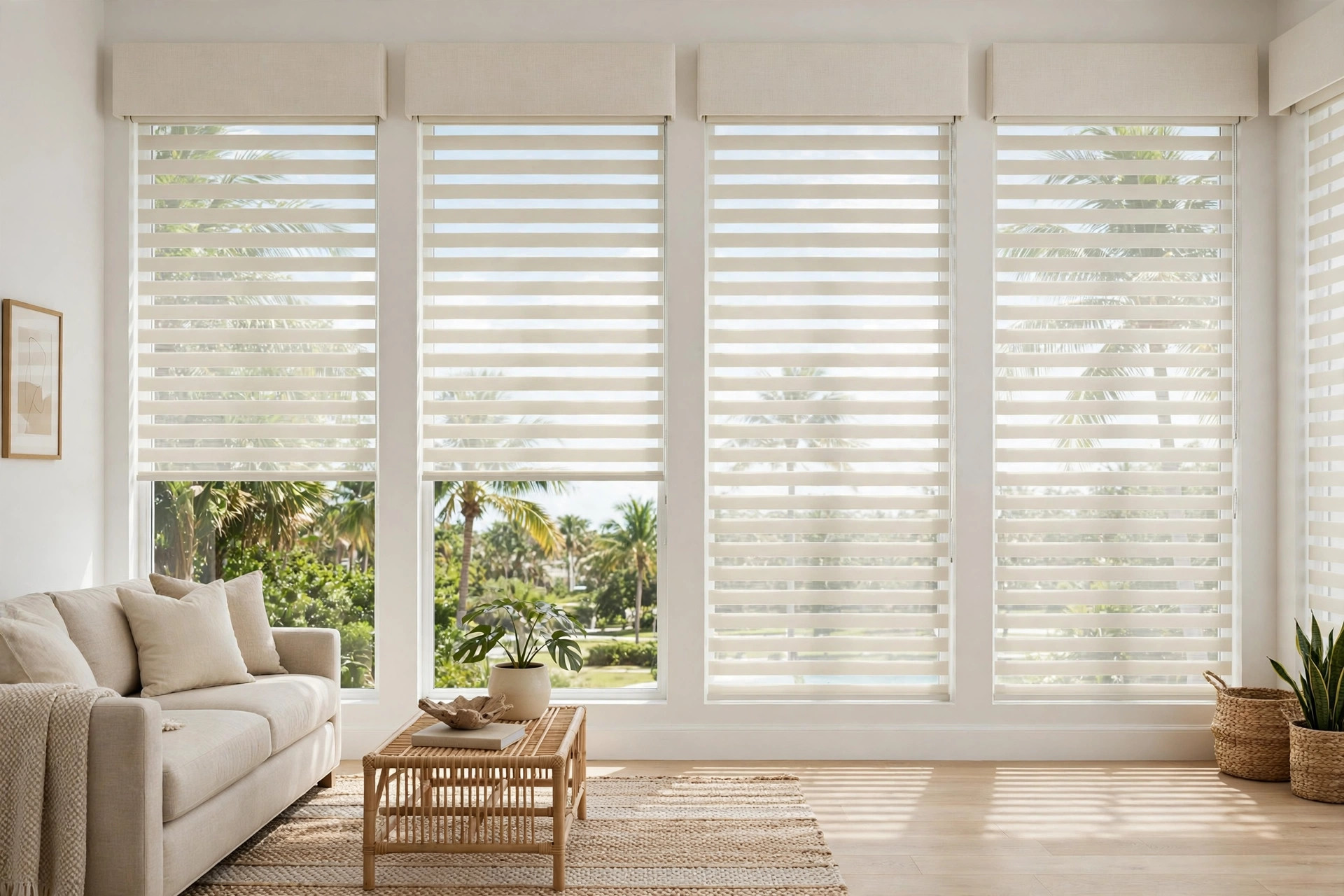
Zebra dual layer shades give Florida homeowners a middle path. The sheer bands let soft daylight pass through while the solid bands block the view from outside. With one pull of the cord or one touch of a remote, the room can go from bright and open to dim and private.
The Florida sun is also harsh on fabrics. Heavy drapes can fade fast on a west-facing window. Quality zebra shades use fabrics treated to resist ultraviolet rays. Light colors reflect heat instead of absorbing it. This keeps the room cooler and keeps the shade looking new for a longer time.
Humidity is the second great test in Florida. Salt air near the coast and damp air inland can ruin cheap window coverings. Many high-end zebra shades use polyester or polyester-blend fabrics. These fibers do not absorb moisture the way natural fibers do, so they resist mold and mildew when kept clean and dry. For a full guide to moisture-friendly window styles, see our notes on pinch pleat drapes for humid climates.
How Zebra Dual Layer Shades Work: Luxury Zebra Dual Layer Shades for Florida Homes
The design is simple. Two layers of fabric run parallel on one roller tube. Each layer has alternating bands of sheer and solid fabric. When the solid bands line up with the sheer bands, light passes through. When the solid bands overlap each other, the window closes off and privacy returns.
A small pull moves the layers a few inches. That is all it takes to shift from open to closed. The change is smooth and quiet, and most luxury models include a bottom rail that keeps the fabric hanging flat and straight.
High-end zebra shades differ from budget versions in three ways. First, the fabric is heavier and more stable, so it hangs without curling at the edges. Second, the mechanism uses a clutch or a motor with a slow, even roll. Third, the valance or cassette at the top hides the roller for a finished look.
Retailers such as Blinds.com show how a fabric-wrapped cassette can hide the hardware and make the shade look built into the window.
What to Look For When You Buy
Fabric quality comes first. Hold the fabric up to a lamp if you can. A good solid band blocks nearly all light, and the sheer band should look even, with no thin spots or pulls. Ask whether the fabric has a UV block rating.
Opacity is the next point. Zebra shades come in sheer, light filtering, and room darkening bands. In Florida, light filtering bands are the most popular choice for living rooms. They cut glare while keeping the room bright. For bedrooms, room darkening bands help against the early morning sun. You can compare blackout options in our guide to cordless cellular shades for American homes.
Size and fit matter more than most buyers expect. Zebra shades must hang level. Measure the window in three places: top, middle, and bottom. Use the narrowest width for an inside mount. If the window is out of square by more than a quarter inch, choose an outside mount instead.
The control option is the third choice. Cord loops are the classic option and cost the least. Cordless lift is cleaner and safer. Motorized lift is the luxury option. A motor lets one shade, or a whole room of shades, move at the touch of a button. They can close at noon when the sun is strongest and open at dusk. Design sites such as HGTV often show motorized shades in modern Florida rooms because the clean look suits the open floor plans common in the state.
Color and texture finish the choice. Whites, ivories, and pale grays are the safe picks. They match most wall paint and reflect heat. Take a sample home and look at it in morning and afternoon light before you order.
Types and Options
Zebra shades are not one product. They come in several forms.
Standard zebra shades roll on an open roller with a cord loop. This is the most common and most affordable form. It suits rental homes and modest budgets.
Cassette zebra shades hide the roller in a fabric-covered box. The cassette gives a tailored look and keeps dust off the top of the roll. It is the most popular choice in new Florida homes where buyers want a finished appearance.
Dual shade systems pair a zebra shade with a blackout roller in one headrail. By day you use the zebra layer. At night you drop the blackout layer for full darkness. This two-in-one system costs more but replaces two separate window coverings.
Motorized zebra shades add a battery or hardwired motor. Battery motors need a charge every six to twelve months. Hardwired motors connect to house power and never need charging. Solar chargers, which sit behind the shade in the window, can extend battery life in sunny Florida rooms.
Fabric width limits the size of one shade. Most zebra fabrics come in rolls up to about 110 inches wide. A window wider than that needs two shades side by side. For sliding glass doors, two or three panels often work better than one wide panel. A door panel moves up and down many times a day, and a smaller panel wears better.
Cost and Price in Florida
Prices for luxury zebra dual layer shades vary with size, fabric, and options. A small bathroom window shade in a standard fabric may cost between 80 and 150 dollars. A large living room window in a premium fabric with a cassette may cost between 250 and 450 dollars. Motorized versions add 150 to 300 dollars per shade.
Professional measuring and installation in Florida usually runs 50 to 100 dollars per window. Some dealers include measuring free with an order. Installation on tall or hard-to-reach windows costs more. Homes in South Florida, where labor rates run higher, may pay at the top of that range.
Custom orders take time. A standard custom shade takes two to three weeks from order to delivery. Motorized or wide shades can take four to six weeks. Plan the order well before a move-in date or a holiday gathering.
To get a fair price, measure all windows and get quotes from at least two dealers. Ask each dealer the same questions. What fabric is included in the quote. Does the quote include the cassette. Does it include installation. Online retailers such as Wayfair, Lowe’s, and Target list prices openly, which helps when you compare a local dealer quote.
One way to save money is to put luxury shades on the front and main rooms and simpler shades on closets and utility rooms. Many sellers run promotions in January and again in late summer, when home improvement spending slows.
Care and Upkeep in a Humid Climate
Zebra shades need little care, but Florida homes need a steady routine. Dust the shades every two to four weeks. A feather duster or a vacuum with a soft brush head works well. Move the shade through its full range as you dust so both fabric layers stay clean.
For spots, use a damp cloth with a small amount of mild soap. Blot the spot. Do not rub, because rubbing can push the stain deeper into the weave. Let the shade dry in the down position with the bands open so air reaches both layers. Never use bleach or strong cleaners.
Humidity control in the home matters as much as cleaning. Keep indoor humidity between 30 and 50 percent. A dehumidifier or a well-maintained air conditioner handles this in most Florida homes. Leave a small gap between the shade and the glass so air can move.
Inspect the mechanism once a year. On cordless shades, lift and lower the shade and listen for grinding. On motorized shades, run each shade through a full cycle and recharge the battery as the maker directs. Stores such as Bed Bath & Beyond carry gentle fabric cleaners and dusters sized for blinds and shades.
Sun damage shows first on the side of the fabric that faces the glass. Once a year, look at the shade from outside through the window. If one band looks much lighter than the rest, the fabric is fading, so pick fade-resistant fabric at the start. It costs more and pays back in a longer life.
Safety for Children and Pets
Window covering safety is a national concern. Loose cords can strangle small children. The Consumer Product Safety Commission has pushed the industry toward cordless designs for years. Florida families with young children or pets should take this seriously.
Cordless lift and motorized lift are the safest choices. They have no loop for a child to reach. If you keep cord loop shades, install the tension device that comes in the box. The device holds the cord tight against the wall. Check it twice a year. Children pull on cords, and the device can loosen.
Cats are a second concern. Some cats bat at moving fabric. A zebra shade that moves when a cat swats it can swing the bottom rail into the window. Mount the brackets firmly and check the screws each year. A shade that hangs firmly will not pull free.
Keep cribs, beds, and play areas away from windows with corded coverings. This is a simple rule that removes most of the risk. When you buy, tell the dealer that children or pets live in the home. A good dealer will steer you to cordless or motorized options without being asked.
Coordinating With the Rest of the Home
Zebra shades look best when they match the mood of the room. In a coastal Florida home with white walls and light wood floors, a white or sand zebra shade keeps the airy feel. In a formal dining room, a shade with a subtle texture adds depth without the weight of drapes.
Many Florida homeowners pair zebra shades with sheer side panels. The panels soften the window edges and add color while the zebra shade does the daily work of light control. For outdoor spaces, a different fabric is needed. See our guide to patio curtains for Florida homes for fabrics built for porches and lanais.
The same shade color can run through the whole house. This gives a clean look from the street. High-end home stores can spark ideas. West Elm and Pottery Barn display window treatments in full room settings, which shows how a shade color plays against furniture and rugs.
Questions and Answers
How long do zebra dual layer shades last in Florida? A quality shade lasts seven to twelve years in a Florida home. Sun is the main factor, and west and south windows age fabric faster. Keeping the shades clean and the indoor humidity steady adds years to their life.
Do zebra shades block heat as well as blackout shades? Not quite. A blackout roller blocks more heat because it seals the window. Zebra shades trade some heat blocking for light control and style. Light colored fabrics with a UV treatment close much of the gap.
Can I install zebra shades myself? Yes, if you are handy and the windows are standard. Inside mounts need a drill, a level, and careful measuring. Tall windows, arched tops, and out-of-square frames are better left to a professional.
Are motorized zebra shades worth the cost? They are worth it for hard-to-reach windows and for rooms with many shades. One remote can move a whole wall of glass at once. For a single small window, a cordless manual shade does the job for less money.
Will zebra shades work on sliding glass doors? Yes. Order the shade as an outside mount that covers the door frame. For wide doors, use two or three panels. Check the clearance so the shade does not catch on the door handle.
How do I clean zebra shades without damaging them? Dust often and wash spots gently. Use a soft cloth, mild soap, and water. Blot, do not rub. Let the shade dry fully in the down position.
A Final Word
Luxury zebra dual layer shades for Florida homes are a strong choice for buyers who want both beauty and function. They handle the bright sun, the damp air, and the demand for privacy in one clean package. Buy the best fabric you can afford. Measure with care. Choose cordless or motorized lift for safety. Keep them clean and dry. With those steps, the shades will serve the home well for a decade or more.
References
Bed Bath & Beyond. (n.d.). Bedding, bath, and home storage. https://www.bedbathandbeyond.com Blinds.com. (n.d.). Window blinds, shades, and shutters. https://www.blinds.com HGTV. (n.d.). Home and garden ideas. https://www.hgtv.com Lowe’s. (n.d.). Home improvement products. https://www.lowes.com Pottery Barn. (n.d.). Furniture and home decor. https://www.potterybarn.com Target. (n.d.). Retail store. https://www.target.com U.S. Consumer Product Safety Commission. (n.d.). Product safety information. https://www.cpsc.gov Wayfair. (n.d.). Furniture and home goods. https://www.wayfair.com West Elm. (n.d.). Modern furniture and home decor. https://www.westelm.com
Was this guide helpful?

About Sarah Mitchell
The My Garden US editorial team writes practical, in-depth home and garden guides for American homeowners — tested advice, no fluff.
You May Also Like
White Linen Curtain Panels Reviews and Buying Guide
March 22, 2026 0 views
Noise Reducing Pinch Pleat Drapes Buying Guide
August 11, 2026 0 views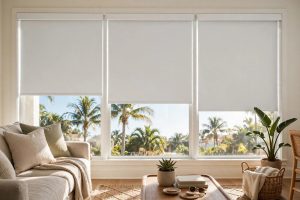
Energy Efficient Blackout Roller Shades for Florida Homes
August 29, 2026 0 views