
A zebra dual layer shades price comparison USA shoppers can trust is hard to find in one place. Prices shift from store to store, from state to state, and from one fabric to the next. One window can cost as little as thirty dollars, while another can pass four hundred. The range is wide, and it confuses many first time buyers.
This guide lays out the real picture. It explains what zebra shades are, what drives their price, and how prices compare across the main ways to buy in America. It also covers the features that are worth paying for and the ones that are not. By the end, you will know how to shop with a clear head and a firm budget.
Why It Matters
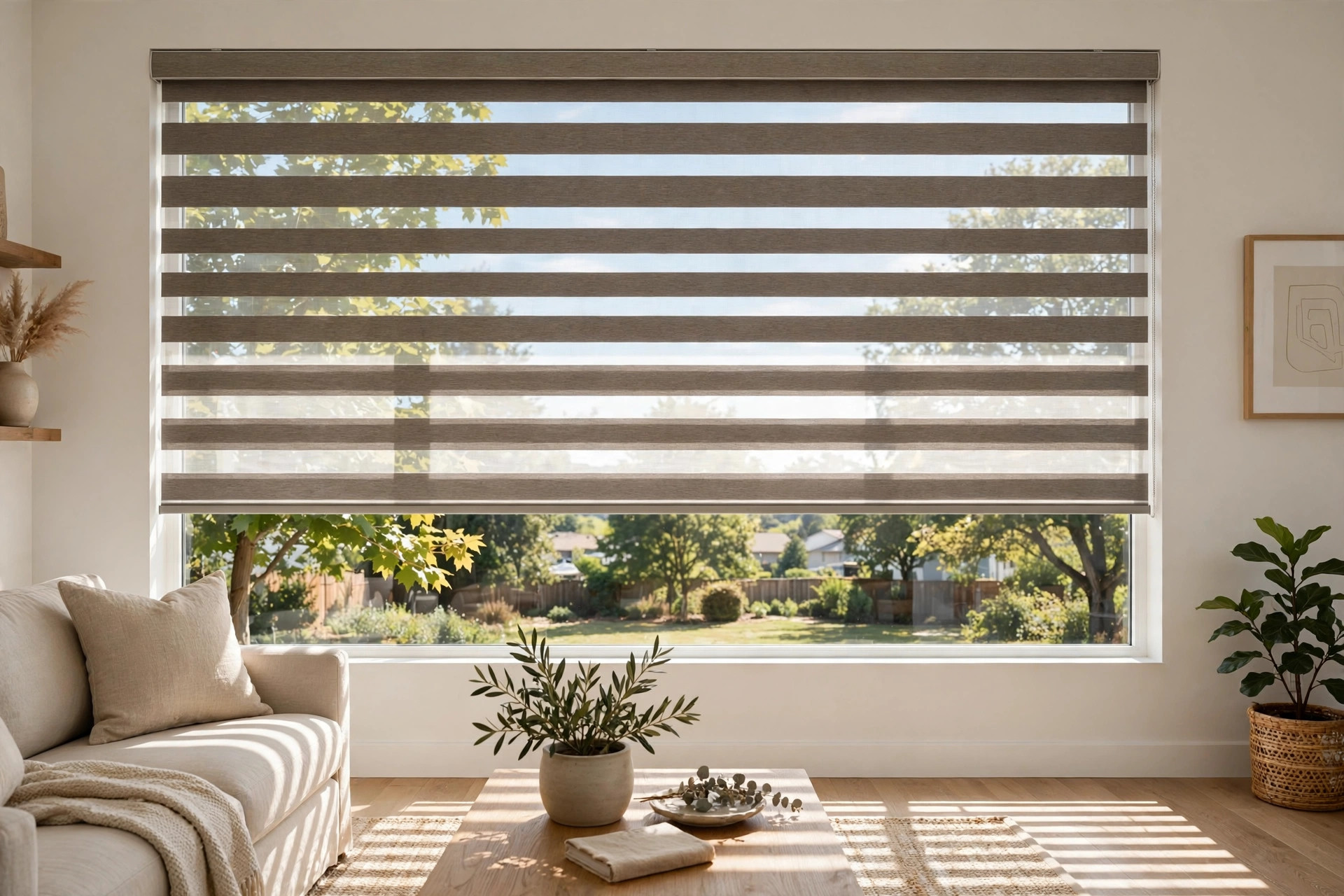
Zebra shades have two layers of fabric with bands that alternate between sheer and solid. Slide one layer, and the bands line up or cross. When they line up, light passes through. When they cross, the shade closes for privacy. One product gives you day light, night privacy, and a dim setting in between.
That flexibility is why sales have grown so fast. Many rooms need light during the day and privacy at night. With plain roller shades, you must raise the shade to see out, which lets the whole room be seen. With blinds, you must tilt the slats, which leaves thin lines of sight. Zebra shades solve both problems with a single pull cord or a small motor.
Price matters because most homes need more than one shade. A living room, three bedrooms, and a kitchen add up fast. A difference of fifty dollars per window becomes three hundred dollars across a house. A careful zebra dual layer shades price comparison USA study of quotes can save real money without giving up quality.
What To Look For When You Compare: Zebra Dual Layer Shades Price Comparison Usa
A fair price comparison only works when you compare like with like. Two shades can look the same in a photo and differ in every detail that matters. Keep these points in mind as you gather quotes.
Fabric Grade
The fabric decides how the shade looks, how long it lasts, and how it handles sun. Entry level fabrics are thin and fade within a few years in sunny rooms. Mid grade fabrics hold color and shape better. Premium fabrics have UV blocking, dirt resistance, and a finer weave. The same size shade can cost twice as much simply because the fabric is a grade higher.
Opacity Level
Zebra shades come in light filtering, room darkening, and full blackout versions. Blackout zebra shades use a thicker backing or a coated band. They cost more than light filtering versions of the same size, often by twenty to forty dollars per window.
Lift System
Corded shades cost the least. Cordless shades cost a bit more but are safer for children and pets. Motorized shades, run by remote or a phone app, cost the most. A motor can add eighty to two hundred dollars to each shade. Ask whether the price includes the remote and the charger.
Size And Mount
Wider and taller windows need more fabric and a stronger roller. Custom sizes cost more than stock sizes. An inside mount fits within the window frame and looks neat. An outside mount covers more of the frame and blocks extra light at the edges. Outside mount shades need extra width, so they cost slightly more.
Valance And Cassette
A cassette is the housing that covers the roller at the top. A square cassette looks modern. A fabric valance softens the look. Some makers include the cassette in the price. Others charge extra for it. Check the quote line by line.
Types And Options
Shoppers comparing prices will meet a few main options. Each has its own price band.
Light filtering zebra shades. The most common type. They soften daylight and give good daytime privacy. Typical price per standard window: thirty to one hundred twenty dollars.
Room darkening zebra shades. They block most light but not all. Good for living rooms and home offices where some darkness helps against screen glare. Typical price: sixty to one hundred eighty dollars.
Blackout zebra shades. They block nearly all light when closed. Popular for bedrooms and media rooms. For more on darkening options, see our blackout roller shades price comparison usa guide. Typical price: ninety to two hundred fifty dollars.
Cordless zebra shades. No hanging cords. The shade moves by a light push or pull on the bottom bar. Child and pet safe. They often add ten to thirty dollars per shade over corded models. Families with small children often prefer cordless options; see the cordless cellular shades price comparison usa page for a similar safe choice.
Motorized zebra shades. Controlled by remote, wall switch, or app. Some work with voice assistants. They are the top of the price range, often two hundred fifty to five hundred dollars per window, including the motor and power supply.
Custom printed zebra shades. Some shops print patterns or photos on the bands. These are special order items and run well above standard prices. They are a niche choice for statement rooms.
Cost And Price Comparison
Now the heart of the zebra dual layer shades price comparison USA buyers need: how the three main ways to buy stack up.
Big Box Stores
Stores such as The Home Depot and Lowe’s sell stock size zebra shades ready to take home. Prices usually run from twenty five to one hundred dollars per shade for common window sizes. The selection is limited to standard widths and a few colors. For many rentals and quick fixes, this is the cheapest route. If your window is a standard size, start here to set your price floor.
Specialty Window Stores
Dedicated window treatment shops, including online specialists such as Blinds.com, sell a wider range of fabrics, colors, and sizes. Made to order shades here run from sixty to two hundred fifty dollars per window. You pay more than at a big box store, but you get exact sizing, more fabric choices, and stronger warranties. Online shops often run sales of twenty to forty percent off, so the listed price is rarely the final price.
Local Dealers And Installers
Local dealers measure your windows, help you pick fabric, and install the shades. Prices run from one hundred fifty to five hundred dollars per window, with motorization at the high end. The labor and service cost money, but the fit is exact and problems get fixed in person. This route suits homes with odd window sizes or many windows where a bad measurement would waste money.
Price Ranges At A Glance
| Window Type | Big Box | Specialty / Online | Local Dealer | |—|—|—|—| | Small window, light filtering | $25-$60 | $60-$120 | $150-$250 | | Standard window, room darkening | $50-$100 | $100-$180 | $200-$350 | | Large window, blackout | $80-$140 | $150-$250 | $300-$450 | | Motorized, any size | Not stocked | $250-$400 | $350-$500 |
These are 2026 typical USA ranges. Sales, shipping, and local labor rates move them up or down.
Shoppers who also like heat control may want to compare our custom thermal insulated curtains for small apartments page, since curtains and shades solve different problems.
Where To Shop And What To Watch
Comparison sites and home guides can help you check prices across sellers. The Spruce publishes buying guides for window treatments that explain fabric and feature terms in plain language. HGTV runs design features that show how zebra shades look in real rooms, which helps you judge style before you spend.
Big retailers also matter for price checks. IKEA offers budget friendly window coverings that set a low price mark. Wayfair lists many brands side by side, which makes fast price comparison easy. Consumer Reports tests window coverings for durability and ease of use, and its ratings can warn you away from cheap shades that fail early.
When you compare, keep the terms equal. A fifty dollar shade with no cassette, corded lift, and thin fabric is not the same as a one hundred fifty dollar shade with a cassette, cordless lift, and UV stable fabric. Note the width, height, mount type, fabric line, and lift system for every quote. Only then do the numbers mean something.
Shipping also changes the true price. Some online sellers charge per shade. Others ship free over a set order size. Returns matter too. A store with free returns can save you a second shipping fee if a color looks wrong at home.
Care And Upkeep
Zebra shades are easy to care for, and good care protects your purchase.
Dust them once a month with a soft cloth or a vacuum brush on low suction. Work from top to bottom so dust falls away from the shade. For spots, use a damp cloth with a drop of mild soap, then dry the area with a clean towel. Do not soak the fabric. Do not use bleach or strong cleaners.
Roll the shade fully up now and then to check the fabric edges for fraying. If a band starts to lift, a small drop of fabric glue can fix it early. Call the seller about warranty repair before you try a home fix on a shade that is still under warranty.
Keep shades out of rooms with heavy steam, such as directly over a stove, unless the fabric is rated for it. Steam and grease shorten fabric life.
Motorized shades need battery charging or a power check once or twice a year. Most remotes use a coin cell battery that lasts about a year. Keep spare batteries on hand so a dead remote does not leave a shade stuck.
Safety
Window cords have injured children in American homes for decades. The U.S. Consumer Product Safety Commission warns that cords on window coverings can strangle small children. Cordless zebra shades remove this risk entirely.
If you buy corded shades, follow the rules. Keep cords out of reach of cribs, beds, and play areas. Use the cord cleat that comes in the box, and wrap cords high and tight. Cut looped cords or fit them with a tension device.
For homes with children or pets, cordless or motorized shades are the safest choice. Many states now limit or ban corded shades for sale. Check your state rules before you buy.
Frequently Asked Questions
How much do zebra dual layer shades cost in the USA? Standard light filtering shades cost twenty five to one hundred twenty dollars per window at retail. Custom and motorized shades run from one hundred fifty to five hundred dollars per window. Most homes pay between sixty and one hundred eighty dollars per window for made to order shades.
Are zebra shades worth the higher price over plain roller shades? They are worth it if you need both daylight and privacy in the same room. A plain roller shade gives you open or closed, with nothing between. A zebra shade gives you a dim setting that plain shades cannot copy. If you only need open or closed, a plain shade costs less.
Do zebra shades provide full privacy at night? Light filtering zebra shades give privacy when closed, but bright indoor light can show silhouettes through the sheer bands. For full night privacy, choose room darkening or blackout zebra shades and close them fully.
Can I install zebra shades myself? Most stock and made to order shades come with brackets and screws for a basic inside or outside mount. A handy homeowner can mount one in about twenty minutes with a drill and a level. Very wide shades are heavy, so ask for help lifting them into the brackets.
How long do zebra shades last? Good quality zebra shades last seven to twelve years in normal use. Sun heavy rooms shorten fabric life. Cheap thin fabrics may fade or warp within three to five years. A strong warranty, five years or more, is a good sign of quality.
Do motorized zebra shades need an electrician? Most use rechargeable batteries or plug into a nearby outlet, so no electrician is needed. Hardwired models do need one. Battery models charge through a small cable a few times a year.
A Short Final Word
A zebra dual layer shades price comparison USA buyers can use comes down to three steps. First, decide your type: light filtering, room darkening, blackout, or motorized. Second, get quotes from all three channels: big box, specialty or online, and local dealer. Third, compare the quotes line by line on fabric, size, lift, and extras.
Do not chase the lowest price alone. A shade that fades in three years is no bargain. A fair price for a well made shade, bought after a careful comparison, will serve your windows for a decade. Measure twice, compare three quotes, and buy once.
References
Blinds.com. (n.d.). Window blinds, shades, and shutters. https://www.blinds.com Consumer Reports. (n.d.). Product reviews and ratings. https://www.consumerreports.org HGTV. (n.d.). Home and garden ideas. https://www.hgtv.com IKEA. (n.d.). Home furnishings. https://www.ikea.com Lowe’s. (n.d.). Home improvement products. https://www.lowes.com The Home Depot. (n.d.). Home improvement products. https://www.homedepot.com The Spruce. (n.d.). Home and garden advice. https://www.thespruce.com U.S. Consumer Product Safety Commission. (n.d.). Product safety information. https://www.cpsc.gov Wayfair. (n.d.). Furniture and home goods. https://www.wayfair.com
Was this guide helpful?

About Jennifer Lee
The My Garden US editorial team writes practical, in-depth home and garden guides for American homeowners — tested advice, no fluff.
You May Also Like
Best Rod Pocket Curtains for First Time Homeowners
September 4, 2026 0 views
Top Rated Sheer Linen Curtains for USA Homes: A Complete Buying Guide
January 13, 2026 0 views
Machine Washable Window Treatment Installation Services Near Me: A Homeowner’s Guide
March 1, 2026 0 views