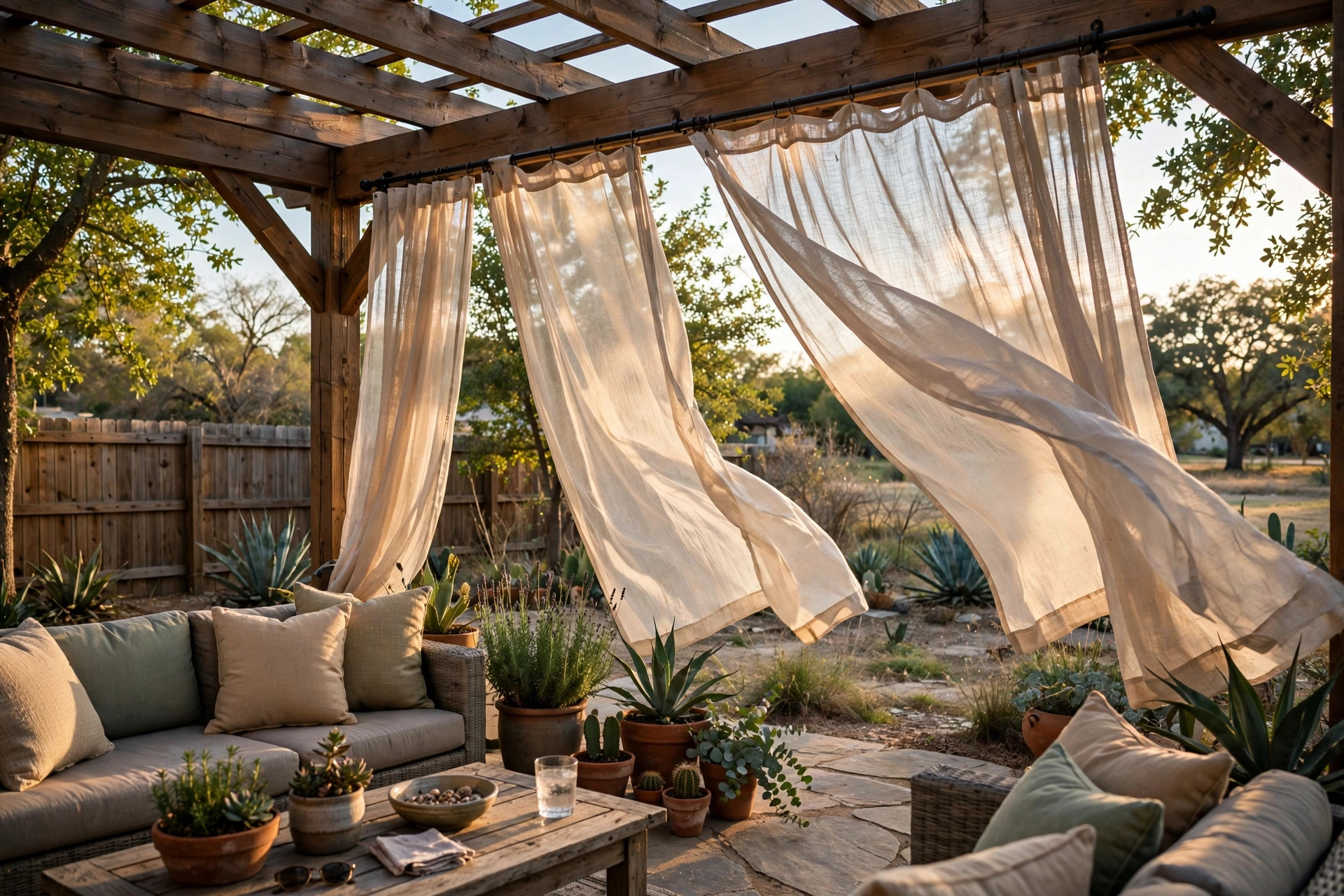

Texas heat can turn a fine patio into an oven by noon. When you buy outdoor patio curtains online in Texas, you get shade, privacy, and a softer look for your yard without driving to a store. Online shops carry more sizes and fabrics than most local stores. This guide walks you through the choice, step by step, so your order is right the first time.
Why Outdoor Patio Curtains Matter in Texas
The Texas sun is strong from spring through fall. Temperatures cross one hundred degrees in many parts of the state. A bare patio offers no relief. Curtains block harsh afternoon light. They cut glare on glass doors. They give shade to chairs, pets, and plants.
Wind matters too. The Gulf Coast gets sea breezes and sudden storms. West Texas gets dust and dry wind. Good outdoor curtains weigh enough to hang straight in a breeze. They shield the patio from blown dust and light rain.
Privacy is the third reason. Many Texas homes sit close to their neighbors. Curtains let you eat dinner on the porch without feeling watched. They draw closed in seconds and open just as fast.
There is a comfort angle as well. A curtained patio feels like a room. It becomes a place to read, to talk, to sit out the long evening. For little money, cloth walls turn a slab of concrete into a living space.
What to Look for When You Shop: Buy Outdoor Patio Curtains Online in Texas
Online stores make the choice easy, but they also make it easy to buy the wrong thing. Read the details before you add to cart. The product page holds the facts you need.
Fabric That Handles Sun and Storms
Texas weather is hard on cloth. The sun fades cheap fabric in one season. Pick fabric made for outdoor use. Look for labels like “fade resistant,” “UV resistant,” or “mildew resistant.” These words tell you the maker built the cloth for real weather.
Olefin and acrylic fabrics hold color well. Polyester blends are cheaper and dry fast. Waterproof canvas sheds rain but feels heavy. Sheer mesh gives light shade and lets air pass. Each has a place. A sunny west-facing patio needs strong UV fabric. A covered porch may do fine with a lighter weave.
Check the fabric weight. Outdoor curtain fabric usually runs between five and ten ounces per yard. Heavier cloth hangs better in wind. Lighter cloth moves more but dries faster. Both work if you match them to the spot.
Read reviews from buyers in hot states. A curtain that lasts three years in Ohio may fade in one summer near Houston. Shoppers often note how the color held up. That kind of note is worth more than a glossy photo.
Size and Fit
Measure before you buy. Many shoppers order panels that are too short. A patio curtain should reach near the floor or ground. Standard lengths are eighty-four inches and ninety-six inches. Taller porches may need one hundred eight inches.
Width matters as well. One panel does not cover a wide opening. Plan on one and a half to two times the width of the space. Two panels on a rod let you open the center like theater curtains. Leave a small gap at the bottom so the cloth does not drag in dirt.
Write down the measurements of each opening: the patio edge, the pergola beam, the covered porch. Buy for the largest opening first. Stores such as The Home Depot list exact sizes on each product page. Read them with care and compare them to your notes.
If your porch posts are not even, buy adjustable rods. If the ceiling slopes, measure the short side and the tall side. A little extra length beats a panel that floats six inches off the deck.
Hardware and Hanging
Curtains need a rod, cable, or track strong enough to hold them. Outdoor rods are often stainless steel or coated aluminum. These metals resist rust in humid Texas air.
Grommets are metal rings set into the top of the curtain. They slide on rods and look neat. Rod pockets hide the rod but move less freely. Tab tops fit rustic looks but snag in wind. Grommets suit most Texas patios.
Check the weight rating of the rod. Wind adds load. A rod that holds in calm air may bend in a storm. Wall mounts should screw into solid wood or masonry, not soft siding. Use anchors rated for outdoor use.
A cable system with turnbuckles is another good pick. It stays tight and holds panels flat in wind. It suits wide openings where a rod would sag in the middle.
Color and Light Control
Color is more than looks. Light colors reflect heat and keep the patio cooler. White, sand, and light gray are smart picks for sunny Texas yards. Dark colors absorb heat but hide dirt and stains. They suit covered porches where the sun never beats down hard.
Some buyers want total shade. Others want soft filtered light. Solid weaves give the darkest shade. Sheers give the lightest. If you eat dinner on the patio, a mid-weight weave cuts glare without turning the space into a cave. Think about the hours you use the patio most and match the weave to them.
Types of Outdoor Patio Curtains
Shops sell several styles. Each fits a different need. Learn the main three before you order.
Sheer Panels
Sheer panels filter light but let air move. They give a soft look and light privacy. They work well on covered porches where sun is indirect. They are not the best pick for full afternoon sun. They cost less than heavy fabrics, so they suit large areas on a budget.
Solid Weave Panels
Solid weave panels block more light and give real privacy. Many carry UV coatings. They suit open patios that face west or south. They feel heavier and hold their line in wind. Most buyers pick this type for the main seating area.
Waterproof Canvas Curtains
Waterproof canvas handles rain and splashing from pools. It dries slow after heavy rain, so it suits spots with some cover. It also blocks the most light. Families with pools often pick this type for changing areas or wind breaks. Specialty shops like Blinds.com list outdoor-rated options with full specs, which helps when you compare canvas to lighter weaves.
Many buyers pair types. Sheer panels on the east side catch morning light. Solid panels on the west side block the hard afternoon sun. Online stores such as Wayfair and IKEA carry both styles in one place, so mixing is simple.
Cost and Price
Prices vary by fabric, size, and brand. As a rough guide for a pair of panels:
– Basic polyester panels, eighty-four inches long, often cost twenty to forty dollars. – Fade-resistant acrylic panels of the same size often cost forty to eighty dollars per pair. – Waterproof canvas panels often cost sixty to one hundred twenty dollars per pair. – Wide pergola panels or extra-long lengths can cost more than one hundred dollars each.
Do not forget the hardware. A good outdoor rod or cable kit adds twenty to sixty dollars. Mounts, screws, and tie-backs add a little more. Add these to the budget before you judge a price.
Watch shipping terms. Shoppers often look for outdoor patio curtains with free shipping, but the better move is to compare the full price, shipping and all. Big warehouses that ship to Texas often drop the fee above a set order amount. Read the return policy too. Outdoor items may carry restocking fees. Measure twice so you do not pay to ship panels back.
Before you commit, compare a few sellers. Smart shoppers check the best outdoor patio curtains for sale across more than one store. Prices move with the season. Late spring and early fall bring sales. Buying in winter often brings the lowest prices of all.
Care and Upkeep
Outdoor curtains need simple care. Shake off dust once a week. Hose them down each month in summer. Dust holds moisture, and moisture feeds mildew.
Most outdoor panels wash in a machine on a gentle cycle. Use mild soap. Skip bleach unless the label allows it. Hang them back while damp so they dry in shape. Never put them in a hot dryer unless the tag says you can.
Take curtains down before strong storms. Texas storms can tear grommets out of cloth. Store panels in a dry bin during the off season. A covered porch may let you leave them up all year, but a quick take-down in March and a fresh hang in April costs little.
Check grommets and rod mounts each spring. Tighten loose screws. Replace rusted rings before they stain the fabric. A small tube of rust-proof spray on the hardware adds a year of life in coastal air.
Safety
Curtains near grills or fire pits can catch fire. Keep cloth well away from open flames. Many outdoor fabrics are not fire rated. Read the product label and honor the warning.
Wind is the other risk. Loose panels turn into sails. Tie panels back with straps on windy days. Make sure rods are fixed to solid framing. A falling rod can hurt a child or a pet.
Cord safety matters for homes with small children. Outdoor shades with long pull cords can be a hazard. The U.S. Consumer Product Safety Commission gives guidance on safe window coverings for homes with kids and pets. Pick cordless styles where you can.
If you hang curtains on a second-floor balcony, make sure the rail can take the full load in wind. A quick check with a local handyman may be worth the time. Do not guess on a high balcony.
Frequently Asked Questions
How many panels do I need for a twelve-foot patio opening? Plan for eighteen to twenty-four feet of curtain width in total. That usually means four panels of fifty-four inches each. The extra fullness gives folds and lets the panels close fully without gaps.
Do outdoor patio curtains really cool a patio? They cut direct sun, which is the main source of heat. A shaded patio can feel five to ten degrees cooler. They do not cool the air, but they stop the sun from baking furniture and stone.
What fabric lasts longest in Texas sun? Solution-dyed acrylic lasts the longest in most tests. Olefin is a close second. Both resist fading far better than cotton or basic polyester. Buying guides on The Spruce and HGTV often point shoppers to these two fabrics.
Can I leave outdoor curtains up all winter? In South Texas, yes, in most years. In North Texas, take them down before ice storms. Ice adds weight and can snap rods. Watch one winter and learn your local pattern.
Are waterproof outdoor shades a better pick than curtains? It depends on the job. Waterproof outdoor shades roll up neatly and suit clean modern looks. Curtains give a softer look and more privacy. Some homes use shades on the upper level and curtains below, and both work well.
How do I stop curtains from blowing too much? Use heavier fabric, add weights to the bottom hem, and tie panels back in strong wind. A cable system with clips holds panels tighter than a simple rod. Guides from Bob Vila and Lowe’s show tie-back and weight options that fit most setups.
A Final Word
When you buy outdoor patio curtains online in Texas, start with measurements and fabric. Pick UV-resistant cloth in the right length. Hang it on strong hardware. Then enjoy a cooler, calmer patio through the long hot season. For more ideas, read the guide to the best outdoor patio curtains for Florida homes to see how hot-climate buyers in another state make the same choice.
References
Blinds.com. (n.d.). Window blinds, shades, and shutters. https://www.blinds.com Bob Vila. (n.d.). Home improvement advice. https://www.bobvila.com HGTV. (n.d.). Home and garden ideas. https://www.hgtv.com IKEA. (n.d.). Home furnishings. https://www.ikea.com Lowe’s. (n.d.). Home improvement products. https://www.lowes.com The Home Depot. (n.d.). Home improvement products. https://www.homedepot.com The Spruce. (n.d.). Home and garden advice. https://www.thespruce.com U.S. Consumer Product Safety Commission. (n.d.). Product safety information. https://www.cpsc.gov Wayfair. (n.d.). Furniture and home goods. https://www.wayfair.com
Was this guide helpful?

About Robert Taylor
The My Garden US editorial team writes practical, in-depth home and garden guides for American homeowners — tested advice, no fluff.
You May Also Like
Made to Measure Blinds Reviews and Buying Guide
October 4, 2026 0 views
Curtain Cleaning Services Cost Guide USA
January 18, 2026 0 views
Noise Reducing Machine Washable Curtains for Sale: A Complete Buyer’s Guide
August 31, 2026 0 views