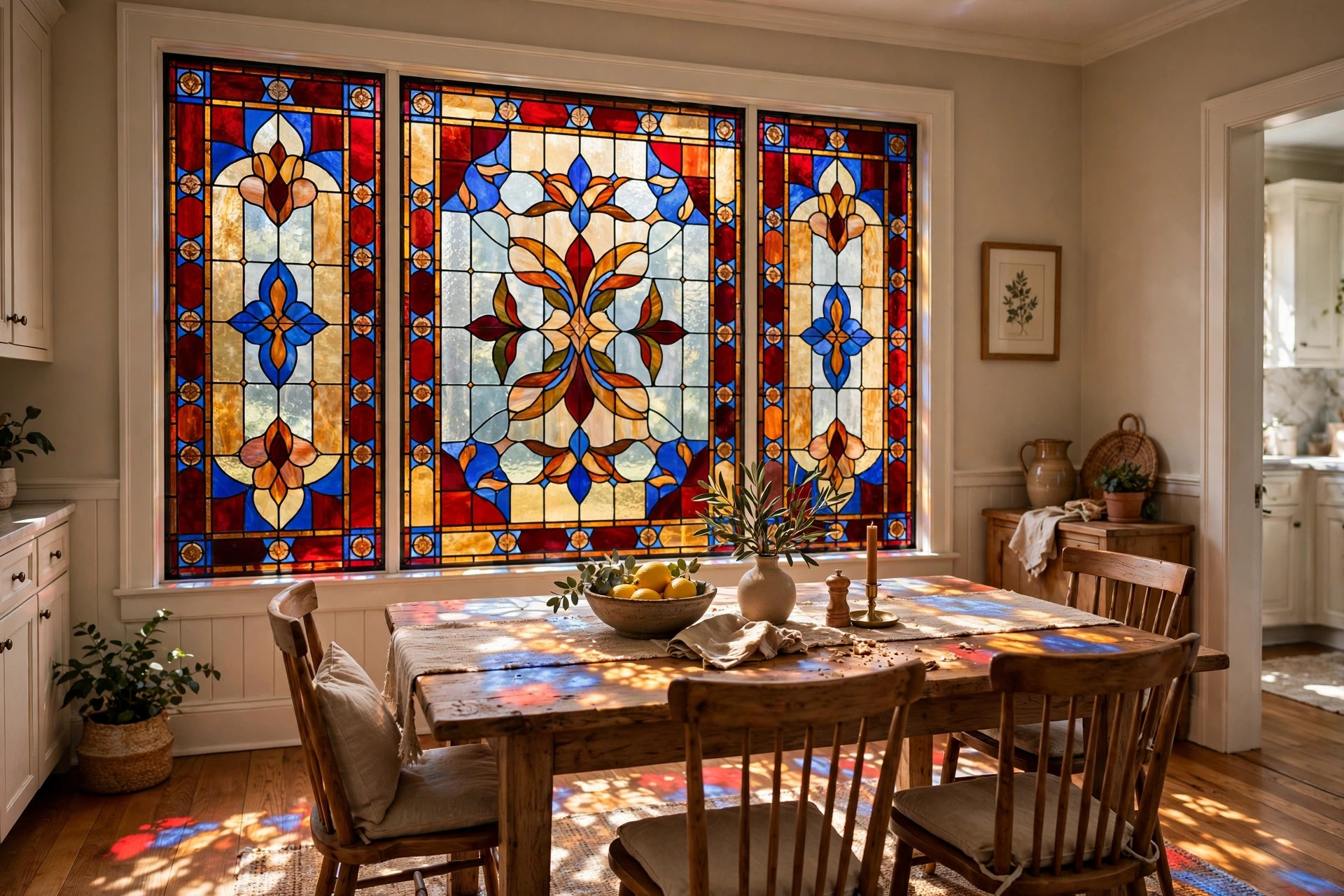

A stained glass window film reviews and buying guide begins with a plain fact. The film is a thin sheet of vinyl or polyester. You stick it on a plain window. From a few feet away, many guests cannot tell the difference. The price is a small fraction of real stained glass. That is why the product sells. It sells to renters. It sells to young homeowners. It sells to anyone who wants color and privacy without a contractor. This guide explains what the film is and how it works. It lists the main types on the market. It gives fair prices. It explains how to put it up and care for it. It notes the safety points that matter. It ends with answers to the questions buyers ask most.
Why It Matters
Windows are the eyes of a house. Bare glass shows everything. At night, with the lights on, your living room becomes a stage. Many people do not like that. They want privacy. They also want beauty. Plain blinds give privacy. They block the light too. Stained glass window film offers a middle path. It lets light through. It hides the view. It throws gentle color into the room when the sun hits it. Morning light through a ruby red panel looks like a small sunset on your floor.
There is also the question of cost. A real stained glass panel can cost hundreds of dollars per square foot. A professional installation can take weeks to order. Stained glass window film costs a few dollars per square foot. You can order it today and hang it tonight. Renters love this point. Most leases forbid changes to the glass. Film peels off when the lease ends. The glass stays untouched. Dark films also soften harsh afternoon sun, which can trim cooling bills a little. Buy it for privacy and beauty. Take the small energy gain as a bonus.
What to Look for When You Choose: Stained Glass Window Film Reviews and Buying Guide
The first choice is static cling or adhesive. Static cling film has no glue. It holds to clean glass with water and a small air gap. You press out the water with a squeegee. It stays put for years. When you want it gone, you peel it off. There is no residue. This is the right choice for renters and for anyone who may change the pattern. Adhesive film has a sticky back. It bonds harder and lasts longer. It resists steam in a bathroom better. It is harder to remove. Some brands leave a gummy edge. If you own the home and you are sure of the design, adhesive can serve you well.
The second choice is the material. Cheap film is thin vinyl. It works. It can bubble in strong sun. Better film uses thicker polyester or layered vinyl. It lies flatter. The colors look deeper. Read the product page for thickness. Sellers list it in mils. A mil is one thousandth of an inch. Film around 2 to 3 mils is common. Thicker is usually better, up to a point. Very thick film can be hard to trim.
The third choice is the pattern. Sellers offer hundreds of designs. Some copy classic church windows. Some copy the work of Louis Comfort Tiffany. Some are modern flowers, vines, and geometric shapes. Light patterns are best for dark rooms. Dark patterns are best for strong sun. Look at sample photos in real homes, not just product shots. Product shots are lit to sell. Review photos from buyers show the truth. Many buyers post photos of the film on their own windows. Those photos are worth more than the sales copy.
The fourth choice is privacy rating. Stained glass patterns vary in how much they hide. A dense floral print may block nearly all the view. An open geometric print may show shapes through it. Most sellers give a privacy score. A score of 95 percent or better means the neighbor cannot see in during the day. At night, with bright indoor light, no thin film hides everything. If total night privacy matters, plan a shade or curtain too.
The fifth choice is size and coverage. Measure the glass, not the frame. Measure twice. Buy rolls a few inches wider than you need. You will trim the edges with a sharp blade. A kit with a squeegee, a spray bottle, and a cutting tool costs a few dollars. Many buyers find the kit worth it. A credit card works as a squeegee in a pinch. A dull knife will tear the film, so use a fresh blade.
Types and Options on the Market
The market holds four broad families. The first is traditional stained glass look film. It prints colored shapes with dark lead lines. Good prints look convincing from across a room. Weak prints look flat. Buyer reviews often praise the colors and complain about weak edges. Read the three and four star reviews. They tell you how a product ages.
The second family is frosted and textured film with color. It copies sea glass, rain glass, and frosted church glass. It scatters light softly and gives strong privacy. It suits bathrooms and front doors.
The third family is suncatcher and art film. These are small, bold pieces. They fit one pane of a double hung window. They suit kitchens and hallways. They cost less than full window rolls. They make good first projects. If you have never applied film before, start here. A small pane forgives mistakes.
The fourth family is custom printed film. Some sellers print your chosen image. The service costs more and ships slower. The result fits odd sizes like arched and round windows. Some buyers pair a stained glass film with top rated decorative window film on nearby side windows for a matched look.
There is also a related product worth knowing. Affordable window film privacy tint is plain and dark. It hides the view but gives no color. Some buyers layer it behind a stained glass film for night privacy. The two work together. The tint faces out. The art film faces in.
Cost and Price
Prices run wide. A basic static cling roll in a common pattern costs about four to eight dollars per square foot. A premium thick film costs about eight to fifteen dollars per square foot. Custom printed film costs about fifteen to thirty dollars per square foot. Small suncatcher pieces cost five to twenty dollars each. A full living room window often needs twenty to forty dollars of film. A whole house project can run one hundred to three hundred dollars. That is still far below real stained glass.
Watch the hidden costs. You need a spray bottle, a squeegee, and a sharp utility knife. Most of these items sit in a kitchen drawer already. If you hire help, labor adds fifty to one hundred dollars per window. Most buyers do it themselves. The trick is plenty of water. The water lets you slide the film into place before it sticks.
Shipping costs matter for large rolls. Compare the total price, not the per foot price. A cheaper roll with costly shipping is no bargain. Sale events around holidays often cut prices by twenty percent.
How to Install It Well
Start with a clean window. Dirt under the film makes bubbles that never leave. Wash the glass with soap and water. Dry it. Then wipe it once more with a lint free cloth. Work in the morning or on a cloudy day. Direct hot sun dries the water too fast.
Spray the glass with soapy water until it is very wet. Peel the backing off the film. Lay the film on the wet glass. Slide it until the pattern sits straight. Now spray the front of the film. This keeps the squeegee from scratching the print. Start at the top center. Push water and air toward the edges. Work slowly. Small bubbles can be pushed to the edge. Trim the edges with a sharp blade and a straight edge. Leave a sixteenth of an inch gap from the frame.
Bathrooms need extra care. Steam loosens weak adhesive. Choose an adhesive film rated for wet rooms, or choose static cling and press it firmly. Let it cure for a day before you shower. Very dark film on a window in brutal sun can trap heat, so read the warning on the package.
Care and Upkeep
Stained glass window film asks little of you. Dust it with a soft cloth. Wash it with mild soap and water. Never use ammonia based cleaners. Ammonia can cloud cheap film and dull the print. Never use a razor blade or harsh scrub pads on it. Treat it like a framed print.
Static cling film may lift at a corner in high heat. Press it back with a damp cloth and a squeegee. Adhesive film rarely lifts, but it can fade. Sun breaks down color over years. South facing windows fade fastest. Most makers promise three to five years of strong color. When the color fades, peel the film and replace it. That easy replacement is the point of the product.
Keep spare film from the same roll. Dye lots shift slightly between runs. If one pane gets damaged, a patch from the same roll will match.
Safety
This product is low risk, but a few rules apply. Keep film away from small children before it is applied. A loose sheet can wrap and cling in play. The national safety agency lists cord and choking hazards for window coverings, and its window covering guidance is worth a look when your home has young kids.
Fire safety matters too. Keep film away from open flames and high heat sources. It is plastic. It can melt and burn. Do not put it on the glass of a fireplace door or a stove window. The product is not rated for those temperatures.
Lead is a fair question. Real stained glass uses lead came between the pieces. Window film uses printed lead lines. There is no lead in the film itself. That is one more reason parents choose film over real stained glass in a playroom.
Rental rules are the last safety point, in a legal sense. Most leases allow removable film. Some do not allow any window covering changes. Check your lease before you order. A quick email to the landlord saves trouble later.
Where Buyers Shop and What Reviews Say
Big home improvement retailers such as The Home Depot and Lowe’s carry the common patterns in store and many more online. Large catalog sites like Wayfair and IKEA list hundreds of designs with buyer photos. Window fashion retailers such as Blinds.com offer the premium and custom lines. For style ideas, home and garden magazines like The Spruce and HGTV show the film in real rooms. The Energy Department’s window pages explain how window films affect heat gain, which helps if your goal is partly cooling.
Review patterns are steady across brands. Buyers praise rich color, easy daytime privacy, and rental friendly removal. The most common complaints are bubbles during install, weak cling in humid bathrooms, and colors that look darker than the photos. The fix for bubbles is more water and a slower hand. The fix for weak cling is a cleaner window and firmer squeegee work. Film always looks a shade deeper on the glass than on the screen.
Frequently Asked Questions
Does stained glass window film look real?
From across a room, good film looks very close to real stained glass. Up close, you can see it is printed. The lead lines are flat. Most guests will not study it. They will enjoy the color and light. Buyers who want a convincing look choose thick film with detailed prints and matte finishes.
How long does it last?
Indoor life runs three to seven years for most brands. North and east windows last longest. South and west windows fade faster. Adhesive films usually outlast static cling in heat and steam. When it fades or peels, replacement is cheap and easy.
Can I put it on double pane windows?
Yes, in most cases. Apply it to the indoor face of the inner pane. Do not put dark film between the panes or on the outer face in strong sun. Trapped heat can stress the glass seal. The maker will state which products suit double pane glass.
Will it damage my windows?
Static cling film leaves no damage. It peels clean. Adhesive film can leave a light residue on old glass. The residue comes off with warm soapy water and a plastic scraper. Test a corner first if your windows have special coatings.
Does it work at night for privacy?
Partly. In daylight it gives strong privacy. At night, with bright lights on inside, shapes can show through thin film. Dense dark patterns hide more. For full night privacy, pair the film with a cordless cellular shade or curtain.
Is it hard for a beginner to install?
No. Most beginners get a good result on the first window. Keep the glass very wet. Do not rush the squeegee. Trim with a fresh blade. After one window, the rest of the house goes quickly.
A Final Word
Stained glass window film is a simple product that does its job. It brings color and privacy to plain glass. It costs little. It installs in an evening. It comes off without damage. Choose the right type for your room. Measure with care. Install with plenty of water. Clean it gently. When it fades in a few years, replace it with a new pattern and enjoy the change.
References
Blinds.com. (n.d.). Window blinds, shades, and shutters. https://www.blinds.com HGTV. (n.d.). Home and garden ideas. https://www.hgtv.com IKEA. (n.d.). Home furnishings. https://www.ikea.com Lowe’s. (n.d.). Home improvement products. https://www.lowes.com The Home Depot. (n.d.). Home improvement products. https://www.homedepot.com The Spruce. (n.d.). Home and garden advice. https://www.thespruce.com U.S. Consumer Product Safety Commission. (n.d.). Product safety information. https://www.cpsc.gov U.S. Department of Energy. (n.d.). Energy efficiency and renewable energy. https://www.energy.gov Wayfair. (n.d.). Furniture and home goods. https://www.wayfair.com
Was this guide helpful?

About James Carter
The My Garden US editorial team writes practical, in-depth home and garden guides for American homeowners — tested advice, no fluff.
You May Also Like
Luxury Blackout Curtains for Bedrooms: A Complete Buying Guide
February 19, 2026 0 views
Top Rated Blackout Curtains for Bedrooms for Sale: A Plain Guide to Deeper Sleep
July 13, 2026 0 views
The Top Rated Decorative Window Film Buying Guide for American Homes
July 5, 2026 0 views