
Most homeowners start the same way. They sit at the kitchen table, type “best blinds installation companies near me” into a search box, and stare at a long list of names. Some names are big national chains. Some are small local shops. All of them promise fast work and low prices. The choice feels hard because the stakes are real. Blinds cover every window in the home. They cost real money. A poor installation leaves crooked slats, gaps at the edges, and hardware that pulls loose from the wall within a year. This guide walks through the process step by step. It explains why professional installation matters, what to ask before you hire, which types of blinds installers commonly fit, what the work should cost, how to care for blinds, and how to keep children and pets safe around them.
Why Hiring a Professional Installer Matters
Hanging a pair of curtains is a simple job for most people. Fitting blinds is different. The brackets must sit level, or the headrail will tilt. The mounts must bite into solid wood or a proper anchor, or the whole unit will sag. On wide windows, a center support is needed to stop the blind from bowing. A trained installer knows these details. Most blind specialists also measure each window themselves, and that single step prevents more problems than any other.
Accurate measuring is the heart of the trade. Windows are rarely square. A frame may be a quarter inch wider at the top than at the bottom. If the blind is too wide, it will not fit inside the frame. If it is too narrow, light leaks in along the edges. Good installers measure twice and write the numbers down in order: width, then height, then depth.
Many blind makers tie their warranty to professional fitting. If you hang the blinds yourself and a cord lock fails, the maker may refuse the claim. Keep the product receipt and the installer’s invoice in a folder with the other records of the house.
What to Look for When You Choose a Company: Best Blinds Installation Companies near Me
The search phrase “best blinds installation companies near me” returns ads first and reviews second. Do not trust the ads alone. Start with reviews from your own neighbors. Local review sites and the home service listings at HomeAdvisor let you read about jobs done on streets near yours. Look for companies with many reviews spread across several years, not a dozen perfect scores posted in a single month.
Ask each company the same set of questions. How long have you been fitting blinds. Do you measure the windows yourself. Are your installers employees or day laborers. What is the warranty on the labor itself, separate from the product warranty. How do you handle a blind that arrives the wrong size. The answers tell you a great deal. A company that measures its own work and stands behind the labor for at least a year is worth a higher quote than a company that will not answer plainly.
Signs of a Good Company
A good company gives a written quote before the work starts. The quote lists each window, the product chosen, the price of the product, the price of the labor, and the date the work will be done. A good company carries insurance and can show proof of it. It arrives with its own tools, ladders, and drop cloths. The installers wear shoe covers or ask to remove their shoes. When the work is done, they test every blind in front of you, show you how the tilt and lift cords work, and haul away the boxes and old hardware.
Ask about product range as well. Some companies sell only one brand. Others carry many. A company that carries many brands can match the right product to your budget instead of selling you the only thing on its shelf. Consumer guides on window coverings can help you learn the brand names before the salesperson arrives.
Warning Signs to Avoid
Walk away from any company that demands full payment before the work begins. A deposit of one third to one half is normal. Full payment up front is not. Be wary of prices that are far below every other quote. The low bidder often plans to make the money back with surprise charges on the day of the job. Also be wary of high-pressure sales. A salesman who says the price expires when he leaves the house is selling, not serving.
Check the fine print for a service charge on each visit. Some companies charge a trip fee for the measuring visit and then credit it against the job. That is fair. A company that charges for the quote with no credit is a company to skip. Trust your instincts about the person in your living room. You will live with the blinds for years. Hire someone you would invite back.
Types of Blinds an Installer Can Fit
Most installation companies fit the same core set of products. Learning the names before you shop makes the meetings shorter and the quotes easier to compare. Design magazines like HGTV show these styles in real rooms, which helps you picture them in your own home. Many of the same firms also offer top rated shutter installation services for homeowners.
Wood and Faux Wood Blinds
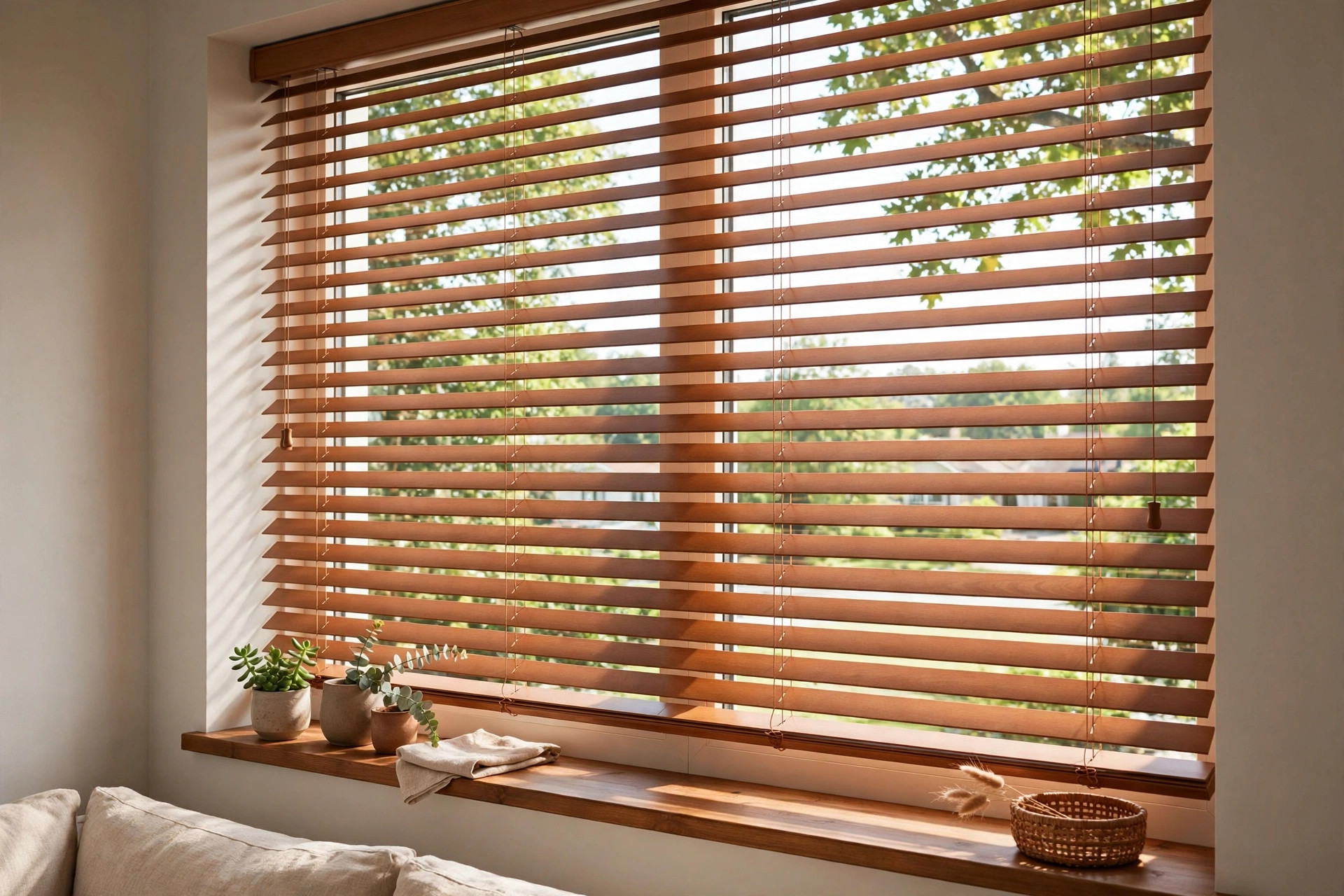
Real wood blinds bring warmth to a room. They suit living rooms, dining rooms, and home offices. They do not suit damp rooms. Wood swells in steam, so keep it out of bathrooms and kitchens. Faux wood looks much like the real thing and shrugs off moisture. Many installers recommend faux wood for bathrooms and kitchens because it costs less and lasts longer in wet air. Both types tilt to control light and lift to clear the window. Slats usually come in two inch widths, which give a classic look.
Cellular and Roller Shades
Cellular shades, sometimes called honeycomb shades, trap air in their pleats. That trapped air slows heat from passing through the glass. Installers like them for bedrooms and rooms with large windows. Cordless cellular shades are a favorite choice of families with small children because there are no cords to reach. If you want maximum darkness for sleep, ask about blackout fabric. Pair it with our guide to top rated cordless cellular shades for american homes when you compare options.
Roller shades are a single sheet of fabric that rolls up and down. They give a clean, modern look and work well in kitchens and bathrooms. Light filtering fabric softens the sun without blocking the view. Blackout fabric stops it cold.
Vertical Blinds and Panel Track Blinds
Wide sliding doors need a different answer. Vertical blinds hang from a track and draw to one side. They have been around for decades and still work well. Panel track blinds are the newer style. Broad fabric panels slide on a track like a closet door. They look sharp in modern rooms and come in many weaves. For very wide openings, see our notes on custom sliding panel track blinds for midwest homes.
Cost and Price
Price is the question every homeowner asks first. The honest answer is that it depends on the window count, the product, and the region. A single standard window with a basic vinyl blind may cost under one hundred dollars for product and labor together. A wide window with real wood blinds can cost several hundred. Most companies charge labor per window, with a minimum charge for the visit. Ask how the minimum works. A company with a one hundred fifty dollar minimum is not the right choice if you need only one blind fitted.
Get at least three quotes. Make sure each quote covers the same product tier. Comparing a quote for basic vinyl against a quote for real wood tells you nothing. Ask each company to break out product cost and labor cost on separate lines. That way you can see whether one company charges more for the blinds or more for the fitting. Big box stores such as Home Depot and Lowe’s publish rough price ranges online, which gives you a starting point before the quotes arrive.
Watch for extra charges. Arched windows, bay windows, and very tall windows often carry a surcharge. Motorized blinds cost more both to buy and to install, and they may need an electrician if wiring is involved. Old blinds that need removal can add a fee per window. Ask about each of these before you sign. A quote that lists the extras is a quote you can trust. One that hides them is not.
Payment terms matter too. A deposit of one third to one half at signing is standard. The balance is due when the work is finished and you have tested every blind. Never pay the full balance before the installer has left your home. If something is wrong, it is far easier to get it fixed when the company still waits on your check.
Care and Upkeep
Blinds last longer with small, regular care. Dust the slats once a month with a soft cloth or a vacuum brush attachment. Work from the top down so dust falls to the sill, where you can wipe it up last. For faux wood and vinyl, a damp cloth with a drop of mild dish soap handles most marks. For real wood, use a dry cloth only. Water stains wood and lifts the finish. Never spray cleaner straight onto the slats. Spray the cloth, then wipe.
Check the cords and tilt wands twice a year. Frayed cords are a warning. Replace them before they snap, because a snapped lift cord can send a heavy blind crashing down. Many do it yourself repair guides show how to restring a standard blind, but if the unit is under warranty, call the installer first. Your own repair can void the coverage.
Keep the headrail and brackets tight. Once a year, open each blind fully and give the headrail a gentle tug. If it moves, tighten the bracket screws. Small repairs done early keep a small problem from becoming a new purchase.
Safety
Window cords have hurt children, and every installer should raise the subject without being asked. The Consumer Product Safety Commission has long warned that looped pull cords and inner cords can strangle a small child. The safest choice is a cordless blind. If you already have corded blinds, move cribs, beds, and playpens away from the windows. Cut looped pull cords and fit tassels, or replace the blinds outright.
Ask your installer about cordless options for every room where a child or pet spends time. Cordless lift systems work by a light push or pull on the bottom rail. Motorized blinds go a step further and remove the cords entirely. They cost more, but many parents find the peace of mind worth the price. When you buy through a large seller such as Wayfair, the product page will state whether the blind is cordless, so you can filter before you shop.
Pets face the same danger. Dogs and cats chew cords and tangle themselves in loops. A cordless blind protects them too. If you rent your home, ask the landlord before you replace the blinds, but do not skip the safety step. A set of cord cleats costs a few dollars and keeps cords wound high out of reach.
Frequently Asked Questions
How long does a typical installation take?
A trained installer fits one standard blind in about twenty to thirty minutes. A house with ten windows takes most of a morning. Wide windows, shutters, and motorized units take longer. Ask for a time estimate when you book, and clear the area in front of each window before the crew arrives.
Should I buy the blinds myself and hire only the labor?
You can, but it is often better to buy through the installer. When the installer supplies the product, one company owns the whole job. If a blind arrives the wrong size, the installer reorders it at no cost to you. If you supply the product and it is wrong, you own the delay and the return shipping. Buy the blinds yourself only if you found a price the installer cannot match.
Do installers also remove old blinds?
Most do, sometimes for a small fee per window. Old blinds can be heavy and dusty, and many homeowners are glad to hand the job over. Ask whether removal is included in the quote. If you plan to donate or recycle the old blinds, tell the installer so the crew sets them aside instead of breaking them down.
What if my windows are not square?
Few windows are perfectly square, and installers deal with this every day. For an inside mount, the blind is cut to the smallest width measured. Small gaps at the edges are normal and can be hidden with trim. For a perfect look on a crooked window, an outside mount covers the frame and hides the flaws. Your installer will advise which mount suits each window.
Are motorized blinds worth the extra cost?
For hard to reach windows, yes. A motorized blind on a tall stairwell window saves you from climbing a ladder twice a day. They also suit homes where many windows need to move at once, since one remote can drive them all. The cost is real, often double the manual version, plus the price of batteries or wiring. For standard windows at arm height, a manual blind works just as well.
How do I check an installer’s reviews?
Read reviews on more than one site. Look for patterns across many reviews. One angry review about a late arrival means little. Ten reviews about wrong sizes mean a great deal. Ask the company for two or three local references and call them.
A Final Word
Finding the best blinds installation companies near me is not about finding the lowest price. It is about finding the company that measures with care, writes a clear quote, stands behind its labor, and treats your home with respect. Take an afternoon to gather three quotes. Ask the hard questions. Check the reviews. Then choose the company that earned your trust, not just your signature. Good blinds, well fitted, will serve your home for fifteen years or more. That is a long time to live with a hasty choice, and a good reason to choose with care.
References
Blinds.com. (n.d.). Window blinds, shades, and shutters. https://www.blinds.com Bob Vila. (n.d.). Home improvement advice. https://www.bobvila.com HGTV. (n.d.). Home and garden ideas. https://www.hgtv.com HomeAdvisor. (n.d.). Local home service professionals. https://www.homeadvisor.com IKEA. (n.d.). Home furnishings. https://www.ikea.com Lowe’s. (n.d.). Home improvement products. https://www.lowes.com The Home Depot. (n.d.). Home improvement products. https://www.homedepot.com The Spruce. (n.d.). Home and garden advice. https://www.thespruce.com U.S. Consumer Product Safety Commission. (n.d.). Product safety information. https://www.cpsc.gov Wayfair. (n.d.). Furniture and home goods. https://www.wayfair.com
Was this guide helpful?

About Sarah Mitchell
The My Garden US editorial team writes practical, in-depth home and garden guides for American homeowners — tested advice, no fluff.
You May Also Like

How to Buy Moroccan Pattern Curtains Online in the USA
January 27, 2026 0 views
Luxury Sheer Voile Panels for Florida Homes: A Complete Guide
July 27, 2026 0 views
The Best Bay Window Curtain Rods for USA Homes
January 6, 2026 0 views