If you are looking for heated floor kits for sale usa, you have joined a large and growing number of American homeowners. Heated floors were once a luxury found only in high-end homes. Today they are common in ordinary bathroom remodels. A heated floor kit is a packaged set of electric heating elements, a thermostat, and installation parts. You buy the kit in one box, and you install it under your floor tile. The result is a floor that feels warm under bare feet on cold mornings. This guide explains what these kits are, the types you can buy, how to choose one, what they cost, and how to care for them.
Why Heated Floors Matter
Bathrooms are the coldest rooms in most houses. Tile and stone floors pull heat away from your feet. In winter this can make the whole room feel cold. A heated floor kit changes that. Warm coils or mats under the tile send heat upward. The floor stays at a steady, pleasant temperature. The room feels warmer too, because the heat rises and spreads.
There are health and comfort reasons for this. Cold bathroom floors cause discomfort for older people and for small children. A warm floor is kinder to stiff joints in the morning. It also dries the floor faster after a shower. A drier floor means less mildew and fewer slippery spots. Many buyers of electric radiant floor heating kits say the comfort alone was worth the price.
Heated floors also save energy in some homes. When the floor is warm, you can set the room thermostat lower and still feel comfortable. The heat from the floor rises through the room. It warms people and objects rather than just the air. For a small bathroom, the running cost is often only a few cents a day.
What to Look For When You Buy: Heated Floor Kits for Sale Usa
Not all kits are the same. Before you pick heated floor kits for sale usa, check these points.
Size and Coverage
Measure your bathroom floor. Subtract the space taken by the vanity, the toilet, and the tub. Heating elements should not run under fixed fixtures. Most kits come in fixed mat sizes, such as ten, twenty, or forty square feet. Choose a mat that covers the open floor area you walk on. A mat that is too small leaves cold spots. A mat that is too large will need to be cut, and some mats cannot be cut in all places.
Voltage
American homes use 120-volt and 240-volt circuits. Most small bathroom kits run on 120 volts. Larger kits, usually for bigger rooms, run on 240 volts. Check your electrical panel. Make sure a spare circuit is available. If you are not sure, ask an electrician. Using the wrong voltage can damage the kit or trip the breaker.
Thermostat Type
Every kit needs a thermostat to control the temperature. Basic thermostats turn the heat on and off by hand. Programmable thermostats let you set a schedule. The floor can warm up before your morning shower and cool down while you are at work. Some newer models connect to your phone. A programmable thermostat costs more but saves electricity over time.
Warranty and Certification
Look for kits that are tested by a recognized safety body. Labels from UL or ETL certification programs mean the product passed safety tests. Good makers offer a warranty of twenty years or more on the heating element. Read the warranty terms. Some warranties are void if the kit is installed by someone who is not licensed.
Floor Compatibility
Most heated floor kits are made for tile, stone, or polished concrete. These materials carry heat well. Some kits also work under luxury vinyl plank or engineered wood. Few work well under thick carpet. Check the product notes for your floor type. If you plan a new tile floor, you have the widest choice of kits.
Types of Heated Floor Kits
There are three main types of electric floor heating sold in the United States.
Heating Mats
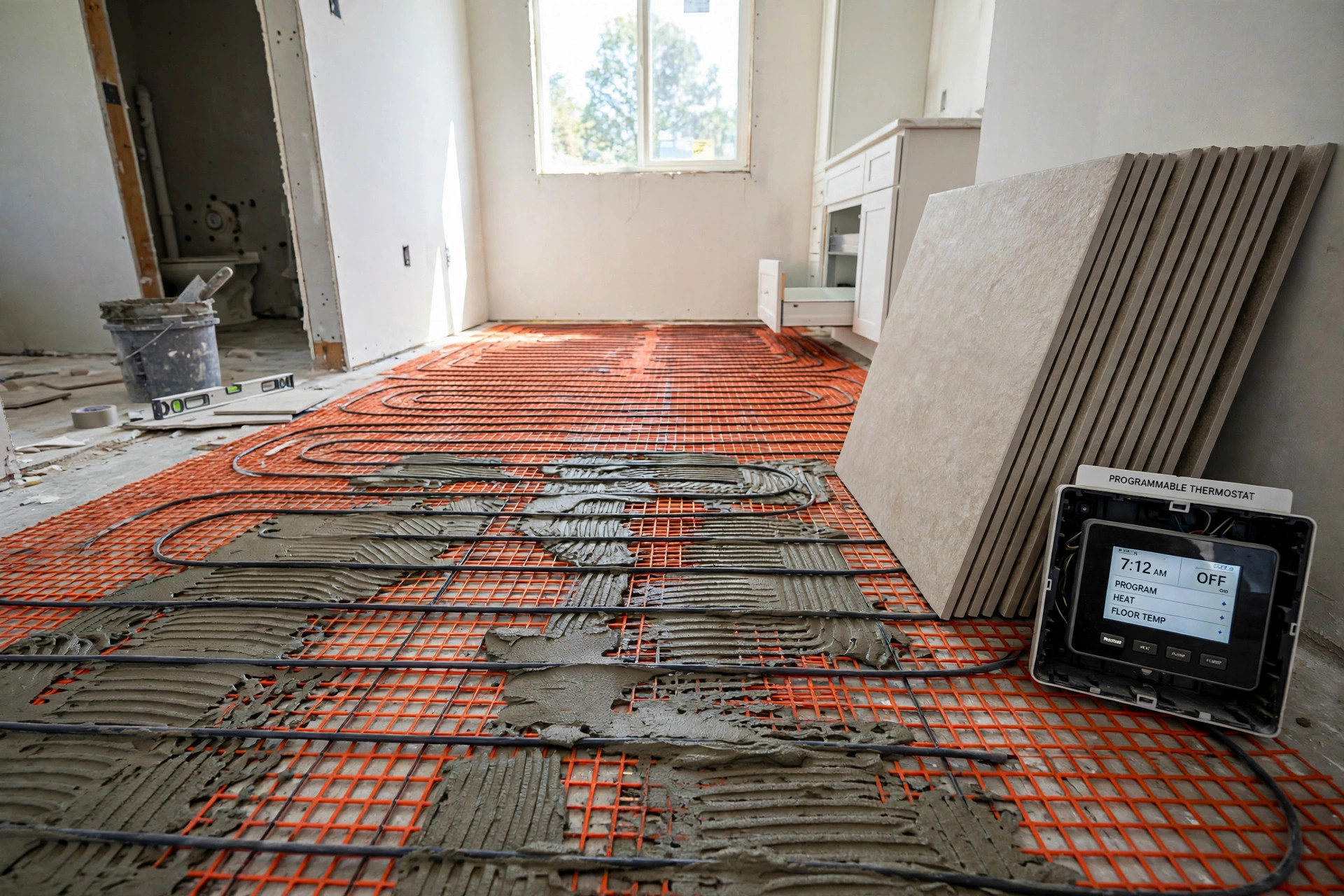
Heating mats are the most popular choice for bathrooms. Thin electric cables are sewn into a mesh mat at even spacing. You roll the mat out on the floor and press it into thin-set mortar. The mesh can be cut to fit around corners, as long as you do not cut the cable itself. Mats are easy for first-time installers because the cable spacing is already set. Many homeowners compare floor heating mats for sale by mat size and wattage per square foot.
Loose Cable Systems
Loose cable kits include a spool of heating cable and plastic guide strips. You fix the strips to the floor and weave the cable through them at the spacing you want. This type takes more time to install. The advantage is full control of the layout. You can heat an odd-shaped floor or add heat around a curved vanity. Loose cable is also useful when the mat sizes do not match your room.
Membrane Systems
Some kits use a special uncoupling membrane. The membrane goes over the subfloor first. The heating cable snaps into the channels of the membrane. This method is popular with professional tile setters. The membrane also helps prevent tile cracks. These systems cost more than simple mats. They are a good pick for a large bathroom or a full master bath remodel.
All three types are electric. They are different from hot-water radiant systems, which use pipes and a boiler. Hot-water systems suit whole houses. Electric kits suit single rooms, which is why they dominate the heated floor kits for sale usa market.
Cost and Price Guide
Prices vary by kit size, brand, and thermostat choice. The numbers below reflect typical United States prices.
A small mat kit for a powder room, about ten to fifteen square feet, often costs between one hundred and two hundred dollars. This includes the mat and a basic thermostat. A medium kit for a standard full bath, about twenty-five to forty square feet, often costs between two hundred and four hundred dollars. Larger kits for master baths, fifty square feet or more, can cost four hundred to seven hundred dollars.
Installation is a separate cost. If you install the kit yourself during a tile job, you pay only for materials. Hiring an electrician to wire the thermostat and a tile setter to lay the floor adds several hundred dollars. Some contractors charge a flat fee for the whole radiant floor job. Get written quotes from two or three contractors before you agree.
Running costs are modest. A bathroom floor draws about the same power as a few light bulbs. Many owners run the floor for two or three hours each morning. At average electricity rates, that costs less than a dollar a day. A programmable thermostat keeps the cost down by heating the floor only when you need it.
Installation Basics
Most kits are made for do-it-yourself installation, but electrical work needs care. Here is the normal order of steps.
First, check the subfloor. It must be clean, flat, and dry. Any loose boards or high spots will cause trouble later. Next, lay out the mat or cable in a dry run. Do not cut the heating wire. Use the guide strips or mesh to hold the layout. Test the cable resistance with a multimeter. The reading should match the number in the manual. Write the reading down.
Then wire the thermostat. This step usually needs a licensed electrician. The circuit needs a ground fault protector, because the floor is in a wet room. After the wiring is done, press the mat into a layer of thin-set mortar. Let it set. Then lay your tile on top in the normal way.
Test the system before you grout. Test it again after grout. Keep the resistance readings with your warranty papers. Most failures happen because a wire was nicked during tiling. A careful installer avoids this by testing at every stage. Guides from Bob Vila and This Old House walk through these steps in detail.
Care and Upkeep
A heated floor needs very little care. There are no moving parts. There is nothing to oil or replace. The main task is to keep the floor surface in good shape.
Clean the tile as you normally would. Avoid harsh acids that can eat grout. Check the thermostat batteries if your model uses them. Once a year, run the floor for a day and confirm that it heats evenly. Walk the floor in bare feet. If one area stays cold, note it and call the maker. Most kits last as long as the tile floor itself, which can be thirty years or more.
Keep your warranty papers and installation photos in one folder. If you ever sell the house, give the folder to the buyer. A working heated floor adds value to a bathroom. Buyers notice it right away on a cold day.
Safety Notes
Electric floor kits are safe when installed to code. Still, follow these rules.
Never cut or shorten the heating cable unless the manual allows it. Never cross one cable over another. Never install the heating elements under a wall or under fixed cabinets. Keep furniture with flat bases off the heated area, since trapped heat can build up. Always use the ground fault protection that the kit calls for. If the breaker trips, do not reset it again and again. Find the cause first.
Keep the thermostat where a child cannot reach it easily. Some models lock the settings with a code. If you remodel the room later, mark the floor plan that shows where the cables run. This stops a future worker from drilling into a live cable.
For general bathroom safety standards, agencies and consumer safety resources publish guides on wet-room electrical rules. Your local building office can also tell you which permits are needed in your town.
Frequently Asked Questions
Can I install a heated floor kit myself?
Yes, many homeowners install the mat or cable themselves. The electrical hookup should be done by a licensed electrician. The rest of the work, laying the mat and tiling over it, is within the reach of a careful do-it-yourselfer. Always follow the manual and local code.
How long does the floor take to warm up?
A tile floor usually takes thirty to sixty minutes to reach full warmth. A programmable thermostat solves this by starting the heat before you wake up. Stone floors take a bit longer than ceramic tile because they are thicker.
Will a heated floor raise my electric bill a lot?
Not much. A small bathroom kit uses about as much power as several light bulbs. With a timer set for morning hours only, most owners see a rise of a few dollars a month. The comfort gain is much larger than the cost.
Can heated floors go under a bathtub or vanity?
No. Heating elements must go only under open floor space. Heat trapped under a tub or cabinet can damage the kit and waste energy. Measure the open area and buy a mat that fits it.
Do I need a special thermostat?
Yes. Use the thermostat that comes with the kit or one approved by the maker. Floor heating thermostats include a floor sensor, which is a small probe that sits between the cables. A normal wall thermostat does not have this sensor and will not control the floor correctly.
Where can I buy heated floor kits for sale usa?
Heated floor kits for sale usa are sold at large home improvement stores, online retailers, and specialty flooring shops across the country. Buying from an established store means you get a real warranty and a proper return policy. Compare kit sizes, thermostat options, and warranty length before you choose. Reading independent buying guides can also help you shortlist makers.
Pairing Heated Floors With Your Remodel
A heated floor works best as part of a full bathroom plan. Many buyers shop for a heated floor kits buying guide alongside other fixture upgrades. If you are redoing the shower, look at walk-in shower kits for a curbless, easy-entry design. A new rain shower head pairs well with warm tile underfoot. Warm floors, a roomy shower, and good lighting turn an ordinary bath into a small spa.
Plan the floor layout early. The electrician needs to know where the thermostat will go. The tile setter needs to know the mat layout. When everyone works from the same plan, the job goes faster and costs less. Brands such as American Standard and Moen offer matching fixtures that suit modern heated-floor bathrooms.
A Final Word
Heated floor kits for sale usa have moved from luxury to common sense. The kits are simple, the prices are fair, and the comfort is real. Measure your floor, pick a certified kit, and wire it to code. Your winter mornings will never feel the same.
Related guides on this site include freestanding soaking tubs buying guide usa.
References
American Standard. (n.d.). Bathroom and kitchen products. https://www.americanstandard.com Bob Vila. (n.d.). Home improvement advice. https://www.bobvila.com HGTV. (n.d.). Home and garden ideas. https://www.hgtv.com Lowe’s. (n.d.). Home improvement products. https://www.lowes.com Moen. (n.d.). Faucets and plumbing fixtures. https://www.moen.com The Home Depot. (n.d.). Home improvement products. https://www.homedepot.com The Spruce. (n.d.). Home and garden advice. https://www.thespruce.com This Old House. (n.d.). Home renovation guidance. https://www.thisoldhouse.com U.S. Consumer Product Safety Commission. (n.d.). Product safety information. https://www.cpsc.gov
Was this guide helpful?

About Michael Thompson
The My Garden US editorial team writes practical, in-depth home and garden guides for American homeowners — tested advice, no fluff.