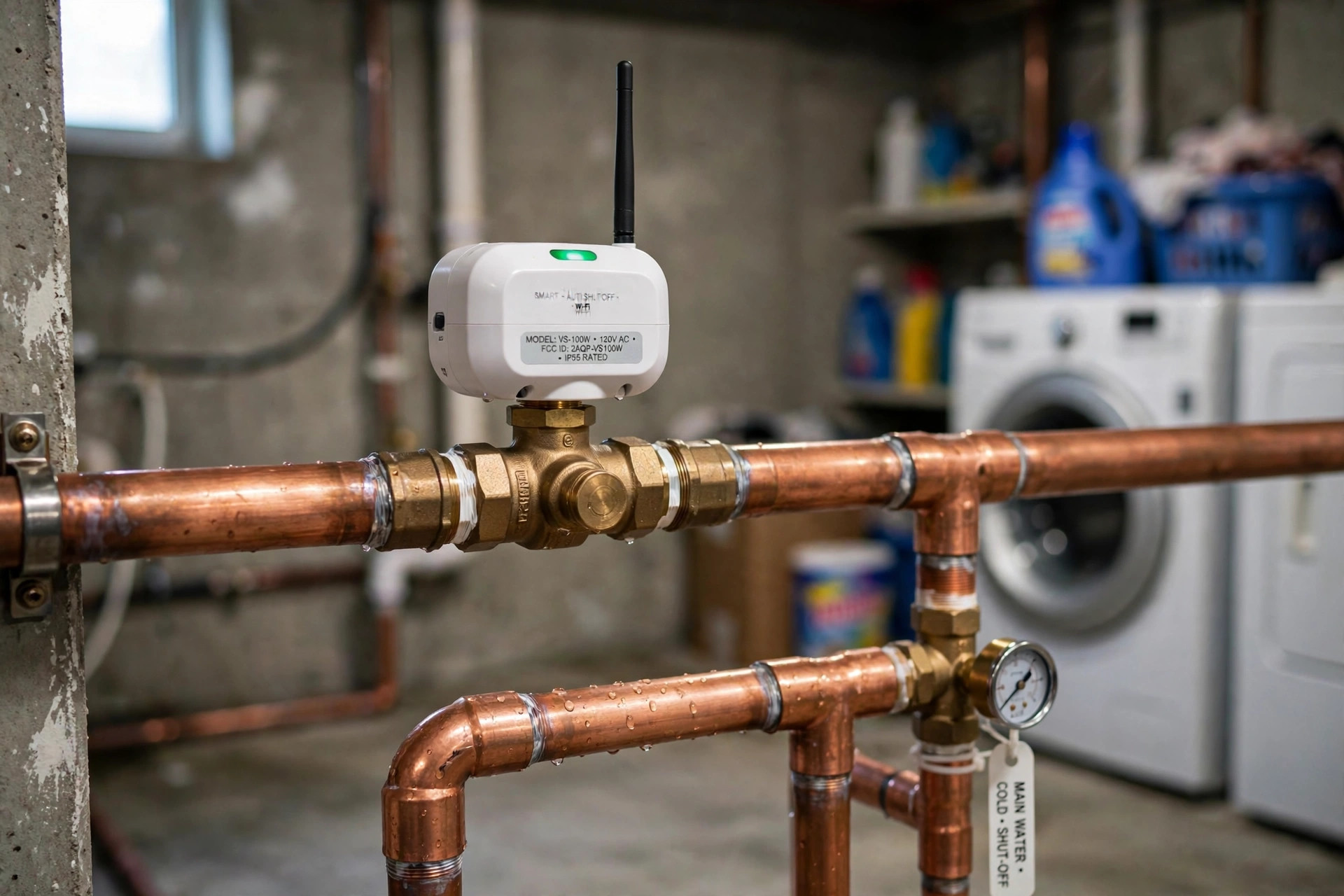

Water damage is the quiet ruin of many homes. A small leak under a sink can run for days while the family is away. A washing machine hose can burst at night. By the time anyone notices, the floor is gone, the drywall is soft, and the bill is in the thousands. A smart water valve shutoff exists to stop this story before it starts. It watches for leaks and turns off the water on its own. These smart water valve shutoff reviews 2026 USA will help you judge the field, compare the common types, and decide what fits your home.
Why a Smart Shutoff Valve Matters
A leak detector that only sounds an alarm is a half measure. It helps if you are home and awake. It helps not at all when you are at work or on vacation. The automatic water shutoff valve closes this gap. When a sensor finds water where it should not be, the valve motor turns the main supply off within seconds.
The math is plain. A burst pipe can release hundreds of gallons in an hour. Most homeowners insurance claims for water damage cost several thousand dollars. A valve that costs a few hundred dollars is cheap insurance by comparison. Some insurance companies now offer a discount on premiums for homes with an automatic shutoff. It pays to ask your agent before you buy.
How a Smart Water Shutoff System Works: Smart Water Valve Shutoff Reviews 2026 Usa
The system has two parts: the watcher and the closer.
The Leak Sensors
Small wireless sensors sit near risk points: under sinks, behind the washing machine, beside the water heater, and near the toilet base. Each sensor has two metal contacts on its bottom. When water touches them, the sensor sends a signal to the valve controller. Reviews of the smart water leak detector reviews 2026 usa show that sensor placement matters more than sensor count. Put them where water pools first.
The Valve Motor
The valve sits on the main water line where it enters the house. A small motor turns the valve handle from open to closed. Most models use a ball valve because it closes fast and rarely sticks. When the controller gets a leak signal, it drives the motor. Many units also let you close the valve from a phone app, which is useful when you leave for a trip.
Types of Smart Water Shutoff Valves
Reviews across the market point to three main designs. Each has clear strengths and clear limits.
Full-Bore Inline Valves
These valves replace a section of the main line with a motorized ball valve. They close in seconds and handle full water pressure. They are the most reliable choice for whole-house protection. The catch is installation. A plumber must cut the pipe and sweat or press the new valve in place. That adds labor cost, but the result is clean and permanent.
Retrofit Clamp-On Valves
These units bolt over your existing manual ball valve and turn the handle with a motor arm. No pipe cutting is needed. Most homeowners can install one in under an hour with basic tools. They are the best pick for renters and for houses where the main shutoff is hard to reach. The trade-off is speed and torque. They close a bit slower, and they cannot grip every handle shape.
Valves with Flow Monitoring
A newer class adds a flow meter inside the valve body. It learns your normal water use. If it sees continuous flow at two in the morning when no one is home, it treats it as a leak and closes the valve. This catches slow leaks that sensors might miss. These units often pair with a smart home water usage monitor reviews usa so you can also spot waste and high bills.
What to Look for Before You Buy
Reading whole house water shutoff valve reviews is easier when you know what the important specs are. Work through this short list.
Pipe Size and Fit
Measure your main line before you shop. Most American homes use three-quarter inch or one inch pipe. Inline valves must match the pipe size and the pipe material: copper, PEX, or CPVC. Clamp-on models need a standard lever-handle ball valve to grip. A round gate-valve wheel will not work with most retrofit motors.
Power Source and Backup
The valve needs power to stay smart. Most units plug into a nearby outlet. Some run on batteries with a long life. Ask what happens during a power outage. The best units hold their open or closed state when power fails and resume normal work when power returns. A few high-end models include a battery backup that keeps the motor alive through an outage.
Connectivity and App
Wi-Fi is standard, but not all Wi-Fi is equal. A valve in a basement may struggle to reach the router. Check whether the unit also talks Zigbee, Z-Wave, or a direct hub connection. The app should show valve status at a glance, send push alerts, and let you open and close the valve from anywhere. Read app store reviews too. A strong valve with a buggy app is a poor buy.
Response Speed and Sensitivity
Sensor-to-close time should be under a minute, and under thirty seconds is better. For flow-based units, check how you set the sensitivity. Too sensitive and the valve shuts off during a long shower. Too loose and a slow leak runs for hours. Look for adjustable thresholds and a manual override button on the valve itself.
Warranty and Support
A valve that guards your whole house should carry a solid warranty. Look for at least two years on the motor and electronics, and read the fine print on water damage liability. Most makers do not cover damage if the device fails. Check that the company offers phone support, not just email. When a valve misbehaves on a Sunday night, a real person on the line matters.
Integration with Your Smart Home
Many buyers already run a smart home hub. Check whether the valve works with your system of choice. Some units join the major platforms directly, while others need a hub bridge. A valve that talks to your security panel can flash the lights and sound the alarm when it closes, which is a fine backup for the phone alert.
Cost and Price
Prices in the USA market fall into three bands. Retrofit clamp-on valves run from about one hundred to two hundred dollars. Mid-range inline valves with sensors cost between two hundred and four hundred dollars. High-end units with flow meters and many sensors run from four hundred to seven hundred dollars.
Professional installation adds one hundred fifty to four hundred dollars depending on the plumber and the access. A retrofit unit that you install yourself keeps the total under two hundred dollars. Ask about extra sensor packs. Most kits include two or three sensors, and each extra sensor costs fifteen to thirty dollars. Many reviewers say the sensor count, not the valve price, is where the budget breaks. Plan for six to eight sensors in a typical home: kitchen, laundry, water heater, both baths, and the main line area.
Installation: DIY or Call a Plumber
The retrofit route is a true do-it-yourself job for most people. Mount the bracket, align the motor arm over the valve handle, plug in the power, and pair the app. Then place the sensors and run a test: wet a sensor and watch the valve close.
Inline valves are a job for a licensed plumber in most states. The water to the house must be turned off at the street or the meter. The line must be cut, and the valve must be joined to copper, PEX, or CPVC with the right fittings. A good plumber finishes in two to three hours. While the plumber is there, ask to have a manual bypass or drain added nearby. It makes future service easier.
One note on location. The valve must sit on the main line after the meter but before the line branches to fixtures. If your main shutoff is outside in a meter box, you may need an indoor-rated unit moved inside or a weatherproof enclosure. Check the unit’s rating before you buy.
Care and Upkeep
A smart valve is not a set-and-forget device. Give it a little care each year.
– Test the system every three months. Wet a sensor with a damp cloth and confirm the valve closes and the alert arrives on your phone. – Exercise the valve monthly if the app has a cycle test. Ball valves that sit open for years can stiffen. – Change sensor batteries once a year, or sooner if the app reports a low battery. – Keep the area around the valve clear. Storage boxes and paint cans make emergency access slow. – After any plumbing work in the house, run a full test again. Disconnected wires and moved sensors are a common cause of silent failures.
For laundry rooms, many owners pair the main valve with a dedicated automatic washing machine shutoff valve reviews unit at the washer hookups. The small unit catches a burst hose at the source while the main valve guards the rest of the house.
Safety Notes
A shutoff valve is a safety device, so treat it with care. Never rely on it as your only defense. Keep smoke alarms and a working manual main shutoff in the house. Make sure every adult in the home knows how to open and close the valve by hand and how to use the manual override.
Read the product label for freeze warnings if the valve sits in an unheated garage or crawl space. Some electronics fail in deep cold. The Consumer Product Safety Commission keeps guidance on home water damage prevention, and it is worth a look before a big purchase (cpsc.gov). If a leak involves standing water near outlets or the breaker panel, call an electrician before you wade in. Water and electricity do not mix.
FAQ
Will a smart valve work during a power outage? It depends on the model. Most hold their last position when power fails. Battery-backed units keep working through short outages. Check the spec sheet for the outage behavior before you buy.
Do I need a plumber to install one? For retrofit clamp-on valves, usually not. For inline valves that replace a pipe section, yes, hire a licensed plumber.
How many leak sensors do I need? Start with the high-risk spots: kitchen sink, dishwasher, washing machine, water heater, and each bathroom. Six to eight sensors cover a typical single-family home.
Can the valve tell the difference between a leak and a long shower? Sensor-based valves do not need to. They close only when a sensor touches water. Flow-based units use smart thresholds and away-mode learning. Set the limits to match your household habits.
Will it lower my home insurance cost? Many insurers give a discount for automatic water shutoff devices. The discount varies by state and carrier. Call your agent with the model name and ask before you file the paperwork.
Does it work with well water or a water softener? Yes, as long as the valve sits on the main line after the pressure tank and softener loop. Keep sensors near the softener too, since softener valves can stick open and flood a basement.
A Short Final Word
A smart water valve shutoff is one of the few gadgets that can save you from a five-figure disaster. The technology is mature, the prices are fair, and the install is easy for the retrofit models. Pick a valve that fits your pipe, place your sensors with care, and test the system a few times a year. Do that, and the device will sit quiet for years, waiting for the one day you truly need it. That quiet is the whole point.
For more background, see Ring, SimpliSafe, and ADT. For more background, see CNET, PCMag, and The Verge.
References
ADT. (n.d.). Home security and automation. https://www.adt.com CNET. (n.d.). Technology news and reviews. https://www.cnet.com Google Store. (n.d.). Smart home devices. https://store.google.com PCMag. (n.d.). Technology product reviews. https://www.pcmag.com Ring. (n.d.). Smart home security devices. https://www.ring.com SimpliSafe. (n.d.). Home security systems. https://www.simplisafe.com The Verge. (n.d.). Technology news and reviews. https://www.theverge.com U.S. Consumer Product Safety Commission. (n.d.). Product safety information. https://www.cpsc.gov
Was this guide helpful?

About Lisa Anderson
The My Garden US editorial team writes practical, in-depth home and garden guides for American homeowners — tested advice, no fluff.
You May Also Like

Best Door Alarm Sensor for Apartments USA
February 14, 2026 0 views
Best Level 2 Charger for Garage Reviews USA
August 21, 2026 0 views
Solar Generator for Home Backup Reviews USA: A Complete Guide
January 21, 2026 0 views