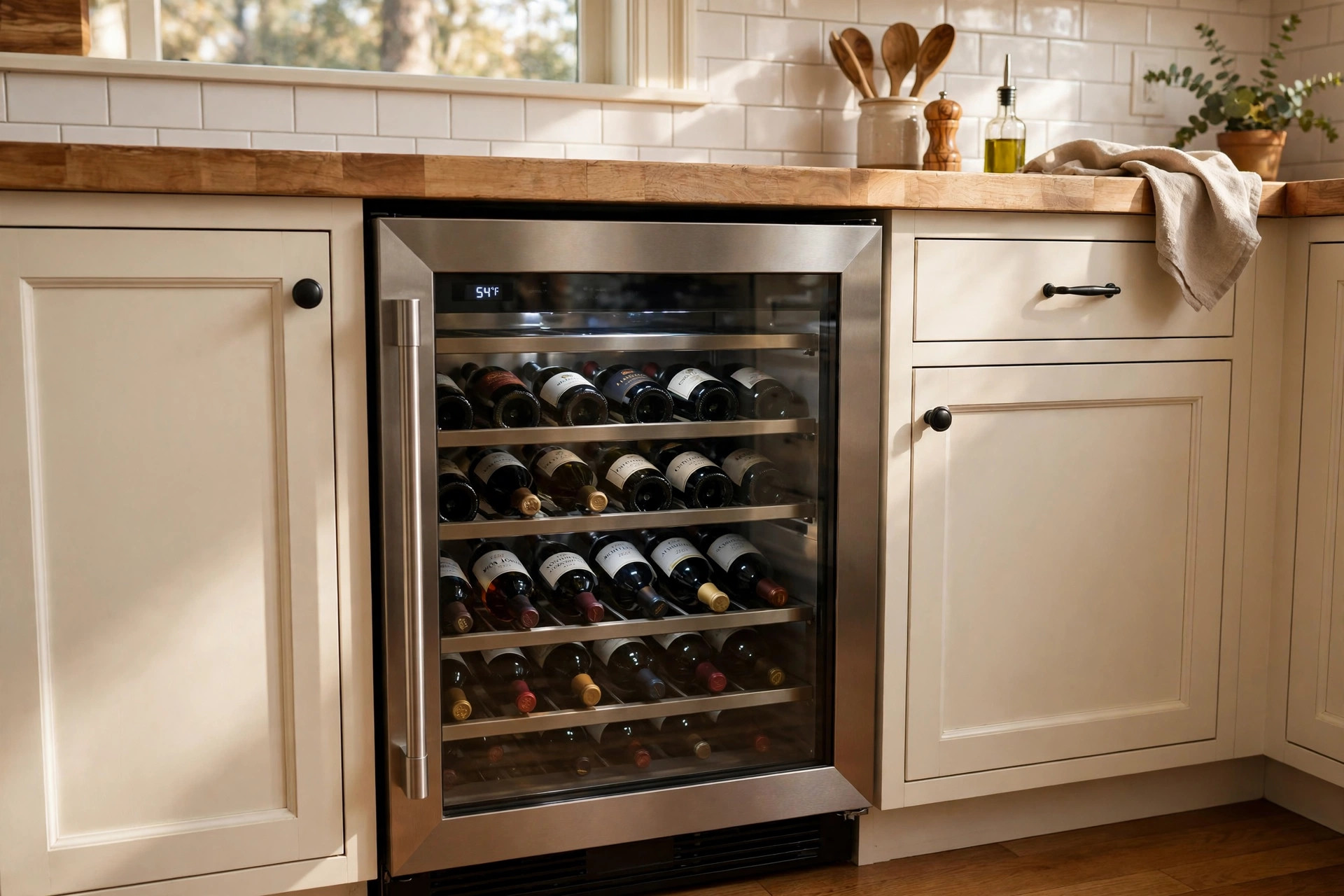

Many American homes now keep a small stock of wine on hand. A bottle for dinner. A few for guests. A case for the holiday season. When a household begins to collect more than a handful of bottles, the search often starts with the same question: under counter wine fridges where to buy usa. The answer is not hard to find. What matters more is knowing which sellers are worth a visit and what to check before money changes hands.
This guide walks through the best places to buy an under counter wine fridge in the United States. It covers the types of stores that carry them, what to look for in a unit, the price ranges one may expect, and how to keep the unit running well for years.
Why an Under Counter Wine Fridge Matters
Wine keeps best at a steady temperature. A regular kitchen refrigerator runs too cold for most wines and swings up and down each time the door opens. A cellar is ideal but few homes have one. An under counter wine fridge fills the gap. It sits under a countertop or cabinet, often beside a dishwasher or kitchen island, and holds bottles at a stable temperature and humidity.
An under counter wine fridge also adds order to a kitchen. Bottles lie on their sides so corks stay wet. Glass doors let a host see the stock at a glance. A built-in unit gives the kitchen a finished look, much like a second dishwasher. For a homeowner who enjoys wine but lacks space for a full cellar, this small appliance is a sound answer.
Where to Buy Under Counter Wine Fridges in the USA: Under Counter Wine Fridges Where to Buy Usa
The United States offers several kinds of sellers for this appliance. Each has its own strengths.
Big Home Improvement Stores
National home improvement chains carry a wide range of under counter wine fridges. Floor models stand ready for a close look. Doors can be opened. Shelves can be pulled out. Noise levels can be judged in person. Stores such as Home Depot and Lowe’s stock models from several brands and often run seasonal sales. Delivery and haul-away of old units are common services. For a buyer who wants to see the unit before paying, this is a good first stop.
Major Appliance Brands and Their Sites
Some buyers prefer to shop straight from the maker. Brand websites show the full line, including models that stores do not carry. Sites such as Whirlpool and GE Appliances list sizes, finishes, and features in full detail. The pages often include manuals and parts lists. Prices on brand sites run close to store prices. A buyer who already owns appliances from one brand may want a matching wine fridge from the same maker.
European brands have a strong name in this field as well. Bosch Home offers built-in wine coolers that match its kitchen lines. These units tend to cost more. They also tend to run quiet and hold temperature with care.
Independent Appliance and Kitchen Dealers
Local kitchen and appliance dealers sell under counter wine fridges in many towns. These shops often carry higher-end brands that big chains skip. Their staff usually know the product well and can speak about cabinet dimensions, venting needs, and trim kits. Prices may run higher than at a chain store. In return, the buyer often gets careful delivery, a clean install, and a person to call if a problem appears.
Online Retailers and Marketplaces
Many buyers shop online for under counter wine fridges for sale in the USA. Online stores list hundreds of models with reviews from past buyers. Prices are easy to compare. Some sellers offer free shipping. The risk is that the buyer cannot see or hear the unit first. A buyer who shops online should read the return terms with care and check that the seller will take the unit back if it arrives damaged.
Warehouse Clubs
Warehouse clubs sell select models at low prices. The range is narrow. Often only two or three models are in stock at a time. For a buyer who wants a simple single-zone unit at a fair price, a club can be a good deal.
What to Look for When You Shop
Before buying, it helps to know which features matter and which are merely nice to have. A short under counter wine fridges buying guide can help a first-time buyer learn the basics.
Size and Fit
Measure the opening before shopping. Under counter wine fridges come in standard widths, most often 15 inches or 24 inches. Depth matters too. A unit that sticks out past the cabinet face will look wrong and may block a door swing. Height is also fixed. The opening must match the unit within a small margin. Write down the width, height, and depth of the space and carry these numbers when shopping.
Single Zone or Dual Zone
Single-zone units hold one temperature. They suit a buyer who drinks mostly red or mostly white. Dual-zone units hold two temperatures at once. Reds rest at the top. Whites chill at the bottom. Dual-zone units cost more. They are worth the price for a household that keeps both kinds of wine.
Front Venting
An under counter unit must vent from the front. This is called front ventilation. A unit built for free standing will vent from the back or sides. Placed under a counter, it will overheat and fail early. When shopping, check the product sheet for the words “built-in” or “front-venting.” If neither appears, the unit is not fit for under counter use.
Bottle Count
Units range from about 20 bottles to more than 50. Count the bottles on hand, then add room to grow. A 24-bottle unit suits a casual drinker. A 46-bottle unit suits a small collector. Shelves can often be removed to fit larger bottles, but doing so cuts the count.
Noise Level
Wine fridges use small compressors or thermoelectric systems. Compressors cool faster and work in warm rooms. They also hum. Thermoelectric units run silent but cool weakly and fail in hot garages. For a unit placed in a kitchen or living area, check the decibel rating. A rating near 40 decibels is about as loud as a quiet library.
Door and Glass
Most units have a glass door with a stainless frame. Glass should be tinted or treated to block light. Light harms wine over time. A lock on the door is useful in a home with children or in a rental unit.
Energy Use
A wine fridge runs all day, every day. Its yearly cost depends on its size and design. The ENERGY STAR program sets clear rules for home appliances. A buyer can look for the ENERGY STAR mark or compare the yellow EnergyGuide labels on store models. Over ten years, a low-draw unit can save real money.
Types and Options on the Market
Under counter wine fridges fall into a few clear groups. Each group fits a different kind of buyer.
Built-In Units
Built-in units are made to sit under a counter with the door flush to the cabinets. They vent from the front. They look like part of the kitchen. Most cost between 400 and 1,200 dollars. They are the most common choice for a kitchen remodel.
Free-Standing Units That Can Go Under a Counter
A few units are sold as convertible. They can stand free or slide under a counter if the space has room to breathe. These are rare. Check the manual. If the maker does not say the unit is fit for built-in use, do not place it under a counter.
Outdoor-Rated Units
Outdoor kitchens need special units. An outdoor-rated wine fridge resists rain and heat. It costs more than an indoor unit of the same size. A buyer with a covered patio bar may find it worth the price. This Old House has covered outdoor kitchen planning in depth and notes how weather shapes appliance choice.
Integrated and Panel-Ready Units
High-end units accept a cabinet panel on the door. The fridge then matches the kitchen cabinets and seems to vanish. These units cost the most. They suit a full kitchen remodel where a clean look matters. A remodel that includes butcher block countertops or new vinyl plank flooring may pair well with a panel-ready unit for a fully custom kitchen.
Cost and Price Ranges
Prices for under counter wine fridges in the USA fall into three bands.
Budget range, 250 to 500 dollars. These units hold 20 to 30 bottles. Most are single zone. Finishes are basic. They work well for a first-time buyer or a small apartment.
Mid range, 500 to 1,000 dollars. These units hold 30 to 50 bottles. Many are dual zone. Stainless finishes and soft-close doors appear in this band. This is where most buyers land.
Premium range, 1,000 to 2,500 dollars and more. These units come from top brands. They hold temperature to a tight range. Doors accept wood panels. Noise drops to a whisper. They suit serious collectors and high-end kitchens.
Watch for sales. Holiday weekends often bring price cuts at big chains. Floor models can drop by a fifth or more. Open-box units at Home Depot or Lowe’s may carry the full factory warranty.
Delivery fees add to the cost. A large unit may need two people to set in place. Haul-away of an old unit may cost extra. Ask about these fees before the sale is final.
Care and Upkeep
A wine fridge asks little but gives back a lot when treated well. A few simple habits keep it running for a decade or more.
Keep the vents clear. Dust builds up on the front grille. Vacuum it twice a year. A blocked vent makes the compressor work hard and shortens its life.
Set the temperature and leave it. Reds do best near 55 to 58 degrees. Whites near 45 to 50. Each swing stresses the wine. Open the door as little as needed.
Wipe the inside twice a year. Warm water and a soft cloth are enough. Do not use harsh cleaners. Rinse well and dry before restocking.
Check the door seal. A worn seal lets warm air in. Close the door on a dollar bill. If the bill slides out with ease, the seal may need a look. Most seals can be replaced at home with basic tools.
Keep the unit level. A tilt strains the compressor. Use the small feet on the bottom to level the unit after install. A simple bubble level is all it takes.
Safety
An under counter wine fridge is an electric appliance in a damp kitchen. A few rules keep it safe.
Plug the unit into a grounded outlet. Do not use a long extension cord. The compressor draws a surge at start. A thin cord can overheat.
Leave the vent path open. Do not push boxes or bags against the front grille. Heat must escape.
Keep liquids off the top. A spill can reach the controls or drip into the vents.
If the unit smells hot or the cord feels warm, unplug it and call for service. Do not keep running a unit that shows these signs.
For a rental home, check with the landlord before cutting a cabinet opening. Some leases bar changes to built-in cabinets.
Frequently Asked Questions
Can I place a regular mini fridge under the counter for wine?
A regular mini fridge is not made for under counter use. It vents from the back and sides. Placed in a tight space, it will run hot and may fail. It also runs too cold for wine. Buy a unit made for built-in use. The Spruce has a plain guide to wine fridge basics that explains the difference.
How many bottles should the fridge hold?
Count what is on hand and add half again. A buyer with 20 bottles today should look at a 30-bottle unit. Wine collections grow. A unit that is full on day one will feel small within a year.
Do under counter wine fridges need a water line?
No. Wine fridges do not make ice and do not need a water line. They need only a standard outlet and room to vent from the front.
How long does a wine fridge last?
A well-made unit lasts 8 to 15 years. Cheap units fail sooner. Dusty vents, hot rooms, and full door seals cut life short. Clean vents and a steady room temperature add years.
Is a dual-zone unit worth the extra cost?
It is worth the cost for a buyer who keeps both red and white wine. It is not worth the cost for a buyer who drinks one kind only. A single-zone unit set to 55 degrees serves mixed short-term storage just fine.
Where is the best place to buy one in person?
Big chains such as Home Depot and Lowe’s let a buyer see, touch, and hear the unit. Local dealers give better advice and cleaner installs. Consumer Reports tests wine coolers and publishes ratings that help compare models before a store visit. For brand-matched kitchens, the maker sites of Whirlpool, GE Appliances, and Bosch Home show full lines and specs.
A Final Word
The question of under counter wine fridges where to buy usa has a simple answer. Start at the big chains to see units in person. Check brand sites for full specs. Visit a local dealer for advice and install. Compare prices online with care. Measure the opening twice. Pick a front-venting unit in the right size. Set it, stock it, and enjoy wine at its best for years to come.
Related guides on this site include stainless range hoods buying guide usa.
References
Bob Vila. (n.d.). Home improvement advice. https://www.bobvila.com Bosch. (n.d.). Home appliances. https://www.bosch-home.com Consumer Reports. (n.d.). Product reviews and ratings. https://www.consumerreports.org ENERGY STAR. (n.d.). Energy efficient products. https://www.energystar.gov GE Appliances. (n.d.). Kitchen and home appliances. https://www.geappliances.com Lowe’s. (n.d.). Home improvement products. https://www.lowes.com The Home Depot. (n.d.). Home improvement products. https://www.homedepot.com The Spruce. (n.d.). Home and garden advice. https://www.thespruce.com This Old House. (n.d.). Home renovation guidance. https://www.thisoldhouse.com Whirlpool. (n.d.). Home appliances. https://www.whirlpool.com
Was this guide helpful?

About James Carter
The My Garden US editorial team writes practical, in-depth home and garden guides for American homeowners — tested advice, no fluff.
You May Also Like

Where to Find Dual Fuel Ranges Deals Near Me
August 5, 2026 0 views
Where to Buy Gas Kitchen Ranges in the USA
July 30, 2026 0 views
Quartz Countertop Installation for Sale USA: A Plain Guide for Homeowners
May 9, 2026 0 views