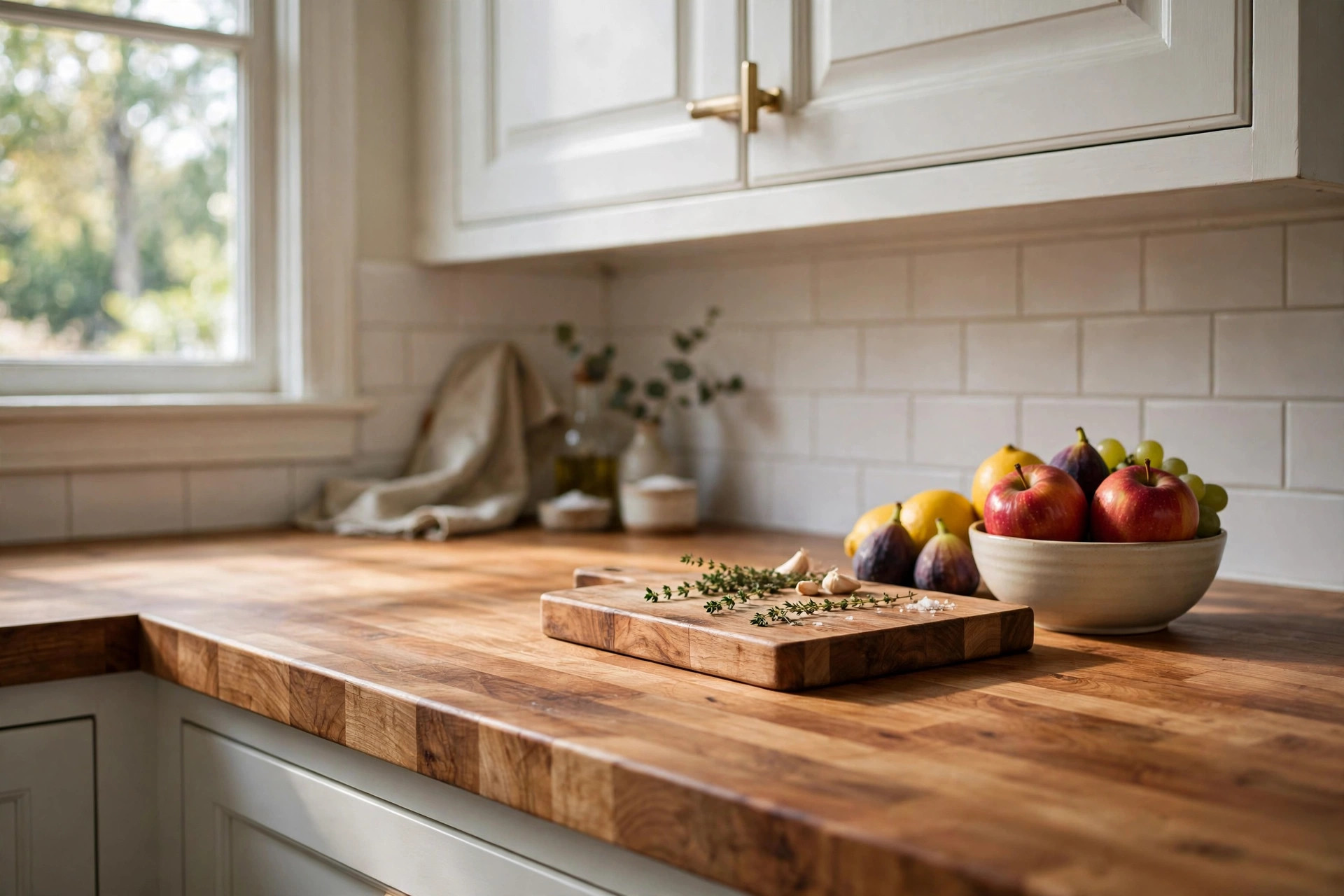

Shoppers who read butcher block countertops reviews before buying tend to feel more sure of their choice. Wood counters have a warmth that stone cannot copy, and they cost less than most solid surfaces. But wood also asks for care, and not every brand earns the same marks. This buying guide for USA homeowners pulls together what reviews tend to say, what wood types cost, and how to keep the top in good shape for years.
Why Butcher Block Deserves a Serious Look
A butcher block top is made of strips or squares of wood glued into a thick slab. Many home cooks pick it because it is kind to knife edges and can be sanded back to new when it scars. A kitchen gets used hard. Plates slide. Pots land with a thud. A wood top takes that daily wear and can be renewed with a sheet of sandpaper and a bottle of oil. That is rare among counter materials.
Cost is the other draw. Real wood counters often run at half the price of quartz and a third the price of granite. For a small kitchen, the savings can reach the hundreds or even the low thousands of dollars. Reviews from homeowners often note the price first, then the look, then the feel under the hand. Wood stays warm to the touch. Stone stays cold.
There is a trade side. Wood stains when wet things sit too long. It can warp if one side soaks up water and the other side stays dry. And it asks for oil now and then. A buyer who wants a surface that never asks for care will be happier with stone, as test reports from Consumer Reports on counter materials often note. A buyer who likes a living, warm surface will be glad with wood.
What to Look for When You Choose: Butcher Block Countertops Reviews Buying Guide Usa
Reviews point to the same few checks again and again. Start with the build. Edge-grain tops place the board edges facing up, which gives a striped look. End-grain tops place the board ends facing up, like a checkerboard of squares. End-grain tops cost more, and they hide knife marks best. Edge-grain tops are the common choice and suit most kitchens.
Next, check the wood species. Hard maple is the classic. It is hard, pale, and takes oil well. Cherry starts pink and deepens to a rich red-brown over time. Walnut runs dark and rich, though it costs more. White oak and beech also appear in store stock. Soft woods like pine dent fast and earn weak reviews. Buyers should stick to tight-grained hardwoods.
Then look at thickness. Most tops come in one-and-a-half inches or thicker. A thicker top feels more solid and sands down more times over its life. Thin tops can be fine on a short run, but a thick slab wins for a main work counter.
Joints matter too. Finger-joint tops use short pieces glued end to end. They cost less but show more seams. Full-length strips show fewer seams and look smoother. Reviews that complain about a blotchy finish often come from budget finger-joint stock. Spending a little more on full-length strips is a common tip from past buyers.
Finally, read the finish. Some tops ship unfinished, ready for oil. Others ship pre-oiled or sealed. Unfinished gives full control, but it means work on day one. Pre-finished tops save time, though some buyers sand them back and oil them anyway. Choose based on how much work you want in the first week.
Measure twice before you order. Write down the length, depth, and overhang for each run. Note where the sink sits and where the range sits. A wrong cutout wastes a whole slab, and reviews full of regret often start with a tape measure left in the drawer. Most sellers cut to your numbers, but they cannot fix a wrong number after the cut.
Ask about delivery and handling. A long slab is heavy and can crack if bent. Good sellers strap the slab flat and pack the ends. Read delivery notes in reviews. A chipped corner on arrival is no fun, and claims take time. Check the slab the day it lands, while the driver is still there if you can.
Types and Options on the Market
The market holds a few clear options. Big-box lumber slabs from stores like Home Depot and Lowe’s are the low-cost route. They run wide enough for most kitchens and ship to the door. Reviews praise the price and complain, at times, about glue-up quality. Buyers should check each slab in the store or read the latest buyer notes online before ordering.
Specialty wood shops sell premium tops. These cost more, often two to three times the big-box price. The wood tends to be clearer, the joints tighter, and the finish smoother. Reviews for these shops run strong, though buyers note the wait time can be weeks.
Custom mill shops cut tops to exact sizes and add details like drain grooves or rounded edges. This route fits odd layouts and farmhouse sinks. The price sits at the top of the range. Many buyers who pick this route say it was worth it for a one-piece fit with no seams.
A newer choice is butcher block with a resin or epoxy coat. The coat seals the wood hard, so spills bead up. It kills the oiled-wood feel, but it cuts upkeep to near zero. Reviews split here. Some buyers love the tough surface. Others feel it defeats the point of wood. Know which camp you are in before you pay.
For owners pairing a wood island with a new stainless range hood, the warm wood can soften the cold steel look. Appliance makers such as Whirlpool and GE Appliances list finish options that sit well next to wood tones. Kitchens that mix materials often read friendlier to guests.
Cost and Price in the USA
Prices shift by wood type, thickness, and source. A rough range helps. Big-box maple slabs often list near twenty to forty dollars per square foot. Walnut runs higher, often fifty to ninety dollars per square foot. Cherry and white oak sit in the middle. Custom work can pass one hundred dollars per square foot before install.
Install adds cost. A straight run on flat cabinets is a simple job for a handy owner. Cutouts for sinks and cooktops raise the price. Many buyers hire a pro for undermount sinks, since a bad cut ruins the slab. Ask for a quote before you buy so the total stays clear.
Do not forget the upkeep budget. Food-safe mineral oil costs little, and a bottle lasts a long while. Wood wax or board cream runs a bit more. Sandpaper and time round out the list. Year one asks for oil each month. Later years ask for oil three or four times a year. The total cost is small, but the time is real. Premium kitchen brands like Bosch design their cooktops and dishwashers to sit flush with thick wood tops, and ENERGY STAR rates the efficient models worth pairing with a remodel.
Reviews often call butcher block the best value in wood counters. The math holds when the buyer does the upkeep. A neglected top still works, but it looks gray and dry. A kept top looks better at year ten than at year one.
Care and Upkeep That Actually Works
Oil is the core of care. Food-safe mineral oil soaks in and keeps the wood from drying out. Wipe it on, let it sit, wipe off the extra. Do this monthly for the first year. After that, oil when the wood looks pale or drinks up water drops fast. Step-by-step guides at The Spruce and Bob Vila walk through the oiling process for first-timers.
Sand out stains before they settle deep. A quick pass with medium grit, then fine grit, then oil will lift most rings and marks. Deep burns may need a bit more sanding. One strength of wood is that it forgives. Unlike chipped stone, a sanded spot blends back in.
Keep standing water off the top. Wipe the area near the faucet dry. Use trivets under hot pots. A gas range throws real heat, and a hot pan straight off the flame can scorch wood fast. A trivet costs a few dollars and saves a sanding job.
Use a cutting board for raw meat. This is the most repeated tip in reviews. Wood tops are tough, but food safety comes first. A board keeps juices out of the grain and keeps the top cleaner. When planning the full kitchen remodel, This Old House offers project guides that cover counters, cabinets, and layout together.
Re-seal the finish when water stops beading. With an oiled top, the test is simple. Flick a few drops of water on the wood. If they bead, the oil is holding. If they soak in dark, it is time to oil again.
Watch for small cracks in dry winters. Wood shrinks when the air is dry. Tiny cracks at the ends are normal and easy to fix. Rub a bit of oil into the crack and let it soak. If a crack grows wide, a pro can fill it with wood glue mixed with fine dust from the same wood. Caught early, cracks stay small.
Keep the underside cared for too. Many buyers oil only the top. The underside sees steam from the dishwasher and heat from the oven. One thin coat of oil on the underside once a year keeps both faces even and cuts the risk of warp. It takes five minutes and pays off.
Safety Notes for Wood Counters
Wood counters are safe for food when kept clean and sealed. Wash with mild soap and warm water after use. Dry the top after washing. Strong bleach can dry the wood and dull the finish, so mild cleaners win.
Watch the area near heat. Keep the top away from direct flame and glowing coils. A proper cooktop gap and a heat-safe rail near the range help. If you plan refrigerator or range placement against wood, check the maker’s clearance notes.
Check for lead-free and food-safe glues when buying. Reputable makers use food-safe adhesives. Ask the seller if the glue is rated for food contact. This is a small question that matters for peace of mind.
FAQ
Are butcher block countertops good for daily cooking?
Yes, for most home cooks. They handle chopping, sliding plates, and hot dish sets with ease. They ask for oil and quick wipe-downs. Heavy commercial kitchens may want harder surfaces, but a family kitchen suits wood well.
Which wood is best for butcher block counters?
Hard maple wins the most reviews. It is hard, affordable, and light enough to show grain. Walnut looks richer but costs more. Cherry darkens with age, which some buyers love and others do not. Avoid soft pine.
How long do butcher block countertops last?
With care, twenty to thirty years is common. Some old tops pass fifty years. The top can be sanded and re-oiled many times, which is why wood outlasts many glued-on surfaces. Neglect shortens the life.
Can I put a hot pot on butcher block?
Not directly. Use a trivet or pad. Short contact with a warm dish is fine, but a hot pot off a burner can scorch or crack the wood. Keep trivets near the range as a habit.
Do butcher block counters stain?
They can. Red wine, coffee, and beet juice leave marks if left sitting. Wipe spills fast and keep the oil fresh. Most light stains sand out. Prevention beats repair.
Are wood counters harder to keep clean than stone?
They need a little more attention. Stone asks for almost nothing. Wood asks for oiling and quick wipe-ups. Many buyers find the trade fair for the price and look.
A Short Final Word
Butcher block countertops win reviews for warmth, value, and forgiveness. They lose points only when buyers skip the upkeep. Read recent buyer notes, pick a hard wood, oil it on schedule, and the top will pay back the effort for decades. For a kitchen that gets used every day, wood is a smart, honest choice.
References
Bob Vila. (n.d.). Home improvement advice. https://www.bobvila.com Bosch. (n.d.). Home appliances. https://www.bosch-home.com Consumer Reports. (n.d.). Product reviews and ratings. https://www.consumerreports.org ENERGY STAR. (n.d.). Energy efficient products. https://www.energystar.gov GE Appliances. (n.d.). Kitchen and home appliances. https://www.geappliances.com Lowe’s. (n.d.). Home improvement products. https://www.lowes.com The Home Depot. (n.d.). Home improvement products. https://www.homedepot.com The Spruce. (n.d.). Home and garden advice. https://www.thespruce.com This Old House. (n.d.). Home renovation guidance. https://www.thisoldhouse.com Whirlpool. (n.d.). Home appliances. https://www.whirlpool.com
Was this guide helpful?

About James Carter
The My Garden US editorial team writes practical, in-depth home and garden guides for American homeowners — tested advice, no fluff.
You May Also Like
French Door Refrigerators for Sale USA: A Complete Buyer’s Guide
August 22, 2026 0 views
French Door Refrigerators Buying Guide USA
May 31, 2026 0 views
Kitchen Pantry Cabinets Deals Near Me: How to Find Real Savings Close to Home
January 14, 2026 0 views