
This indoor wall sconces reviews buying guide USA is written for shoppers who want plain facts before they spend. Wall sconces are small light fixtures that mount on a wall. They give rooms a warm glow and a finished look. They can frame a mirror, light a hallway, or add charm to a bedroom. Yet the market is full of choices. Prices range from a few dollars to several hundred. Reviews can be hard to read. Some praise a fixture. Others warn of dim light or poor wiring. This guide walks through each step. It covers types, buying tips, prices, care, and safety. It also shows how to read reviews with care. By the end, you will know what to buy and why.
Why Indoor Wall Sconces Matter
Wall sconces do more than light a wall. They shape how a room feels. A single overhead light can make a room look flat. Sconces add layers of light. They can highlight art, trim, or a mirror. They can make a narrow hallway feel wider. They can make a bedroom feel calm at night.
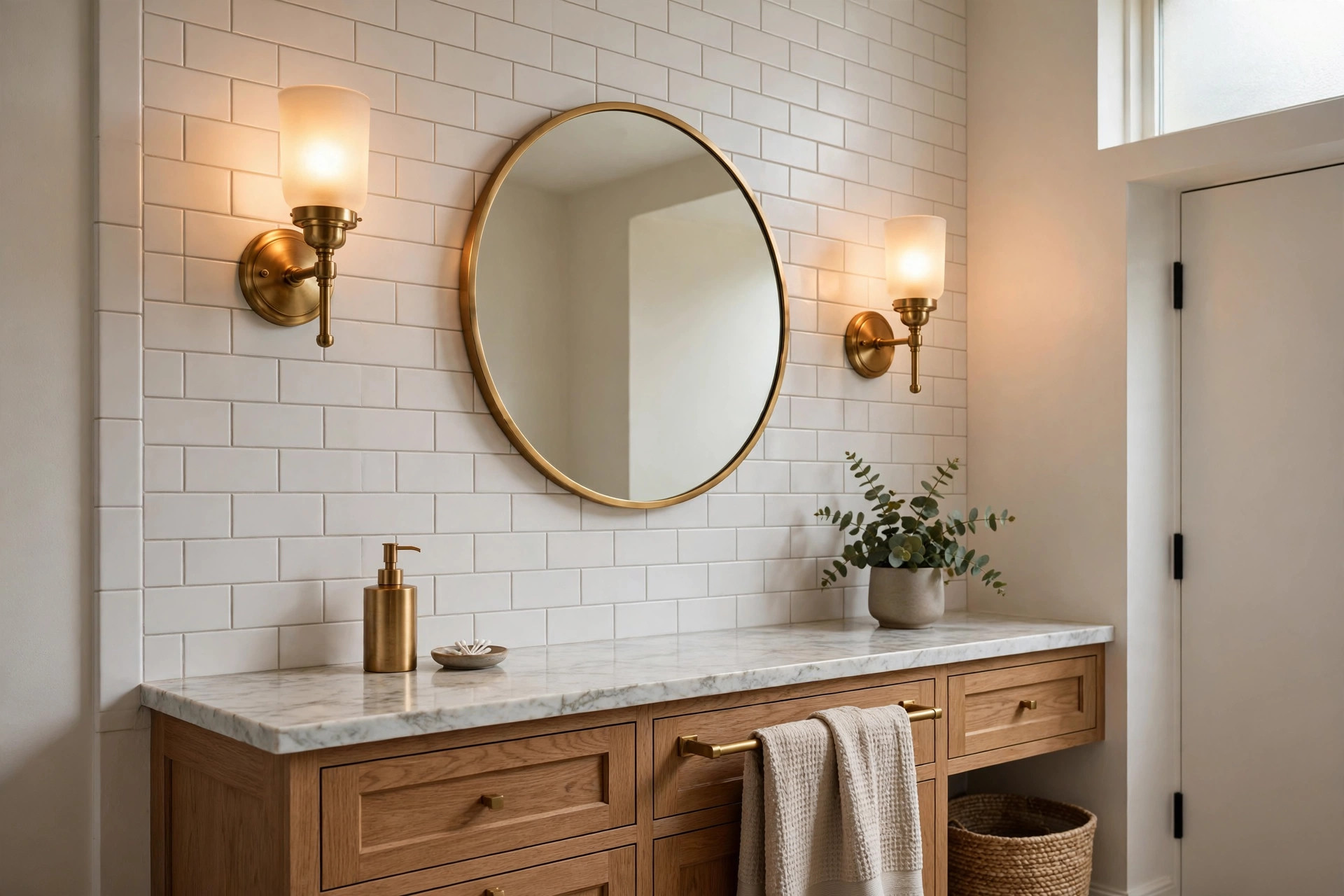
Many American homes built in the 1980s and 1990s used one ceiling fixture per room. That style is fading. Homeowners now want varied light. Sconces fill that need. They take up no floor space. That makes them ideal for small rooms. They also serve a task purpose. A pair of sconces beside a bathroom mirror cuts harsh shadows on the face. A reading sconce over a bed saves table space.
Sconces also add style. They come in brass, bronze, black, nickel, and glass shades. The right pair can lift a plain wall. They act like jewelry for the home. Buyers who plan a room update often start with light. It is one of the cheapest ways to change a mood.
What to Look for When You Buy: Indoor Wall Sconces Reviews Buying Guide Usa
Before you read a single review, know what matters. A sconce that suits one buyer may fail another. Keep these points in mind.
Light Quality and Brightness
Light is measured in lumens. More lumens mean more light. For accent light, 100 to 300 lumens per sconce is enough. For task light near a mirror, look for 400 to 800 lumens. Check the bulb type. Many sconces now use built-in LED modules. These last for years and use little power. Others take standard bulbs. Standard bulbs give you freedom to change color and brightness later.
Color temperature matters too. It is measured in Kelvin. Warm white light sits near 2700 Kelvin. It feels like candle glow. It suits bedrooms and living rooms. Cool white near 4000 Kelvin looks crisp. It suits baths and work areas. Most buyers prefer warm white in living spaces. The Energy Star program offers guides on bulb labels and what the numbers mean.
Style and Finish
Match the sconce to your home. A brass sconce suits a classic home. Matte black suits a modern one. Look at your door handles, faucets, and frames. Try to match those tones. Mixed metals can work, but a plan helps.
Shade material changes the light. Fabric shades soften light. Glass shades spread it wide. Metal shades direct it up or down. Opaque shades hide the bulb. Clear shades show it. Think about what each room needs.
Size and Scale
A sconce should fit its wall. A tiny sconce gets lost on a tall wall. An oversize sconce crowds a small bath. As a rule, the sconce should be about one-third the height of the mirror it flanks. In a hallway, space sconces six to eight feet apart. Mount them so the center of the fixture sits about 60 inches from the floor. That height suits most adults.
Dimming and Controls
Many buyers wish they had chosen dimmable sconces. Dimmers let you set mood. Bright for tasks. Low for evening rest. If the sconce has a built-in LED, check that it works with your dimmer switch. Not all pairs work well. Mismatched dimmers can cause flicker. The Department of Energy site explains LED dimming in plain terms.
Types of Indoor Wall Sconces
Sconces fall into a few main groups. Each has strengths.
Hardwired Sconces
Hardwired sconces connect to the home wiring. They need an electrician to install. They give the cleanest look. No cords show. They often allow the widest choice of styles. They are the top pick for baths and new builds. The trade-off is cost. Install can add to the price.
Plug-In Sconces
Plug-in sconces have a cord that runs to a wall outlet. No electrician is needed. They suit renters and older homes. Some come with cord covers that hide the wire. Others look fine with the cord shown. They are easy to move if you change your mind.
Battery and Rechargeable Sconces
Battery sconces mount anywhere. No wiring and no cord. They use LED bulbs to keep power use low. They are handy for closets, dark corners, and rented walls. The trade-off is upkeep. Batteries need charging or changing. Light output is often lower than wired models. Still, they solve real problems in hard spots.
Up-Light and Down-Light Sconces
Some sconces throw light up. Some throw it down. Some do both. Up-light models bounce light off the ceiling. That gives a soft, even glow. Down-light models focus light where you need it. Shades that are open at top and bottom give both. Think about the task before you choose.
Buyers who like bold looks may also browse dining room chandeliers for Texas homes for ideas on matching large fixtures to wall lights.
How to Read Reviews With Care
Reviews are the heart of this indoor wall sconces reviews buying guide USA. They hold real buyer experience. But not every review helps. Use these rules.
First, read the middle ratings. Five-star reviews can be too kind. One-star reviews can be too harsh. Three-star reviews often tell the full story. They note both good and bad points.
Second, look for detail. A helpful review names facts. It states the bulb type, the install time, and the light color. A vague review that says “great light” tells you little. A detailed one that says “took 20 minutes to mount, light is warm at 2700K” tells you much.
Third, check dates. A product may change over time. The maker may switch parts. Reviews from the past year carry more weight than old ones.
Fourth, watch for patterns. One complaint about a loose mount may be a fluke. Ten complaints about the same loose mount point to a real flaw. The same holds for praise. Repeated praise for bright, even light is a good sign.
Fifth, note the use case. A review from a bath remodel may not apply to a hallway. Look for reviewers who used the sconce as you plan to use it.
Sixth, check photos from buyers. Buyer photos show the real finish and real light. Maker photos are staged. Buyer photos are honest. Look at how the shade glows when lit.
Sites like Lamps Plus and Lumens host large sets of buyer reviews for lighting. Read across more than one store. That gives a wider view.
Where to Shop and What to Expect
Most American buyers shop at large home stores. The Home Depot and Lowe’s carry wide ranges. They stock budget models and mid-range lines. Their sites hold many reviews. Wayfair and IKEA offer style-driven picks. Philips sells lighting with strong brand backing.
Prices vary by type. A basic plug-in sconce can cost under twenty dollars. A mid-range hardwired pair often runs forty to one hundred twenty dollars. Designer pieces can pass two hundred dollars each. Install adds cost for hardwired models. A simple swap may cost under one hundred dollars in labor. A new wire run can cost more.
Watch for sales. Holiday weekends often bring lighting deals. Clearance sections can hide strong buys. But do not chase price alone. A cheap sconce with poor wiring can fail fast. Read the reviews first. A mid-priced fixture with strong reviews beats a cheap one with poor ones.
For whole-room plans, it helps to pair sconces with ceiling lights. Shoppers in warm states often compare LED recessed lights for Florida homes to plan layered light.
Care and Upkeep
Sconces need little care. Dust them often. Dust on shades dims light. Use a dry cloth for metal and glass. Use a soft brush for fabric shades. Never spray cleaner straight on a fabric shade. It can stain.
Change bulbs when they dim. LED modules last long but not forever. If a built-in LED fails, check the warranty. Many makers cover the module for years. Keep your receipt. Save the install guide. It lists the bulb type and care steps.
Check mounts once a year. Screws can loosen with time. A loose sconce can pull from the wall. Tighten gently. Do not over-tighten. Over-tightening can crack glass shades.
For outdoor-adjacent spots like covered porches, indoor sconces may not suit. Damp-rated fixtures are built for that. Shoppers adding yard light may like patio string lights deals online for outdoor charm.
Safety Tips
Light and wiring demand respect. Follow these safety points.
Turn off power at the breaker before any hardwired install. Test with a voltage tester. Do not trust the wall switch alone. A switch can be miswired. The breaker is the safe stop.
Use bulbs at or below the rated wattage. The rating is printed on the fixture. Too hot a bulb can melt shades or wire covers. LED bulbs run cooler. They are the safer pick.
Keep fabric shades clear of heat. Do not drape cloth over a lit sconce. Keep shades away from curtains. Heat needs space to escape.
Check for listing marks. A UL or ETL mark means the fixture passed safety tests. Avoid unlisted fixtures. The price may tempt you. The risk is not worth it.
If wiring looks old or damaged, call an electrician. Do not guess. A pro can check the box and the wire gauge. This is cheap peace of mind.
The Spruce lighting guides offer room-by-room tips that echo these safety basics.
Frequently Asked Questions
How many sconces do I need in a hallway? Most hallways look best with sconces spaced six to eight feet apart. A ten-foot hall may need two. A twenty-foot hall may need three. Mount each so its center sits about 60 inches from the floor. Walk the hall at night before you buy. Note the dark spots. Place sconces to fill them.
Can I install sconces myself? Plug-in and battery models are easy do-it-yourself jobs. You need only a drill and a level. Hardwired models need care. If a wire box already exists, a handy owner can often swap a fixture. If new wiring is needed, hire an electrician. When in doubt, hire a pro.
What light color is best for a bathroom mirror? Most buyers choose 2700 to 3000 Kelvin for baths. That range looks warm and true. It flatters skin tones. Place one sconce on each side of the mirror at eye level. That cuts shadows better than a single light above the mirror.
Do wall sconces use a lot of power? No. Modern LED sconces use very little power. A typical LED sconce draws five to twelve watts. That is far less than old incandescent fixtures. Running two sconces for five hours a day costs only a few dollars a year in most states.
Are expensive sconces worth it? Sometimes. Higher price often buys better metal, cleaner welds, and truer finishes. It can also buy longer warranties. But price is not proof of quality. Read reviews with care. Some mid-priced fixtures earn top marks. Some pricey ones earn poor ones. Let buyer experience guide you.
Can sconces work in a rental? Yes. Plug-in sconces are made for renters. They mount with small screws or even adhesive brackets. Battery models need no holes at all in some cases. Keep the original fixture if you swap a hardwired one. Put it back when you move out.
A Short Final Word
A good sconce is a small buy with a big effect. It can warm a cold hall. It can frame a mirror. It can turn a plain wall into a feature. The key is to shop with a plan. Know your light needs. Know your style. Read reviews with care. Check safety marks. Then buy once and buy well. This indoor wall sconces reviews buying guide USA was written to help you do just that. Take your time. Compare a few picks. The right pair will serve your home for years.
References
ENERGY STAR. (n.d.). Energy efficient products. https://www.energystar.gov IKEA. (n.d.). Home furnishings. https://www.ikea.com Lamps Plus. (n.d.). Lighting and home decor. https://www.lampsplus.com Lowe’s. (n.d.). Home improvement products. https://www.lowes.com Lumens. (n.d.). Lighting and ceiling fans. https://www.lumens.com Philips. (n.d.). Lighting products. https://www.philips.com The Home Depot. (n.d.). Home improvement products. https://www.homedepot.com The Spruce. (n.d.). Home and garden advice. https://www.thespruce.com U.S. Department of Energy. (n.d.). Energy efficiency and renewable energy. https://www.energy.gov Wayfair. (n.d.). Furniture and home goods. https://www.wayfair.com
Was this guide helpful?

About David Wilson
The My Garden US editorial team writes practical, in-depth home and garden guides for American homeowners — tested advice, no fluff.
You May Also Like
Indoor Wall Sconces Deals Near Me: How to Find Good Value Close to Home
April 17, 2026 0 views
LED Recessed Lights Florida Homes USA: How to Choose and Install
May 10, 2026 0 views
Indoor Wall Sconces USA Online Deals: A Practical Buying Guide
June 27, 2026 0 views