
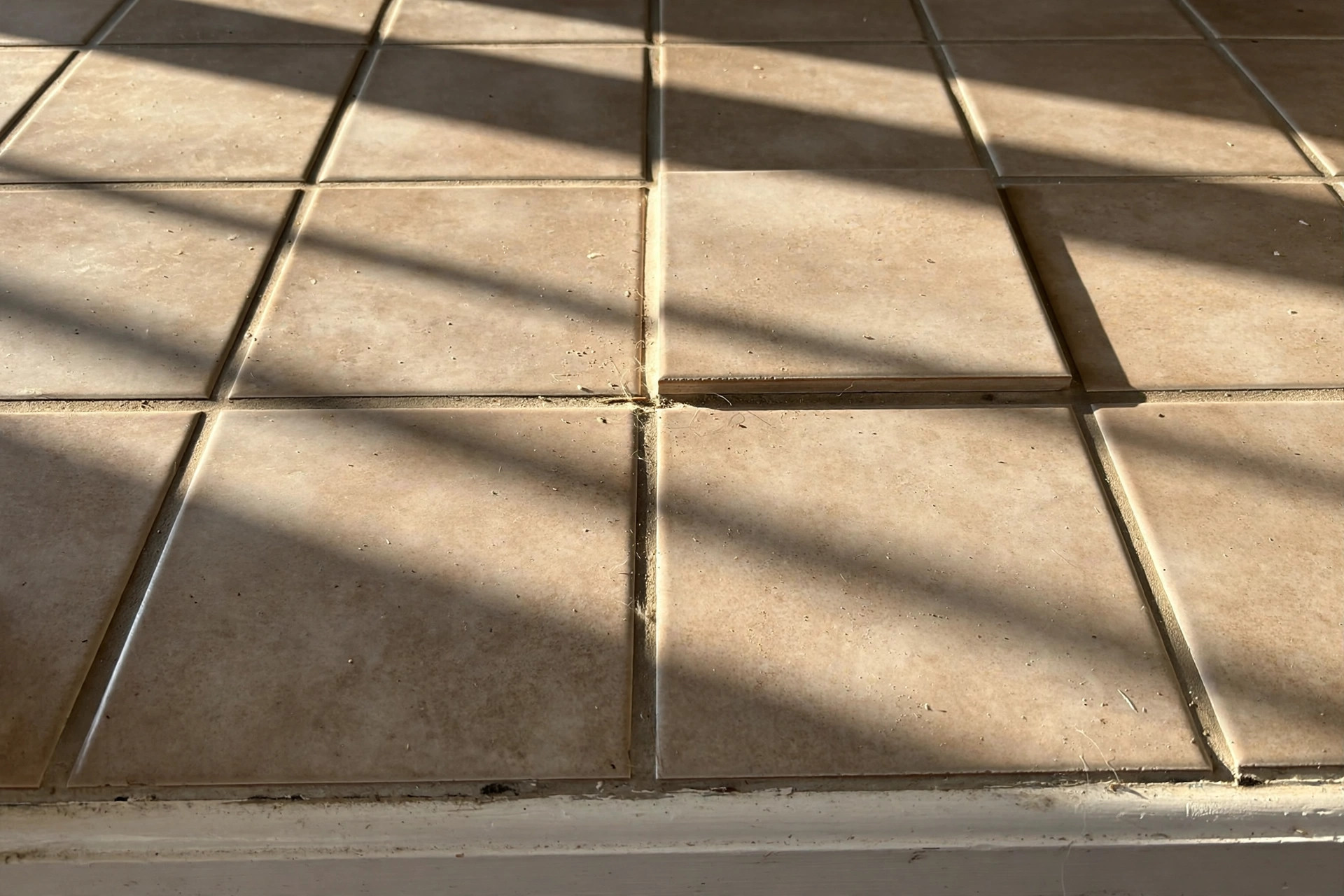

A tiled floor should feel flat under bare feet. When one tile edge sits higher than its neighbor, the floor looks rough and walks rough. Builders call this fault “lippage.” This guide explains lippage in tile floors, how to fix it, and what it costs in the USA, in plain words anyone can follow.
What Lippage Means, and Why It Matters
Lippage is the uneven height between the edges of two tiles that sit side by side. You see it where two corners meet and one stands proud of the other. You feel it when a bare foot crosses a sharp edge, or when a chair drags and catches.
A little lippage is normal in almost every tiled floor. Clay and stone are natural materials, and few tiles are perfectly flat. But when the difference grows too large, it stops being a small flaw and becomes a real problem. Edges chip more easily. Dirt collects along the raised edge. In bad cases, the floor can trip people, which matters most in homes with older adults and small children.
The tile industry in the United States sets a clear limit. For most floor tiles, the finished surface should not vary by more than one thirty-second of an inch, about the thickness of a credit card, where the edges of two tiles meet. You can read the full standards on the sites of Daltile and Shaw Floors. A coin laid flat across a joint is a quick home test. If the coin rocks or slides under an edge, the lippage is past the limit.
What Causes Lippage in Tile Floors: Lippage in Tile Floors How to Fix Usa
Lippage has a few common causes, and most of them trace back to the day the tile was set.
The first cause is an uneven base. Tile needs a flat bed. If the concrete slab or the backer board under the tile waves up and down, the tile follows it. Large tiles are less forgiving than small ones, because one tile can bridge a high spot on one side and a low spot on the other.
The second cause is warped tile. Big porcelain tiles, especially long planks, often bow a little in the middle from the kiln. The maker stamps a flatness grade on the box. A bowed tile set in a straight line will always lift at its center or its ends.
The third cause is poor setting technique. If the thinset mortar is not spread evenly, or if the tiles are not pressed and beaten flat before the mortar sets, edges stay high. Rushing the job is a classic reason. Tile set without spacers, or spacers pulled too early, can also drift out of plane.
The fourth cause is the wrong layout. Large format tiles laid in a running bond pattern, where each row starts half a tile off, put the high center of one bowed tile against the low end of another. Many installers now limit the offset to one third of the tile length for big tiles. If you are planning a bath project, our guide to large format tile for small bathroom usa covers layout choices that keep floors flatter.
The fifth cause is movement after the job. A wood subfloor that flexes, or a floor that settles, can push tiles up over time. This kind of lippage appears months or years after a good install and may point to a problem under the tile, not in it.
How Much Lippage Can You Live With
Not every uneven tile needs a fix. Ask three questions.
First, can you see it? Stand at the door and look across the floor in daylight. If the shadows along the joints bother you every time you enter the room, the floor will never satisfy you.
Second, can you feel it? Walk the floor barefoot. Slide a hand across the joints. A slight ripple is fine. A sharp lip that catches a toe is not.
Third, is it getting worse? Mark a suspect joint with a pencil line and check it again in a month. If a tile is lifting, the gap will grow.
How to Fix Lippage in Tile Floors
There is no magic product that flattens a tiled floor. The fix depends on how bad the lippage is and what caused it.
Fix Small Lippage by Grinding
Slight lippage, where one edge stands a hair above its neighbor, can be ground down. A stone and tile restoration worker uses a diamond grinding pad, then hones and polishes the spot back to match the rest of the floor. This works best on stone tile, such as marble or travertine, which takes a polish well. It can also work on the edges of porcelain tile, though the ground edge will look a little different from the factory finish.
Grinding is dusty work and needs a skilled hand. A worker who grinds too deep can dish the tile and leave a low spot that looks worse than the original lip. Get a firm price for the whole job, not per tile, and ask to see past work before you hire.
Fix Bad Lippage by Replacing Tiles
When the height difference is large, or when many tiles are affected, the honest fix is to pull the bad tiles and set them again. The worker cuts out the grout, lifts the tile, scrapes the old mortar flat, and re-sets the tile level with its neighbors. Matching tiles matter here. Keep a box of spare tiles from the original job. If you have none, a close match from the same maker and line is the next best choice. You can browse current lines at LL Flooring and Mohawk Flooring.
Replacement is the only fix that truly cures lippage caused by a warped tile or a bad bed. It costs more than grinding, but it restores the floor to flat.
What Not to Do
Do not try to fill the low side with extra grout. Grout is not a leveling compound. A thick grout joint next to a raised edge will crack and crumble under foot traffic, and it will look lumpy.
Do not sand tile edges with a hand sander and a masonry disk unless you know the craft. Homeowners who try this often leave scratches across the tile face that cannot be polished out.
Do not ignore growing lippage. A tile that keeps lifting may be coming unbonded. A loose tile can crack under weight and leave a sharp edge, or it can let water reach the subfloor in a bath or kitchen.
Preventing Lippage in New Tile Work
The best fix is the one you never need. If you are hiring a tile setter, these points keep floors flat.
Start with a flat base. Ask the setter to check the floor with a ten-foot straightedge before any tile goes down. High spots get ground down, and low spots get filled with a leveling compound. Many stores that sell tile, such as The Home Depot and Lowe’s, carry floor patch and self-leveling products for this step.
Use a tile leveling system. Small plastic clips and wedges hold neighboring tiles at the same height while the mortar cures. They add a little cost and a little time, but they are the single best tool against lippage in large tile. Most pro setters use them on any tile bigger than twelve inches square.
Back-butter large tiles. Spreading a thin coat of mortar on the back of each tile, in addition to the bed, gives full contact and stops hollow spots that later let tiles rock.
Mind the layout. Keep offsets to one third of the tile length or less on large format tile. A straight stack layout shows the least lippage of all, since high spots line up with high spots.
Choose flat tiles. Check the grade on the box and sight down a stack of tiles before you buy. A tile that is visibly bowed in the store will be bowed on your floor.
Ask about the setting standard. A good setter knows the industry lippage limit and will talk about it without being asked. That conversation alone separates careful craftsmen from hurried ones.
Cost and Price in the USA
Prices move with region and with the size of the job, but these ranges hold for most American markets in recent years.
Grinding and honing a few lips in one room usually runs a few hundred dollars. A full stone floor restoration, grinding every tile flat and polishing the whole surface, can run several dollars per square foot. Get the price in writing before work starts, with a clear statement of how flat the finished floor will be.
Replacing tiles costs more because the work is slower. Expect a service call fee plus a per-tile charge. Small jobs of a handful of tiles often land between two hundred and six hundred dollars. A whole room of bad tile can cost as much as a fresh install, and at that point a full re-tile is often the wiser spend.
A brand-new tile floor, set right the first time with leveling clips and a flat base, is the cheapest lippage fix of all. Tile installation itself is a separate budget question; our article on tile installation cost per square foot usa is a related read, though it sits outside this guide’s three internal links. When you compare bids, ask each bidder how they control lippage. The bidder with a clear answer is usually the one worth hiring.
Care and Upkeep After the Fix
A repaired floor needs the same care as any tile floor, with a few extra notes.
Wait before you wash. Fresh grout and fresh thinset need days to cure. Your setter should give you a time, often forty-eight to seventy-two hours, before the floor sees water and foot traffic.
Seal the grout. Grout around replaced tiles should be sealed once it cures, just like the rest of the floor. Sealer keeps water and stains out of the joints. If your grout is old and tired elsewhere in the room, read our guide to the best grout for shower floor reviews usa for sealer and grout choices that hold up in wet rooms.
Clean gently. Use a pH-neutral tile cleaner and a soft mop. Harsh acids and bleach can etch stone and weaken grout. Sweep or vacuum first so grit does not scratch the surface underfoot.
Watch the joints. Once a year, walk the floor and look at the grout lines around repaired tiles. Hairline cracks are normal with age, but a crack that widens can let water under the tile. Re-caulk where tile meets tubs and walls; that joint moves, and grout there always fails in time.
Safety
A floor with lippage is a trip risk, so treat the repair as a safety job, not just a beauty job.
Block the work area. Grinding throws dust and chips. Keep children and pets out of the room until the work is done and the floor is washed.
Wear protection. Anyone grinding tile should wear a respirator, eye protection, and hearing protection. Silica dust from stone and porcelain is a real lung hazard. A pro will tent the area and run a vacuum with a fine filter.
Mind the edges. Until the repair is done, a raised tile edge can catch a toe. A strip of tape over the worst lips warns the household while you wait for the repair date.
Check the rest of the house. If lippage came from a settling slab or a flexing subfloor, other rooms may show the same trouble soon. A quick walk-through now can catch the next problem early. Practical repair know-how from This Old House and The Spruce is worth a look before any big floor project.
Frequently Asked Questions
Can lippage be fixed without removing tiles? Slight lippage can be ground and polished flat without removing the tile. This works best on stone. For porcelain and ceramic, grinding changes the edge finish, so it suits small spots better than whole rooms. Heavy lippage needs tile replacement.
How much lippage is acceptable? The industry limit is about one thirty-second of an inch between the edges of two adjoining floor tiles. Less than that is normal and usually invisible in daily life. More than that is worth a repair, especially where people walk barefoot.
Will my tile setter fix lippage for free? If the floor is new and the lippage breaks the industry limit, a reputable setter will come back and make it right. Call soon after you notice it, and put the request in writing. After many months, or when the cause is a settling house rather than the install, expect to pay for the repair.
Does lippage mean the tile job was bad? Often yes, but not always. Warped tiles from the factory and a moving subfloor can cause lippage even with careful setting. A good setter reduces the risk with leveling clips, a flat base, and a sensible layout, but no setter can flatten a badly bowed tile.
Can I fix lippage myself? A handy homeowner can replace a single loose tile or grind a small lip with rented tools. Whole-room problems belong to a pro. The tools are aggressive, the dust is hazardous, and mistakes in stone or porcelain are hard to undo.
Does homeowners insurance cover lippage repair? Almost never. Insurance covers sudden damage, not poor workmanship or normal settling.
A Short Final Word
Lippage is one of the most common complaints about tile floors, and also one of the most fixable. Small lips can be ground smooth. Bad ones can be replaced. And the next floor can be set flat from the start with a level base, good clips, and a careful hand. Measure the problem, match the fix to its size, and hire the worker who talks about flatness before you have to ask. If you are choosing tile for a wet wall as well as a floor, our notes on the best tile for shower walls reviews usa may help you pick a line that stays true.
References
Daltile. (n.d.). Ceramic and porcelain tile. https://www.daltile.com LL Flooring. (n.d.). Hardwood, vinyl, and tile flooring. https://www.llflooring.com Lowe’s. (n.d.). Home improvement products. https://www.lowes.com Mohawk Flooring. (n.d.). Flooring products. https://www.mohawkflooring.com Shaw Floors. (n.d.). Flooring products. https://www.shawfloors.com The Home Depot. (n.d.). Home improvement products. https://www.homedepot.com The Spruce. (n.d.). Home and garden advice. https://www.thespruce.com This Old House. (n.d.). Home renovation guidance. https://www.thisoldhouse.com
Was this guide helpful?

About Sarah Mitchell
The My Garden US editorial team writes practical, in-depth home and garden guides for American homeowners — tested advice, no fluff.
You May Also Like

Black Grout Bathroom Floor Ideas USA: A Plain Guide
September 21, 2026 0 views
Concrete Look Tile for Modern Homes USA: A Plain Buyer’s Guide
October 5, 2026 0 views
The Best Doormat for Rainy Climates USA: A Practical Buying Guide
April 21, 2026 0 views