
Why a Bed with a Slide Works So Well
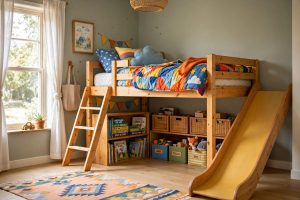
A bed with a slide does two jobs at once. It is a place to sleep at night and a place to play by day. For a small playroom bedroom, this matters. Floor space is short, and every piece of furniture must earn its spot. The best kids bed with slide for playroom bedroom use turns bedtime from a chore into a game. Children climb up the ladder or stairs at night and glide down the slide each morning with a smile.
Parents often worry that a slide will make bedtime wild. In most homes the opposite is true. The slide is fun in small doses. After a few days it becomes part of the room, like a toy shelf. Children learn the rule quickly: the slide is for daytime play, and the bed is for sleep. A bed that makes a child happy to go to the bedroom is worth its price.
What to Look for When You Choose: Best Kids Bed with Slide for Playroom Bedroom
Size and Room Layout
Measure the room before you shop. Write down the length and width in inches. Then measure the bed you like, including the slide. A slide sticks out from the side of the bed, so the room needs extra floor space on that side. Many models need a clear zone of two to three feet at the foot of the slide. Leave room for a door to swing and for an adult to stand beside the bed.
Low loft beds fit rooms with low ceilings. A bed that lifts the mattress four to five feet off the floor works in most homes. Leave at least two feet between the top of the mattress and the ceiling so a child can sit up without bumping their head.
Weight Limit and Age Range
Check the weight limit before you buy. Most kids beds with slides hold between 150 and 250 pounds. That range covers a child plus a parent who sits on the edge for story time. Check the age range too. Slides suit children from about three to ten years old. A bed that converts into a regular bed later will last longer as the child grows.
Materials and Build Quality
Solid wood is the strongest choice. Pine and rubberwood are common and hold up well. Metal frames are light and often cheaper, but they can wobble if the joints loosen. Look for beds with thick side rails and a sturdy ladder. Shake the bed in the store if you can. A good bed feels rock solid.
Stairs or Ladder
Some beds use a ladder. Some use stairs. Stairs cost more and take more room, but they are easier for small children and safer at night. Stairs often hide drawers, which add storage to a small room. A ladder saves floor space and suits older children who climb with ease.
Types of Kids Beds with Slides
Loft Beds with Slides
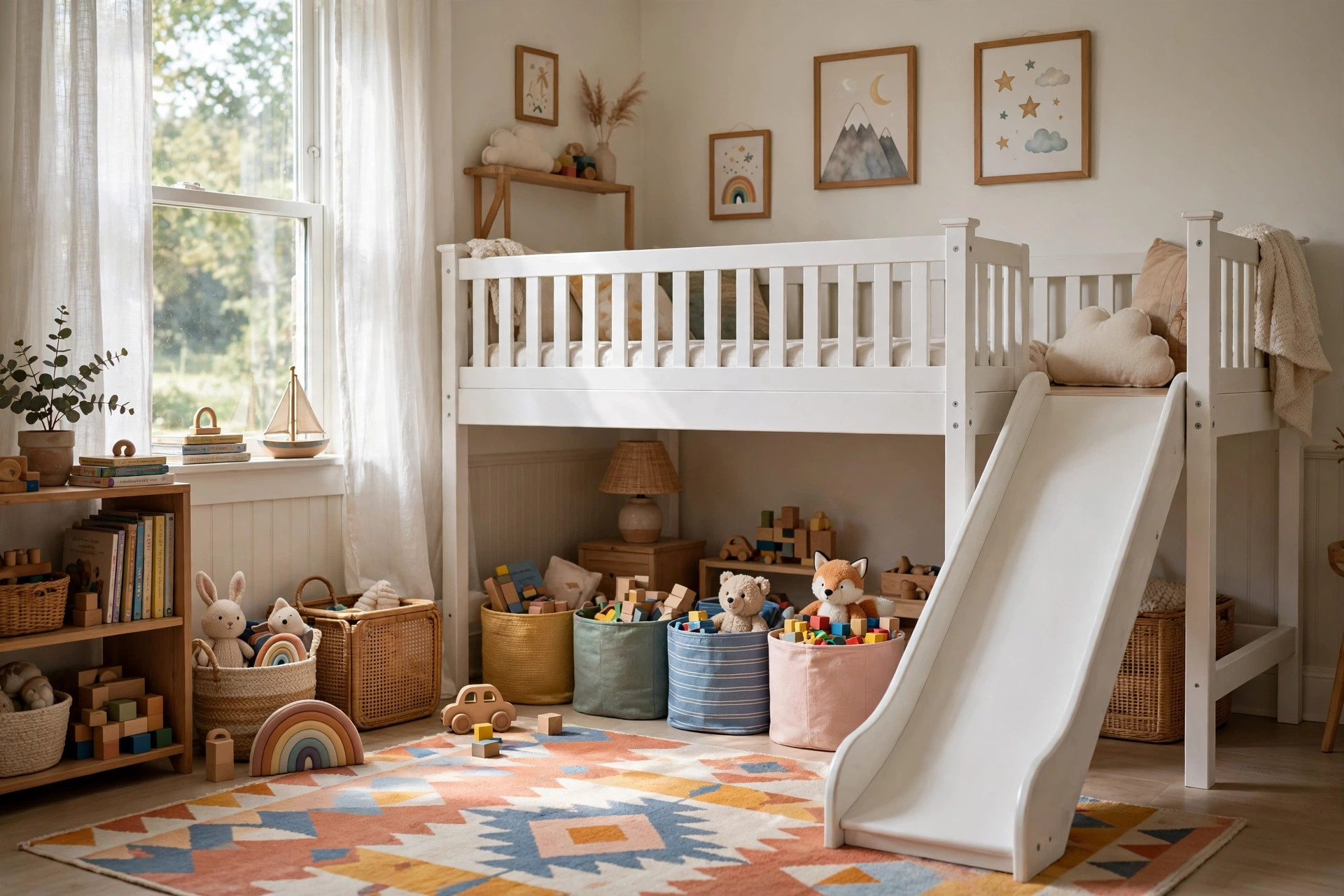
A loft bed lifts the mattress high and leaves open space below. The slide runs from the sleeping deck to the floor. The space under the bed becomes a play nook, a reading corner, or a spot for toy bins. This type gives the most play value per square foot, which is why it suits a playroom bedroom so well.
Bunk Beds with Slides
A bunk bed stacks two mattresses. The slide attaches to the top bunk. This type suits siblings or a child who hosts sleepovers. The lower bunk gives a second sleeping spot without taking more floor space. Check that the slide does not block the lower bunk’s ladder.
Low Loft and Junior Beds
A low loft sits closer to the floor. The slide is shorter and gentler. This type suits young children from three to six years old. It costs less and feels less risky for parents of toddlers. The space below is too low for play, but it can hold shallow bins for toys or shoes.
Themed Beds
Some beds come shaped like castles, fire trucks, or cabins. The slide blends into the theme. These beds cost more and delight young children. The risk is that a child outgrows the theme in two or three years. A plain bed with a slide keeps its charm longer.
Cost and Price
Prices vary by material, size, and brand. A basic metal or pine loft bed with a slide often costs between $250 and $450. A solid wood model with stairs and drawers can run from $500 to $900. Themed beds and large bunk sets may pass $1,000.
Set a budget before you shop. A bed in the middle range often gives the best value. It is strong enough to last through two children and plain enough to repaint. Delivery and assembly add cost. Some beds ship flat and need an hour or two to build. If assembly sounds hard, budget for a handyman or a delivery team that builds it on site.
Watch for hidden costs. A mattress, guardrails, and bedding are often sold apart from the bed. A twin mattress in a safe thickness adds $150 to $300. Keep these costs in your plan.
Safety Comes First
Safety is the most important part of this purchase. Read the safety rules with care.
Buy a bed that meets current safety standards. The U.S. Consumer Product Safety Commission publishes rules for bunk beds and loft beds, including rail height and gap sizes. You can read their guidance on children’s furniture safety at CPSC.
Place the bed away from windows, ceiling fans, and sharp furniture corners. Anchor a tall bed to the wall with the straps or brackets that come in the box. This stops the bed from tipping if a child rocks it.
Teach simple rules: one child on the slide at a time, feet first, no standing on the top rail. Check the bolts and joints every few months and tighten them when they loosen. A bed that creaks or wobbles needs a check right away.
Pick a slide with a smooth surface and raised sides. Raised sides keep a child centered on the way down. The landing area should be clear of toys and hard edges. A soft rug at the foot of the slide cushions the landing.
Care and Upkeep
A kids bed with a slide needs little care, but small habits keep it safe for years. Dust the frame once a month. Wipe spills with a damp cloth and dry the spot at once. Wood beds can be touched up with matching paint or stain when scratches show.
Check the slide surface twice a year. Sunlight and wear can make plastic slides rough. A rough slide slows the ride and can scratch skin. If the slide cracks or warps, stop using it and order a replacement part from the maker.
Wash bedding in hot water to keep dust mites down. Rotate the mattress every three months so it wears evenly. If the bed has drawers, keep them from overloading. Heavy drawers strain the frame and make the stairs hard to open.
Making the Playroom Bedroom Work
A bed with a slide is the star of the room. Plan the rest of the room around it. Put toy storage under the loft so play stays in one zone. A small adjustable kids study desk with chair set gives the child a spot for drawing and homework. A nursery dresser with a removable changing tray works well in rooms shared with a younger sibling. For cozy evenings, a kids bed tent for a cozy sleep space can drape over the lower area and turn it into a reading hideout.
Keep the color scheme simple. White, natural wood, or gray frames suit almost any decor. Let bedding, rugs, and wall art bring the color. This makes the room easy to update as the child grows. Bright bedding is cheap to swap. A painted bed is not.
Light the room well. A ceiling light for play and a small lamp for reading cover most needs. Keep cords out of reach. A nightlight near the ladder or stairs helps a child who wakes up at night.
Shopping Tips
Shop with your measurements in hand. Read reviews from parents with children the same age as yours. Look for notes about assembly time, sturdiness, and slide quality. Photos from buyers often show the bed in real rooms, which helps more than studio shots.
Big home stores and furniture sites carry many models. You can compare styles and prices at IKEA, Wayfair, Home Depot, and Lowe’s. Stores that focus on children’s furniture, like Pottery Barn Kids, offer themed designs and strong safety testing.
For guidance on safe sleep and play spaces, HealthyChildren.org offers parent-friendly advice from pediatricians. Home and design sites such as The Spruce, HGTV, and Bob Vila publish room ideas and buying guides. Independent testers like Consumer Reports review children’s furniture for safety and durability.
Buy at the right time. Furniture sales run often in late summer and around holidays. A floor model in a store may sell at a discount. Ask the store about it. Bring your child to see the bed in person if you can. Let them climb the ladder and touch the slide. A child who picks the bed feels proud of it and takes better care of it. If you shop online, read the return policy. A bed that arrives damaged should be replaced at no cost to you. Keep the box until the bed is built and checked.
FAQ
What age is right for a kids bed with a slide?
Most makers suggest ages three and up for low lofts and ages six and up for high lofts and top bunks. Follow the age range on the box. A three-year-old needs a low bed with a gentle slide. An older child can handle a taller loft.
Is a bed with a slide safe for a small bedroom?
Yes, if you measure first. Leave a clear landing zone at the foot of the slide and keep the bed away from windows and fans. Anchor the bed to the wall. A low loft suits a small room better than a tall one.
Can the slide be removed later?
Many models let you remove the slide when the child outgrows it. Check the product details before you buy. A bed that converts to a plain loft or a regular bed lasts much longer.
How much weight can the slide hold?
Most slides hold 100 to 175 pounds. The bed frame often holds more. Check both numbers. Do not let two children ride the slide at once, even if their combined weight is under the limit.
How long does assembly take?
Plan for one to three hours with two adults. Read the manual fully before you start. Sort the hardware first. An electric screwdriver saves time but can strip screws, so finish by hand.
What mattress thickness is best?
Follow the maker’s limit, often six to eight inches for a top bunk or loft. A mattress that is too thick raises the child above the guardrail, which is unsafe.
A Short Final Word
The best kids bed with slide for playroom bedroom life is a simple idea done well. It gives a child a bed they look forward to and a slide that makes the room a place to play. Measure your room, pick solid materials, put safety first, and the bed will serve your family for years. The morning slide down to breakfast may become the best part of the day.
References
American Academy of Pediatrics. (n.d.). HealthyChildren.org. https://www.healthychildren.org Bob Vila. (n.d.). Home improvement advice. https://www.bobvila.com Consumer Reports. (n.d.). Product reviews and ratings. https://www.consumerreports.org HGTV. (n.d.). Home and garden ideas. https://www.hgtv.com IKEA. (n.d.). Home furnishings. https://www.ikea.com Lowe’s. (n.d.). Home improvement products. https://www.lowes.com Pottery Barn Kids. (n.d.). Kids furniture and decor. https://www.potterybarnkids.com The Home Depot. (n.d.). Home improvement products. https://www.homedepot.com The Spruce. (n.d.). Home and garden advice. https://www.thespruce.com U.S. Consumer Product Safety Commission. (n.d.). Product safety information. https://www.cpsc.gov Wayfair. (n.d.). Furniture and home goods. https://www.wayfair.com
Was this guide helpful?

About Michael Thompson
The My Garden US editorial team writes practical, in-depth home and garden guides for American homeowners — tested advice, no fluff.
You May Also Like
Kids Wall Clock for Learning Time Decor: A Parent’s Guide
January 10, 2026 0 views
Toddler Bed With Tent Canopy for Imagination: A Guide for Parents
August 14, 2026 0 views
Crib Mattress Pad Waterproof for Accidents: A Parent’s Guide
May 19, 2026 0 views