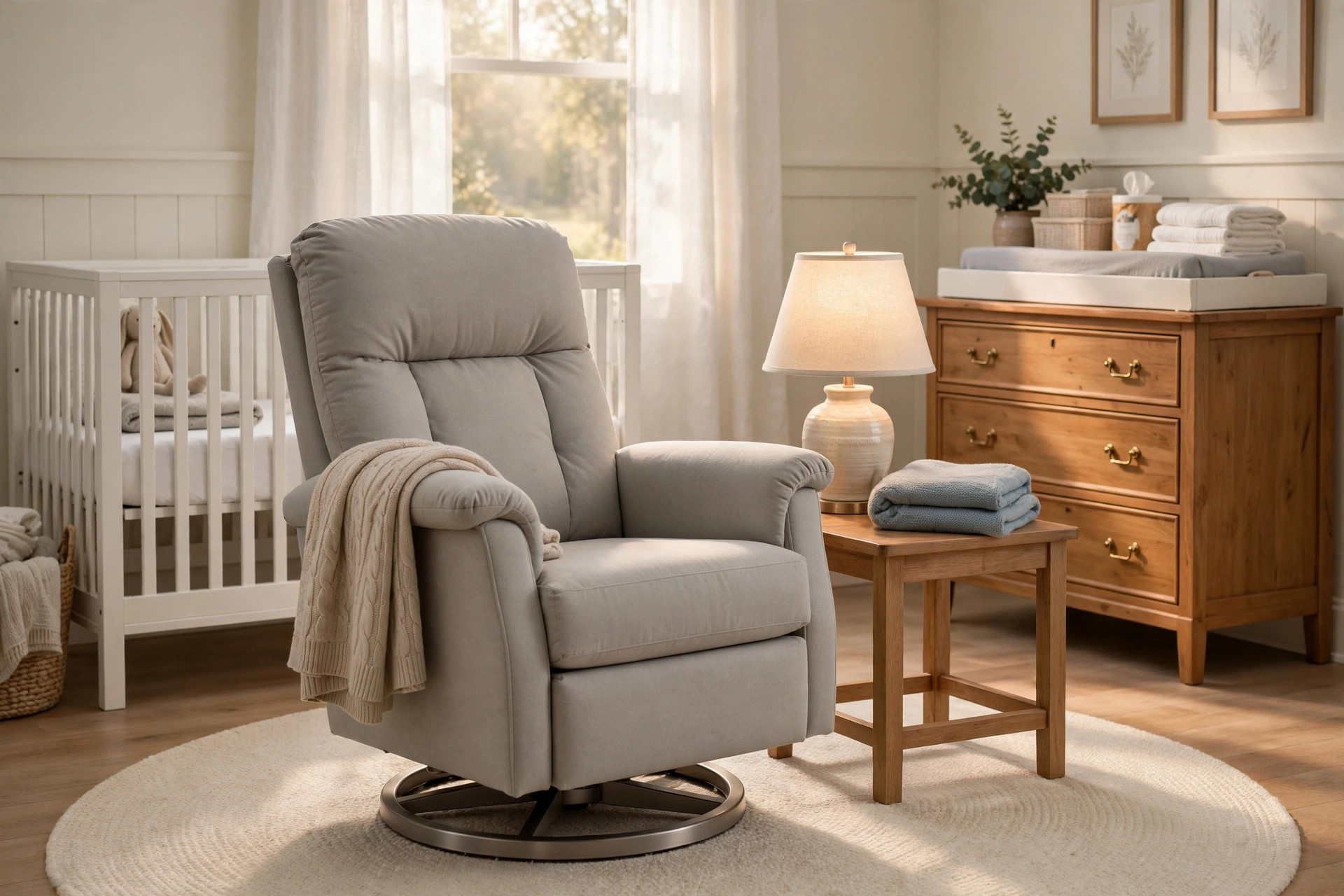

A nursery glider swivel for easy movement is one of the most used pieces of furniture in a baby’s room. New parents sit in this chair many times each day. They sit in it for night feedings, for burping, and for rocking a fussy baby to sleep. A good chair makes these hours easier on the back, the arms, and the legs. A poor chair makes them worse.
A swivel glider is different from an old wooden rocker. A rocker moves on curved rails. A glider moves on a flat base, back and forth in a smooth line. The word swivel adds one more kind of motion. A nursery glider swivel for easy movement turns in a full circle, or close to it. The parent can glide, turn to the lamp or the nightstand, and glide again, all without standing up. When the nursery is dark at 3 a.m., that ease of motion matters a great deal.
This guide explains what to look for, the main types, what they cost, how to keep them in good shape, and how to use them safely.
Why a Swivel Glider Matters
A baby may need feeding eight to twelve times in a day during the first weeks. Each feeding can last twenty to forty minutes. That is hours of sitting every single day. Good posture in the chair reduces back pain. Proper arm height reduces shoulder strain. A smooth glide helps a restless infant settle faster, which means more sleep for everyone.
The swivel adds reach. A small table with a water bottle, a burp cloth, and the phone often stands next to the chair. With a swivel base, the parent turns to reach it and turns back without lifting the baby. This small motion is used again and again. Over months, it saves real effort.
Many parents also use the chair for reading aloud, for pumping milk, and for quiet time with the child as the baby grows into a toddler. A chair bought before birth often stays in use for three or four years.
How to Choose the Right Chair: Nursery Glider Swivel for Easy Movement
Choosing a chair comes down to comfort, build, and fit in the room. Try to sit in a floor model before buying if that is possible. A chair that looks right in a picture may feel wrong in person.
The Motion
Test the glide. It should move back and forth with a gentle push and stop on its own. It should not squeak, clunk, or stick. Test the swivel. It should turn in a full circle with little effort and no grinding feel. Some chairs lock the swivel or lock the glide. A lock can be useful when the parent stands up holding the baby, because a chair that moves away can cause a stumble.
Size and Seat Shape
Measure the nursery first. Most glider swivel chairs need about three feet of depth to glide safely. Add room on the sides for the swivel to turn. The seat should be wide enough that the parent’s hips fit with room to spare. The seat depth should let the lower back rest against the backrest while the feet reach the floor or an ottoman.
Tall parents may want a high backrest that supports the head. Shorter parents may prefer a lower back and shallower seat so the feet touch the ground. Back problems are common after birth, so lumbar support matters. Many chairs come with a small lumbar pillow.
Armrests
The armrests carry much of the baby’s weight during feeding. They should be wide, padded, and at a height that lets the elbows rest with the shoulders down. Low armrests force the parent to hold the baby’s weight. High armrests push the shoulders up and cause neck pain.
The Base
A good base is wide and stable. It should not tip when the parent leans to one side. Metal bases are common and strong. Wood bases look warm and classic. Some parents compare a swivel glider with a best rocking chair for nursery small spaces before they decide, since a classic rocker takes up less room and suits some styles better.
Fabric
Nursery chairs see spit-up, spilled milk, and leaking diapers. Choose a fabric that cleans easily. Tightly woven polyester blends and performance fabrics wipe clean with a damp cloth. Light colors show stains more than mid-tone prints. Removable, washable covers are a strong plus. Leather or faux leather wipes clean fast but can feel cold in winter and sticky in summer.
Types of Swivel Glider Chairs
Not every chair with the name is built the same. The main types differ in motion, size, and features.
Standard Swivel Glider
This is the basic model. It glides back and forth and turns in a circle. It usually has no recline. It is lighter and less costly than other types. For many parents, this simple motion is enough.
Swivel Glider Recliner
This model adds a reclining backrest. A lever or a push-back motion tilts the chair for rest or for nursing in a laid-back pose. Some recliners include a pop-up footrest. A nursery glider recliner for small apartment is a smart pick when the nursery doubles as a spare bedroom, since the recliner can serve as a guest seat later. The trade-off is size and price. Recliners are wider, heavier, and cost more.
Swivel Glider with Ottoman
Some chairs pair with a matching ottoman that glides with the chair. The ottoman lifts the feet and eases leg swelling after birth. A separate ottoman gives more freedom of position than a built-in footrest. A nursery glider chair with ottoman for breastfeeding keeps the parent in a natural feeding pose with good knee height.
Compact or Sleeper Models
Compact models fit small rooms and tight budgets. They give up some padding and width. Oversized sleeper models run the other way. They are wide enough for an adult to nap in with the baby beside them in a crib. These large chairs can weigh over one hundred pounds and may not fit through narrow doors.
Cost and Price
Prices vary widely. A basic fabric swivel glider often costs between one hundred fifty and three hundred dollars. A mid-range model with better padding, a nicer fabric, and a solid wood base often costs between three hundred and six hundred dollars. High-end models with a recline, a matching ottoman, and premium fabric can cost eight hundred to twelve hundred dollars or more.
Several things drive the price. Kiln-dried hardwood frames cost more than softwood or plywood frames but last longer. Performance fabrics cost more than basic polyester. A reclining mechanism adds parts and labor. Brand name adds a premium. Retailers run sales around major holidays, and floor models can save twenty to forty percent.
Set a budget before shopping. A chair in the mid-range often gives the best value. It has enough comfort for daily use and a frame that lasts through more than one child. Check reviews at sites like Consumer Reports and product lists at The Spruce to compare models in your price range.
Where to Place the Chair
Place the chair near the crib so the parent can stand and set the sleeping baby down with few steps. Keep it a few inches from the wall. The glide and the recline need clearance behind the chair. A small rug under the chair protects the floor and softens noise.
Put a small table within arm’s reach of the chair’s side. On it, keep water, a burp cloth, a night light, and a book. A soft lamp matters. Harsh light wakes the baby. Some parents add a dimmer switch to the nursery lamp.
Care and Upkeep
A nursery glider needs little care, but regular upkeep keeps it smooth and clean for years.
Vacuum the fabric weekly with an upholstery attachment. Crumbs and dust work into the weave and wear it down. Blot spills at once with a clean damp cloth. Work from the edge of the stain toward the center so the stain does not spread. For set stains, use a mild soap and water. Test any cleaner on a hidden spot first.
Check the bolts and screws every few months. Gliders move, and moving joints can loosen over time. Tighten anything that has worked loose. If the glide squeaks, a drop of silicone lubricant on the moving parts usually quiets it. Do not use oil-based products on fabric chairs, since they can stain.
Keep the chair out of direct sun when possible. Strong sun fades fabric and dries out leather. Rotate cushions if the design allows, so wear spreads evenly.
Safety
Safety matters most with nursery furniture. The federal product safety agency publishes guidance on nursery products, and parents can check current recalls and standards at the CPSC website. Read the chair’s manual and follow its weight limit.
Check for pinch points. The glide mechanism has moving parts near the base. Small fingers and toes should stay clear. Keep cords from lamps and monitors away from the chair’s moving parts. A cord can snag in the base.
Place the chair on a firm, level surface. A chair on thick carpet may wobble. Lock the glide before standing up with the baby. An unlocked chair can slide and cause a fall.
Do not sleep in the chair with the baby. This is one of the most important safety rules. Falling asleep while holding an infant on a soft surface raises the risk of sudden infant death and suffocation. Pediatric guidance at HealthyChildren explains safe sleep practices, including placing the baby on a firm, flat sleep surface. If feeding makes you drowsy, put the baby back in the crib and rest yourself.
Buy from a retailer that lists the chair’s safety testing. Names like IKEA, Wayfair, Target, and Pottery Barn Kids publish product details and compliance notes for their nursery lines. Registry guides at Babylist and parenting explainers at What to Expect also cover what to ask before buying nursery furniture.
FAQ
Is a swivel glider better than a regular rocker?
A swivel glider gives two motions instead of one. The glide is smooth and flat, and the swivel turns the seat in a circle. A rocker moves on curved rails and can pinch little toes at the floor. Parents who value easy reach and smooth motion often prefer the glider. Parents who want a smaller footprint or a classic look may prefer the rocker.
How much space does a swivel glider need?
Plan on a space about three feet deep and three feet wide. The chair needs room to glide back and forth without hitting a wall. The swivel needs clearance on the sides. A recliner needs more room behind the chair. Measure twice before you order.
Can the chair be used after the baby years?
Yes. Many families move the chair to a living room, a bedroom, or a reading corner. A neutral fabric and a classic frame make this easy. That is one reason to buy a sturdy model. The chair can serve for many years beyond the nursery.
What fabric is best for a nursery glider?
Tightly woven performance fabric or a polyester blend is the most practical choice. It resists stains and cleans with a damp cloth. Removable washable covers are ideal. Avoid loose weaves that snag and light solid colors that show every mark.
Does the chair need assembly?
Most swivel gliders need some assembly. The base usually ships apart from the seat. Assembly often takes thirty to sixty minutes with basic tools. Some retailers offer in-home assembly for a fee. Keep the manual and extra parts in case you move the chair later.
How do I stop the chair from squeaking?
Tighten all bolts first. Then apply a small amount of silicone lubricant to the glide tracks and the swivel ring. Wipe away extra lubricant. If the squeak stays, check for a bent track or a worn bushing, and contact the maker about replacement parts.
A Final Word
A nursery glider swivel for easy movement is a simple tool that does hard work. It holds a tired parent. It soothes a crying baby. It turns the long nights of the first year into something gentler. Take time to test the motion, check the size, and read the safety guidance. The right chair, cared for well, will still be gliding smoothly when the second or third child arrives.
References
American Academy of Pediatrics. (n.d.). HealthyChildren.org. https://www.healthychildren.org Babylist. (n.d.). Baby registry and gear guides. https://www.babylist.com Consumer Reports. (n.d.). Product reviews and ratings. https://www.consumerreports.org IKEA. (n.d.). Home furnishings. https://www.ikea.com Pottery Barn Kids. (n.d.). Kids furniture and decor. https://www.potterybarnkids.com Target. (n.d.). Retail store. https://www.target.com The Spruce. (n.d.). Home and garden advice. https://www.thespruce.com U.S. Consumer Product Safety Commission. (n.d.). Product safety information. https://www.cpsc.gov Wayfair. (n.d.). Furniture and home goods. https://www.wayfair.com What to Expect. (n.d.). Pregnancy and parenting guidance. https://www.whattoexpect.com
Was this guide helpful?

About David Wilson
The My Garden US editorial team writes practical, in-depth home and garden guides for American homeowners — tested advice, no fluff.
You May Also Like

Kids Night Light with Timer for Bedtime Routine: A Parent’s Guide
May 6, 2026 0 views
Nursery Glider Chair with Ottoman for Breastfeeding
May 26, 2026 0 views
Nursery Wall Sconce for Soft Ambient Light: A Parent’s Guide
June 11, 2026 0 views