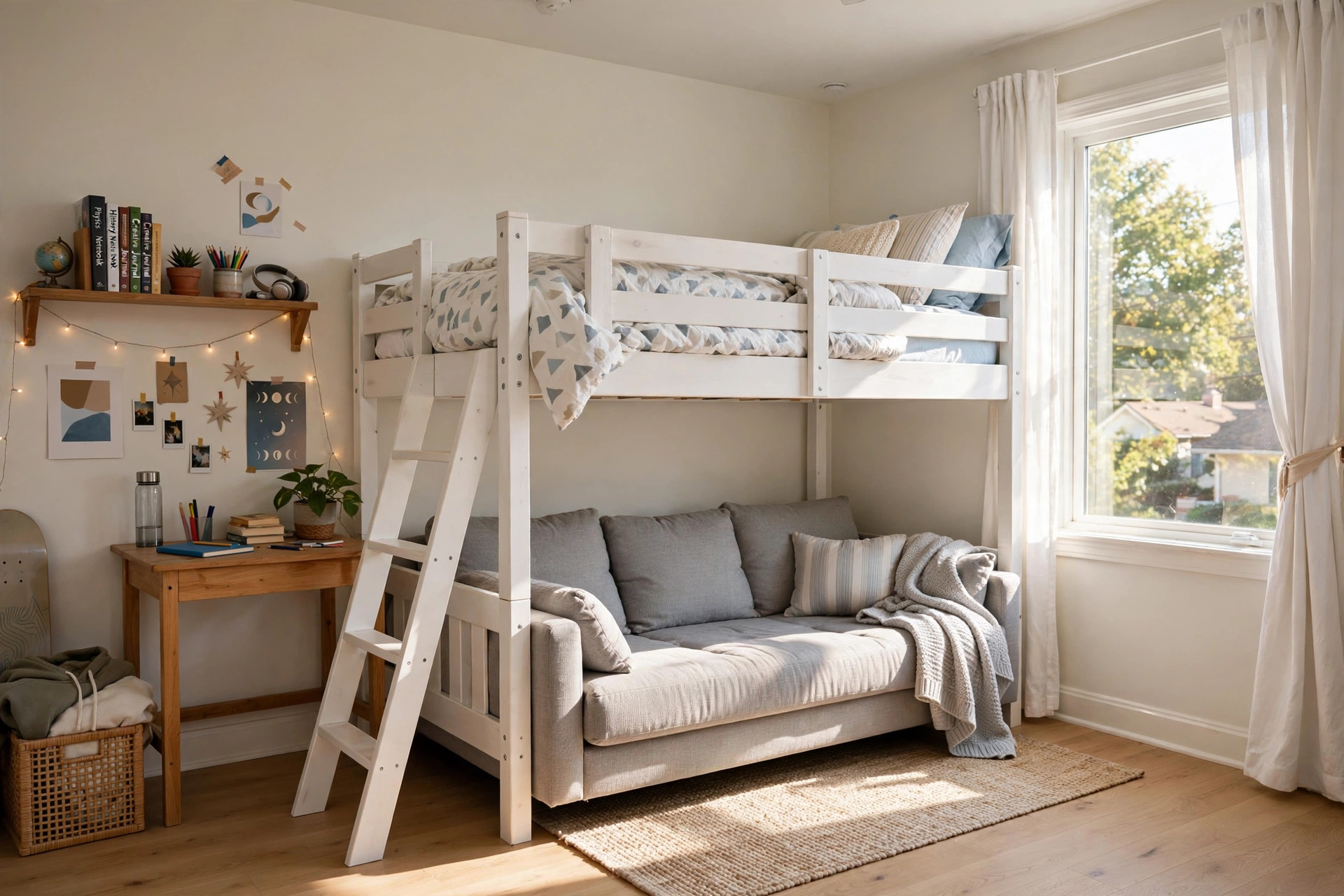

A kids loft bed with futon underneath teens love is more than a bed. It is a room within a room. The top holds the mattress. The floor below holds a futon. That futon can be a couch by day and a spare bed by night. For a teen with a small room, this one piece of furniture changes how the whole space works.
Why a Loft Bed with a Futon Makes Sense for Teens
A teen room must do many jobs. It is a bedroom, a study hall, a hangout spot, and a closet all at once. Floor space is always short. A standard bed eats up close to half of a small room. A loft bed lifts the sleeping area off the floor and gives that space back.
The futon underneath is what makes this setup special for teens. A bare loft bed leaves an open void. Teens fill it with clutter. A futon fills it with purpose. It becomes a reading nook. It becomes a spot for homework with a lap desk. It becomes the seat where friends gather on a Friday night. When a friend sleeps over, the futon folds flat and becomes a second bed. One piece of furniture, three jobs.
Teens also want a room that feels grown up. Bunk beds feel like little-kid furniture. A loft bed with a futon feels more like a studio apartment. It gives a teen a sense of their own space. That matters at an age when privacy starts to matter a great deal.
Parents like the math. One loft bed costs less than a bed plus a sofa plus a guest mattress. Assembly takes one afternoon. The payoff lasts for years, from middle school through high school.
What to Look for When You Choose One: Kids Loft Bed with Futon Underneath Teens
The weight limit is the first number to check. Teen bodies grow fast. A frame rated for a small child will not serve a fifteen-year-old. Look for a bed rated for at least 300 pounds on the top bunk. Heavier duty steel frames often hold 400 pounds or more. Check the number in the product specs, not just in the ad copy.
The size of the opening matters too. Some loft beds are tall enough to sit under. Others are tall enough to stand under. A high loft leaves about five feet of space below. That fits a futon and gives room to sit up on it. A mid loft leaves less room and can feel cramped. If your teen is tall, measure twice. Bring a tape measure to the room. Mark the height on the wall with painter’s tape. Sit on a chair under the mark. See how it feels.
Materials run from solid wood to metal to mixed frames. Solid wood beds look warm and hold up well. Pine and rubberwood are common and cost less. Metal frames are light, simple, and easy to move. They can squeak, so check the joints. A solid frame uses bolts, not just pegs, and holds tight over years of use.
The futon is half the purchase. Look at the frame of the futon, not just the mattress. Wood slat futon frames last longer than wire mesh. The mattress should be at least six inches thick for real comfort. Thinner pads work for sitting but feel poor for sleep. Covers matter too. A removable, washable cover will save you. Teens spill things. Life happens.
Guard rails are a must. The top of a loft bed needs rails on both sides. The rails should rise at least five inches above the mattress top. Check that the gap between the rail and the frame is small. The Consumer Product Safety Commission sets rules for bunk and loft beds for this reason, and good makers follow them.
The ladder or stairs deserve a look. A straight ladder takes up less floor space. Stairs are easier to climb and often hold drawers. Drawers in the stairs add storage. That is a real bonus in a small room. Make sure the ladder hooks on tight and does not wobble.
Types and Options on the Market
Loft beds with futons come in a few main styles. The high loft is the most common. The bed sits about six feet off the floor. The futon sits below with full sitting room. This is the best pick for rooms with standard eight-foot ceilings. Measure your ceiling first. The sleeper on top needs at least two feet of space between the mattress and the ceiling.
The low or mid loft sits lower. The bed is about four feet off the floor. The futon below works more as a daybed. This suits rooms with low ceilings. It also suits younger teens who do not like heights. The trade is less sitting room underneath.
Some models let the futon roll out. A pull-out futon frame slides forward and lies flat. This gives a wider sleep surface for guests. Others are simple click-clack futons. The back folds down in one motion. Both work fine. Test the motion in a store if you can. Stiff hinges wear out fast.
Finish options range from white to natural wood to dark espresso to black metal. White and light wood keep a small room bright. Dark finishes look sharp but can make a room feel smaller. Let your teen pick the finish. A room they helped design is a room they will keep clean, or at least cleaner.
Some beds ship as a bundle with the futon included. Others sell the frame alone. A bundle costs less than buying both parts apart. But the included futon mattress may be thin. Read the reviews. Look for complaints about the mattress in the first year. If the bundle futon is weak, buy the frame alone and pick your own futon mattress.
Cost and Price: What You Should Expect to Pay
Prices vary wide. A basic metal loft bed frame with no futon starts around 150 dollars. Add a decent futon and you are near 400 dollars. A solid wood loft bed with an included futon runs 500 to 900 dollars. High-end sets from specialty kids stores can pass 1,200 dollars.
Do not judge by price alone. A cheap frame with weak joints costs more in the long run. It breaks. It wobbles. You replace it. A solid frame lasts through the teen years and can move to a college dorm or a first apartment.
Watch for hidden costs. Shipping on heavy furniture can add 50 to 100 dollars. Some stores charge extra for the guard rails. Some charge extra for the slat kit. Read the full parts list before you buy. If you want help comparing prices, big retailers like Home Depot and Wayfair list specs side by side, and IKEA offers budget loft frames worth a look.
Sales follow the school calendar. Prices drop in late summer during back-to-school sales. They drop again after the winter holidays. If you can wait a month, you can often save 15 to 20 percent.
A used loft bed can be a smart buy. Check the joints for cracks. Check that all bolts are present. Ask the seller for the manual. Missing parts are common with used furniture. The maker may sell spare parts, but not always. Inspect before you pay.
Care and Upkeep Through the Teen Years
A loft bed needs a check-up twice a year. Bolts loosen with time. Climbing shakes the frame a little each day. Take a wrench and tighten every bolt. This takes ten minutes. It keeps the bed quiet and safe.
Wipe the frame down with a damp cloth. For wood frames, use a mild soap. For metal frames, dry the joints after cleaning to stop rust. Keep drinks off the top bunk. One spilled soda can warp a wood slat.
The futon needs care too. Flip the mattress every three months. Futon mattresses pack down where people sit. Flipping spreads the wear. Wash the cover on a regular cycle. If the cover is not removable, use a washable slipcover over it.
Teach your teen the rules of the loft. No jumping on the top bunk. No hanging off the guard rails. No more than one person up top. These rules sound dull. They keep the bed standing and the teen safe. The American Academy of Pediatrics notes that falls from high beds are a real cause of injury, and most are preventable with simple habits.
Check the mattress fit each year. Teens grow. A mattress that fit at thirteen may feel short at sixteen. A twin XL loft bed gives five extra inches of length. It costs a little more. For a tall teen, it is worth it.
Safety Comes First
Safety is not optional with a raised bed. Start with the guard rails. They must run the full length of both sides of the top bunk. There should be no gap wider than a few inches where a child could slip through. The top of the rail should sit at least five inches above the top of the mattress.
Place the bed against two walls if you can. A corner placement cuts the fall risk in half. Keep the area around the ladder clear. No toys, no shoes, no backpacks on the rungs or the floor below the ladder. Night climbs in the dark are when most falls happen.
Age matters. Most safety groups say children under six should never sleep on a top bunk. For teens, the risk is lower, but the rules still apply. Horseplay on a loft bed is the top cause of accidents. Set the rule early and hold it.
The futon below adds a soft landing, which is a plus. But it is not a crash pad. Keep the rule: the top bunk is for sleeping and reading, not for play.
Check for recalls once a year. The Consumer Product Safety Commission lists furniture recalls on its site. Type in the brand and model. It takes two minutes. If your bed is recalled, the maker must fix it or take it back.
Weight limits apply to the futon too. A futon frame rated for 250 pounds will sag under two teens and a pile of books. Buy a futon built for real daily use, not a dorm-room special.
Frequently Asked Questions
What age is right for a loft bed with a futon underneath? Most makers say ages six and up for the top bunk. For a futon loft setup, the sweet spot is ages ten to eighteen. Younger teens like the lounge feel. Older teens like the extra sleep space for friends. Under six, keep kids on a low bed.
Will a loft bed fit in a room with an eight-foot ceiling? Yes. Most high lofts are made for eight-foot ceilings. The sleeper gets about two feet of space above the mattress. That is enough to sit up and read. Measure your exact ceiling height. Old houses vary. Do not trust the listing alone.
Can two people sleep on the futon underneath? A full-size futon sleeps two in a pinch. A twin-size futon sleeps one in comfort. Check the futon size before you promise a sleepover for two. A thin mattress will leave both guests sore. A six-inch or thicker mattress makes a real difference.
How hard is it to put together? Plan for two to three hours with two adults. The instructions are long but clear. Lay out all parts first. Count the bolts. Do not tighten anything fully until the whole frame stands. A power drill with care saves time, but hand-tighten the last turns so you do not strip the wood.
Is a loft bed with a futon better than a bunk bed for teens? For most teens, yes. Bunk beds sleep two but use the floor space twice over. A loft with a futon sleeps one up top and gives a lounge below. Teens use the lounge every day. The second bunk often sits empty. If you need two full-time sleepers, a bunk wins. For one teen plus guests, the loft wins.
What if my teen is afraid of heights? A mid loft or low loft is the answer. The bed sits lower. The futon below is closer. The climb is short. Some teens get used to the height in a week. Others never do. Do not force it. A bed should feel safe, not scary.
A Short Final Word
A kids loft bed with futon underneath teens love is one of the smartest buys for a small teen room. It stacks sleep, seating, and guest space into one footprint. Pick a strong frame. Pick a thick futon mattress. Check the rails and the bolts. Set the safety rules. Do it right, and the bed will serve your teen from the first day of middle school to the last day of high school.
For more ideas on teen room layouts, see our guides to a kids loft bed with desk underneath for teens, a best bunk bed with stairs for kids room, and a toddler bed with guard rails for first bed. For general room design help, The Spruce and Bob Vila both run deep guides, and This Old House covers the build side. Stores like Pottery Barn Kids show styled room ideas, and What to Expect covers the parenting angle of kids furniture.
References
American Academy of Pediatrics. (n.d.). HealthyChildren.org. https://www.healthychildren.org Bob Vila. (n.d.). Home improvement advice. https://www.bobvila.com IKEA. (n.d.). Home furnishings. https://www.ikea.com Pottery Barn Kids. (n.d.). Kids furniture and decor. https://www.potterybarnkids.com The Home Depot. (n.d.). Home improvement products. https://www.homedepot.com The Spruce. (n.d.). Home and garden advice. https://www.thespruce.com This Old House. (n.d.). Home renovation guidance. https://www.thisoldhouse.com U.S. Consumer Product Safety Commission. (n.d.). Product safety information. https://www.cpsc.gov Wayfair. (n.d.). Furniture and home goods. https://www.wayfair.com What to Expect. (n.d.). Pregnancy and parenting guidance. https://www.whattoexpect.com
Was this guide helpful?

About Michael Thompson
The My Garden US editorial team writes practical, in-depth home and garden guides for American homeowners — tested advice, no fluff.
You May Also Like
Crib Mattress Topper for Extra Comfort Support: A Parent’s Guide
August 20, 2026 0 views
The Best Kids Chair for Desk Ergonomic Support: A Parent’s Guide
August 6, 2026 0 views
Best Bunk Bed With Stairs for Kids Room: A Parent’s Buying Guide
July 24, 2026 0 views