
Introduction
The exterior basement waterproofing cost in the USA is one of the most common questions among homeowners who face wet basements. Water that enters through foundation walls can damage belongings, weaken the structure, and create conditions for mold growth. Many owners want to know what the job costs before they call a contractor.
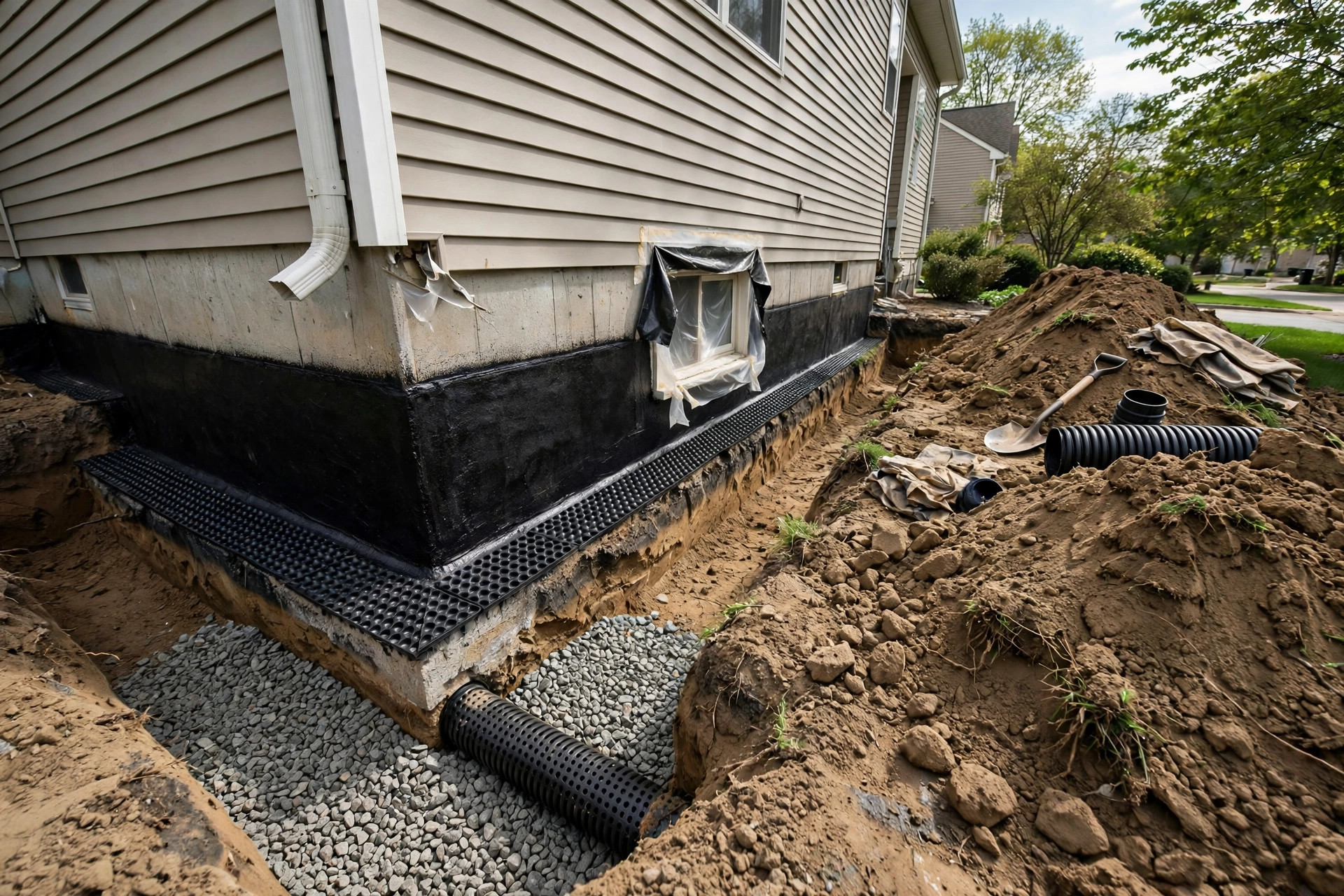
Exterior waterproofing is work done from the outside of the house. Workers dig a trench down to the base of the foundation, clean the wall, apply a waterproof layer, and add drainage so water moves away from the home. It is a large job. It is also one of the most lasting fixes for a leaking basement.
This article gives a full picture of the exterior basement waterproofing cost in the USA. It covers typical price ranges, the factors that raise or lower the bill, the main methods used, and how to choose a good contractor. With this knowledge, you can plan your budget and ask the right questions.
Why Exterior Waterproofing Matters: Exterior Basement Waterproofing Cost Usa
A basement wall sits against soil that holds water after rain and snow melt. Over time, water presses against the wall. This pressure can push water through small cracks and porous concrete. A damp basement is not just a nuisance. It can hurt the value of the home.
Water damage can ruin stored goods, drywall, and flooring. Moist air in a basement can feed mold, which is a health concern for the whole family. The U.S. Environmental Protection Agency notes that moisture control is a key step in keeping indoor air healthy. Fixing the problem from the outside stops water before it enters.
Interior fixes, such as sealants painted on the inside wall, only manage water that has already come through. Exterior waterproofing treats the source. It creates a barrier between the wall and the soil. For homes with repeated leaks, it is often the best long-term answer.
What to Look for When Water Is Coming In
Before you spend money, it helps to know the signs of a foundation water problem. Common signs include:
– Damp spots or puddles on the basement floor after rain – White mineral stains on the wall, called efflorescence – A musty smell that does not go away – Paint that bubbles or peels on basement walls – Visible cracks in the foundation wall – Mold spots on walls or on stored items
If you see one or more of these signs, the problem may be getting worse. A small crack can grow. A minor leak can turn into standing water. An early fix is almost always cheaper than a repair after major damage.
Many homeowners first learn about home improvement projects through sites like This Old House, which covers foundation work in plain language. Reading up on the basics helps you talk with contractors on even ground.
How Exterior Waterproofing Works
Exterior waterproofing is a step-by-step process. A contractor follows these stages on most jobs:
Excavation
Workers dig a trench around the foundation, all the way down to the footing, which is the concrete base under the wall. The trench must be wide enough for safe work. On a typical home, this digging alone takes several days. Soil is piled on tarps or hauled away.
Wall Preparation
The bare wall is cleaned with wire brushes or a power washer. Old coatings are scraped off. Cracks are filled with hydraulic cement or an epoxy injection. The wall must be smooth and dry enough for the new coating to bond.
Waterproof Membrane
A waterproof coating is applied to the wall. This may be a liquid asphalt layer, a rubberized coating, or a thick sheet membrane that sticks to the concrete. Many contractors add a dimpled drainage mat over the membrane. The mat gives water a path to flow down to the drain instead of pressing on the wall.
Drain Tile and Backfill
A perforated pipe, called drain tile or a French drain, is laid in gravel at the footing. It carries water away from the house to a sump pit or a daylight drain. The trench is then backfilled with clean gravel and soil, graded so surface water runs away from the home.
Typical Exterior Basement Waterproofing Cost in the USA
Homeowners across the country ask for one number. The honest answer is that the range is wide. The exterior basement waterproofing cost in the USA often falls between $5,000 and $15,000 for a full job on an average home. Smaller partial jobs can cost less. Large or hard jobs can pass $20,000.
On a per-foot basis, contractors often charge between $100 and $300 per linear foot of wall. A home that needs 150 feet of wall treated at $120 per foot would cost about $18,000. Prices differ by region. Labor rates are higher in the Northeast and on the West Coast. Material costs move with the market.
It is smart to get at least three written quotes. A good quote lists the work in detail: how deep the trench goes, what membrane is used, what drain pipe is installed, and how the soil is backfilled. Quotes that differ greatly from one another deserve a second look. The cheapest bid may skip key steps.
Factors That Change the Price
No two homes are the same. These factors push the exterior basement waterproofing cost in the USA up or down:
Size of the Job
More linear feet means more digging and more material. A job on one wall costs much less than a full perimeter job. Some homes only need the worst side treated.
Depth of the Foundation
Deeper basements need deeper trenches. More depth means more labor, more shoring for safety, and more material. A shallow crawl space wall is far cheaper to reach than a nine-foot basement wall.
Soil Type
Clay soil holds water and is hard to dig. Rocky soil slows the work. Sandy soil digs fast but may need extra care to keep the trench walls from falling in. A contractor who knows local soil will price the job more truly.
Access to the Work Area
If a deck, patio, driveway, or large tree sits next to the house, the work gets harder. Concrete must be cut and replaced. Roots must be dealt with. Fences may need to come down and go back up. Each of these adds cost.
Condition of the Wall
Walls with many cracks, crumbling mortar, or past bad repairs need more prep work. In rare cases, a wall is so weak that it needs structural repair before waterproofing can start. That is a separate cost.
Drainage and Sump Systems
A full job often includes a new drain tile and a sump pump. A sump pump moves collected water out and away from the house. Adding a pump and a battery backup adds to the bill but protects the investment.
Permits and Inspections
Many towns require a permit for excavation near a foundation. Permit fees are small next to the total, but the inspection step keeps the work honest.
Types of Exterior Waterproofing Methods
Contractors use a few main methods. Each has its own cost and use case.
Liquid Waterproof Coating
A thick liquid is rolled or sprayed on the wall. It dries into a rubber-like skin. This is the least costly membrane option. It works well on walls in fair shape with mild water pressure.
Sheet Membrane
Heavy sheets of rubberized asphalt or plastic are stuck to the wall in overlapping rows. Sheet membranes cost more than liquid coatings but give a tougher, more even barrier. Many pros prefer them for high water tables.
Drainage Mats
Dimpled plastic mats go over the membrane. They create an air gap so water runs down to the drain tile. Mats add some cost but cut the pressure on the wall itself.
Cement-Based Coatings
A cement mix with waterproof additives is troweled onto the wall. These coatings are common on older stone or block foundations. They are stiff rather than flexible, so they suit walls that do not move much.
Retailers such as The Home Depot and Lowe’s carry many of the coatings, membranes, and drainage products used in these jobs. Seeing the products in a store helps a homeowner understand what a contractor plans to install.
Cost Comparison With Other Fixes
Exterior waterproofing is the most complete fix, but it is not the only option. It helps to see how it compares.
Interior drain systems cost less in many cases, often $3,000 to $10,000. They catch water after it enters and send it to a sump pump. They do not stop water from touching the wall.
Interior sealants are the cheapest option, sometimes only a few hundred dollars in materials. They are a short-term patch for minor dampness, not a fix for active leaks.
Grading and gutter work is a smart first step for some homes. If roof water dumps next to the foundation, extending downspouts and sloping soil away from the house can cut leaks at low cost. Guides on sites like Family Handyman explain these do-it-yourself drainage fixes well.
For homes with steady, serious leaks, the higher upfront price of exterior work pays off over time. It is a once-in-a-generation repair when done right.
Care and Upkeep After the Job
A good exterior waterproofing job needs little care, but a few habits keep it working for decades.
Keep gutters clean and downspouts extended at least six feet from the house. Roof water is the largest source of water near a foundation. Check the soil grade each spring. Soil settles over time, and low spots next to the wall should be filled so water runs away.
If a sump pump was installed, test it twice a year. Pour a bucket of water into the pit and make sure the pump starts and stops. A battery backup is worth its cost in areas with frequent storms. Trim roots near the foundation so they do not press on the new membrane.
Watch the basement after heavy rain for the first year. Small damp spots should be reported to the contractor while the warranty is fresh. Most firms offer a written warranty of five to twenty years.
Safety During the Project
Excavation is real construction work with real risks. A deep trench can cave in. Local rules often require trench shoring or sloping for worker safety. A licensed contractor carries insurance and follows these rules.
Homeowners should keep children and pets far from the open trench. The work area should be fenced or marked. Ask the contractor about the daily plan so you know when heavy machines will be near the house.
Utility lines are another concern. Gas, electric, and water lines may run through the dig zone. A responsible contractor calls the national 811 line-location service before digging. This step is free and required in most states.
How to Choose a Contractor
The contractor matters as much as the method. A poor install of good materials will still leak. Use these steps to pick well:
1. Get referrals. Ask neighbors, friends, or a local hardware store for names of firms that do foundation work. 2. Check credentials. The firm should hold a valid license and carry both liability and workers’ compensation insurance. Ask for proof. 3. Read reviews. Look at several review sites, not just one. Watch for patterns in complaints. 4. Ask about method. A good contractor explains which membrane and drain system they use and why it fits your soil and water table. 5. Get it in writing. The contract should list the full scope, the materials, the timeline, the price, and the warranty terms. 6. Ask about the warranty. Find out what is covered, for how long, and whether the warranty transfers if you sell the home.
Be wary of firms that demand full payment upfront or refuse to give a written contract. A deposit of one-third or less is normal. The balance is due when the work passes inspection.
Advice columns on Bob Vila and project guides on The Spruce both stress the same point: the lowest bid is not always the best value on foundation work.
Frequently Asked Questions
How long does exterior basement waterproofing take?
Most jobs take one to three weeks. Digging takes the most time. Weather can slow the work, since an open trench and heavy rain do not mix. Your contractor should give a timeline in the written quote.
Can I stay in the house during the work?
Yes, in most cases. The work happens outside. You may hear machines during the day and lose the use of a patio or walkway for a while. Water and power shutoffs are brief and planned in advance.
Will my landscaping be damaged?
Plants and shrubs next to the foundation will be disturbed. Most contractors try to save what they can, but beds along the wall are often lost. Budget for replanting after the backfill settles.
Does exterior waterproofing add home value?
A dry basement with a transferable warranty is a strong selling point. Buyers fear water damage. Proof of a professional waterproofing job can raise buyer confidence and may support a higher price.
What is the difference between waterproofing and damp-proofing?
Damp-proofing is a thin coating that resists light moisture. True waterproofing uses thicker membranes and drainage to stop water under pressure. Many older homes only have damp-proofing, which is why they leak.
Should I waterproof the whole perimeter or just one wall?
If only one wall leaks, treating that wall can be enough. But water often finds the next weak spot. A full perimeter job costs more upfront and gives complete peace of mind. Ask the contractor for both prices and compare.
Final Word
The exterior basement waterproofing cost in the USA is a serious outlay, but it buys a dry, healthy basement for decades. Prices vary with the size of the home, the soil, and the local labor market, so written quotes from several licensed contractors are the only way to know your true number.
Start with the simple checks: gutters, grading, and downspouts. If the leaks persist, get a professional to look at the foundation. Done right, exterior waterproofing stops water at the wall, protects the structure, and ends the worry that comes with every heavy rain.
Related reading: water softener installation cost near me, best water softener for well water usa, and salt free water softener reviews for hard water.
See Delta Faucet for more detail.
References
Bob Vila. (n.d.). Home improvement advice. https://www.bobvila.com Delta Faucet. (n.d.). Kitchen and bathroom faucets. https://www.deltafaucet.com Family Handyman. (n.d.). DIY home repair and maintenance. https://www.familyhandyman.com Lowe’s. (n.d.). Home improvement products. https://www.lowes.com The Home Depot. (n.d.). Home improvement products. https://www.homedepot.com The Spruce. (n.d.). Home and garden advice. https://www.thespruce.com This Old House. (n.d.). Home renovation guidance. https://www.thisoldhouse.com U.S. Environmental Protection Agency. (n.d.). Protecting human health and the environment. https://www.epa.gov
Was this guide helpful?

About Emily Rodriguez
The My Garden US editorial team writes practical, in-depth home and garden guides for American homeowners — tested advice, no fluff.
You May Also Like

Handheld Shower Head with Slide Bar Reviews: What Buyers in the USA Should Know
May 11, 2026 0 views
Iron Filter for Well Water Reviews: What American Homeowners Report
February 14, 2026 0 views
How to Thaw Frozen Pipes Safely: A USA Guide
February 1, 2026 0 views