
Why Well Water Needs a Softener
Well water is the lifeblood of millions of American homes. It comes straight from the ground. No city plant treats it. That independence has a price. Well water often carries heavy loads of calcium and magnesium. These two minerals cause what we call hard water.
The best water softener for well water USA homeowners choose is built to fight this hardness. A good unit removes the minerals before they reach your pipes. Without one, the damage builds slowly. Scale forms inside pipes. The flow weakens. Water heaters work harder and die sooner. Faucets crust over. Clothes wash stiff and gray.
City water also has minerals. But well water is usually harder. It can also carry iron, manganese, and sulfur. That mix makes softening more important. A homeowner in Ohio may test at 15 grains per gallon. A neighbor may test at 30. The EPA, which tracks drinking water standards across the country, notes that hardness itself is not a health threat (https://www.epa.gov). But it ruins fixtures, shortens the life of appliances, and raises energy bills.
People who move from the city to the country often notice the change fast. Soap stops lathering. The shower leaves a film on the skin. The coffee maker fills with white scale. These are the signs. When you see them, a softener is no longer a luxury. It is protection for the whole plumbing system.
What to Look For in the Best Water Softener for Well Water USA
Not every softener suits a well. Some units are made for city water only. They fail fast on a well. Here is what matters when you shop.
Grain Capacity
Capacity tells you how much hardness one tank can remove before it must regenerate. It is measured in grains. A family of four with 20-grain water needs about 64,000 grains of capacity. A family of two with 10-grain water can use 32,000 grains.
Buyers often pick a unit that is too small. That is a mistake. An undersized softener regenerates too often. It wastes salt and water. Oversizing is safer. It means fewer cycles and longer resin life.
Salt-Based Versus Salt-Free Systems
A true softener uses salt and resin beads. The beads trade sodium for calcium and magnesium. The result is genuinely soft water. This is the proven method. It has worked since the 1950s.
A salt free water softener does not remove minerals. It changes their form so they stick to pipes less. Many buyers read salt free water softener reviews and hope for an easy fix. For very hard well water, these units often fall short. They work best as a supplement, not a cure.
If your well tests above 10 grains per gallon, choose salt-based. It is the only type that truly softens. Retailers like Lowe’s carry both styles, and their buying guides explain the difference in plain terms (https://www.lowes.com).
Iron and Manganese Handling
Well water often contains iron. Iron stains sinks orange. It feeds bacteria in the pipes. Standard softener resin can handle small amounts, usually under 2 parts per million. Above that, the iron fouls the resin.
For higher iron levels, add an iron filter ahead of the softener. Many homeowners pair their unit with a sediment filter for well water to catch sand and rust first. This protects the softener and keeps it working for years. Product specialists at The Home Depot often recommend this two-stage setup for private wells (https://www.homedepot.com).
Metered Versus Timer Regeneration
Old softeners regenerate on a timer. They flush on a fixed schedule whether they need it or not. New metered units measure actual water use. They regenerate only when the resin is spent. This saves salt. It saves water. It cuts yearly costs by a clear margin.
Always choose a metered valve. The control heads made by major brands now include digital meters as standard. Sites like This Old House walk through the valve options in their plumbing sections (https://www.thisoldhouse.com).
Types of Water Softeners
Single-Tank Salt-Based Softeners
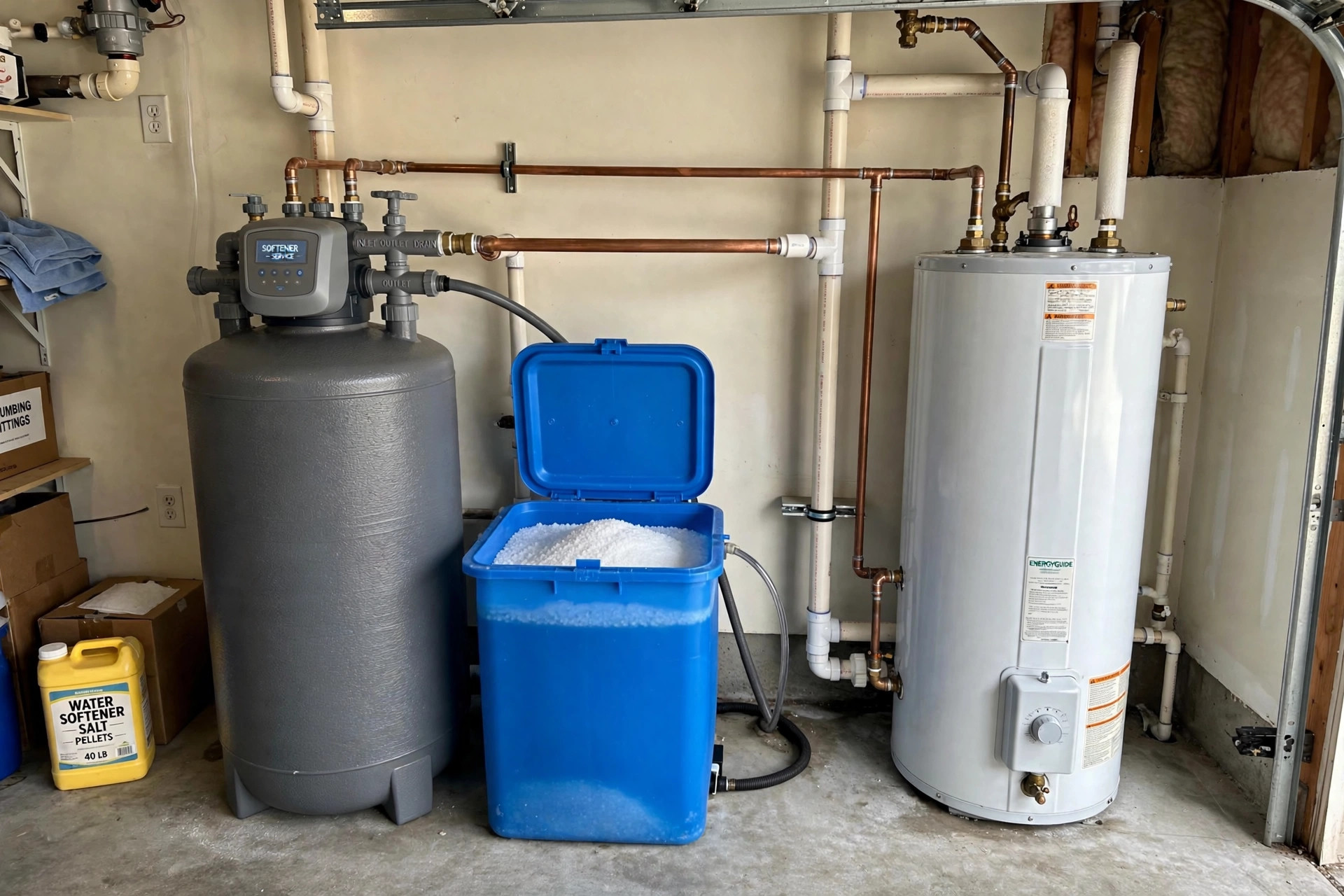
This is the workhorse. One resin tank plus one brine tank. It regenerates at night. For a few hours, you have hard water again. Most families never notice. These units cost the least and last the longest. With good care, a single-tank unit runs 15 to 20 years.
Dual-Tank Softeners
A dual-tank system uses two resin tanks. One always stays in service. When the first tank regenerates, the second takes over. You get soft water around the clock. These systems cost more. They suit large families and homes with high water use. Farms and homes with big irrigation needs often choose this type.
Compact Cabinet Softeners
A cabinet unit puts the resin tank and brine tank in one shell. It fits tight spaces. It suits apartments, condos, and small utility rooms. Capacity is limited. For a small household on a moderate well, it can work well.
Whole-House Conditioners
These are not true softeners. They use media that reduces scale without salt. They appeal to people who want no salt discharge. But they do not remove hardness minerals. Test results on real wells are mixed. A conditioner is fine for mild city water. It is rarely enough for a hard well.
Aquasana, a well-known maker of home water products, offers both softeners and conditioners and explains the trade-offs between them on its site (https://www.aquasana.com).
Cost and Price
A water softener is a real investment. Prices vary with size and features.
A compact cabinet unit costs about 400 to 800 dollars. A standard single-tank 48,000-grain unit costs 900 to 1,800 dollars. A dual-tank system costs 1,800 to 3,500 dollars. High-end units with smart controls and iron pre-filters can pass 4,000 dollars.
Installation adds more. A plumber charges 300 to 800 dollars for a standard install. The job includes cutting into the main line, adding a drain, and setting the hardness level. Homes with tight crawl spaces pay more.
Yearly running costs are modest. Salt costs 60 to 150 dollars a year for a family of four. Water and power for regeneration add about 50 dollars. Resin replacement, needed every 10 to 15 years, costs 300 to 600 dollars.
Look at the whole picture. A softener saves money in hidden ways. Water heaters last longer. Dishwashers last longer. You use less soap, less detergent, less shampoo. Many families recover the purchase price within five years through lower repair bills and lower energy use.
Care and Upkeep
A softener is a simple machine. It asks for little. Give it that little and it will serve you for decades.
Check the salt level once a month. Keep the brine tank at least one-third full. Use clean pellet salt or solar salt. Rock salt is cheaper but leaves more residue. Clean the brine tank once a year. Salt sludge builds up at the bottom. Scoop it out. Rinse the tank. Refill it with fresh salt.
Watch for salt bridging. This is a hard crust that forms over an empty gap in the tank. The unit thinks it has salt when it does not. Break the crust with a broom handle. Do not stab down hard. You can crack the tank.
Clean the resin every year or two with a resin cleaner. This matters most on wells with iron. Iron coats the beads. The cleaner strips it off. Pour the cleaner into the brine tank and run a manual regeneration. Your water will thank you.
Sanitize the system once a year. A small amount of household bleach in the brine well kills bacteria. Then run a full regeneration. This step matters for wells, which can harbor iron bacteria. The Family Handyman site offers clear step-by-step guides for this yearly routine (https://www.familyhandyman.com).
Check the settings after any power outage. Some valves lose their programming. Reset the time of day and the hardness number. A wrong hardness setting wastes salt or leaves water hard.
Call a professional if the water turns salty. That can mean a stuck valve or a clogged injector. Do not ignore it. Salty drinking water is a sign the unit needs repair.
Safety
Water softeners are safe. But a few points deserve care.
Softened water contains added sodium. For most people, the amount is tiny. A person on a strict low-sodium diet should talk to a doctor. A common fix is a separate hard-water tap at the kitchen sink for drinking and cooking. Many installers add this as standard practice.
Salt bags are heavy. A 40-pound bag can strain a back. Lift with care. Store salt in a dry place. Wet salt clumps and bridges.
The drain line must have an air gap. This is a small space between the drain hose and the drain pipe. It stops dirty drain water from flowing back into the unit. Local plumbing codes require it. A licensed installer knows the rule.
Backwash water carries salt to the drain or septic tank. Some towns limit salt discharge into septic systems. Check local rules before you buy. In dry states, route the drain to a proper outlet, not the yard. Salt kills grass and plants.
Frequently Asked Questions
How do I know my well water is hard? Order a water test kit or call a local lab. The test reports grains per gallon. Below 3 is soft. From 3 to 7 is moderate. From 7 to 10.5 is hard. Above 10.5 is very hard. Many wells test above 15. Test once a year. Well chemistry changes with seasons and rainfall.
Will a softener remove the sulfur smell in my water? No. That rotten-egg smell comes from hydrogen sulfide gas. A softener does not remove it. You need an aeration system or an oxidizing filter ahead of the softener. Fix the smell first. Then soften the water.
Can I install a water softener myself? A skilled homeowner can do it. The job needs basic plumbing skills. You must cut the main water line, solder or press fittings, and run a drain. Mistakes cause floods. If you doubt your skills, hire a plumber. The 300 to 800 dollar install fee is cheap insurance.
Does softened water taste salty? It should not. Properly working units add only a small amount of sodium. Most people cannot taste the difference. If your water tastes salty, the valve may be stuck in regeneration. Call for service.
How long does softener resin last? Good resin lasts 10 to 15 years on city water. On well water with iron, it may last 7 to 10 years. Iron fouling is the main killer. A pre-filter and yearly resin cleaning stretch its life. When water stays hard even after regeneration, the resin is likely spent.
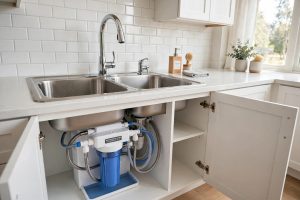
Do I still need a drinking water filter with a softener? Many experts say yes. A softener removes hardness. It does not remove lead, pesticides, or most chemicals. A small under-sink filter handles drinking water. Moen and other fixture makers note that pairing filtration with softening gives the best total result (https://www.moen.com).
A Final Word
The best water softener for well water USA buyers pick is the one that matches their water test. Not the biggest. Not the cheapest. The right one. Start with a test. Size the unit to your hardness and your family. Choose salt-based for real results on hard wells. Add a pre-filter if iron is high.
This one machine protects every pipe, every faucet, and every appliance in the house. It is quiet work. You will not think about it day to day. But your water heater, your dishwasher, and your plumbing will last years longer. For a home on a private well, that is money well spent.
Delta Faucet and Kohler, two of the largest American fixture makers, both stress that fixture warranties assume reasonable water quality, another reason softening pays off over time (https://www.deltafaucet.com) (https://www.kohler.com).
References
Aquasana. (n.d.). Water filtration systems. https://www.aquasana.com Delta Faucet. (n.d.). Kitchen and bathroom faucets. https://www.deltafaucet.com Family Handyman. (n.d.). DIY home repair and maintenance. https://www.familyhandyman.com Kohler. (n.d.). Bathroom and kitchen fixtures. https://www.kohler.com Lowe’s. (n.d.). Home improvement products. https://www.lowes.com Moen. (n.d.). Faucets and plumbing fixtures. https://www.moen.com This Old House. (n.d.). Home renovation guidance. https://www.thisoldhouse.com U.S. Environmental Protection Agency. (n.d.). Protecting human health and the environment. https://www.epa.gov
Was this guide helpful?

About David Wilson
The My Garden US editorial team writes practical, in-depth home and garden guides for American homeowners — tested advice, no fluff.
You May Also Like
Matte Black Kitchen Faucet: Pros and Cons for American Homes
January 28, 2026 0 views
Best Carbon Filter for Chlorine Removal USA: A Complete Home Guide
September 30, 2026 0 views
Best Water Leak Detector for Water Heater USA: A Complete Buying Guide
January 2, 2026 0 views