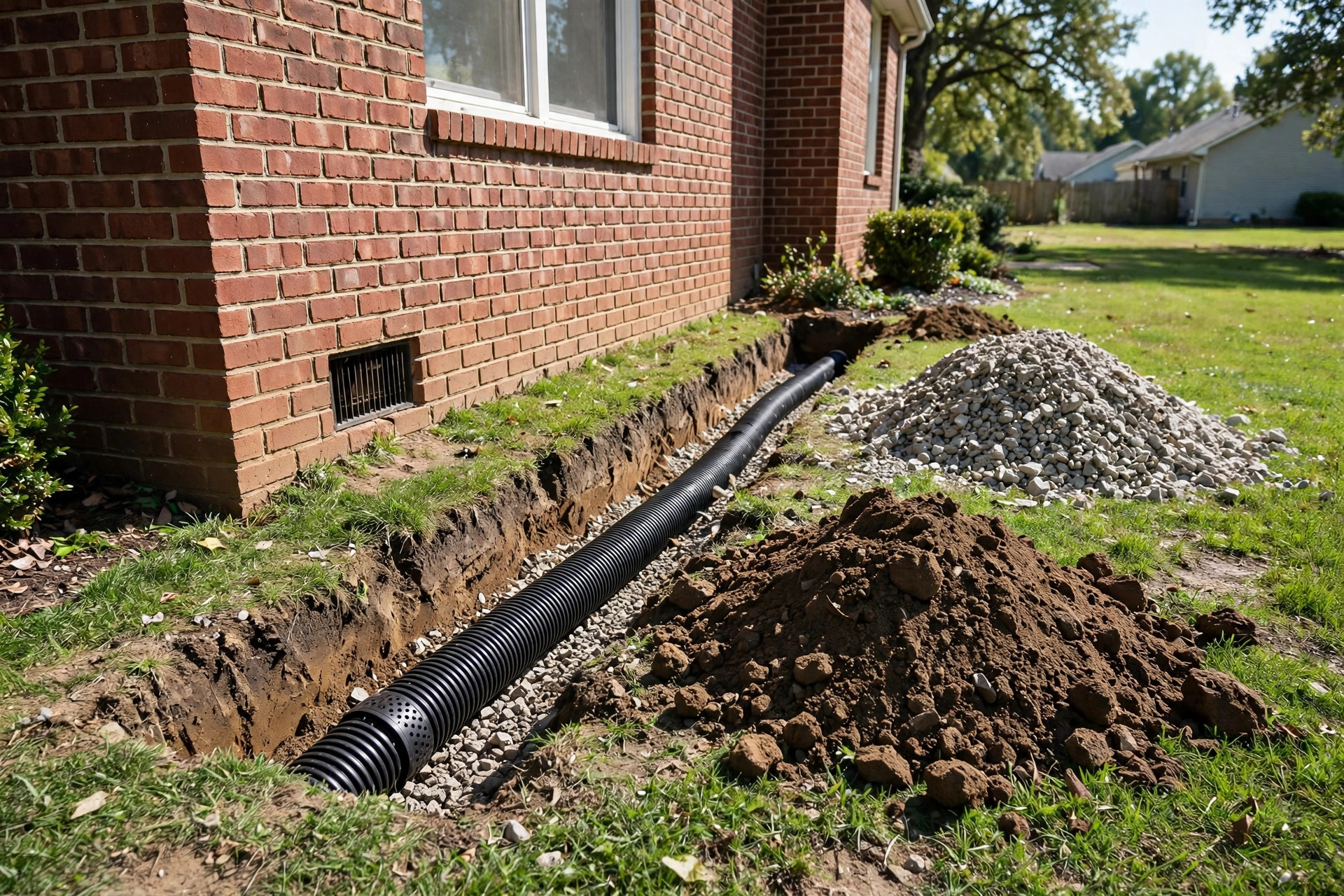

Water is the quiet enemy of every home. It seeps into basements, softens soil under footings, and turns a good yard into a swamp after every storm. A French drain is one of the oldest and most trusted ways to move that water away before it causes harm. If you are planning this project, the first question is always about money: what is the french drain installation cost per foot usa homeowners pay today? In most parts of the country, a standard French drain costs between $10 and $50 per linear foot installed. Simple exterior yard drains sit at the low end. Interior basement systems and deep foundation drains sit at the high end. This guide explains every part of that price, so you can plan your budget with care.
Why a French Drain Matters
A French drain is a gravel-lined trench with a perforated pipe at the bottom. Water flows into the trench, enters the pipe through the holes, and runs by gravity to a safe outlet such as a storm drain, a dry well, or a daylight drain at the edge of the yard. The idea dates back centuries. Builders used stone-filled trenches long before pipes existed. The modern version simply adds pipe, filter fabric, and careful grading for better flow.
The value is easy to see. Pooling water near a foundation puts constant pressure on walls. In winter, trapped water freezes and expands, which can crack concrete. In wet soil, water finds its way through even small joints and hairline cracks. A well-placed drain keeps the soil dry against the foundation and carries roof runoff and ground water away. Homes on slopes, homes with clay soil, and homes with a history of basement leaks gain the most. Good drainage also protects patios, driveways, and garden beds from washing out.
How to Choose the Right French Drain: French Drain Installation Cost Per Foot Usa
Before you spend money, know what your problem is. Walk your property after a hard rain. Look for standing water, soggy soil near walls, water stains in the basement, and musty smells. Mark the wet spots with small flags or paint. The pattern tells you where water collects and where it wants to go.
Exterior French Drain
The most common type runs along the outside of a foundation or across a yard. A trench is dug from two to three feet deep and about one foot wide. Landscaping fabric lines the trench. A bed of washed gravel goes in, then the perforated pipe, then more gravel, then the fabric folds over the top. Sod or mulch covers the surface. This type is best for surface water and ground water that pushes against foundation walls.
Interior Basement French Drain
When water already enters a basement, the drain goes inside. A contractor breaks a narrow channel in the slab around the inside edge of the basement floor, lays pipe in gravel, and connects it to a sump pit. This work is harder. It takes jackhammers, concrete removal, and a sump pump installation cost near me budget on top of the drain itself. But for homes with regular seepage through the floor, it is often the most reliable fix. If you compare this with full basement waterproofing cost per linear foot, an interior drain is one part of the larger waterproofing picture.
Curtain Drain and Yard Drain
A curtain drain sits in the middle of a yard, usually across a slope, to catch water before it reaches the house. It is shallower than a foundation drain and does not need to connect to a pump. It is a good choice for soggy lawns and landscape erosion. Some homeowners pair it with a dry well, an underground pit of stone where water slowly soaks into the earth.
What Affects the Price Per Foot
No two yards are the same, and several factors move the price up or down. Knowing them helps you read bids and spot low-quality work.
Depth and length. A deeper trench takes more digging, more gravel, and more pipe. A longer run spreads the fixed costs of equipment and labor over more feet, which can lower the per-foot price slightly. Most jobs run from 40 to 200 linear feet.
Soil type. Rocky soil and heavy clay are slow and hard to dig. Contractors may bring in special equipment, and the bill rises. Sandy, loamy soil digs fast and costs less.
Access. A wide-open side yard lets machines work fast. A narrow lot with fences, sheds, and tree roots forces hand digging, which is slow and costly.
Interior versus exterior. Interior basement drains cost more per foot because the work happens under the floor slab. Cutting and patching concrete adds labor, and most interior jobs need a sump pump added.
Permits and codes. Some towns require permits for drainage work, especially when a drain ties into a public storm system. Permit fees are small, but the inspection schedule can add time.
Pipe and material quality. Rigid PVC perforated pipe lasts longer and resists crushing better than flexible corrugated pipe. Washed stone and proper filter fabric cost more than cheap filler, but they keep the system working for decades instead of years. Detailed guides on This Old House explain how material choice affects the life of a drain.
French Drain Installation Cost Per Foot: The Full Price Picture
For a standard exterior French drain, most American homeowners pay $10 to $30 per linear foot, including labor and materials. A 100-foot yard drain at $20 per foot costs about $2,000. At the low end, a shallow curtain drain in easy soil may cost as little as $8 per foot if you can get a short run with simple access. At the high end, exterior drains in rocky soil or under patios and driveways can reach $40 per foot.
Interior basement French drains cost more. Expect $40 to $100 per linear foot, and many contractors quote a flat $5,000 to $12,000 for a full basement perimeter. The range is wide because every basement differs in slab thickness, wall type, and the need for a sump system. Homeowners sometimes combine the drain with sewer line replacement cost per foot usa work when old pipes are failing at the same time, which adds to the total but saves on repeat digging.
Beyond the per-foot figure, plan for extras. A sump pump adds $300 to $800 for the pump and pit. A dry well for discharge adds $500 to $2,000 depending on size. If the drain runs under a concrete driveway or sidewalk, cutting and replacing the concrete adds several hundred dollars. If the yard needs regrading or new sod after the trench is backfilled, add that too. A written bid should list each item so you can compare contractors fairly.
To get the best price, collect three written bids from licensed drainage or foundation contractors. Ask each one to state the depth, pipe type, gravel type, and discharge point. Cheaper bids that use thin fabric or skip fabric altogether often clog within a few years. DIY advice on the Family Handyman site can help you judge whether a bid covers the basics, and review sites like The Spruce keep current photos of what a correct installation looks like.
Materials and Pipe Options
The pipe is the heart of the system. Rigid Schedule 40 PVC with holes is the strongest choice for foundation drains. It keeps its shape under soil pressure and its smooth inside wall lets water flow fast. Corrugated HDPE pipe with slots is lighter, cheaper, and easier to bend around curves, but it can crush under heavy loads and its ridges can trap silt. For most residential jobs, contractors prefer PVC near the house and use corrugated pipe for yard runs.
The trench needs washed angular gravel, usually three-quarter inch stone. Round pea gravel can shift and settle. Filter fabric, also called geotextile, wraps the gravel to keep soil from washing in and clogging the pipe. Good fabric has a twenty-year life. Sod-quality topsoil and seed go over the top for yard drains so the lawn grows back clean.
Some systems add a solid pipe section at the end to carry water to the discharge point. Others add cleanouts, vertical standpipes with caps, so a garden hose can flush the line every few years. Ask your contractor to include cleanouts. They cost little and make long-term care far easier.
Care and Upkeep
A French drain is low care, not no care. The main threat is silt. Fine soil slowly moves into the gravel and pipe and reduces flow. Once a year, check the discharge outlet after a rain. You should see steady flow when water is moving through the system. A weak trickle or no flow at all may mean a clog or a crushed section.
Keep the area above the trench clear. Do not park cars on a shallow yard drain. Do not plant trees with aggressive roots near the line, since roots seek water and can enter the pipe. Flush the system through the cleanouts every two or three years with a garden hose. If water backs up, a plumber with a drain jetter can clear most clogs from the cleanouts. Guides on Home Depot and Lowe’s project pages show simple flush steps a homeowner can do in an afternoon.
Watch the ground over the trench each spring. Settling is normal in the first year as soil firms up. Add topsoil and reseed any low spots. If a large dip forms, the gravel may have shifted, and a call to the installer is wise while any workmanship warranty is still in force.
Safety
Trench work carries real risk. Trenches deeper than five feet need proper shoring or sloping under safety rules, and even shallow trenches can collapse in loose or wet soil. If you dig yourself, call 811 before you dig so utility crews can mark buried gas, electric, and water lines. Never trench alone, and keep children and pets away from open trenches.
Chemical safety matters too. Some contractors suggest weed killers along the trench line. Follow the label, keep chemicals away from the perforated pipe, and never wash them into the drain. The U.S. Environmental Protection Agency keeps plain-language guidance for homeowners on keeping storm water clean, which is worth a read before any yard project. If the drain ties into a municipal storm system, the town may ban certain chemicals near the line.
Inside the home, interior drain work stirs up concrete dust. Keep the work area sealed with plastic sheeting, wear a proper respirator, and run ventilation. Let the contractor handle the jackhammering; concrete dust contains fine silica that harms lungs.
FAQ
How long does a French drain last? A well-built French drain lasts 30 to 50 years. Rigid PVC pipe, washed stone, and good filter fabric last the longest. Drains built with cheap fabric or no fabric may clog in 10 years or less.
Can I install a French drain myself? Yes, for a shallow yard drain in soft soil, a careful homeowner can do it in a weekend or two. Rent a trencher, buy washed gravel and perforated pipe, and mind the slope. For foundation drains deeper than three feet or any interior basement work, hire a licensed contractor. The risk and labor are too great for a first-timer.
How much slope does a French drain need? The pipe should fall at least one inch for every ten feet of run, and more slope is better. Poor slope is the most common cause of a drain that never works right. Check the slope with a level before the gravel goes in.
Where should the water go? The best outlet is a daylight drain, a pipe end that sits above the surface at a low spot so water runs out by gravity. A dry well or a storm sewer tie-in also works where the code allows. Never drain onto a neighbor’s land or into a septic field.
Does a French drain help with a wet basement? Often yes, but it depends on the source of the water. An interior French drain tied to a sump pump handles seepage through the floor and wall joints very well. It will not fix a broken plumbing pipe or a leaking window. A water test or an inspection finds the true source before you spend money.
Will a French drain raise my home value? Dry basements and well-drained yards make homes easier to sell. Buyers and inspectors like to see documented drainage work. Keep the contract, the paid invoice, and a sketch of the drain path for the next buyer.
A Short Final Word
The french drain installation cost per foot usa range of $10 to $50 covers most residential jobs, with exterior yard drains at the low end and interior basement systems at the high end. Get the design right first, use quality pipe and gravel, and protect the work with a clear written bid. A French drain is not the cheapest home project, but it is one of the few that pays you back every time it rains. Plan the budget, hire with care, and your home will stay dry for decades.
For more background, see Kohler, Aquasana, and Moen.
References
Aquasana. (n.d.). Water filtration systems. https://www.aquasana.com Family Handyman. (n.d.). DIY home repair and maintenance. https://www.familyhandyman.com Kohler. (n.d.). Bathroom and kitchen fixtures. https://www.kohler.com Lowe’s. (n.d.). Home improvement products. https://www.lowes.com Moen. (n.d.). Faucets and plumbing fixtures. https://www.moen.com The Home Depot. (n.d.). Home improvement products. https://www.homedepot.com This Old House. (n.d.). Home renovation guidance. https://www.thisoldhouse.com U.S. Environmental Protection Agency. (n.d.). Protecting human health and the environment. https://www.epa.gov
Was this guide helpful?

About James Carter
The My Garden US editorial team writes practical, in-depth home and garden guides for American homeowners — tested advice, no fluff.
You May Also Like
Best Sewer Cleanout Installation Cost USA: A Plain Guide for Homeowners
April 16, 2026 0 views
Best Farmhouse Kitchen Sink Reviews USA: A Plain Guide to Buying Right
July 1, 2026 0 views
Water Softener Salt Delivery Service Near Me: How to Keep Your Home’s Water Soft
March 5, 2026 0 views