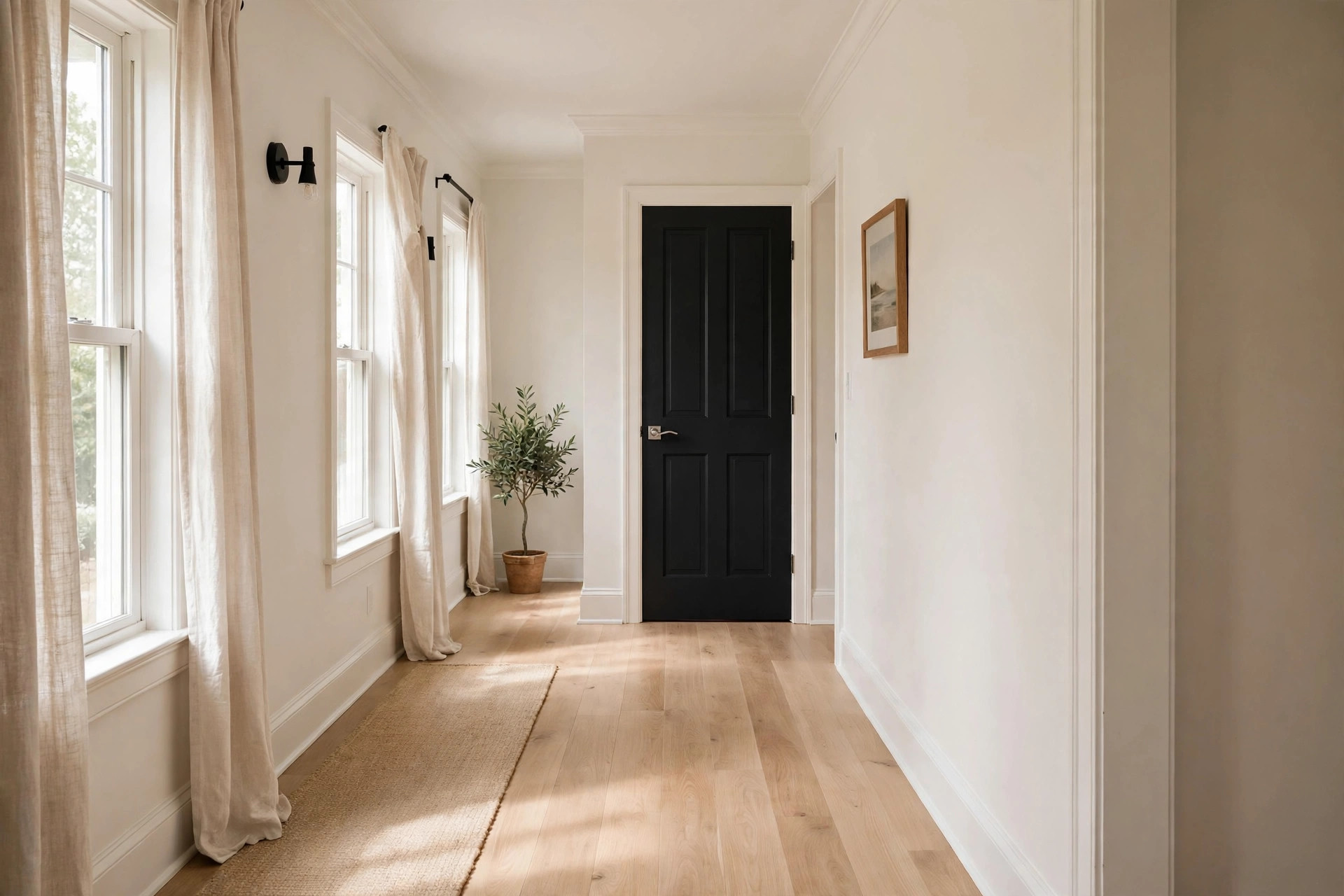

A black interior door can change a whole room. It looks bold and calm at the same time. It fits old homes and new homes alike. Yet the best black paint for interior doors usa shoppers want is not always easy to pick. Black shows every flaw. It shows brush marks. It shows dust. It shows thin spots. So the paint must cover well and dry smooth.
This guide will help you choose. It covers the types of black paint, the finishes that work on doors, the cost, and the steps to get a clean result. It also answers common questions from American homeowners. By the end, you will know what to buy and how to use it.
Why It Matters
Doors take more wear than walls. Hands touch them all day. Bags and keys bump into them. Shoes knock against the lower panels. A door painted with the wrong paint will look worn in a year. The right paint will stay sharp for many years.
Black is less forgiving than white or cream. A thin coat will let the old color show through. A cheap paint may dry with a chalky or uneven look. Paint experts at Benjamin Moore remind painters that deep colors need good hide and a steady hand. That is why the paint you choose matters as much as the color itself.
A black door also frames the room. It draws the eye. It can make a plain hallway look planned and finished. Real estate agents in the USA often say that small details like painted doors help a home feel cared for. When the paint job is smooth and clean, the effect is strong. When it is streaked and dull, the effect is the opposite. So take the time to choose the best black paint for interior doors usa shelves can offer, and apply it with care.
How to Choose the Right Black Paint: Best Black Paint for Interior Doors Usa
Start with the base. For interior doors, an acrylic latex enamel or an alkyd enamel is the common choice. Acrylic latex enamel dries fast and cleans up with water. It has low odor. That matters when you paint inside a lived-in home. Alkyd enamel dries harder and slower. It levels out well, which hides brush marks. But it has a strong smell and needs mineral spirits for cleanup.
Next, think about the finish. Doors look best in semi-gloss or satin. Semi-gloss gives a soft shine and wipes clean with ease. It stands up to scrubbing. Satin gives a softer look with less glare. It hides small dents better than semi-gloss. Most painters pick semi-gloss for doors because doors are handled so much. Flat or matte finishes are not wise for doors. They mark and scuff, and they are hard to clean. Guides from The Spruce note that high-touch surfaces like doors and trim do best with glossier paints.
Color matters too. Not all blacks are the same. Some lean blue. Some lean green. Some are warm, with a brown note. A black that looks pure in the store may look blue next to your trim. Buy a small sample pot and paint a test board. Hold it next to your door frame, your floor, and your light switches. Look at it in daylight and at night. This small test can save you from a bad choice.
Also check the coverage. Deep colors often need more coats. A paint that promises one-coat coverage in white may need two or three coats in black. Read the label. Look for words like “door and trim enamel” or “cabinet, door and trim.” These paints are made for hard use. This Old House advises shoppers to pick a paint made for trim and doors when the surface will be touched often.
Types and Finishes for Black Doors
Several paint makers in the USA sell blacks that work well on interior doors. Each has its own character.
Soft or true blacks are the most popular. Names like Tricorn Black, Black Magic, or Iron Ore are common on store shelves. They give a clean, neutral dark. They fit white trim and light walls. Most painters buy a neutral black for the first try.
Warm blacks have a brown or bronze undertone. They feel softer in rooms with wood floors and cream walls. They pair well with brass or gold hardware. Cool blacks lean blue or slate. They suit gray walls and modern chrome handles. The right undertone depends on the room.
Paint lines made for doors include Sherwin-Williams Emerald Urethane Trim Enamel and Behr Alkyd Semi-Gloss Enamel. Sherwin-Williams lists trim enamels that level well and resist yellowing. Behr sells door and trim paints at Home Depot that many do-it-yourself painters trust. Lowe’s carries several brands of trim enamel too, so you can compare prices in one trip.
For a very hard finish, some pros still use oil-based enamel. It dries glass-smooth. But it yellows with age, and its fumes are strong. In most homes, a good water-based enamel is the better pick. It is easier to live with, and the best modern formulas come close to the old oil look.
If your door is old and has layers of paint, a bonding primer is a must. A gray-tinted primer helps black cover faster. Gray primer under black paint can cut the job from three coats to two. It is a small step that saves time and paint.
Cost and Price in the USA
A gallon of good trim enamel costs between 40 and 85 dollars in 2026. Premium lines sit at the top of that range. A gallon covers about 300 to 400 square feet per coat. One door needs only a fraction of a gallon. A quart is often enough for one or two doors. Quarts cost 15 to 30 dollars.
If you hire a painter, the cost rises. Painting a single interior door costs 75 to 200 dollars in most US markets. That covers labor, prep, primer, and paint. A whole house full of doors costs more. Get three quotes before you hire. Home Depot and local paint stores can point you to painters, and HGTV offers planning advice for painting projects.
For a do-it-yourself job, the supply list is short. You need sandpaper, a good angled brush or small foam roller, painter’s tape, a drop cloth, primer, and the paint. The whole kit costs under 100 dollars if you already own a brush. That makes black doors one of the cheapest ways to update a home.
Remember that two coats are the norm with black. Buy enough paint for two full coats plus touch-ups. Running out mid-job forces a second store trip, and a fresh batch may not match the first can exactly.
Care and Upkeep
Black doors show dust and fingerprints. Wipe them down every few weeks with a soft damp cloth. Use a mild soap and water. Do not use harsh cleaners. They can dull the finish.
For scuffs, try a damp cloth first. Most marks on semi-gloss enamel wipe away with ease. For stubborn marks, a little dish soap on the cloth will do. Rinse with clean water after. Dry the door with a soft towel to avoid water spots.
Check the edges once a year. The bottom of the door and the latch side take the most hits. Touch up small chips with a small brush. Keep a small jar of the same paint for touch-ups. Mark the jar with the paint name, color code, and date. Paint stored in a cool dry place lasts for years.
Humidity can slow the cure time. Fresh paint may feel dry in hours but take two to four weeks to reach full hardness. Treat new doors gently during that time. Do not hang heavy wreaths or lean things against them. Bob Vila notes that painted doors should cure before hard use, so plan your project when you can give the doors a few quiet days.
If the door sticks to the frame after painting, a thin coat of paste wax on the edge can help. Wait until the paint is fully cured before you do this.
Safety
Paint fumes can bother people and pets. Choose a low-VOC or zero-VOC paint when you can. VOC stands for volatile organic compounds. These are the chemicals that give paint its strong smell. Low-VOC paints are widely sold in the USA today. They are kinder to indoor air.
Ventilate the room while you paint. Open windows and run a fan. Keep children and pets out of the room until the paint is dry and the smell is gone. Read the label for the safe re-entry time. Most latex enamels are safe once dry to the touch, but full cure takes longer.
Wear gloves and eye protection when sanding old paint. If your home was built before 1978, the old paint may contain lead. Do not sand lead paint without proper care. The EPA rules for lead paint are strict. When in doubt, call a lead-certified pro. Your health is worth more than a paint job.
Store paint out of reach of children. Keep cans sealed and upright. Dispose of old paint at a local hazardous waste drop-off. Never pour paint down the drain.
FAQ
How many coats of black paint does an interior door need?
Most doors need two coats over a gray-tinted primer. Cheap paint or a big color change may need three coats. Let each coat dry fully before the next one.
Should I use a brush or a roller on a black door?
A small foam roller gives a smooth finish on flat panels. An angled sash brush works well on moldings and edges. Many painters use both: brush the details first, then roll the flat areas.
Can I paint a door black without sanding?
Light sanding helps the paint stick. A quick scuff with 220-grit sandpaper is enough. It takes minutes and improves the bond. Skip it only if the door is new and pre-primed.
What hardware looks best with a black door?
Brushed nickel, matte black, and brass all look good. Brushed nickel is the safest pick for most homes. Brass adds warmth. Matte black hardware on a black door looks modern but can blend in too much.
Will a black door make my hallway look dark?
A black door can add depth without darkening the room. It reads as an accent, not as a wall. With light walls and good lighting, the room will still feel bright. Test a painted board first if you worry.
Do I need to remove the door to paint it?
You can paint a door while it hangs. But removing it gives a smoother job. Lay it flat on sawhorses. That stops drips and lets you paint the edges with ease. If you leave it hung, tape the hardware and protect the floor.
A Final Word
A black interior door is a small project with a big payoff. The paint is cheap. The work takes a weekend. The result looks sharp for years. The key is the right product: a door and trim enamel in the finish you like, a gray-tinted primer under it, and two careful coats.
Take time with prep. Sand lightly. Clean the surface. Tape the edges. Work in good light so you can see thin spots. Black will punish rushed work, but it rewards careful work. When the last coat dries, you will have a door that looks made, not just painted.
If you are painting more of the house, you may want to read about the best paint for kitchen cabinets or the best white paint for interior walls next. And if your front entry needs the same treatment, see our guide to the best paint for front doors. Each project uses the same skills you just learned.
References
Behr. (n.d.). Paints, primers, and stains. https://www.behr.com Benjamin Moore. (n.d.). Paints and stains. https://www.benjaminmoore.com Bob Vila. (n.d.). Home improvement advice. https://www.bobvila.com HGTV. (n.d.). Home and garden ideas. https://www.hgtv.com Lowe’s. (n.d.). Home improvement products. https://www.lowes.com Sherwin-Williams. (n.d.). Paints and coatings. https://www.sherwin-williams.com The Home Depot. (n.d.). Home improvement products. https://www.homedepot.com The Spruce. (n.d.). Home and garden advice. https://www.thespruce.com This Old House. (n.d.). Home renovation guidance. https://www.thisoldhouse.com
Was this guide helpful?

About Lisa Anderson
The My Garden US editorial team writes practical, in-depth home and garden guides for American homeowners — tested advice, no fluff.
You May Also Like
Textured Wall Finish Contractors Near Me: A Plain Guide to Hiring Right
May 18, 2026 0 views
Wallpaper Removal Service Price Comparison USA
April 3, 2026 0 views
Dry Erase Wall Paint Reviews for Offices: What Works and What Does Not
June 23, 2026 0 views