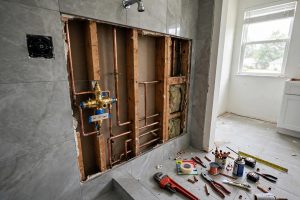

Few repairs unsettle a homeowner more than a broken sewer line. When the line fails, waste water cannot leave the house, and the yard may hold soggy spots that smell foul. The topic of the sewer line replacement cost per foot usa comes up fast at that point, because contractors in many parts of the country quote this work by the foot. This guide explains what the per-foot price covers, which factors move it up or down, and how to keep the project within reason.
Why Sewer Line Replacement Matters
The sewer line is the buried pipe that carries waste water from a house to the city main or to a private septic system. Most lines rest several feet underground, so damage grows quietly for months or even years. Clay, cast iron, and older orangeburg pipe all weaken with age. Tree roots seek out small cracks, push inside, and block the flow. Shifting soil can crack or crush a pipe outright.
A full replacement is not the same as a simple cleaning. Cleaning clears a blockage with a snake or a hydro-jetter, but it does not fix a collapsed or badly broken pipe. Replacement puts a new, sound pipe in place and ends the cycle of repeated service calls. For owners comparing options, the related question of conventional vs aerobic septic system cost sometimes enters the picture when the home uses a private system rather than a city main.
What Affects the Cost Per Foot: Sewer Line Replacement Cost Per Foot Usa
The per-foot price is a handy shorthand, but it is never one flat number. Several forces push it up or down.
The Replacement Method
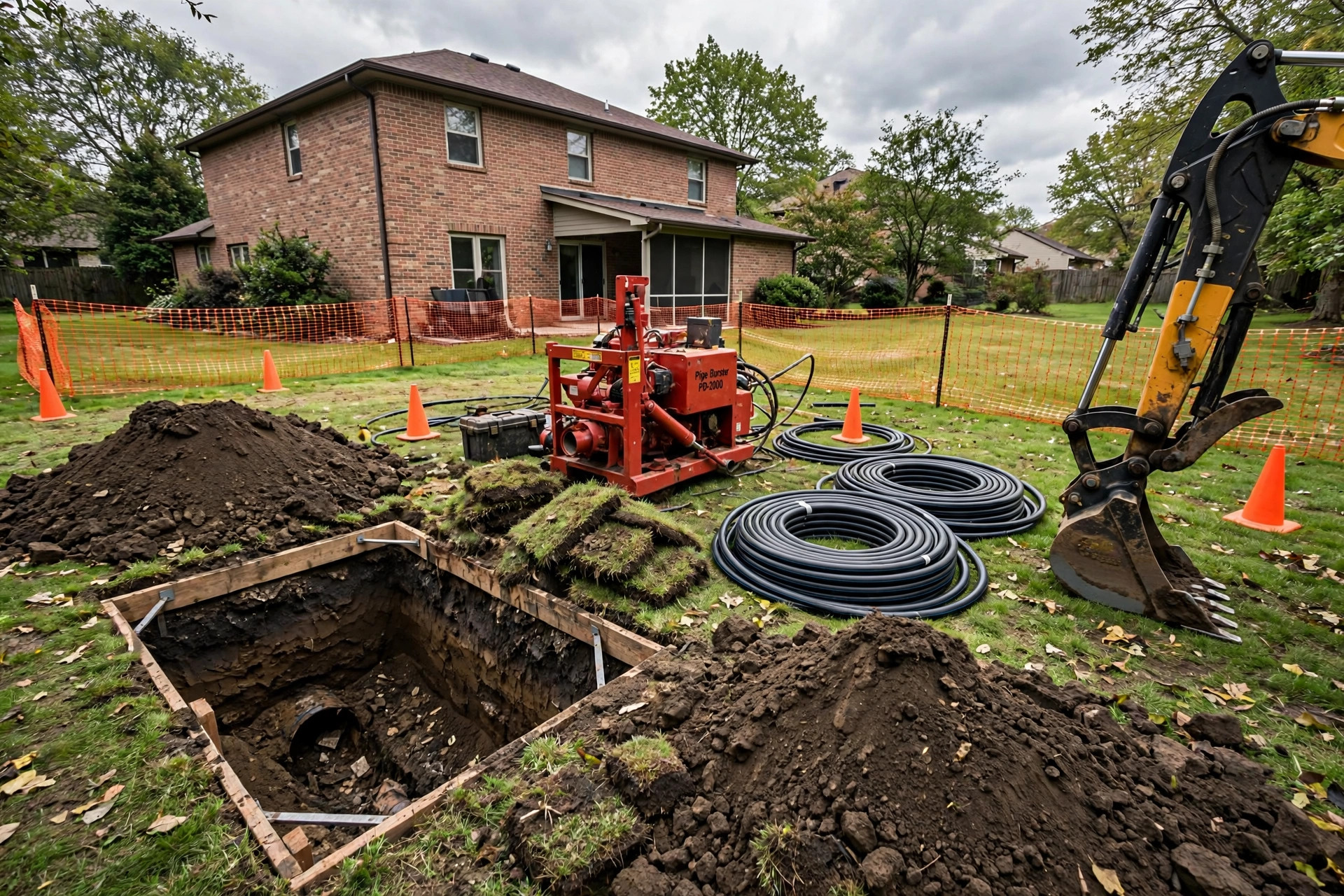
Method is the largest single factor. Traditional open-trench digging usually costs less per foot in labor and equipment than trenchless work, but it requires a long open ditch through the yard, and restoring lawns, driveways, and sidewalks adds expense afterward. Trenchless methods such as pipe bursting or pipe lining often cost more per foot yet leave the yard nearly intact. When total project cost is tallied, trenchless can finish close to the open-trench price.
Depth and Length of the Line
A line buried four feet deep is far cheaper to reach than one buried twelve feet deep. Deep lines demand shoring, larger machines, and more time. Length also matters because of mobilization costs. A short line of thirty feet still requires permits, a crew, and equipment delivery, so the first feet carry a heavy share of fixed cost. Longer lines spread those fixed costs and can show a lower average per-foot price.
Pipe Material
New lines are commonly built from PVC or HDPE plastic pipe. Both last many decades and cost less than the cast iron or ductile iron used in some commercial work. If local code requires a specific material, the choice is already made for the owner.
Permits, Inspections, and Location
Most cities and counties require a permit before a sewer line is replaced, plus an inspection when the new pipe is in the ground. Permit fees run from modest to several hundred dollars. Labor rates also differ by region. Work in a large coastal metro almost always costs more per foot than work in a small inland town.
Common Replacement Methods
Trenchless Pipe Bursting
Pipe bursting pulls a new pipe through the path of the old one while breaking the old pipe apart underground. Two small access pits are dug, one at each end. It suits long runs under driveways, patios, and mature trees. Guides on older-home repair sites describe how the method keeps most landscaping in place, and sources such as This Old House explain the equipment used on real jobs.
Trenchless Pipe Lining
Pipe lining, often called cured-in-place pipe, inserts a resin-soaked sleeve inside the existing pipe and hardens it into a new inner wall. Only one access point is needed in many cases. Lining is not right for pipes that have collapsed or lost their shape, but it repairs cracked and leaking lines with very little digging. The Family Handyman project library carries step-by-step accounts of how lining compares with full digging.
Traditional Open-Trench Digging
The open-trench method excavates the full line from house to street, removes the failed pipe, and lays a new one. It is the oldest approach and the only one that lets the crew see every inch of the old pipe. The downside is the wound across the property: sod, shrubs, and sections of driveway or sidewalk are removed and must be replaced. Retail and project resources such as The Home Depot and Lowe’s stock the drainage pipe, fittings, and bedding gravel used in these jobs.
Cost and Price
Across the United States, homeowners commonly see quotes between about fifty and two hundred and fifty dollars per foot, depending on method, depth, and region. Open-trench work with PVC often lands at the lower end of that band. Trenchless pipe bursting and lining often land at the upper end.
Total project costs therefore run from roughly three thousand dollars for a short, shallow, easy trench job to fifteen thousand dollars or more for a long, deep, or trenchless project. The per-foot figure is useful for comparing bids, but owners should always compare the total quoted price, because two contractors can show different per-foot numbers yet finish at similar totals.
Ways to keep cost under control:
– Get three written bids. Compare totals, not just the per-foot rate. – Ask about trenchless options. The per-foot price may be higher, yet the avoided landscape repair can balance it out. – Check responsibility lines. In many towns the city owns the portion of the lateral under the street. Knowing where the property line falls prevents paying for work that is not the owner’s. – Bundle related work. If the line must be open anyway, it may be a sensible time to address old fixtures inside. Owners sometimes review the best touchless kitchen faucet reviews when a larger plumbing project is already under way, and those planning hot water upgrades look at the best 50 gallon gas water heater reviews usa in the same season.
A camera inspection, usually a few hundred dollars, is money well spent before signing a contract. It shows the exact location and nature of the failure, and it keeps honest contractors from quoting a full replacement when a shorter repair would do.
Bids should break out labor, materials, permit fees, and restoration separately. When one line item looks far lower than the others, ask why. A price that omits the permit or the yard repair is not a lower price; it is an incomplete one. Also confirm whether the quote covers the full run from the house foundation to the city main or tap, since some contractors price only to the property line and bill the street portion as extra. Written clarity here prevents the most common billing disputes.
How to Choose a Contractor
Sewer work is specialized. Look for a plumber or excavation firm with a current license, proof of insurance, and references from recent sewer jobs. Ask whether the firm does its own digging or hires it out. Confirm who pulls the permit and who schedules the inspection. A written scope should state the method, pipe material, length, depth, and exactly what restoration of the yard is included.
Payment terms should follow the work, not lead it. A small deposit is normal. The balance is due when the line passes inspection and the yard is restored. Fixture makers such as Moen, Kohler, and Delta Faucet are best known for indoor fixtures, yet their installation guides remind owners that reliable drainage starts with a sound line below the house. For whole-house water quality work after a line replacement, resources such as Aquasana cover filtration options.
Care and Upkeep
A new sewer line should serve fifty years or more, but it is not immune to neglect. A few habits protect the investment.
– Mind what goes down the drains. Grease, wipes marketed as flushable, and thick paper towels cause buildup that stresses even new pipe. – Control tree roots. Do not plant willows, maples, or other aggressive-rooted trees near the line path. Root barriers can shield a new line where trees already stand. – Schedule a periodic camera check. Every three to five years is enough for most homes. Early sight of root intrusion allows a small fix instead of another full replacement. – Protect the trench line. Avoid parking heavy vehicles over the buried path and avoid new deep foundations near it.
The Environmental Protection Agency publishes guidance on household wastewater systems that helps owners understand how their line fits into the broader water system.
Keep paper records of the job as well. The permit card, the inspection report, and the as-built drawing that shows the line’s route and depth are worth filing with the deed paperwork. Future owners, and future contractors, will value knowing exactly where the new pipe lies and what material was used. A simple sketch with measurements from the house corner to the access pits takes only minutes to draw and saves hours of searching later.
Safety
Sewer line work involves deep excavation, and deep trenches can collapse without warning. Never enter an open trench unless it has proper shoring or sloping and a competent person on site. Sewage also carries bacteria and gases. Workers should wear gloves, boots, and eye protection, and the work area should be ventilated. Gas from sewers can be toxic in enclosed pits, so air monitoring is part of professional practice on deep jobs.
Homeowners should also confirm that underground utilities are marked before any digging begins. A call to the national 811 service routes the request to local utility companies, which mark gas, electric, and communications lines free of charge.
Frequently Asked Questions
How long does a sewer line replacement take?
Most residential jobs finish in two to five days. Trenchless methods often take one to three days because so little digging is involved. Open-trench jobs take longer when the line is deep or when concrete must be cut and replaced.
Does homeowners insurance cover sewer line replacement?
Standard policies usually exclude wear and tear, root damage, and gradual failure. Some carriers sell a service-line endorsement that covers buried lines for a small yearly premium. Check the policy before work starts, because coverage must be in force ahead of the failure.
How deep are residential sewer lines?
Depth varies with climate and local code. In warm regions the line may rest three to four feet deep. In cold regions it must sit below the frost line, which can mean six to ten feet or more.
Can I stay in the house during the work?
Often yes, with limits. Water service may be shut off for hours at a time, and toilets may be unavailable during parts of the job. The contractor should give a daily schedule so the household can plan around it.
Is trenchless always the better choice?
Not always. Trenchless methods save the yard and often finish faster, but they cost more per foot and cannot fix a fully collapsed pipe. A camera inspection shows which option fits the actual condition.
How do I know the line is failing?
Slow drains across the house, gurgling toilets, sewage smells in the yard, and patches of unusually green grass over the pipe path are classic signs. A camera inspection turns suspicion into fact.
A Final Word
The sewer line replacement cost per foot usa gives owners a common yardstick, yet the final bill turns on method, depth, length, and local rates. Three written bids, a camera inspection before work begins, and clear terms on restoration are the best tools an owner has. With those in hand, a daunting project becomes a manageable one, and the new line should serve the house quietly for decades.
References
Aquasana. (n.d.). Water filtration systems. https://www.aquasana.com Delta Faucet. (n.d.). Kitchen and bathroom faucets. https://www.deltafaucet.com Family Handyman. (n.d.). DIY home repair and maintenance. https://www.familyhandyman.com Kohler. (n.d.). Bathroom and kitchen fixtures. https://www.kohler.com Lowe’s. (n.d.). Home improvement products. https://www.lowes.com Moen. (n.d.). Faucets and plumbing fixtures. https://www.moen.com The Home Depot. (n.d.). Home improvement products. https://www.homedepot.com This Old House. (n.d.). Home renovation guidance. https://www.thisoldhouse.com U.S. Environmental Protection Agency. (n.d.). Protecting human health and the environment. https://www.epa.gov
Was this guide helpful?

About James Carter
The My Garden US editorial team writes practical, in-depth home and garden guides for American homeowners — tested advice, no fluff.
You May Also Like

Commercial Style Kitchen Faucet Reviews USA: What to Know Before You Buy
June 5, 2026 0 views
Best Sump Pump for Crawl Space USA: A Practical Homeowner Guide
February 28, 2026 0 views
Septic Safe Toilet Paper Reviews USA: Which Brands Keep Your Tank Healthy
May 23, 2026 0 views