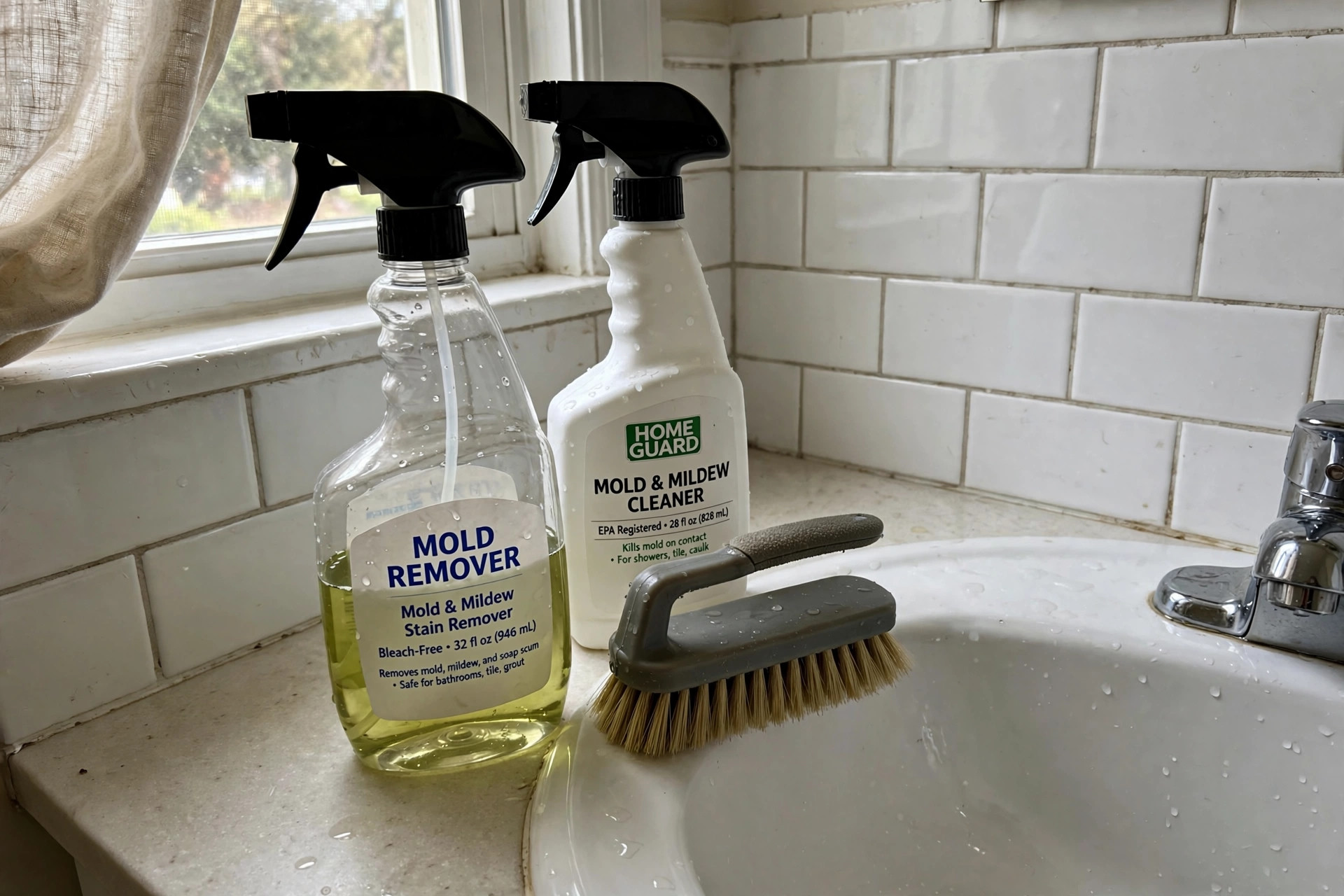

Mold loves the South. Long hot summers, mild winters, and damp air give it all it needs. If you live in Florida, Georgia, Louisiana, Texas, or the Carolinas, you have likely seen dark spots on the shower tile. The best mold removal sprays for southern states kill surface mold fast and help stop it from coming back. This guide explains how to pick the right spray, how to use it the right way, and what to do when the mold will not leave.
Why Southern Homes Get More Mold
Mold is a living thing. It needs water, warmth, and food. It feeds on soap scum, dust, wood, and drywall. It needs almost no light. A dark bathroom corner gives it all it wants.
The South gives mold a long season. In most northern states, cold winter air dries the house out. In the South, the air stays warm and damp for many months. A study of indoor air in Gulf Coast homes has shown that indoor humidity can stay above 60 percent for weeks at a time. Mold grows fast when humidity passes that mark.
Storms add to the problem. Hurricanes and heavy rains push water into crawl spaces, attics, and wall cavities. After a storm, mold can start to grow within one or two days. Air conditioning helps, but many people keep the fan running all day, which can move damp air into ducts and wall spaces.
That is why the best mold removal sprays for southern states must do more than clean. They must work in high heat and high humidity. They must kill mold on contact. And they should leave behind something that slows regrowth, because in the South the mold will try to return.
What to Look for When You Choose a Spray: Best Mold Removal Sprays for Southern States
Not all mold sprays are the same. Some only clean the stain. Others kill the mold at the root. Here are the facts that matter on the label.
Kills mold and mildew. The label should say it kills mold and mildew. A plain cleaner can remove the dark color but leave live mold behind. The stain comes back in a few days. Look for words like “kills mold,” “mold remover,” or “mold killer.”
Works on your surface. Bathroom tile, grout, tubs, and fiberglass can take strong chemicals. Painted drywall cannot. Many strong sprays will bleach paint or stain fabrics. Read the label for the surface list. If the label says to test a small hidden area first, do it.
The active ingredient. Common mold killers include sodium hypochlorite (bleach), hydrogen peroxide, ammonium-based quats, and plant-based acids such as citric acid. Bleach-based sprays kill fast and are cheap. Hydrogen peroxide sprays are less harsh on surfaces. Citric acid sprays are mild and safer around children and pets, but they work slower.
Dwell time. Dwell time is how long the spray must stay wet on the mold. Some products need only three minutes. Others need ten. A short dwell time is easier to use, but you must keep the surface wet for the full time. Do not wipe it off early.
Preventive action. The best mold removal sprays for southern states often leave a residue that slows regrowth. The label may say “prevents mold for up to 7 days” or “inhibits regrowth.” In a humid climate this feature is worth paying for.
Smell and fumes. Bleach sprays smell strong. Some homes cannot handle that, especially with small children or pets inside. Fragrance-free or plant-based sprays trade some power for comfort, so open a window and run the bath fan no matter which spray you use.
Guides from The Spruce and Bob Vila both stress reading the label before you buy. Testing groups like Consumer Reports note that no spray works if you do not follow the directions. The advice is old and true. The product only works when you use it right.
Types of Mold Removal Sprays
Store shelves hold many kinds of spray, and each type has a job. Knowing the types saves you from buying the wrong bottle.
Bleach-Based Sprays
These use sodium hypochlorite, the same chemical in liquid laundry bleach. They kill mold on hard, non-porous surfaces in minutes and also whiten stained grout. They are cheap and easy to find.
The downsides are real. The fumes are strong. The liquid can bleach colored grout, fabrics, and carpet. It can corrode metal fixtures if left on too long. On porous wood or drywall, bleach kills the surface mold but cannot reach the roots. The stain may fade while live mold stays deep inside.
Hydrogen Peroxide Sprays
These sprays use hydrogen peroxide at about 3 to 7 percent strength. They bubble when they touch mold, which helps lift the growth from grout lines. They are less likely to damage colored surfaces than bleach. They break down into water and oxygen, so they leave no harsh residue.
They work slower than bleach and may need a second pass on heavy growth. Store them in a dark bottle in a cool place, since heat and sunlight break hydrogen peroxide down.
Quat-Based Sprays
Quats are ammonium compounds made for killing germs. Many commercial cleaners use them. They kill mold and leave a film that keeps killing for hours or days. They smell milder than bleach. Many are made for bathrooms and kitchens.
They cost more than bleach sprays, and some leave a sticky film if you do not rinse. Read the safety label. Quats can irritate skin and eyes, so gloves are a must.
Concrobium-Style and Encapsulating Sprays
Some products work by drying out mold and crushing it at a chemical level. They contain no bleach. They are often odorless. You spray them on, let them dry, and wipe. They are popular with people who cannot stand fumes.
They are gentle. That is both good and bad. On light mold they do fine. On heavy growth they may need several rounds. They cost more per bottle.
Plant-Based and Citric Acid Sprays
These use acids from citrus fruit or other plant sources. They kill common bathroom mold but work best on light growth, and they do not bleach surfaces.
For deep or spreading mold, they may not be strong enough. Use them for weekly touch-ups, not for a mold crisis.
Cost and Price: What You Should Pay
Mold sprays are not expensive. Most bottles sell for 4 to 15 dollars at stores like The Home Depot and Lowe’s.
Budget bleach-based sprays cost about 4 to 6 dollars for a 32-ounce bottle, and store brands work as well as name brands for basic bathroom mold.
Mid-range sprays with peroxide or quats cost about 7 to 11 dollars. They are a good choice for tile and tub surrounds that grow mold every summer. The regrowth protection can save you a second bottle.
Premium sprays cost 12 to 18 dollars, including large contractor-size bottles for basements or rental properties.
Compare cost per ounce, not cost per bottle. A 22-ounce bottle for 9 dollars costs more per spray than a 32-ounce bottle for 10 dollars. Buy the size you will use in a few months. Old spray loses strength, especially peroxide formulas.
For related cleaning work, see our guides on powerful move out cleaning services near me, reliable spin mop bucket systems with free shipping, and quiet carpet deep cleaning machines with free shipping.
How to Use Mold Spray the Right Way
Even the best mold removal sprays for southern states fail when used wrong. Follow these steps every time.
1. Protect yourself. Wear rubber gloves. Wear safety glasses if the spray can splash. Open a window or turn on the exhaust fan. If you have asthma or a mold allergy, wear a dust mask. 2. Clear the area. Remove rugs, towels, and bath items. You do not want spray on fabric. 3. Pre-clean loose grime. Wipe away soap scum and loose dirt with a damp cloth. The spray works better on a clean surface. 4. Spray generously. Coat the mold so the surface is fully wet. Do not mist it lightly. 5. Wait. Let the spray sit for the full dwell time on the label. Keep the surface wet. Spray more if it starts to dry. 6. Scrub. Use a stiff brush on grout. Use a sponge on smooth tile. Work in small areas. 7. Rinse or wipe. Follow the label. Some products need a rinse. Others tell you to leave the residue. 8. Dry the area. This step matters most in the South. Use a fan or open a window. A damp bathroom grows mold again in days.
Never mix bleach spray with other cleaners. Bleach mixed with ammonia makes toxic gas. Bleach mixed with vinegar also makes harmful gas. Use one product at a time. Rinse between products.
Safety in Southern Homes
Safety rules change a little in hot climates. Keep sprays in a cool, dry place. A garage in Texas can reach 120 degrees. Heat ruins spray chemicals and can burst cheap bottles. Store them inside the house, in a locked cabinet if children or pets are present.
Ventilation is the second rule. Many southern homes are sealed tight for air conditioning. Run the bath fan for 30 minutes after you spray. Open a window if you can. Fresh air clears fumes fast.
Know when a spray is not enough. The U.S. Environmental Protection Agency advises that mold covering more than about 10 square feet should be handled with care, and hidden mold inside walls needs a professional. If you smell mold but cannot see it, or if the same spot keeps growing back after three cleanings, call a mold inspector. The Centers for Disease Control and Prevention notes that mold can worsen asthma and allergies, so do not delay on a large problem.
Care and Upkeep: Keeping Mold Away
Killing mold is only half the job. In the South, prevention decides whether it returns. These habits cost little and work well.
Lower indoor humidity. Keep indoor humidity below 60 percent, and below 50 percent if you can. Run the air conditioner in dry mode or buy a dehumidifier for damp rooms, and empty the tank often.
Vent the bathroom. Run the bath fan during every shower and for 20 minutes after. Squeegee the shower walls after use to remove most of the water mold needs.
Fix leaks fast. A drip under the sink feeds mold day and night. Check under sinks and around toilets once a month. Replace worn caulk around tubs and showers each year. In southern heat, caulk fails faster than you think.
Wash soft goods. Wash shower curtains, bath mats, and towels weekly in hot water. Replace a shower liner when it stains.
Clean monthly. Spray a light coat of mold spray on grout lines once a month, even when you see no mold. This stops small growth before you notice it. Wipe and dry the area after.
Watch the laundry room and kitchen. Mold hides behind washers, under dishwashers, and inside refrigerator drip pans. Pull appliances out once or twice a year and check baseboards for moisture.
Advice from Family Handyman and This Old House backs these habits. Testing editors at Good Housekeeping add one more tip. Dry everything. A dry home is a mold-free home.
FAQ
How often should I spray for mold in a southern state?
In summer, treat bathroom grout once a month even if it looks clean. In winter, every two months is enough for most homes. If you have no central air, stay on the monthly schedule all year. Watch the calendar, not the stains.
Can I use mold spray on painted walls?
Most strong sprays will damage paint. Bleach sprays can lighten the color. Peroxide sprays can leave spots. For painted drywall, use a mild spray made for painted surfaces. If mold has grown through the paint, the drywall behind it may be wet, so call a professional.
Is bleach spray enough for black mold?
Bleach kills surface mold on hard tile and tubs. The dark color called “black mold” is often just common bathroom mildew. True toxic mold grows inside walls and on wood, where bleach cannot reach. If the growth covers a large area or sits on drywall, do not rely on a spray bottle. Get an inspection.
Are plant-based sprays safe around pets?
Most are safer than bleach sprays, but “plant-based” does not mean harmless. Keep pets out of the room while you spray. Let the surface dry fully before pets return. Read the label for pet warnings. When in doubt, rinse the area after use.
Why does mold keep coming back in the same spot?
Three reasons are common. First, the surface stays damp because of poor ventilation. Second, water is leaking behind the wall. Third, the spray did not reach the mold roots in grout or wood. Fix the moisture first. Then treat again with a spray that prevents regrowth. If it returns a third time, look for a hidden leak.
Should I wear a mask when spraying?
Wear a simple dust mask if you have asthma, allergies, or a weak immune system, or when you scrub a large area and stir up spores. For small jobs with good ventilation, gloves and glasses are usually enough. Stop and get fresh air if you feel dizzy or get a headache.
Final Word
Mold is a fact of life in southern states. Heat and damp air will always feed it. But you can stay ahead of it with the right spray and the right habits. Buy a spray that kills mold on contact, follow the dwell time, and dry the area well. Then keep the humidity low, fix leaks fast, and treat problem spots on a schedule. Do both, and the mold stays gone.
References
Bob Vila. (n.d.). Home improvement advice. https://www.bobvila.com Centers for Disease Control and Prevention. (n.d.). Cleaning and disinfecting your home. https://www.cdc.gov Consumer Reports. (n.d.). Product reviews and ratings. https://www.consumerreports.org Family Handyman. (n.d.). DIY home repair and maintenance. https://www.familyhandyman.com Good Housekeeping. (n.d.). Product reviews and home advice. https://www.goodhousekeeping.com Lowe’s. (n.d.). Home improvement products. https://www.lowes.com The Home Depot. (n.d.). Home improvement products. https://www.homedepot.com The Spruce. (n.d.). Home and garden advice. https://www.thespruce.com This Old House. (n.d.). Home renovation guidance. https://www.thisoldhouse.com U.S. Environmental Protection Agency. (n.d.). Protecting human health and the environment. https://www.epa.gov
Was this guide helpful?

About Lisa Anderson
The My Garden US editorial team writes practical, in-depth home and garden guides for American homeowners — tested advice, no fluff.
You May Also Like
Quiet Dust Mite Mattress Covers With Free Shipping: A Simple Buying Guide
March 26, 2026 0 views
Extendable Duster Sets: Reviews and Buying Guide for American Homes
February 27, 2026 0 views
Quiet Mold Remediation Services Near Me: What to Know Before You Hire
February 24, 2026 0 views