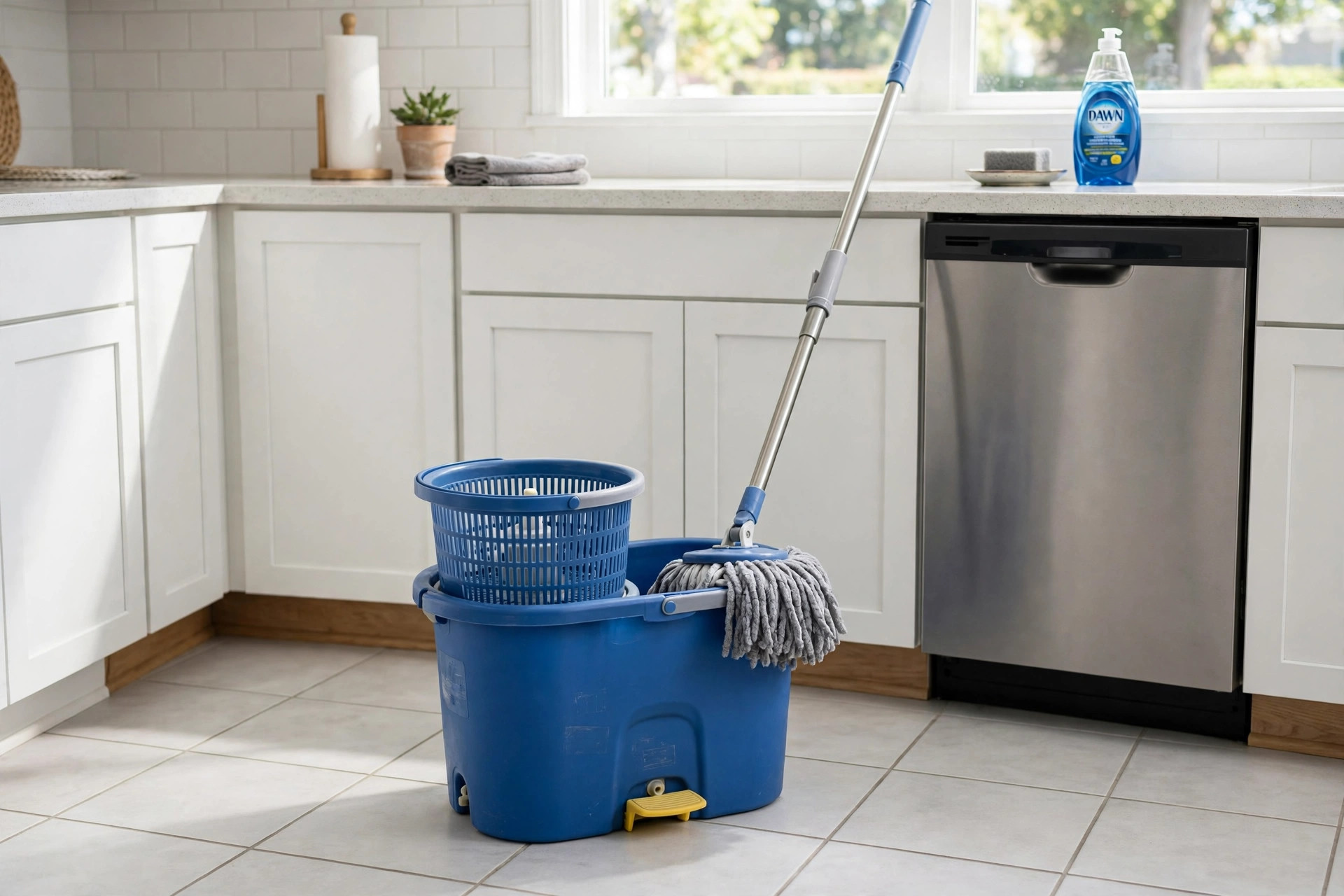

Shoppers across the country want a clear spin mop bucket systems price comparison usa buyers can trust. A spin mop lets you clean floors without wringing the mop by hand. The bucket does the hard work. You press a pedal or pump a handle. The basket spins. Extra water flies off the mop head. This guide compares prices, explains what raises cost, and shows how to choose the right set for your home.
Why a Price Comparison Helps Before You Buy
Floor mops look simple. Prices are not simple. One set may cost twenty dollars. Another may cost sixty. The boxes look much the same. A careful price comparison shows what you get for the money. It also stops you from paying for features you do not need.
Many families mop once or twice a week. A good set lasts two years or more. A cheap set may break in six months. When you compare prices against quality, you see the true cost per year. That number matters more than the price on the shelf.
Prices also shift by season. Stores often cut prices in spring and before the holidays. Online prices move up and down each week. A comparison done today may differ from one done last month. Still, the range stays fairly steady. Most sets fall between twenty-five and fifty-five dollars.
What to Look for in a Spin Mop Bucket System: Spin Mop Bucket Systems Price Comparison Usa
A spin mop set has four main parts. Each part affects price and how well the mop works.
The Bucket
The bucket holds water and the spin basket. Look for thick plastic that does not flex when you press on it. A wide mouth makes it easy to dip the mop. Some buckets have two chambers. One side holds clean water. The other side catches dirty water. Two-chamber buckets cost more but keep floors cleaner.
Check the drain plug at the bottom. A good plug lets you empty the bucket without lifting it. The wheels should turn freely. Small wheels on cheap sets often snap off after a few months.
The Mop Head
Most mop heads use microfiber strands. Microfiber picks up dust and dirt well. Heads come in round and flat shapes. Round heads fit the spin basket best. Flat heads cover more floor per stroke but may not wring as well.
Count the number of head refills in the box. Some sets include one extra head. Others include two or three. Each refill costs five to ten dollars when bought alone. A set with two heads is a better deal than it looks at first glance.
The Wringer Mechanism
Two designs dominate the market. Pedal models use a foot pedal to spin the basket. Hand-pump models use a handle you push down. Pedal models tend to cost less. Hand-pump models give more control over spin speed. Both work well when built from sturdy parts.
Test the mechanism in the store if you can. It should move smoothly. A rough or grinding motion is a warning sign. Online shoppers can read reviews on Consumer Reports and Good Housekeeping to learn which mechanisms hold up over time.
The Handle
The handle should lock at several lengths. A handle that slips during mopping is a source of constant annoyance. Stainless steel handles last longer than aluminum ones. Some handles split into two pieces for storage. That feature helps in small apartments and closets.
Types of Spin Mop Bucket Systems
Shoppers will find three broad types on store shelves in the USA.
Basic pedal spin mops. These are the least costly. They include a single-chamber bucket, a pedal wringer, and one or two mop heads. They clean well for small homes and apartments. Prices usually run from twenty to thirty dollars.
Hand-pump spin mops. These use a push handle instead of a pedal. Many come with two chambers and extra mop heads. They suit larger homes and busy families. Prices usually run from thirty to fifty dollars. Popular makers like O-Cedar offer several models in this range.
Deluxe and commercial-style sets. These have thicker buckets, metal wringers, and more refills. Some include splash guards and soap dispensers. They are built for heavy use and large floor areas. Prices run from fifty to seventy-five dollars or more.
Which type suits you? Small homes with hard floors do fine with a basic pedal set. Homes with pets or children wear out mops faster, so a mid-range set with spare heads is the smarter buy. Large homes with mixed floors gain the most from a deluxe set, since a strong wringer saves real time on every cleaning day.
Retailers such as The Home Depot and Lowe’s carry all three types. Their websites let you sort by price and read buyer reviews side by side.
Cost and Price: What You Pay in the USA
Here is the plain picture. A basic set costs twenty to thirty dollars. A mid-range set costs thirty to fifty dollars. A deluxe set costs fifty to seventy-five dollars. The middle of the market, around thirty-five dollars, gives most homes the best mix of price and quality.
What raises the price? First, extra mop heads. A set with three heads costs more than a set with one, but refills bought alone cost even more. Second, the two-chamber bucket. Clean water on one side and dirty water on the other is a real gain. Third, metal parts. Steel wringers and handles outlast plastic ones. Fourth, brand name. Well-known brands charge more, but they also sell refills for years. A cheap brand may vanish, leaving you with no spare heads.
Replacement heads cost five to ten dollars each. A family that mops weekly will change heads every three to four months. Plan for twenty to forty dollars a year in refills. Add that to the set price when you compare.
Where you buy matters too. Big-box stores often match online prices. Warehouse clubs sell two-packs that lower the per-set cost. Seasonal sales in March and November can cut ten to fifteen dollars off mid-range sets. Buying the set and the refills together sometimes unlocks a bundle price.
Online shopping adds its own twists. Prices on large marketplaces can change from week to week. A set that costs thirty-nine dollars on Monday may drop to thirty-two on Friday. Shipping fees also shift the true price. A cheap set with high shipping may cost more than a mid-range set with free shipping. Always check the final total before you compare.
In-store shopping has one clear gain. You can touch the bucket. You can press the pedal. You can feel the handle lock. Five minutes in the aisle tells you more about build quality than fifty reviews. Bring a list of the features you want. Hold to the list. Stores place the priciest sets at eye level for a reason.
For a fuller picture of household cleaning costs, see our dryer vent cleaning services cost guide usa and our look at commercial grade cordless stick vacuums for small apartments. Different tools, same idea: compare before you spend.
Care and Upkeep
A spin mop set lasts longer with simple care. Rinse the mop head after every use. Let it dry fully before you store it. A damp head left in the bucket grows mildew and odor. Machine wash the heads once a month in warm water. Skip fabric softener. It coats the fibers and weakens their grip on dirt.
Empty the bucket after each mopping session. Rinse it and leave it upside down to dry. Check the spin basket for hair and string. Pull out what you catch. A basket clogged with hair spins poorly and strains the pedal.
Oil the moving parts twice a year. A drop of household oil on the pedal hinge keeps the motion smooth. Store the set in a dry place. Sun and heat warp thin plastic over time.
Replace mop heads when the strands look flat and worn. Old heads smear dirt instead of lifting it. Mark the date on a new head with a marker. That small habit tells you when a change is due.
Keep a spare head on the shelf. When the old one wears out on a Saturday morning, you will not have to run to the store mid-clean. Store spares in a dry bag away from dust. Microfiber draws dust from the air, and a dusty head starts its first job already dirty.
The bucket itself needs little care. Rinse it after use and let it air dry upside down. Do not stack heavy items inside it during storage. A warped bucket wobbles during spinning. If the wringer starts to stick, check for hair wrapped around the spindle. A pair of scissors frees it in a minute.
Safety
Spin mops are safe tools, but a few rules keep them that way. Wet floors are slippery. Mop in sections and let each section dry before you walk on it. Keep small children and pets out of the room while the floor is wet.
Do not overfill the bucket. A full bucket is heavy and can tip. Lift with your legs, not your back. If the bucket has wheels, lock them or brace the bucket while you pump the handle.
Cleaning products deserve care as well. Follow the label on any floor cleaner you add to the water. Never mix bleach with ammonia-based cleaners. The fumes can harm your lungs. The EPA offers plain guidance on safe household cleaning products.
Some buyers in humid regions also fight mold on floors and walls. If that is your case, read our guide on the best mold removal sprays for southern states. Ventilation and dry floors prevent most mold before it starts.
Frequently Asked Questions
How much should I pay for a good spin mop bucket system?
Most homes do well in the thirty to fifty dollar range. Below twenty-five dollars, parts tend to break early. Above sixty dollars, you pay for commercial features most homes do not need.
Are expensive spin mops worth the money?
Sometimes. The extra cost buys thicker plastic, metal wringers, and more refill heads. If you mop large areas often, a mid-range or deluxe set pays for itself. For a small apartment mopped twice a month, a basic set is enough.
How long does a spin mop bucket last?
A well-made set lasts two to three years with regular care. The bucket usually outlives the wringer mechanism. Mop heads need replacing every three to four months of weekly use.
Can I buy replacement mop heads separately?
Yes. Most brands sell refills in packs of two or three. Check that the refill fits your model before you buy. Head shapes differ between brands. Buying the same brand as your set is the safest choice.
Do spin mops work on all floor types?
They work well on tile, vinyl, laminate, and sealed hardwood. Use a damp head, not a soaking one, on hardwood. Standing water can damage wood floors. Wring the head well before each pass.
Where can I find hands-on buying advice?
Sites like The Spruce, Family Handyman, This Old House, and Bob Vila publish tested reviews and how-to guides for mops and other cleaning tools. Their test notes help you judge build quality before you buy.
A Final Word
A spin mop bucket system is a small purchase that touches your home every week. A clear spin mop bucket systems price comparison usa shoppers can use comes down to four things: sturdy bucket, good mop heads, a smooth wringer, and a handle that locks. Spend thirty to fifty dollars. Care for the set. Change the heads on time. Your floors will show the difference.
References
Bob Vila. (n.d.). Home improvement advice. https://www.bobvila.com Consumer Reports. (n.d.). Product reviews and ratings. https://www.consumerreports.org Family Handyman. (n.d.). DIY home repair and maintenance. https://www.familyhandyman.com Good Housekeeping. (n.d.). Product reviews and home advice. https://www.goodhousekeeping.com Lowe’s. (n.d.). Home improvement products. https://www.lowes.com O-Cedar. (n.d.). Cleaning products and mops. https://www.o-cedar.com The Home Depot. (n.d.). Home improvement products. https://www.homedepot.com The Spruce. (n.d.). Home and garden advice. https://www.thespruce.com This Old House. (n.d.). Home renovation guidance. https://www.thisoldhouse.com U.S. Environmental Protection Agency. (n.d.). Protecting human health and the environment. https://www.epa.gov
Was this guide helpful?

About Michael Thompson
The My Garden US editorial team writes practical, in-depth home and garden guides for American homeowners — tested advice, no fluff.
You May Also Like
Professional Grade Carpet Deep Cleaning Machines for Sale
October 3, 2026 0 views
Finding Reliable Pressure Washing Service Companies in Colorado
July 19, 2026 0 views
Top Rated Move Out Cleaning Services Reviews: How to Read Them and Hire Well
May 2, 2026 0 views