
A Simple Guide to Spray Foam Insulation Types
Spray foam insulation has changed the way American homes are built and sealed. Two types lead the market. They are closed cell foam and open cell foam. Both come from the same basic chemistry. Both are sprayed as a liquid that grows and hardens. But they act very different once in place. This closed cell vs open cell foam comparison usa guide will walk through the facts. It will help you see which type fits your walls, your attic, and your budget.
Homeowners often hear claims that one type is always better. That is not true. Each type has strengths. Each has weak spots. The right pick depends on where it goes, how much it costs, and what you need it to do. Read on to learn the facts in plain terms.
Why the Foam Type Matters: Closed Cell vs Open Cell Foam Comparison Usa
Insulation does one job. It slows the flow of heat. In summer, it keeps heat out. In winter, it keeps heat in. The better it does this job, the less your heater and air conditioner must work. That means lower bills and a home that stays at a steady temperature.
Spray foam does more than slow heat. It also seals air leaks. Warm and cool air slips through cracks and gaps in most homes. Foam fills these gaps as it grows. But closed cell and open cell foam seal and insulate in different ways.
What Closed Cell Foam Is
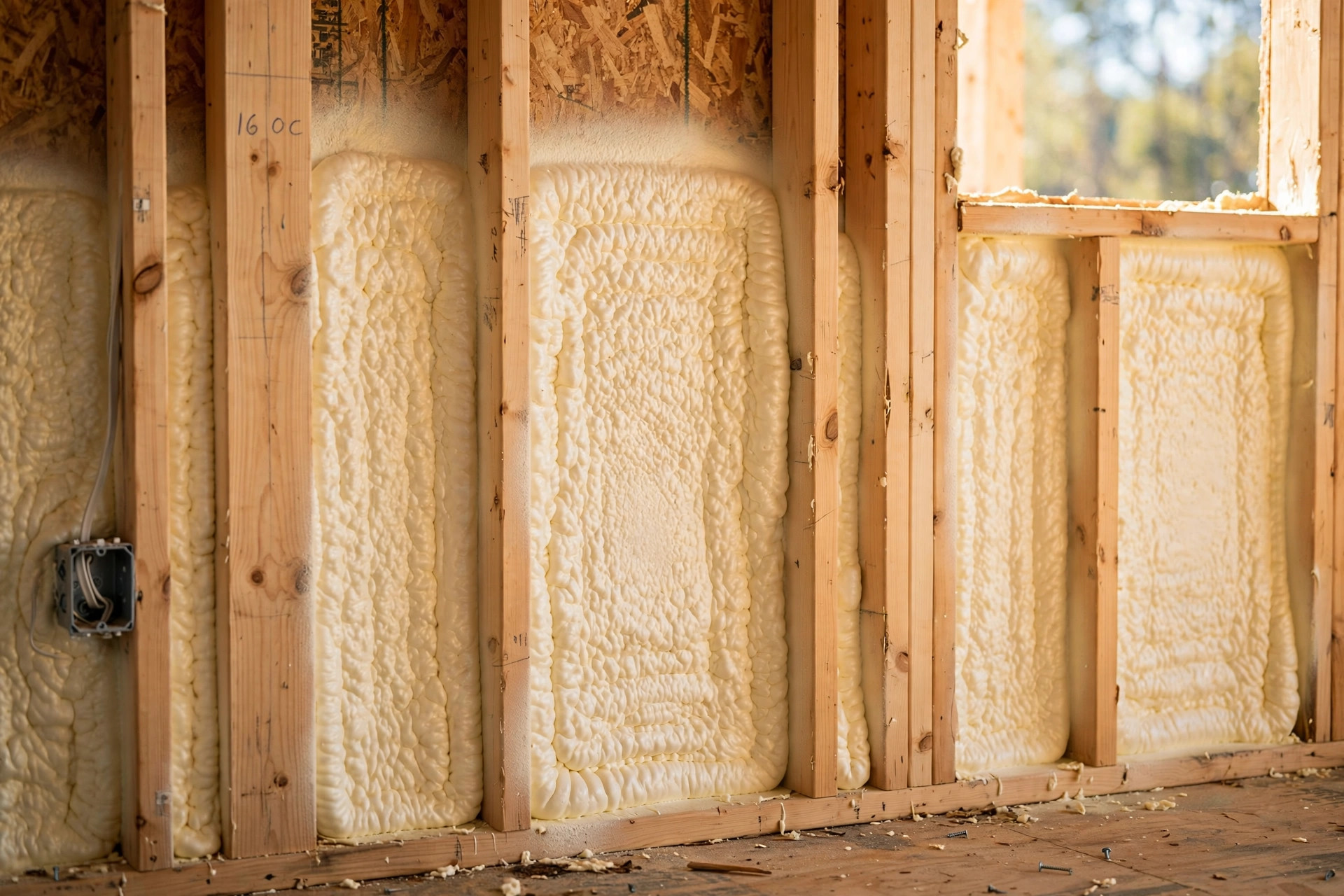
Closed cell foam is the denser of the two. When it is sprayed, tiny cells form and seal shut. Each cell is closed off from its neighbors. The walls of the cells trap a gas that resists heat flow. The result is a rigid, firm foam that can feel as hard as a thick board.
It is about twice as dense as open cell foam. A single inch gives an R-value near 6.5. R-value is the measure of heat resistance. Higher numbers mean better insulation. This dense foam also blocks water vapor. It acts as its own vapor barrier. That means it can keep moisture from passing through the wall. It can even add some strength to the wall structure. Some tests show it helps walls stand up better in high wind. Carrier and other heating firms stress that tight, dry walls help heating systems run well.
Because it is so firm, closed cell foam can be used outside the frame too. It can go under slabs and on roof decks. It resists water well enough that it is often used in basements and crawl spaces where damp air is a risk.
What Open Cell Foam Is
Open cell foam is the lighter, softer type. Its cells stay open. Air fills the cells instead of a special gas. The foam grows much more as it is sprayed. It can fill large, odd-shaped gaps with ease. When it hardens, it feels soft and spongy. You can press it with a finger.
Its R-value is about 3.5 to 3.7 per inch. That is about half of closed cell foam per inch. So you need about twice the depth to get the same insulation value. Open cell foam does not block water vapor the same way. Water vapor can pass through it. In some climates, a separate vapor barrier may be needed on top of it.
But open cell foam has real strengths. It is cheaper per inch. It expands to fill every corner. It is a good sound blocker. The soft, airy structure cuts noise better than the hard foam. Many homeowners pick it for walls between rooms and for ceilings under noisy floors. Trane explains that a quiet home often starts with the building shell, and foam plays a part in that.
R-Value and Thickness: The Core Difference
The R-value gap drives much of this comparison. Closed cell foam gives about R-6.5 per inch. Open cell foam gives about R-3.5 per inch. A wall cavity is only so deep. A standard 2×4 wall gives about 3.5 inches of space. Fill it with closed cell foam and you get about R-23. Fill it with open cell foam and you get about R-13.
In a 2×6 wall, the gap grows. Six inches of space can hold more of either type. Six inches of open cell foam gives about R-22. That is close to the closed cell result in a thinner wall. This is why open cell foam works well in deeper cavities. It is why closed cell foam is the pick when space is tight and you need high R-value in thin depth.
Check local codes too. Many states ask for a set R-value in walls and roofs. The ENERGY STAR program lists target levels by climate zone. Make sure the type and depth you pick meet your zone.
Cost and Price Comparison
Cost is where open cell foam wins. Open cell foam often costs about one third to one half the price of closed cell foam per inch. For a whole attic or a large wall area, the gap adds up fast.
Typical installed prices in the USA run as follows. Open cell foam often lands between $0.35 and $0.65 per board foot. A board foot is one square foot one inch thick. Closed cell foam often runs between $1.00 and $1.50 per board foot. These are rough ranges. Prices shift with your area, the size of the job, and the season.
But raw price is not the full story. Because closed cell foam has a higher R-value per inch, you need less of it to hit a target R-value. Still, even after this math, closed cell foam usually costs more for the same final R-value. Open cell foam is the budget pick in most bids.
For a closer look at what spray foam jobs cost by area, see this guide to spray foam insulation cost per square foot. It breaks down prices by region and project type.
Moisture and Air Sealing
Both foams seal air well. Air sealing may be the largest benefit of spray foam over batts or loose fill. Traditional insulation lets air pass. Foam stops it. Both types cut drafts and dust.
Moisture is a different matter. Closed cell foam resists water. At about two inches thick, it counts as a vapor retarder. This makes it a strong pick for damp spots like basements, crawl spaces, and outer walls in wet climates.
Open cell foam lets water vapor through. This is not always bad. In some walls, it helps trapped moisture dry out. But in very humid zones, or where the wall cannot dry to one side, a vapor barrier may be needed. Your contractor should know your local code. The Family Handyman site has plain guides on where vapor barriers belong in home walls.
For damp below-grade spaces, see this guide on the best insulation for crawl space walls usa. It covers when closed cell foam is the safer pick.
Strength and Structure
Closed cell foam is rigid. Once hard, it bonds to the wood and adds stiffness. Tests show it can raise the racking strength of a wall. This means the wall resists sideways force better. In storm zones, that extra strength is a real plus.
Open cell foam adds no real strength. It is soft. It moves a little with the frame. This can be a plus in its own way. Wood frames shift with heat and cold. The soft foam can move with them without cracking. But if you need the wall to be stronger, only closed cell foam helps.
Sound Control
Here open cell foam wins. Its soft, open structure soaks up sound. It is a good pick for home offices, bedrooms, and walls near loud rooms. It also helps between floors. Many builders use it on purpose for noise, not heat.
Closed cell foam is hard. Hard surfaces pass sound through. It still blocks more noise than an empty wall. But side by side, open cell foam is the better sound barrier.
Fire Safety and Code Rules
Both foam types will burn if lit. They must be covered by a fire barrier in most homes. The common rule is a half inch of drywall over the foam. Local codes may ask for more in some spots, like garages and attics.
Both foams also need a thermal barrier or ignition barrier in places where people do not live, like crawl spaces and some attics. Always check your local code. A good installer knows these rules. Do not skip them. If you are weighing foam against older insulation types, this blown in vs batt insulation cost comparison also touches on fire and safety basics.
Where Each Type Works Best
Closed cell foam works best where space is tight, water is a risk, or strength helps. Good uses include thin wall cavities, basements, crawl spaces, under slabs, roof decks, and metal buildings. It also suits hot, humid zones where vapor control matters.
Open cell foam works best where space is deep, cost matters, or sound control is the goal. Good uses include attics with deep joists, 2×6 walls, interior walls for noise, and ceilings between floors. It also suits mild, dry climates where vapor is less of a worry.
Some homes use both. A contractor may spray closed cell foam on the outside sheathing and open cell foam in the stud cavities. This mix gives vapor control plus low cost. Ask your contractor if a mixed plan fits your home.
Care and Upkeep
Spray foam needs little care once in place. It does not settle like loose fill. It does not sag like old batts. It stays where it was sprayed.
Keep roof leaks fixed. Long-term water on foam can cause trouble at the wood behind it. In attics, make sure vents and fans work so heat and moisture do not build up. Lennox notes that attic heat shortens the life of roof parts, so good venting helps the whole house.
If you remodel and open a wall, look at the foam. It should look firm and dry. If it is wet, soft, or pulling away from the wood, call a pro. Do not try to patch spray foam yourself. The mix and spray gear are not do-it-yourself tools.
Hiring an Installer
The installer matters as much as the foam. Spray foam is a trade skill. The mix must be right. The spray must be even. A bad job can shrink, crack, or smell.
Ask for proof of training. Ask for recent jobs you can call. Ask what type they suggest and why. Get two or three bids. Make sure each bid lists the foam type, the depth in inches, and the target R-value. Rheem advises homeowners to check licenses and reviews before any major home system work, and foam is no different.
Watch out for very low bids. Foam material costs are real. A bid far below the rest may mean thin coverage or a poor mix. Goodman also reminds buyers that skilled labor is part of any quality install.
Environmental Notes
Both foams use blowing agents that help the foam grow. Older agents harmed the ozone layer. Newer agents are much better. Ask your installer which agent their foam uses. Low-impact agents are now the norm in the USA.
Foam also lasts a long time. It does not need to be replaced like some insulation. Over its life, the energy it saves often outweighs the energy used to make it. This Old House has run plain-English pieces on how insulation choices affect a home’s energy footprint. The U.S. Department of Energy offers free guides on insulation levels by climate zone.
FAQ
Which is better, closed cell or open cell foam?
Neither is always better. Closed cell foam gives higher R-value per inch, blocks water vapor, and adds strength. It costs more. Open cell foam costs less, fills gaps well, and blocks sound better. Pick based on your space, climate, and budget.
How thick should spray foam be?
It depends on your target R-value and your climate zone. A 2×4 wall with closed cell foam at 3 inches gives about R-19. The same wall with open cell foam at 3.5 inches gives about R-13. Many attics aim for R-38 or more. Ask your installer to match your zone.
Can I install spray foam myself?
It is not advised. The chemicals need exact mixing and safe handling. The spray gear is costly. A poor mix can fail or smell. Hire a trained installer.
Does spray foam stop mold?
Foam itself does not feed mold. Closed cell foam can keep walls dry, which helps stop mold. But foam cannot fix a leak. Fix water problems first, then insulate.
How long does spray foam last?
It can last for decades. It does not settle or sag. As long as it stays dry and covered, it keeps working.
Is open cell foam safe in a humid climate?
It can be, but it needs care. Because it lets vapor pass, a vapor barrier may be needed. In very damp areas, closed cell foam is often the safer pick.
A Short Final Word
This closed cell vs open cell foam comparison usa comes down to a trade. Closed cell foam gives more insulation per inch, blocks water, and adds strength. It costs more. Open cell foam costs less, fills every gap, and quiets a home. It needs more depth for the same R-value.
Think about where the foam will go. Think about your climate. Think about your budget. Then talk to a trained installer. The right foam in the right place will pay you back in comfort and lower bills for years.
References
Carrier. (n.d.). Heating and cooling systems. https://www.carrier.com ENERGY STAR. (n.d.). Energy efficient products. https://www.energystar.gov Family Handyman. (n.d.). DIY home repair and maintenance. https://www.familyhandyman.com Goodman. (n.d.). Heating and cooling equipment. https://www.goodmanmfg.com Lennox. (n.d.). Heating and cooling systems. https://www.lennox.com Rheem. (n.d.). Heating, cooling, and water heating. https://www.rheem.com This Old House. (n.d.). Home renovation guidance. https://www.thisoldhouse.com Trane. (n.d.). Heating and air conditioning. https://www.trane.com U.S. Department of Energy. (n.d.). Energy efficiency and renewable energy. https://www.energy.gov
Was this guide helpful?

About Robert Taylor
The My Garden US editorial team writes practical, in-depth home and garden guides for American homeowners — tested advice, no fluff.
You May Also Like
Inflation Reduction Act HVAC Rebates Explained
July 9, 2026 0 views
Multi Zone Mini Split Cost Installed in the USA: A 2026 Guide
June 30, 2026 0 views
What Does a Gas Garage Heater Installation Cost in the USA?
September 23, 2026 0 views