A patio umbrella is a sail. Open it on a calm day and it is perfect shade. Open it when a storm rolls in and it becomes a nine-foot kite attached to your patio table. Every summer, umbrellas fly across yards, smash into siding, and snap poles in half. Almost all of it is preventable. The rest of this guide covers patio umbrella stable during storms in plain language.
Table of Contents
Table of Contents
This guide covers how to keep your umbrella standing through normal wind, how to storm-proof it when bad weather is coming, and when the only smart move is to close it and take it down.
Patio Umbrella Stable During Storms: Know What You Are Up Against
When it comes to patio umbrella stable during storms, getting the details right makes all the difference.
Many homeowners find that patio umbrella stable during storms is easier than they expected once they know the basics.
A standard market umbrella catches a huge amount of wind. The canopy acts like a parachute. A gust that barely ruffles your hair can push hard on that much fabric. Cantilever umbrellas are worse. The offset arm gives the wind extra leverage, which is why they need far heavier bases.
No umbrella is storm-proof. Even the toughest wind-rated models have limits. The goal is not to leave your umbrella open through a thunderstorm. The goal is to keep it safe in ordinary breezes and to secure it fast when a storm approaches.
Start With the Right Base
Many homeowners find that patio umbrella stable during storms is easier than they expected once they know the basics.
The key to patio umbrella stable during storms is choosing the right approach for your space and budget.
The base is everything. A beautiful umbrella on a flimsy base is an accident waiting for a windy afternoon.
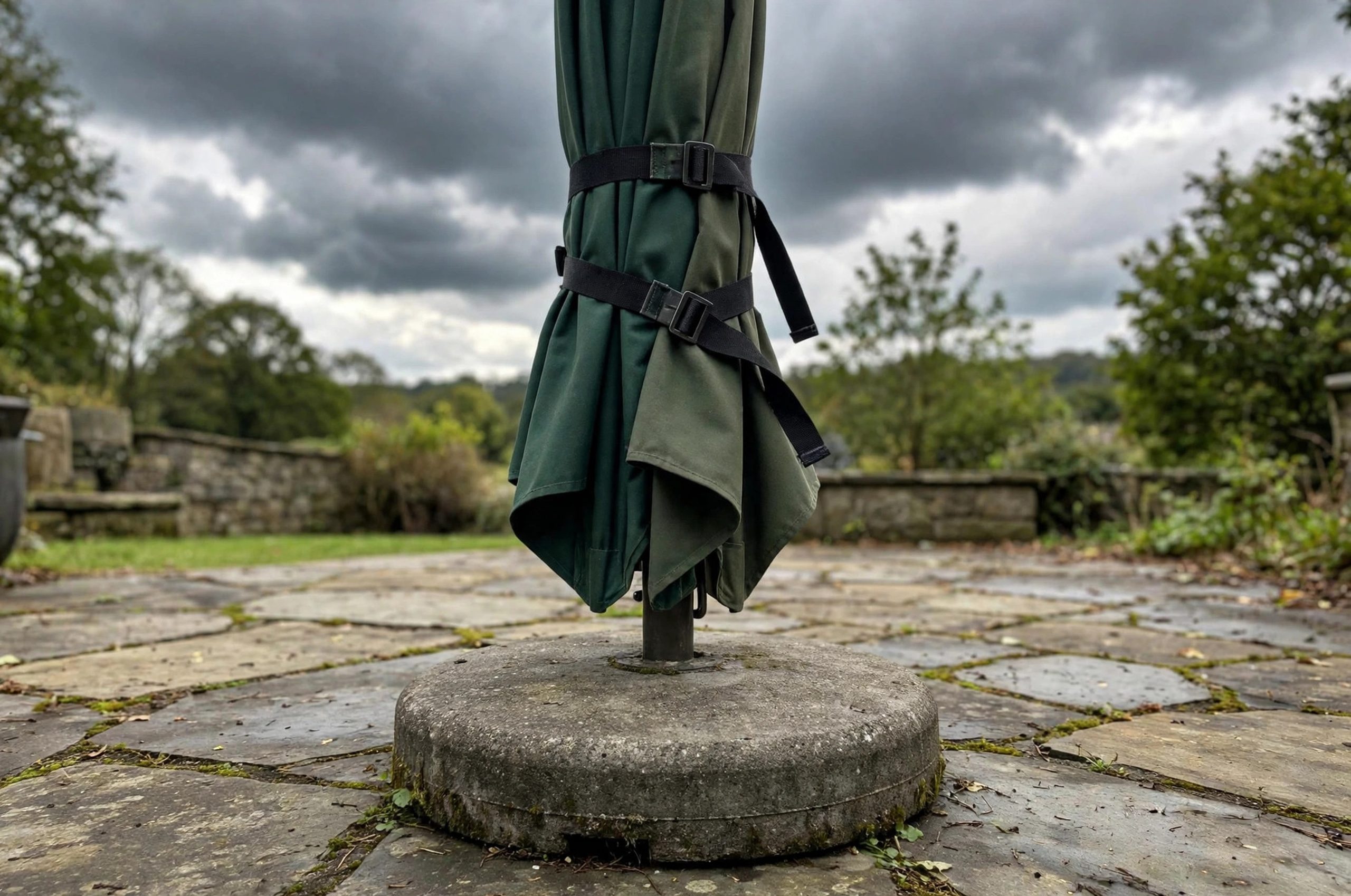
Match the weight to the umbrella. A table umbrella of seven to nine feet needs roughly 40 to 50 pounds of base. A freestanding umbrella of the same size needs 50 to 75 pounds or more. Cantilever models often need 100 pounds and up because of the leverage. One weight guide uses a simple rule of about ten pounds of base per foot of canopy diameter, which is a solid starting point.
Sand beats water. Fillable bases are handy, but what you fill them with matters. Sand is denser than water and does not slosh, so it holds steadier in gusts. Water is easier to drain when you want to move the base. If your base lives in one spot, fill it with sand.
Solid beats fillable in wind zones. Heavy cast stone or solid resin bases do not shift or settle the way fillable ones can. In consistently windy areas, a solid base of 40 pounds or more is the safer pick, according to umbrella stand reviews.
Lock the pole. Weight means nothing if the pole wobbles in the base. Use the tightening knob or screw and check it each season. For wheeled bases, lock the wheels. A base that rolls in a gust is barely a base at all.
If your umbrella sits through a table, the table adds stability, but you still need a real base. Guides for wind-resistant umbrellas stress this point: the table helps, it does not replace the base.
Storm-Proofing Before Bad Weather
The key to patio umbrella stable during storms is choosing the right approach for your space and budget.
With a little planning, patio umbrella stable during storms can fit even a busy schedule.
When a storm is on the forecast, run through this checklist.
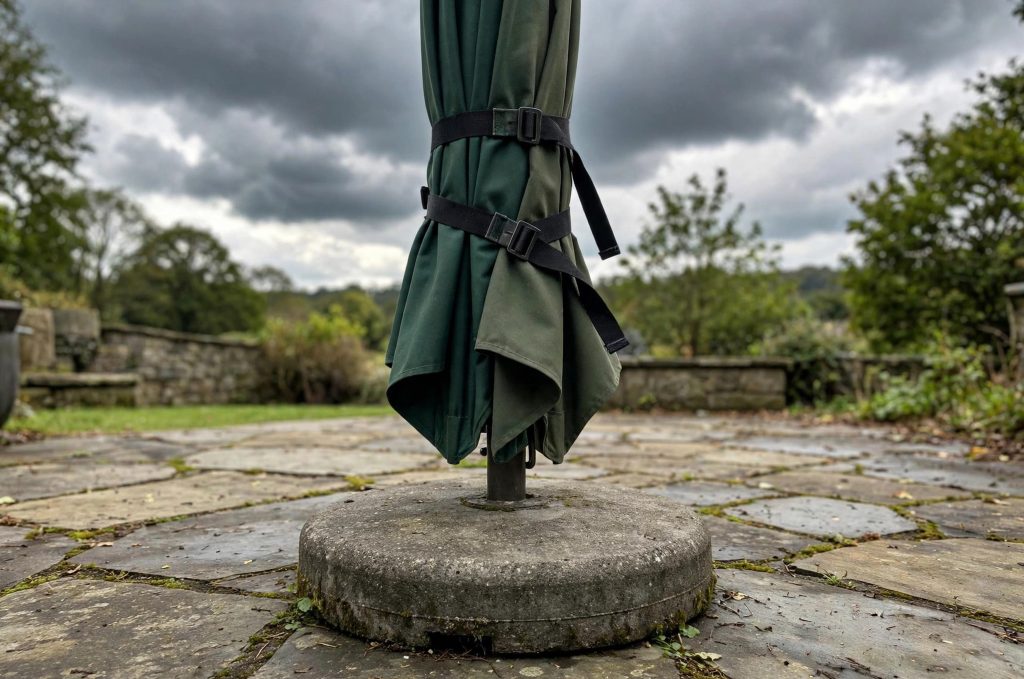
Close the umbrella. This is the single most effective thing you can do. An open umbrella in a storm is asking for damage. Close it, wrap the canopy tight, and secure it with the tie strap. Many umbrellas include a strap for exactly this purpose. If yours did not come with one, a bungee cord works.
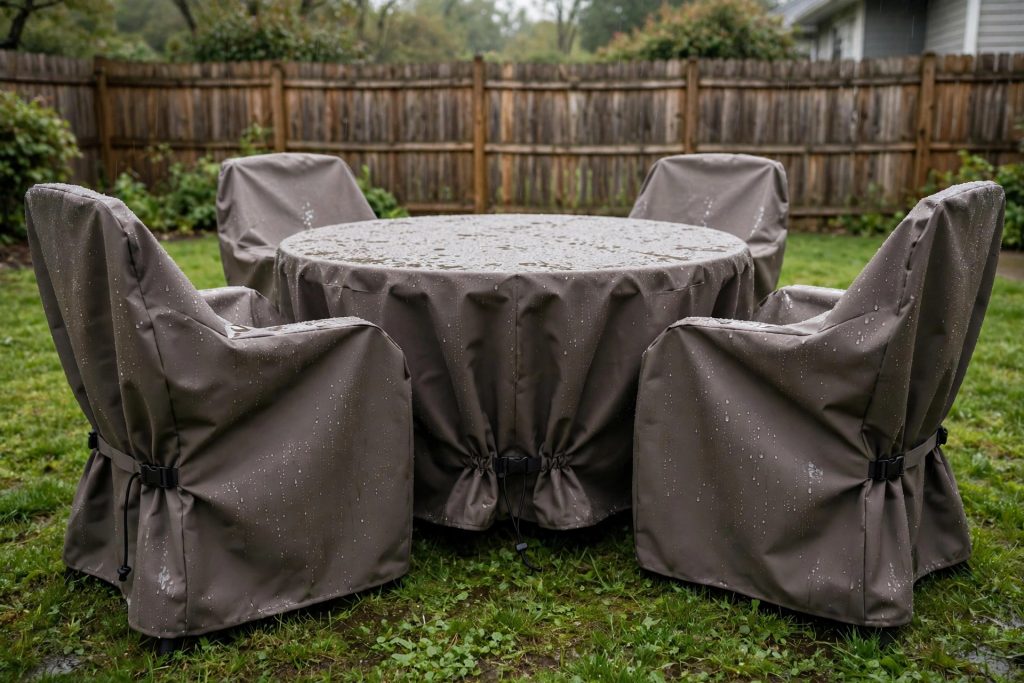
Use a cover. A fitted umbrella cover over the closed canopy does two jobs. It keeps rain and sun off the fabric, and a snug cover cuts wind resistance so gusts cannot catch the folds and work the umbrella open. Hurricane prep guides for porches and patios list taking down or securing umbrellas as a top priority.
Take it down for big storms. If severe weather is coming, pull the umbrella out of the base and lay it flat in the garage or shed. It takes two minutes. Compare that to replacing a bent pole or a shattered table.
Add weight for marginal days. On days with gusty but not dangerous wind, sandbags or purpose-made weight bags around the base add cheap insurance. Hook them to the pole or the base with bungee cords so they cannot slide away.
Mind the tilt. Never use the tilt function in wind, even a light breeze. Tilted canopies catch wind at a worse angle and stress the mechanism. One manufacturer safety sheet warns against opening some umbrellas in wind above a gentle breeze and against tilting in any wind at all.
Everyday Habits That Prevent Disasters
With a little planning, patio umbrella stable during storms can fit even a busy schedule.
Before you start, it helps to understand how patio umbrella stable during storms works in real homes.
Storms get the attention, but most umbrella damage happens on ordinary windy days when nobody is thinking about it.
Close it when you leave. If you are not sitting under the umbrella, close it. Make this a reflex like locking the front door. The worst gusts arrive when you are inside and cannot react.
Close it at night. Evening storms build fast. An umbrella left open overnight is a gamble every single night.
Check the hardware each season. Tighten the crank, the tilt joint, and the base knob. Look for cracked ribs and frayed fabric. A rib that snaps in a gust turns the canopy into a flag.
Choose wind-smart features. If you are shopping, look for vented canopies that let air pass through, flexible fiberglass ribs instead of rigid ones, and sturdy crank mechanisms. Family Handyman's buying guide recommends flexible materials like wood or fiberglass for windy areas and folding the umbrella up whenever it is not in use.
What About Cantilever Umbrellas?
Before you start, it helps to understand how patio umbrella stable during storms works in real homes.
A good plan for patio umbrella stable during storms saves time, money, and frustration.
Cantilever umbrellas shade big seating areas without a pole in the middle, which is wonderful until the wind picks up. Their offset design multiplies wind force on the base.
If you own one, the base weight rules are stricter. Plan on 100 pounds minimum, and more in windy spots. Some owners add cross-braced weight plates or bolt the base to the deck. In a real storm, fold a cantilever down and strap it. They are expensive to replace, and the arm mechanism is the first thing to bend.
Choosing a Storm-Ready Umbrella
A good plan for patio umbrella stable during storms saves time, money, and frustration.
For most people, patio umbrella stable during storms comes down to a few smart choices.
If you are shopping for a new umbrella, or wondering whether your old one is worth keeping, a few features make a real difference in wind.
Vented canopy. A vent at the top lets air pass through instead of catching it. This single feature cuts wind lift more than anything else.
Flexible ribs. Fiberglass ribs bend in gusts instead of snapping. Rigid aluminum ribs are strong but brittle in comparison. Wood ribs flex too, which is why classic wooden market umbrellas handle wind better than people expect.
Sturdy crank and tilt. Cheap plastic cranks strip and jam. Metal gears last. Test the mechanism in the store if you can.
Know the limits. Even wind-rated umbrellas have a cutoff. Wind-focused umbrella guides advise closing and strapping the canopy when winds pass about 20 to 25 miles per hour, and they stress that no umbrella is storm-proof. Timely closing extends the life of any umbrella more than any feature.
Size the base to the canopy. A base weight guide recommends stepping up base weight with umbrella size: around 30 pounds for small table umbrellas, 50 for mid-size, and 70 or more for large freestanding models. When in doubt, go heavier. Extra weight is the cheapest storm insurance you can buy.
Anchor in windy spots. In exposed locations, a heavy base plus sandbags or weight bags on the legs keeps the umbrella planted through gusts that would walk an unanchored base across the patio.
After the Storm
For most people, patio umbrella stable during storms comes down to a few smart choices.
Once the weather passes, inspect before you open the umbrella again. Look for bent ribs, torn fabric at the attachment points, and a loose base. Spin the crank and make sure it moves smoothly. If the pole took a hit, check that it is still straight. A slightly bent pole will bind and eventually snap.
Wash off any debris and let the canopy dry fully before closing it for storage. Mildew grows fast on a damp, folded canopy.
Pairing Your Umbrella With the Right Setup
If you are new to patio umbrella stable during storms, start with the simplest option and build from there.
A stable umbrella starts with a stable setting. A side table with an umbrella hole gives the pole extra support and keeps drinks close. If you live in a windy area, our guide to the best outdoor dining set for windy areas covers furniture built to handle gusts. And for exposed spaces, see our ideas for patio furniture on rooftop decks, where wind is a daily fact of life. Keep this guide handy the next time patio umbrella stable during storms comes up.
References
When it comes to patio umbrella stable during storms, getting the details right makes all the difference.
- Family Handyman. (n.d.). Guide to buying the perfect patio umbrella. https://www.familyhandyman.com/list/how-to-buy-a-patio-umbrella/
- Lafferty Pools. (n.d.). Hurricane preparedness tips for your porch or patio. https://www.laffertyfl.com/blog/hurricane-preparedness-tips-for-your-porch-or-patio
- Lausaint. (n.d.). What is the best patio umbrella for the wind? https://lausaint.com/blogs/news/what-is-the-best-patio-umbrella-for-the-wind
- Pool Fun For Everyone. (n.d.). Wind resistant patio umbrella: Keep it on the ground and not in the air. https://www.poolfunforeveryone.com/wind-resistant-patio-umbrella.html
- Posh Living Magazine. (n.d.). What is best to fill an umbrella base with? Ultimate guide. https://posh.co.uk/living/what-is-best-to-fill-an-umbrella-base-with/
- SLow Weather. (n.d.). Best material for outdoor umbrella stand. https://www.sloweather.com/best-material-for-outdoor-umbrella-stand/
- SLow Weather. (n.d.). Best patio umbrella for wind. https://www.sloweather.com/best-patio-umbrella-for-wind/
- SLow Weather. (n.d.). Best umbrella stand for wind. https://www.sloweather.com/best-umbrella-stand-for-wind/
- TopTensUnit. (n.d.). The 10 best patio umbrella stands and bases. https://www.toptensunit.com/patio-umbrella-stands-bases/
Was this guide helpful?

About My Garden US
The My Garden US editorial team writes practical, in-depth home and garden guides for American homeowners — tested advice, no fluff.
You May Also Like
Outdoor Dining Set With Umbrella Hole: A Practical Guide for the American Patio
August 23, 2026 18 views
Outdoor Wall Sconce Lighting for Patio: A Practical Guide
June 17, 2026 15 views
Best Outdoor Furniture for a Desert Backyard: A Practical Guide
March 14, 2026 17 views