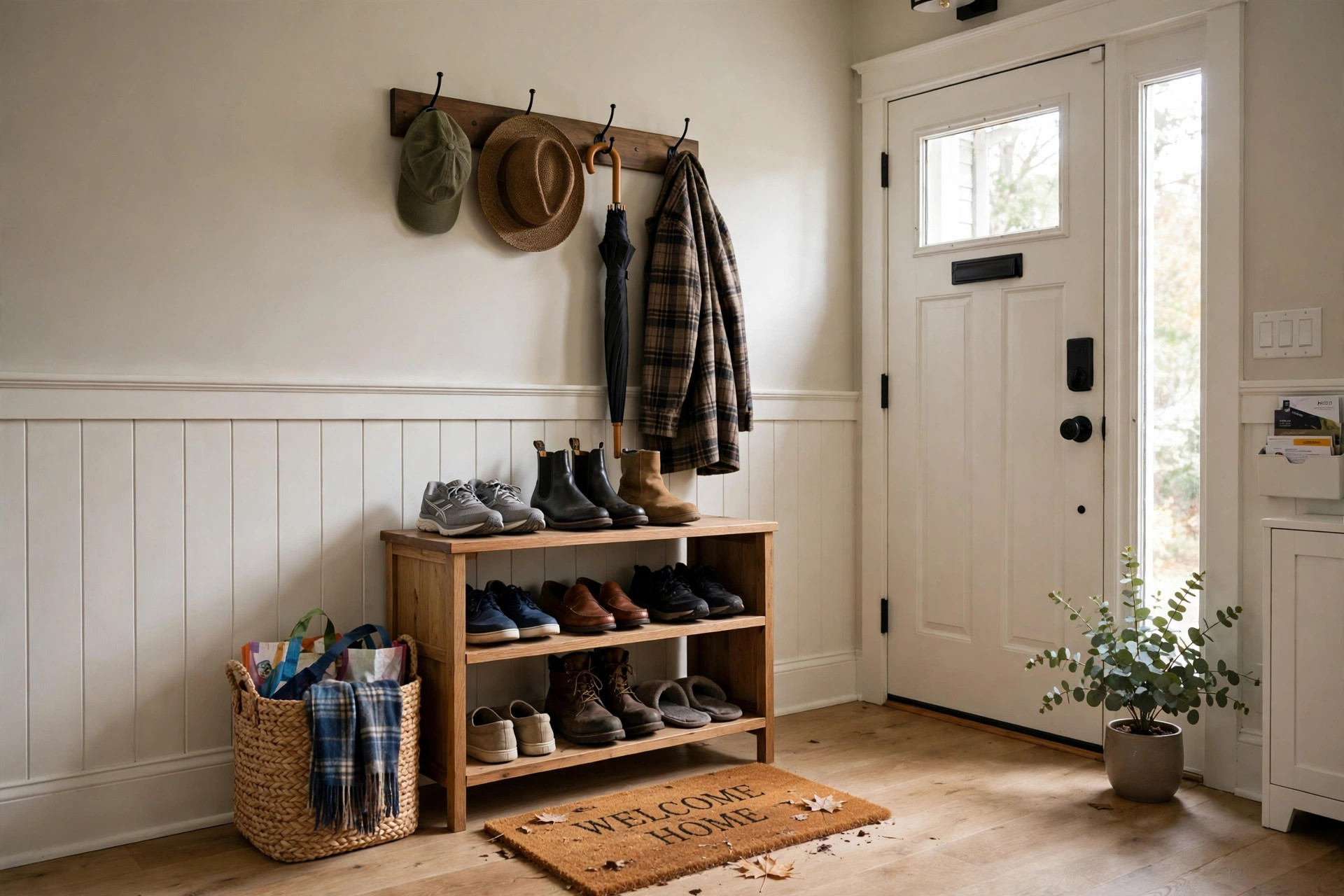

Shoes pile up fast in a busy home. One pair by the door becomes ten. The best shoe storage racks for American homes solve this problem in a plain way. They keep shoes off the floor, save space, and make the home look tidy. This guide walks through why a good rack matters, what to look for when you shop, the main types on the market, what you can expect to pay, and how to care for your rack once it is home.
Why Good Shoe Storage Matters
A home runs better when every item has a place. Shoes are one of the hardest items to keep in order. The average American family owns dozens of pairs. Work shoes, gym shoes, school shoes, and dress shoes all need a home. Without a rack, they end up in piles by the front door or scattered down the hall.
A pile of shoes is more than an eyesore. It trips people up. It scuffs good leather against dirty soles. It makes guests feel uneasy when they step inside. A strong rack changes all of that. Shoes stand in rows. You can see every pair at a glance. You spend less time hunting for the left shoe of a matching pair.
Good storage also protects your floors. Mud, salt, and small stones ride in on shoe soles. A rack with trays or a raised base keeps that grime in one spot. Many entryway organization guides stress this point: the first few feet inside the door set the tone for the whole home. A clean rack sends a clear message.
There is also the matter of shoe life. Shoes last longer when they keep their shape. A rack holds each pair apart so heels and toes do not crush each other. Boots stand upright instead of flopping over. That small care can add years to good footwear.
What to Look for When You Shop: Best Shoe Storage Racks for American Homes
Buying the best shoe storage racks for American homes is easier when you know what counts. Size, material, and style all matter. A little planning before you buy saves trouble later.
Size and Capacity
Start by counting the shoes you need to store. Be honest. Count the pairs you wear each week and the ones you wear each season. Most adults wear about eight to twelve pairs in rotation. A family of four may need room for thirty to forty pairs.
Measure your space too. The spot by the front door may be narrow. A closet corner may be deeper. Standard racks run about thirty to thirty six inches wide. Slim models fit halls under ten inches deep. Tall towers use height instead of floor space. Write down your width, depth, and height limits before you shop. Many shoppers compare options in the shoe storage selection at Home Depot once they know their measurements.
Think about growth. A rack that fits today may feel tight in a year. Leave room for two or three extra pairs per person. A rack that is slightly too big is a smaller problem than one that is slightly too small.
Materials and Build Quality
Shoe racks come in wood, metal, plastic, and fabric. Each has strong and weak points.
Solid wood looks warm and holds weight well. It suits living rooms and bedrooms. It costs more than the other options. Pine and rubberwood are common budget woods. Oak and walnut sit at the top of the price range.
Metal racks are strong and simple. Steel tubes with shelves take heavy boots without complaint. They fit garages, mudrooms, and laundry rooms. Look for powder coating. It keeps rust away when wet shoes drip on the bars.
Plastic racks are light and cheap. They work in closets and dorm rooms. Cheap plastic sags under heavy shoes, so check the weight rating on the box. Thick panels last far longer than thin ones.
Fabric and canvas racks hang or stack. They are the lightest choice of all. They fit renters and small closets. The shelves bow under boots, so save them for flats, sneakers, and children’s shoes.
Check how the rack is put together. Screws and bolts hold better than push pins. Welded metal frames hold better than bent wire. Read the weight limit. A good rack lists how many pounds each shelf can carry. Independent product testing reviews often cover build quality for common storage furniture.
Style and Placement
A rack should fit the room. Open racks show every pair. They work in closets and mudrooms where looks matter less. Closed cabinets hide the shoes. They fit living rooms and entryways that guests see first.
Color matters too. White racks brighten a small hall. Dark wood blends with traditional furniture. Black metal suits a modern flat. Pick a finish that matches the room so the rack feels like it belongs there.
Types of Shoe Storage Racks
There is no single right answer. The best shoe storage racks for American homes come in several shapes. Each shape suits a different need.
Open Racks and Shelves
Open racks are the classic choice. They are simple frames with two to ten shelves. Shoes slide in and out with no doors to open. You see every pair at once, which makes mornings faster.
These racks cost less than most other types. They assemble in minutes. The drawback is dust. Shoes left in the open collect dust and pet hair. They also show clutter when the shelves get messy. Open racks suit closets, mudrooms, and garages where looks matter less. If you want to compare models side by side, the top rated shoe storage racks for sale roundup is a good place to start.
Cabinets With Doors
Shoe cabinets hide shoes behind doors or drawers. Tilt-out bins are common. You pull the handle and the bin tips forward. Each bin holds two or three pairs. Cabinets look like ordinary furniture, so they fit well in entryways and dining areas.
The closed design keeps dust out. It also keeps pet noses away from good leather. The cost runs higher than open racks. Assembly takes longer because doors need alignment. Make sure the cabinet is deep enough for men’s shoes, which run longer than many bins allow.
Stackable Boxes and Cubes
Stackable boxes give each pair its own home. Clear boxes let you see the shoes inside. Cubes with fabric bins slide into a frame. Both let you add one unit at a time as your collection grows.
These units are strong on looks. Rows of matching boxes look neat and modern. They cost more per pair of shoes than a plain rack. Boxes also take longer to use. You open the lid, take the shoes, and close it again. That small step adds up with daily wear pairs. For a premium take on this style, see luxury stackable shoe storage boxes for ideas on high-end finishes.
Over-the-Door and Hanging Racks
Over-the-door racks hook onto a door top. They add storage without using floor space. Hanging pocket organizers do the same job on a closet rod. These are the cheapest option per pair stored.
They have limits. Heavy shoes strain the hooks. Boots do not fit in most pockets. Doors swing harder with the extra weight, which wears hinges over time. These racks suit children’s shoes, flats, and sandals best. Many closet organization ideas include door-mounted options for tight spaces.
Benches With Shoe Storage
A bench with shoe space underneath does two jobs. You sit to put shoes on. The shoes live below. This design suits mudrooms and wide entryways. Many families find it the most practical choice of all.
Benches cost more than simple racks. They need more floor space. But they anchor the entryway and give the room a finished look. Shoppers often compare mudroom storage benches by price before they buy, since prices vary widely by size and material.
Wall-Mounted Shelves
Floating shelves on the wall hold shoes without touching the floor. They make a small room feel larger. They also make cleaning easy because the mop slides under them.
Mounting takes care. Shelves must anchor into wall studs to hold weight. Spacing matters too. Leave about seven inches between shelves for low shoes and twelve for boots. This option suits homeowners who do not mind drilling into the wall. Renters should check their lease first.
Cost and Price
Prices for shoe racks vary a great deal. A simple two-tier plastic rack can cost less than fifteen dollars. A solid wood cabinet with doors can run past two hundred dollars. Most families spend between thirty and one hundred dollars for a rack that holds twenty to thirty pairs.
What drives the price up? Material is the biggest factor. Solid wood and welded steel cost more than plastic and fabric. Size matters too. A tall tower with ten shelves uses more material than a two-tier rack. Doors and drawers add labor and hardware, which raises the price.
Brand name adds a little. Well-known furniture brands charge more for the same shelf space. Store-brand racks often match them on quality. Read the weight rating and the return policy instead of the logo. Large furniture retailers like Wayfair carry racks at every price point, so it pays to compare.
Set a budget before you shop. Under thirty dollars buys basic plastic or fabric racks. Thirty to eighty dollars buys metal racks and mid-range wood units. Over eighty dollars buys solid wood cabinets and designer benches. Shipping can add to the cost, so check whether the store ships free.
Watch for hidden costs. Some racks need wall anchors or extra tools. Some cheap racks need replacement parts within a year. A rack that costs a little more but lasts five years is cheaper than one you replace twice. Home storage guides at Lowe’s often note the trade-off between price and lifespan.
Care and Upkeep
A shoe rack needs little care, but a little care goes far. Wipe shelves once a month with a damp cloth. Dust builds up fast on open racks. A quick pass keeps the shoes and the room cleaner.
Keep wet shoes off wood shelves. Water leaves rings and softens the finish. Place a plastic tray or mat under wet boots. Metal racks need a check for rust spots once a year. Touch up any chips in the coating with a dab of paint.
Tighten screws and bolts every six months. Racks loosen with daily use. A wobbly rack is a rack that will tip. If the rack has fabric bins, wash them when they look dirty. Most come out for a quick clean.
Rotate seasonal shoes. Move summer sandals to the top shelf in winter. Move heavy boots up when spring comes. This small habit keeps the shoes you need at hand and gives the rack a fresh look twice a year. Many home organization articles suggest a full shoe sort each season to keep clutter down.
Check the weight load. Do not pile boots on a shelf rated for light shoes. Overloading bends shelves and breaks joints. Spread heavy pairs across shelves or move them to a stronger rack.
Safety Notes
A loaded shoe rack can tip. This is a real danger in homes with small children. Toddlers pull up on low shelves. A tall rack can fall forward on them.
Anchor tall racks to the wall. Most racks ship with a wall strap or bracket. Use it. The job takes ten minutes and a screwdriver. Safety guides from This Old House stress wall anchoring for any freestanding furniture over three feet tall.
Place heavy shoes on the bottom shelves. Weight down low keeps the rack steady. Keep the top shelves for light pairs. Do not let children climb the rack like a ladder.
Watch for sharp edges. Metal tube racks sometimes have rough ends. Cover them with the caps that come in the box. Splintered wood edges need sanding. Keep the rack away from heat vents and fireplaces. Shoes and finishes both suffer near high heat.
In a garage, keep the rack clear of the car path. A rack that blocks the walkway becomes a trip hazard. Good lighting around the rack helps too. People fumble in the dark, and a dark hall with a shoe rack is a fall waiting to happen.
Frequently Asked Questions
How many pairs of shoes can a standard rack hold?
A standard five-tier rack holds about twenty to twenty five pairs. The exact count depends on shoe size and shelf spacing. Men’s size twelve shoes take more room than children’s shoes. Measure your largest pair before you buy if capacity is tight.
Where is the best place to put a shoe rack?
The entryway or mudroom is the most common spot. It is where shoes come off and go on. A bedroom closet works for dress shoes and out-of-season pairs. A garage rack suits work boots and garden shoes. Pick the spot closest to where the shoes are used.
Should I choose an open rack or a closed cabinet?
Open racks suit closets and mudrooms. They cost less and make shoes easy to grab. Closed cabinets suit entryways and living rooms. They hide clutter and keep dust out. The right choice depends on where the rack will stand.
How do I keep a shoe rack from smelling?
Air flow is the main answer. Open racks smell less than closed cabinets. Sprinkle baking soda in shoes overnight and shake it out in the morning. A small box of baking soda on the bottom shelf helps too. Replace worn insoles, which trap odor over time.
Can I build a shoe rack myself?
Yes. A simple rack needs only boards, screws, and basic tools. Many do-it-yourself storage projects show step-by-step plans for weekend builders. Start with a small two-tier design if you are new to woodwork. Measure twice and cut once.
What size rack fits a small apartment?
A slim two-tier rack about ten inches deep fits most narrow halls. Over-the-door racks use no floor space at all. Wall shelves above a bench double your storage. In a small flat, height is your friend. Go up, not out.
A Final Word
The best shoe storage racks for American homes do not need to be fancy. They need to fit the space, hold the shoes, and stand steady for years. Count your shoes. Measure your spot. Pick a material that suits the room. Anchor tall racks to the wall. Do these simple things and the entryway stays clean day after day. A tidy home starts at the door, and a good rack is the first step.
References
Apartment Therapy. (n.d.). Home design ideas and inspiration. https://www.apartmenttherapy.com Consumer Reports. (n.d.). Product reviews and ratings. https://www.consumerreports.org Family Handyman. (n.d.). DIY home repair and maintenance. https://www.familyhandyman.com Lowe’s. (n.d.). Home improvement products. https://www.lowes.com The Container Store. (n.d.). Storage and organization products. https://www.containerstore.com The Home Depot. (n.d.). Home improvement products. https://www.homedepot.com The Spruce. (n.d.). Home and garden advice. https://www.thespruce.com This Old House. (n.d.). Home renovation guidance. https://www.thisoldhouse.com Wayfair. (n.d.). Furniture and home goods. https://www.wayfair.com
Was this guide helpful?

About Jennifer Lee
The My Garden US editorial team writes practical, in-depth home and garden guides for American homeowners — tested advice, no fluff.
You May Also Like
Mudroom Storage Benches: A Price Comparison Guide for American Homes
January 25, 2026 0 views
Where to Buy Ottoman Storage Benches in Colorado: A Homeowner’s Guide
June 29, 2026 0 views
Stackable Pegboard Wall Organizers for Sale: A Complete Buying Guide
August 6, 2026 0 views