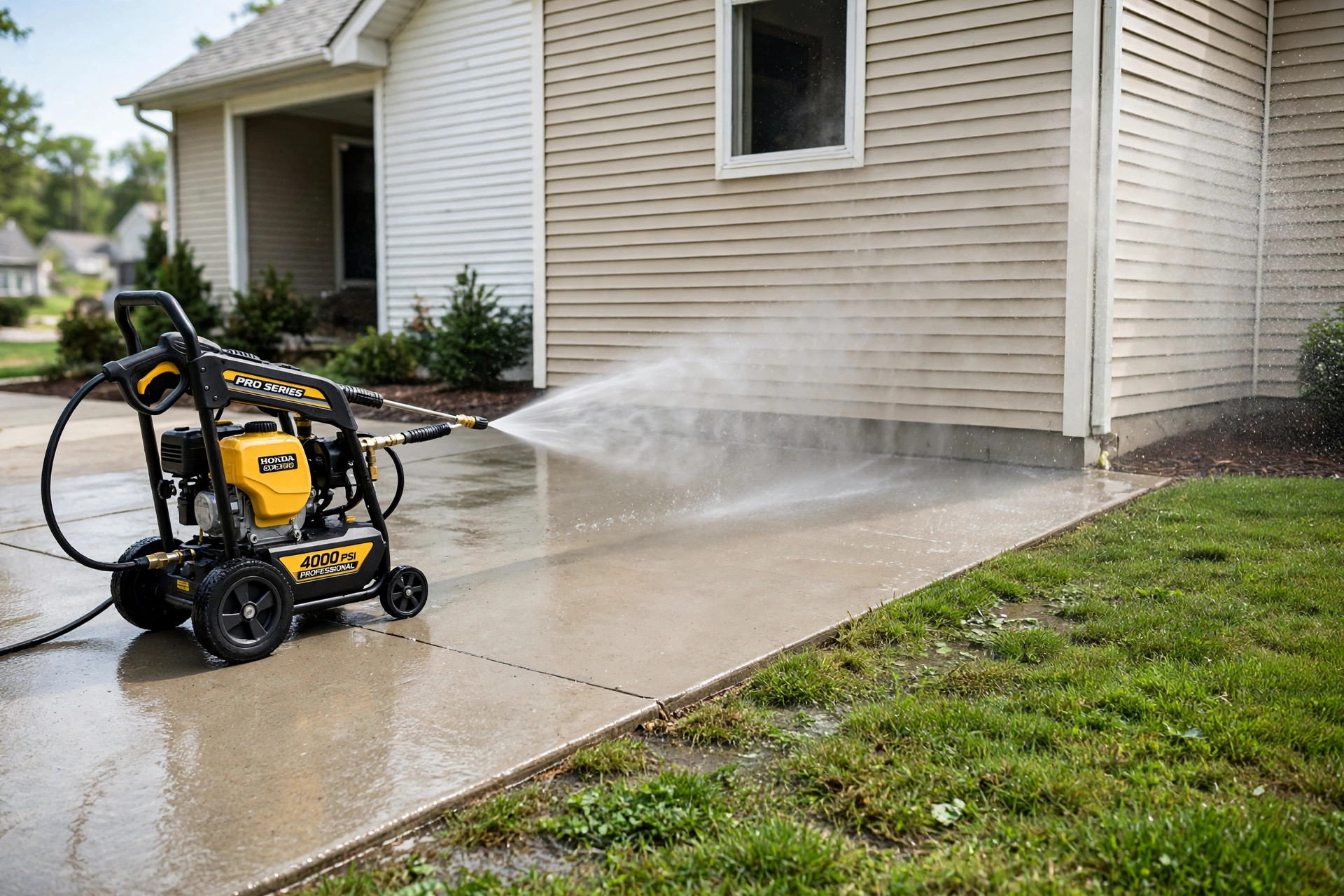

A dirty house can age before its time. Dust, mildew, algae, and grime settle on siding, brick, and concrete each year. A garden hose cannot move them. When a homeowner searches for professional grade pressure washing service companies near me, the goal is plain: hire a crew that uses real power, real skill, and real care. This guide explains what pressure washing is, why it matters, how to choose a company, what it should cost, and how to stay safe through the whole job.
Why Pressure Washing Matters
The outside of a home takes more punishment than the inside. Sun fades paint. Rain feeds mildew on the shaded side. Wind drives dirt into the pores of concrete. Pollen glues itself to window trim. Over time, these layers do more than look dull. They hold moisture against the walls. Moisture shortens the life of paint, wood, and mortar. Algae on a roof can work under shingles and lift them loose. Mold on a deck makes the boards slick and weak.
Pressure washing strips these layers away with a fast stream of water. A trained crew can make a ten-year-old driveway look new in one afternoon. The curb appeal rises at once. Neighbors notice. Real estate agents notice. A clean exterior can add value before a sale, and it can protect value when a sale is far off.
There is also a health side. Mold spores and mildew drift off dirty siding and into the yard air. Children play on the driveway and the patio. Pets lie on the concrete. A thorough wash cuts the load of these growths and leaves the yard fresher. It is not a medical cure. It is basic upkeep, like changing a furnace filter.
Regular washing also saves money. Paint lasts longer on clean walls. Sealant lasts longer on a clean deck. A roof that sheds algae sheds water as it should. Small repairs show up sooner when the surface is clean, and small repairs cost less than big ones. One wash every year or two costs far less than one repaint every five years.
How to Choose a Good Company: Professional Grade Pressure Washing Service Companies near Me
A search for professional grade pressure washing service companies near me returns many names. Some are true professionals. Some are a man with a borrowed machine and a flatbed truck. The difference shows in the work and in the price of mistakes. Use these checks before you sign anything.
Ask about equipment first. Professional grade machines run on gas or diesel and deliver much more force than the electric units sold at home centers. Ask what pressure the crew plans to use on your siding, your brick, and your concrete. Each surface has a safe range. Vinyl siding needs a soft wash, often under 1,500 pounds per square inch, and many crews wash it with low pressure plus soap. Concrete can take 3,000 or more. A crew that quotes one setting for everything does not know the trade.
Ask for proof of insurance. A real company carries general liability coverage and workers compensation for its crew. Ask to see the certificate. If a ladder slips or a window breaks, insurance pays. Without it, the homeowner pays. Also ask about a business license in your town or county. Legitimate firms carry one.
Ask for references or photos of recent jobs. A seasoned crew has before-and-after photos ready to show. Look for clean, even results with no streaks and no etched lines in the concrete. Ask how long the company has been in business. Two or more years in the same area is a good sign.
Ask what cleaning agents they use. Plain water moves loose dirt, but mildew and algae need a soap that kills the roots. Good crews use house-wash mixes that are made for exteriors and that rinse clean. Ask whether the products are safe for plants and pets. A careful crew wets down the shrubs before washing and rinses them again after, so no chemical sits on the leaves.
Ask for a written quote. The quote should list each area to be washed, the method, and the price. A flat fee for the whole house is common. A per-square-foot price is common for big driveways and parking areas. Watch for quotes that arrive only by phone with no detail. Paper protects both sides.
Check reviews with a clear eye. Reviews on trusted sites such as Consumer Reports buying guides can teach you what questions to ask any service company. Read the middle reviews, not just the five-star and one-star ones. They tell you how the crew handles small problems, and small problems are normal on any job.
Types of Services and Options
Not every wash is the same. The right method depends on the surface and the dirt. A good company explains the choice before starting.
Soft washing uses low pressure and a soap mix. It is the standard for house siding, roofs, screens, and painted trim. The soap does the work. It kills mildew and algae at the root so they do not grow back in a month. The crew then rinses at gentle pressure. Soft washing cleans without gouging wood or forcing water under siding.
Standard pressure washing uses higher force with a fan tip. It suits concrete driveways, brick paths, stone patios, and pool decks. The water blast lifts oil spots, tire marks, and years of ground-in dirt. Some crews add a surface cleaner, a round tool with spinning jets that cleans wide paths evenly and avoids the zebra stripes that a single wand can leave.
Hot water washing uses heated water to cut grease. Restaurants need it for dumpster pads and kitchen exits. Homeowners need it when the garage floor or the driveway holds old oil stains. Heat melts the grease so the pressure can push it away. A professional grade machine heats water on board, which is one mark of a serious outfit.
Roof washing deserves its own care. Asphalt shingles lose their grit when hit with high pressure, and that grit is what blocks the sun. Never let a crew blast a shingle roof. A roof wash should be soft wash only, with a soap made for roofing. Ask how the crew protects the gutters and the plants below the drip line.
Some companies bundle extra services. Many crews also wash fences, decks, and outdoor furniture in the same visit. You may find that firms listed under window cleaning service companies cost guide usa pair window washing with house washing, since clean glass and clean siding go together. Bundling can lower the total price, but only bundle work the company does well. A great pressure washer may be a poor window washer, so ask to see results for each service.
Cost and Price
Prices vary by town, by season, and by the size of the job. Still, a homeowner can learn the common ranges and spot a quote that is far off.
A full house wash for a single-story home often runs between two hundred and four hundred dollars. A two-story home runs higher, often between three hundred and five hundred, because the crew needs more time, more water, and longer ladders or poles. These prices cover the siding, trim, and usually the front stoop.
A driveway wash is often priced by size. Expect roughly one hundred to two hundred fifty dollars for a standard two-car driveway. A long drive with heavy oil stains costs more. A small walkway or patio may cost under one hundred when added to a bigger job.
Roof washing often costs between two hundred fifty and six hundred dollars for an average home. The price reflects the soap, the safety gear, and the care needed to walk a roof without damage.
Deck and fence washing often runs between one hundred fifty and four hundred dollars, depending on size and wood type. Older, gray wood takes more time because the crew must work gently to avoid fuzzing the grain.
Beware of two extremes. A quote far below these ranges may mean thin insurance, cheap soap, or a rushed job. A quote far above may mean the company is pricing you as a one-time sale with no hope of repeat work. Get three written quotes from local firms and compare them line by line. The middle quote from a well-reviewed company is often the best value.
Ask about payment terms before the work starts. Most firms take payment when the job is done and the homeowner has walked the property. Never pay the full price in advance. A small deposit for a very large job is fair, but the bulk should follow the work.
Care and Upkeep After the Wash
A pressure wash is not the end of the story. What you do in the months after decides how long the clean look lasts.
Keep gutters clear. Overflowing gutters pour dirty water down clean walls and leave streaks that are hard to remove. Cleaning gutters once or twice a year keeps the siding clean longer. For the tools, see professional grade gutter cleaning tools with free shipping.
Trim plants back from the walls. Shrubs that touch the siding trap moisture and block the breeze. A gap of one foot between plants and walls dries the surface fast after rain and slows the return of mildew. Cut tree limbs that shade the roof all day. Sunlight is a free cleaner.
Seal what should be sealed. A clean concrete driveway accepts sealer well, and sealer keeps oil from sinking into the pores. A clean wood deck accepts stain or sealer well too. Ask the washing crew whether they offer sealing as a follow-up. Doing it within a few weeks of the wash gives the best bond.
Watch for early regrowth. Walk the property each spring. Green film on the shaded side of the house is mildew returning. A small patch can be scrubbed by hand with a brush and a mild house wash. Catching it early keeps a big job small. Plan a full professional wash every one to two years for most homes. Homes under heavy tree cover may need one each year.
Inside the home, keep the same habit. Regular interior cleaning protects floors and air quality just as exterior washing protects walls. Guides like carpet cleaning service companies cost guide usa show what a full-home cleaning schedule can look like.
Safety for Your Home and Family
Water at high pressure is a tool, not a toy. It can cut skin, strip paint, and shatter glass. A professional crew treats it with respect, and a homeowner should too.
Keep people and pets clear of the work zone. Tell the crew where children play and where pets stay. Keep dogs inside during the wash. The noise alone can upset them, and a loose hose can knock a small pet down.
Cover what should stay dry. The crew should close all windows and check that doors shut tight. Ask them to cover outdoor outlets, doorbells, and light fixtures that are not rated for direct spray. A good crew does this without being asked, but it costs nothing to check.
Mind the paint and the mortar. High pressure can carve lines into soft brick and old mortar joints. It can peel loose paint in sheets. Tell the crew about any spots where paint is already lifting or mortar is crumbling. A good crew lowers the pressure or switches to soft wash in those areas.
Protect the plants. Cleaning soaps can burn leaves if they dry on the plant. A careful crew wets the beds first, washes the house, then rinses the plants with plain water. If you grow vegetables near the house, ask the crew to cover the garden bed with a tarp during the wash. Guidance on protecting yards from chemical runoff appears on EPA resources about household care.
Mind the runoff. Dirty wash water carries soap, oil, and mildew toward the street and the storm drain. In many towns, letting wash water enter the storm drain is against local rules. Ask the crew how they handle runoff. Responsible firms block or divert drains and let the water soak into the lawn instead. When in doubt, ask your city public works office what the rules require.
Wear eye protection if you walk the job. Most homeowners watch from inside, which is safest. If you step out to check a spot, stay behind the crew and well clear of the spray.
Safety tips for home service work also appear in guides from This Old House and Bob Vila, which both cover how pros protect homes during exterior projects.
Frequently Asked Questions
Will pressure washing damage my siding?
Not when it is done right. Vinyl and aluminum siding clean best with soft washing, which is low pressure plus soap. High pressure can crack vinyl and dent aluminum. Tell the crew what your siding is made of and ask which method they will use. A crew that answers with one method for all siding has not done its homework.
How long does a wash last?
Most homes stay clean for one to two years. The shaded north side may green up sooner. Homes near the woods or the water may need a yearly wash. A soft wash with the right soap lasts longer than a rinse-only wash because the soap kills the roots of mildew and algae.
Should I be home during the job?
It helps to be home at the start to walk the property with the crew and point out problem spots. After that, most crews work fine alone. Make sure they can reach the water spigot and that gates are unlocked. Many homeowners go back to their day and return for the final walk-through.
Do I need to move my furniture and grills?
Yes. Move patio chairs, tables, grills, toys, and potted plants away from the walls before the crew arrives. This saves time and keeps your things from getting sprayed. The crew can help with heavy items if you ask, but the yard should be mostly clear when they pull in.
Is soft washing really better than high pressure for a house?
For siding, trim, and roofs, yes. Soft washing cleans with soap instead of force, so it kills growth at the root without risk to the surface. High pressure is better saved for hard surfaces like concrete and brick. A professional grade company owns equipment for both and picks the right one for each area.
What time of year is best?
Spring and fall are ideal in most of the country. The weather is mild, which helps the soap work and helps surfaces dry. Summer works too, but soap can dry too fast on hot walls, so crews start early. Winter washing is possible in warm states but rare in the north, where water can freeze on the walk and turn it slick. More seasonal home care advice appears at The Spruce and Family Handyman, and detailed how-to steps for DIY upkeep run in Good Housekeeping.
A Short Final Word
A good wash does more than please the eye. It guards paint, wood, brick, and concrete against the slow damage of dirt and growth. It freshens the air of the yard. It shows small repairs before they grow. Choosing among professional grade pressure washing service companies near me comes down to a few plain steps: check the equipment, check the insurance, ask about the soap, get three written quotes, and walk the job when it is done. Do that, and the water will do the rest. For product research before you hire, independent testing notes from Consumer Reports can sharpen your questions, and equipment overviews at Home Depot show what professional grade machines look like, which helps you judge whether a crew is truly equipped. Consumer safety basics for power equipment also sit with the CPSC.
References
Bob Vila. (n.d.). Home improvement advice. https://www.bobvila.com Consumer Reports. (n.d.). Product reviews and ratings. https://www.consumerreports.org Family Handyman. (n.d.). DIY home repair and maintenance. https://www.familyhandyman.com Good Housekeeping. (n.d.). Product reviews and home advice. https://www.goodhousekeeping.com The Home Depot. (n.d.). Home improvement products. https://www.homedepot.com The Spruce. (n.d.). Home and garden advice. https://www.thespruce.com This Old House. (n.d.). Home renovation guidance. https://www.thisoldhouse.com U.S. Consumer Product Safety Commission. (n.d.). Product safety information. https://www.cpsc.gov U.S. Environmental Protection Agency. (n.d.). Protecting human health and the environment. https://www.epa.gov
Was this guide helpful?

About Sarah Mitchell
The My Garden US editorial team writes practical, in-depth home and garden guides for American homeowners — tested advice, no fluff.
You May Also Like

Carpet Cleaning Service Companies Cost Guide USA
July 5, 2026 0 views
Tile Grout Cleaning Machines Price Comparison USA
August 14, 2026 0 views
Affordable Wet Dry Shop Vacuums With Free Shipping: A Buyer’s Guide
July 5, 2026 0 views