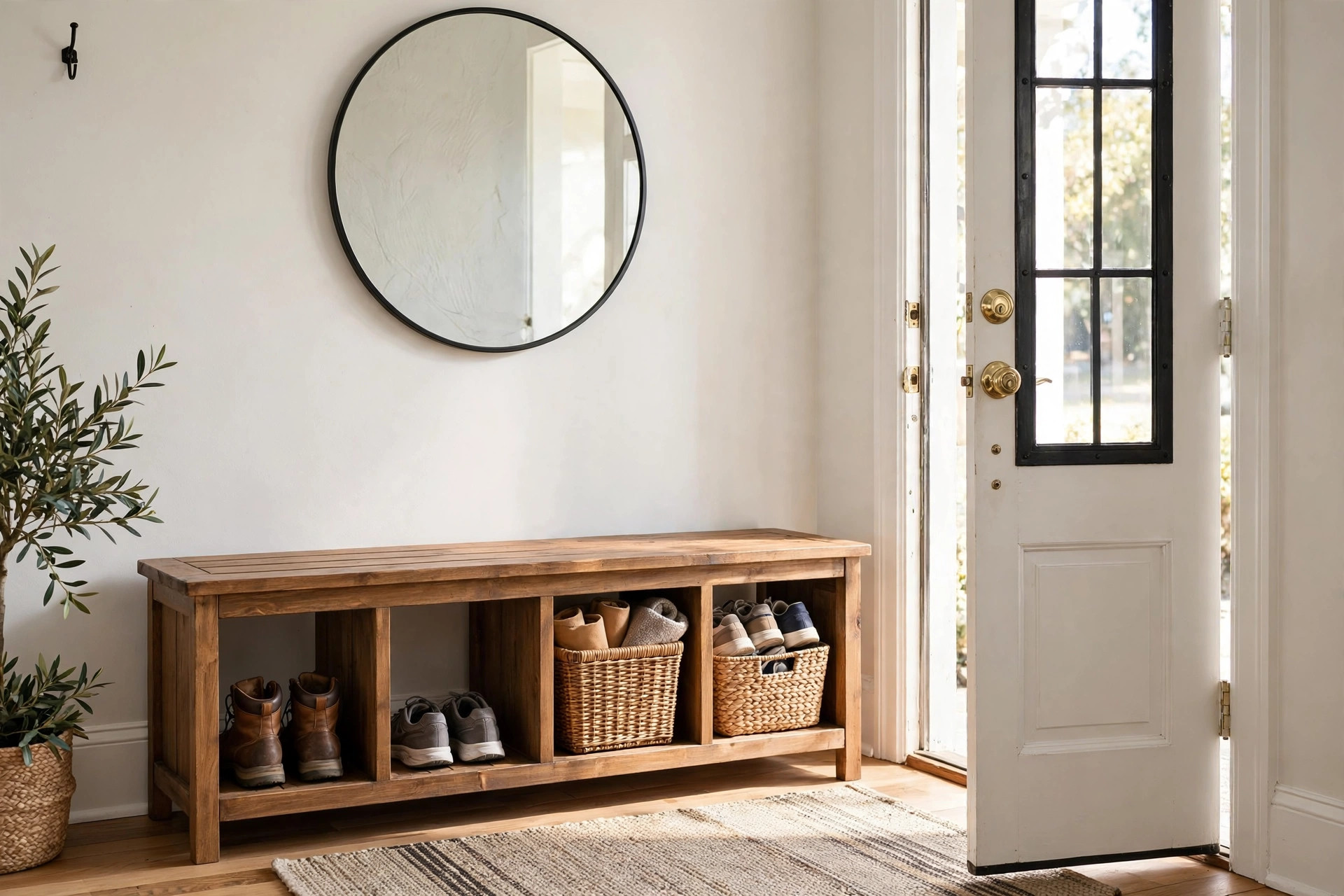

The search for entryway storage benches for sale usa usually starts the same way. A pile of shoes has taken over the front hall. Coats are draped over a chair. The keys are nowhere to be found. An entryway bench with built in storage solves all of this at once. It gives the family a place to sit and a place to put things away.
This guide will help you shop with confidence. It covers why these benches matter, the styles on the market, what to look for in construction, typical prices, care, and safety. Whether you live in a small apartment or a large house, there is a bench to fit the space.
Why an Entryway Storage Bench Matters
The entryway is the first room a guest sees. It is also the last room the family uses before leaving the house. A bench here serves two jobs. It is a seat for pulling on boots and a cabinet for hiding clutter.
Many American homes lack a proper mudroom. A storage bench acts as a small mudroom in one piece of furniture. Shoes go inside. Bags go on top. The floor stays clear. This matters most in homes with children. When every item has a place, mornings run smoother.
Designers have long praised the entryway bench as a hard working piece. The site Houzz shows thousands of foyer designs where a simple bench anchors the whole room. A well chosen bench can make a narrow hall feel finished instead of bare.
What to Look for When You Shop: Entryway Storage Benches for Sale Usa
Not all benches are built alike. Before you buy, study these points.
Size and Proportion
Measure the wall where the bench will stand. Leave at least two feet of walking space in front of it. A bench that is 36 to 48 inches wide fits most foyers. Long benches of 60 inches or more suit wide halls and large families.
Check the seat height too. Most benches sit 17 to 19 inches off the floor. That height lets adults sit with ease to tie shoes. A bench that is too low feels like a child seat. One that is too high looks odd in a small room.
Storage Layout
Storage comes in several forms. Cubbies are open squares that hold baskets or shoes. Lift top benches hide a large compartment under the seat. Some benches have both drawers and open shelves. Think about what you need to store. Tall boots need tall cubbies. Hats and gloves need small drawers.
Shoppers who want ideas for arranging the whole foyer can look at room plans on Apartment Therapy. Its small space guides show how one bench can carry the load of a whole entry.
Build Quality
Knock on the bench. Solid wood sounds dull and heavy. Pressed particle board sounds hollow. Solid pine, oak, or rubberwood lasts longer and holds weight better. Check the weight rating. A good bench should hold at least 200 to 250 pounds.
Look at the joints. Screwed and glued joints outlast simple staples. Drawers should slide on metal glides, not on bare wood. If the bench has a cushion, check that the fabric is tightly stapled underneath. Reviews on sites like Consumer Reports often rate furniture brands on build quality, which can help you compare makers.
Cushion and Finish
Many benches come with a padded seat. A cushion makes the bench more inviting, but it must be practical. Look for removable covers that can be washed. Microfiber and performance fabrics resist stains better than plain cotton. Dark colors hide dirt in busy entries.
The finish on the wood matters too. Stained finishes show wear less than painted ones. White painted benches look clean but need more wiping. If you plan to place the bench near a door that gets rain and mud, choose a finish that wipes clean with a damp cloth.
Types and Styles on the Market
Entryway storage benches come in many looks. The main styles are described below.
Farmhouse and Rustic
Farmhouse benches use distressed wood and iron hardware. They suit country kitchens and rural homes. Many have open cubbies and a long seat. These benches pair well with rustic console tables for sale usa in the same room.
Modern and Mid Century
Modern benches use clean lines and pale wood or lacquer. Mid century designs add tapered legs. They work in city apartments and new homes. Retailers such as West Elm and CB2 carry this look, with slim profiles that fit tight halls.
Classic and Traditional
Traditional benches use dark stained wood and raised panel doors. They fit colonial and craftsman homes. Lift top chests in this style double as hidden storage for off season gear. Crate and Barrel and larger department stores often stock these heavier pieces.
Industrial
Industrial benches mix metal frames with wood tops. They are strong and simple. They suit lofts and modern farmhouses alike. The metal frame keeps the bench stable even on uneven floors.
Shoe Storage Benches
Some benches are made only for shoes. They have slatted shelves or tilt out bins. These are best for homes where shoes are the main problem. Many families buy one of these plus a coat rack for the full effect.
For a full buying walk through, readers may also want our companion piece on entryway storage benches buying guide usa, which covers measurements and materials in greater depth.
Cost and Price
Prices for entryway storage benches in the United States vary widely. Here is a rough guide.
Small benches of particle board or MDF start around 80 to 150 dollars. They work for light use. Expect a life of a few years with daily family traffic.
Mid range benches of solid pine or rubberwood run 200 to 450 dollars. This is the sweet spot for most buyers. These benches hold more weight and look better with age. Many of the best sellers on Wayfair and IKEA fall in this band.
High end benches of oak, walnut, or hand finished wood cost 500 to 1,200 dollars or more. These are built to last decades. They often come from furniture makers or design houses.
Watch for extra costs. Shipping on large furniture can add 50 to 150 dollars. Some sellers offer free delivery. Assembly may take an hour, and a few stores sell white glove setup for a fee. Sales around Labor Day and Presidents Day often cut prices by 20 percent or more.
Where to Buy
American shoppers have many choices. Big box stores like IKEA keep prices low and stock ready to ship. Online marketplaces such as Wayfair offer hundreds of styles with buyer photos. Specialty design stores like Crate and Barrel and West Elm focus on higher end looks.
For style ideas before you shop, browse the foyer galleries at HGTV and the decorating guides at The Spruce. Both show how a bench can tie a whole entry together with a mirror and a rug. Local furniture stores let you sit on the bench before you buy, which online photos cannot offer. Ask the store about their return policy on assembled furniture, since many charge a restocking fee. A wall mirror above the bench, for example from our list of entryway decorative mirrors for sale usa, makes a small hall feel twice as large.
Care and Upkeep
A storage bench needs little care, but a few habits will keep it sound.
Dust the wood weekly with a soft cloth. Wipe spills at once, since water can stain unfinished wood. Tighten the screws every six months. Daily sitting loosens joints over time.
If the bench has a cushion, vacuum it monthly. Spot clean stains with mild soap and water. Rotate removable cushions so wear spreads evenly. Baskets in cubbies can be shaken out and wiped down twice a year.
Keep the bench out of direct sun when possible. Sunlight fades stain and dries out wood. In dry winter months, a little furniture oil on solid wood keeps it from cracking. For painted benches, a gentle all purpose cleaner is enough; skip harsh chemicals that can dull the finish.
Safety
Safety matters most in homes with small children. A bench with a lift top lid can pinch fingers. Look for lids with soft close hinges or safety stays that hold the lid open.
Tall narrow benches can tip if a child climbs them. Anchor any bench taller than 30 inches to the wall with the strap that comes in the box. Keep heavy items in the lowest cubbies to lower the center of gravity.
Check for sharp corners. Rounded edges are kinder to toddlers. Make sure finishes are labeled non toxic, especially on benches children will touch and chew.
FAQ
What size entryway bench should I buy? Measure the wall first. A bench 36 to 48 inches wide fits most foyers. Leave two feet of clear floor in front for walking. In a very narrow hall, look for a slim bench no deeper than 14 inches.
Are storage benches worth the money? For most families, yes. One bench replaces a shoe rack, a coat hook pile, and a side table. It keeps the entry tidy and gives guests a place to sit. Mid range solid wood models offer the best value per year of use.
What is the best material for an entryway bench? Solid wood is best for strength and long life. Pine and rubberwood are good mid price choices. Oak and walnut cost more but last longer. Avoid thin particle board if the bench will see heavy daily use.
How much weight can a storage bench hold? Most quality benches hold 200 to 250 pounds. Check the product listing for the stated limit. If two adults may sit at once, choose a bench rated for 400 pounds or more.
Can I use a storage bench in a small apartment? Yes. Choose a narrow bench with cubbies instead of a wide chest. A 36 inch bench with baskets holds shoes for a family of three and still leaves room to walk past. Wall hooks above it add coat space without taking floor area.
How do I keep shoes from smelling inside a closed bench? Leave the lid open for an hour after coming home so damp shoes can air out. Sprinkle baking soda in the compartment once a month. Cedar blocks or sachets also help. Open cubbies ventilate better than sealed lids for very active families.
Should the bench match the rest of my furniture? It does not have to match exactly. It should share one element with the room, such as wood tone or color. A bench that echoes the floor or the door trim looks planned. Mixing styles is fine as long as one detail ties them together.
A Short Final Word
An entryway storage bench is one of the hardest working pieces in the home. It seats the family, hides the clutter, and sets the tone for the whole house. Measure the space, choose solid build over thin board, and pick a style that matches the home. With a little care, the bench will serve for many years. Happy shopping.
References
Apartment Therapy. (n.d.). Home design ideas and inspiration. https://www.apartmenttherapy.com CB2. (n.d.). Modern furniture and decor. https://www.cb2.com Consumer Reports. (n.d.). Product reviews and ratings. https://www.consumerreports.org Crate and Barrel. (n.d.). Furniture and home decor. https://www.crateandbarrel.com HGTV. (n.d.). Home and garden ideas. https://www.hgtv.com Houzz. (n.d.). Home design and remodeling. https://www.houzz.com IKEA. (n.d.). Home furnishings. https://www.ikea.com The Spruce. (n.d.). Home and garden advice. https://www.thespruce.com Wayfair. (n.d.). Furniture and home goods. https://www.wayfair.com West Elm. (n.d.). Modern furniture and home decor. https://www.westelm.com
Was this guide helpful?

About Michael Thompson
The My Garden US editorial team writes practical, in-depth home and garden guides for American homeowners — tested advice, no fluff.
You May Also Like

Kitchen Island Stools Deals Near Me: A Plain Guide to Good Seating at Low Prices
January 15, 2026 0 views
Living Room TV Stands Texas Homes USA: A Complete Buying Guide
January 19, 2026 0 views
Living Room TV Stands for Sale USA
January 16, 2026 0 views