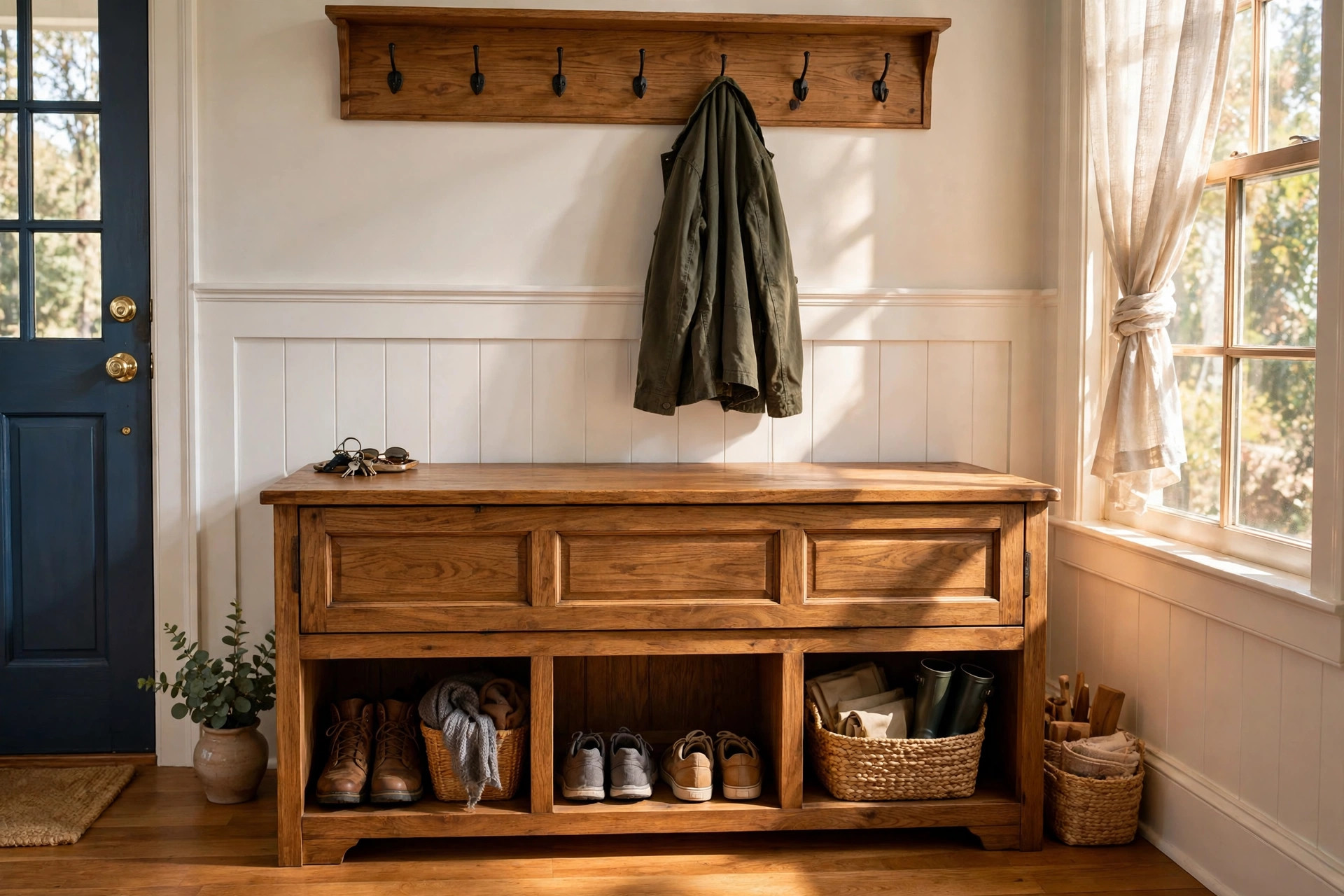

A Small Bench That Works Hard
The entry is the first room a guest sees and the last space you pass on your way out. It collects shoes, coats, bags, mail, and keys faster than any other corner of the house. A bench that also holds storage turns that small space into a work station. This entryway storage benches buying guide usa explains what to look for, what kinds are sold, what they cost, and how to keep one in good shape for years.
Most American entryways are narrow. A good bench gives you a place to sit while you tie your shoes, and it hides the clutter at the same time. When you choose well, the bench becomes one of the most used pieces of furniture in the house. When you choose poorly, it becomes a dusty shelf that everyone walks around. The sections below will help you make the first kind of choice.
Why an Entryway Storage Bench Matters: Entryway Storage Benches Buying Guide Usa
A plain chair gives you a seat. A storage bench gives you a seat plus a hiding place. That second job is the reason these benches sell so well. Shoes go in the lower cubbies. Winter gear fills the space under a lift-up lid. Backpacks hang from side hooks. Everything has a place, and the floor stays clear.
Clear floors matter for more than looks. A tidy entry is safer, since there is less to trip over in a hurry. It also saves time. When each person has one basket or one cubby, mornings run smoother. Children learn where their own things belong. Guests see a calm first room instead of a pile of coats.
Many shoppers at large home stores such as Wayfair report that the entry bench is the piece they use most in the first year. Designers who write for Apartment Therapy often call the entry the hardest working room in the home. A storage bench earns that praise honestly.
What to Look for When You Choose
Start with a tape measure, not a catalog. Measure the width of your wall, the depth you can spare, and the height you need for sitting. Most benches are between 18 and 24 inches deep. Leave at least three feet of walking space in front of the bench so doors can swing and people can pass.
Size and Seating Height
A seat height of 17 to 19 inches fits most adults. Taller people may like 20 inches. If small children will use the bench, the lower end is safer for little legs. Width depends on your household. A bench of 36 inches seats one person. A bench of 48 to 60 inches seats two and holds more storage.
Weight Capacity
Check the weight limit before you buy. Cheap benches may hold only 150 pounds. A family bench should hold 300 pounds or more so two adults can sit at once. Solid wood frames and sturdy joinery carry more weight than thin particle board.
Storage Type
Storage benches come in three main layouts. Open cubbies let you slide shoes or baskets in and out fast. A lift-up lid hides items inside one large box, which looks neater. Drawers give the tidiest look of all but cost more and hold less. Some benches mix two layouts, such as cubbies under a hinged top.
Material
Solid wood lasts the longest and can be refinished. Pine and rubberwood are common and affordable. Mango and acacia are harder and richer in color. Engineered wood with veneer costs less but chips more easily. Metal frames suit modern homes and wipe clean. Wicker baskets inside cubbies add warmth and are easy to pull out for cleaning.
Style
Match the bench to the rest of your hall. Farmhouse styles use thick wood and turned legs. Modern styles use clean lines and flat panels. Mid century styles have tapered legs and warm tones. Scandinavian styles stay pale and light. A bench that fights your other furniture will look like a mistake, even if it is well made.
Types and Options on the Market
The market holds a wide range. The four families below cover most of what you will find.
Lift-top benches. The whole seat lifts on hinges to reveal a deep box. Best for bulky items like boots, sports bags, and winter blankets. Good for homes that need maximum hidden storage.
Cubbies and shoe benches. Open squares hold shoes, baskets, or folded towels. Best for families with many shoes. Air flows through, so damp shoes dry faster. Pairs well with a mirror above, such as the kind shown in our entryway decorative mirrors buying guide.
Benches with coat racks and hooks. A tall back panel holds hooks, a shelf, and sometimes a mirror. This is the classic hall tree style. Best for small homes with no coat closet. It uses vertical wall space instead of floor space.
Upholstered benches. A padded top makes sitting more comfortable for older knees. Many have hidden storage under the cushion. Best for homes where guests sit often. Choose stain-resistant fabric if children or pets live with you.
Specialty options exist too. Some benches include a charging shelf for phones. A few have pull-out drawers sized for umbrellas. Narrow bench designs fit hallways under 36 inches wide. If you also need seating in the living room, see our guide to living room ottomans for pieces that can do double duty.
Cost and Price
Prices in the United States fall into three bands.
Budget, 60 to 150 dollars. Particle board or thin pine, simple cubbies, weight limits near 150 to 200 pounds. Fine for a single person in an apartment. Expect a shorter life and wobble after a few years of hard use.
Mid range, 150 to 400 dollars. This is the sweet spot for most families. Solid wood or thick veneer, weight limits of 250 to 350 pounds, better hardware and hinges. Many of the best rated models at IKEA and CB2 sit in this range. A mid range bench should last ten years or more.
High end, 400 to 1,200 dollars and up. Hardwood frames, dovetail drawers, designer names, and custom sizes. Shops like West Elm and Crate and Barrel carry this tier. Worth it if the entry is a showpiece or if you want a bench that lasts decades.
Watch for hidden costs. Shipping on heavy furniture can add 50 to 100 dollars. Assembly services cost about the same. Floor protectors are cheap but worth adding. Baskets, if not included, run 10 to 25 dollars each, and a four-cubby bench needs four.
Buy at the right time and you can save real money. Major sales cluster around Presidents Day, Memorial Day, Labor Day, and Black Friday. Floor models at local stores often sell for 30 percent less with only a small scratch. Project guides at HGTV and The Spruce note that fall is a good season to buy, when stores clear summer stock.
Care and Upkeep
A storage bench takes daily abuse from shoes, bags, and damp coats. A few simple habits will keep it looking new.
Dust the top and shelves once a week with a dry cloth. Wipe spills right away, since standing water swells particle board and stains wood. For solid wood, use a damp cloth followed by a dry one, then apply furniture polish once a month. For painted finishes, a mild soap solution is enough. Avoid harsh cleaners that strip paint.
Empty the storage space once a month. Shake out baskets outdoors. Check cubbies for lost items and for damp spots from wet shoes. A tray or mat under shoes catches mud and water and rinses clean in the sink. If the bench has a hinged lid, tighten the hinge screws twice a year. Loose hinges are the most common cause of a crooked lid.
Sunlight fades fabric and wood. If the bench sits near a bright window, rotate cushions and consider a curtain or film on the glass. Felt pads under the legs protect hardwood floors and stop the bench from creeping. In humid climates, a small gap behind the bench lets air move and keeps mildew away.
Safety
Furniture safety deserves attention, especially with children. Anchor tall hall tree benches to the wall with the straps or brackets in the box. A climbing child can tip an unanchored unit. The safety pages at Houzz remind readers that wall anchoring takes ten minutes and prevents the worst accidents.
Keep weight limits in mind. Do not let children stand on the seat to reach hooks. Place hooks low enough for small children so they never need to climb. If the bench has a lift-up lid, check that the hinges hold the lid open. A lid that slams shut can pinch small fingers. Soft-close hinges are worth the extra cost in a family home.
Place the bench where it cannot block a fire exit or a doorway swing. In a narrow hall, a deep bench can become an obstacle at night. Battery night lights or a low plug-in lamp near the entry help everyone see the bench edge after dark.
Frequently Asked Questions
How wide should an entryway storage bench be? Measure your wall and subtract at least 36 inches of walking space. For most halls, a bench of 36 to 48 inches wide fits well. Two-person households often choose 48 to 60 inches. Always measure twice before ordering, since returns on heavy furniture are costly.
Are storage benches strong enough for adults to sit on? Yes, if you check the weight rating. Look for benches rated at 250 pounds or more for daily adult use. Solid wood frames with corner blocks are the strongest. Particle board benches rated under 200 pounds are best for children or light use only.
Should I choose open cubbies or a closed lift-top lid? Open cubbies suit families with many shoes, because shoes go in and out fast and air keeps them fresh. A lift-top lid suits people who want a tidy look, since everything hides inside. Many homes do best with a mix, such as cubbies below and a lidded box above, or a separate console for display. For display pieces, our rustic console tables guide covers the options.
What material lasts longest in a busy entry? Solid hardwood lasts longest. Acacia, mango, and oak resist dents and can be sanded and refinished. Powder-coated metal frames also last very well and wipe clean. Engineered wood is fine on a budget but chips at the edges after a few years of shoe traffic.
Can a storage bench work in a very small entryway? Yes. Look for narrow models under 16 inches deep, or a tall hall tree that uses wall space instead of floor space. Wall-mounted fold-down seats are another option for tight halls. Keep the bench slim and let hooks and shelves above do the storage work.
How do I stop the bench from scratching my floors? Stick felt pads or rubber cups under every leg. For heavy benches, use wide furniture cups that spread the weight. Lift, never drag, the bench when you move it. On tile, rubber cups grip better than felt.
A Final Word
The right entryway storage bench is a quiet helper. It seats you, hides your clutter, and greets your guests with order instead of chaos. Measure your space, pick a storage style that fits your family, and buy the sturdiest frame your budget allows. Done well, this one purchase will serve you every single day for years. This entryway storage benches buying guide usa has given you the facts; the choice now belongs to you.
References
Apartment Therapy. (n.d.). Home design ideas and inspiration. https://www.apartmenttherapy.com CB2. (n.d.). Modern furniture and decor. https://www.cb2.com Crate and Barrel. (n.d.). Furniture and home decor. https://www.crateandbarrel.com HGTV. (n.d.). Home and garden ideas. https://www.hgtv.com Houzz. (n.d.). Home design and remodeling. https://www.houzz.com IKEA. (n.d.). Home furnishings. https://www.ikea.com The Spruce. (n.d.). Home and garden advice. https://www.thespruce.com Wayfair. (n.d.). Furniture and home goods. https://www.wayfair.com West Elm. (n.d.). Modern furniture and home decor. https://www.westelm.com
Was this guide helpful?

About James Carter
The My Garden US editorial team writes practical, in-depth home and garden guides for American homeowners — tested advice, no fluff.
You May Also Like
Bedroom Dressers Mirror USA Online Deals
May 25, 2026 0 views
Bedroom Dressers Mirror Deals Near Me: A Practical Guide to Buying a Bedroom Set
May 27, 2026 0 views
Dining Room Sets American Homes Guide: Choosing the Right Table and Chairs
May 11, 2026 0 views