
Mint is one of the easiest herbs a gardener can grow. It asks for little, it comes back year after year, and it gives fresh leaves for tea, salads, and cooking from spring to fall. But mint has a habit that every gardener soon learns. Left alone in open soil, it spreads. The roots, called runners or stolons, move sideways under the ground and send up new shoots many feet from the parent plant. One small clump can become a large patch in a single season. That is why so many gardeners want to know how to grow mint without spreading. The good news is that it is simple to do. With the right pot, the right spot, and a little care, mint stays where you put it.
Why It Matters to Keep Mint Under Control
Mint is a strong grower. Its roots do not respect the lines you draw in the garden. They slip under the soil surface and push into flower beds, vegetable rows, and lawn edges. Once mint is settled in open ground, it is hard to remove. Digging it out often misses pieces of root, and each missed piece starts a new plant.
A spreading patch of mint can also crowd out weaker plants. It steals water, food, and light from flowers and herbs that grow nearby. In a small garden this matters a great deal. Space is dear, and no gardener wants one herb to take over the whole bed.
There is also a question of looks. A neat row of potted mint on a patio looks clean and fine. A mint patch that has pushed into the walkway and into the lawn looks wild and messy. When you learn how to grow mint without spreading, you keep both the harvest and the order.
What to Look for Before You Start: How to Grow Mint Without Spreading
Before you plant, think about where the mint will live. A sunny or partly shaded spot suits mint well. It likes soil that stays a little damp but never waterlogged. Most common potting soil works fine.
The single most important choice is the container. A solid pot with drainage holes is the best tool for the job. Unglazed clay pots let air reach the roots and help the soil dry a bit between waterings. Plastic pots hold water longer and are light to move. Either works. The size matters more than the material. A pot that is at least twelve inches wide gives the roots room to grow without crowding.
You will also want a good pair of shears or scissors. Cutting mint back often is part of keeping it contained. A small trowel helps when you lift and divide the plant at the end of the season. Gardening is lighter work when the tools are right, and many gardeners who handle thorned plants swear by choosing the best garden gloves for pruning thorns before the season begins.
The Best Ways to Grow Mint Without Spreading
There are several proven methods. Each one keeps the roots in bounds. Pick the one that fits your garden and your habits.
Growing Mint in Pots and Containers
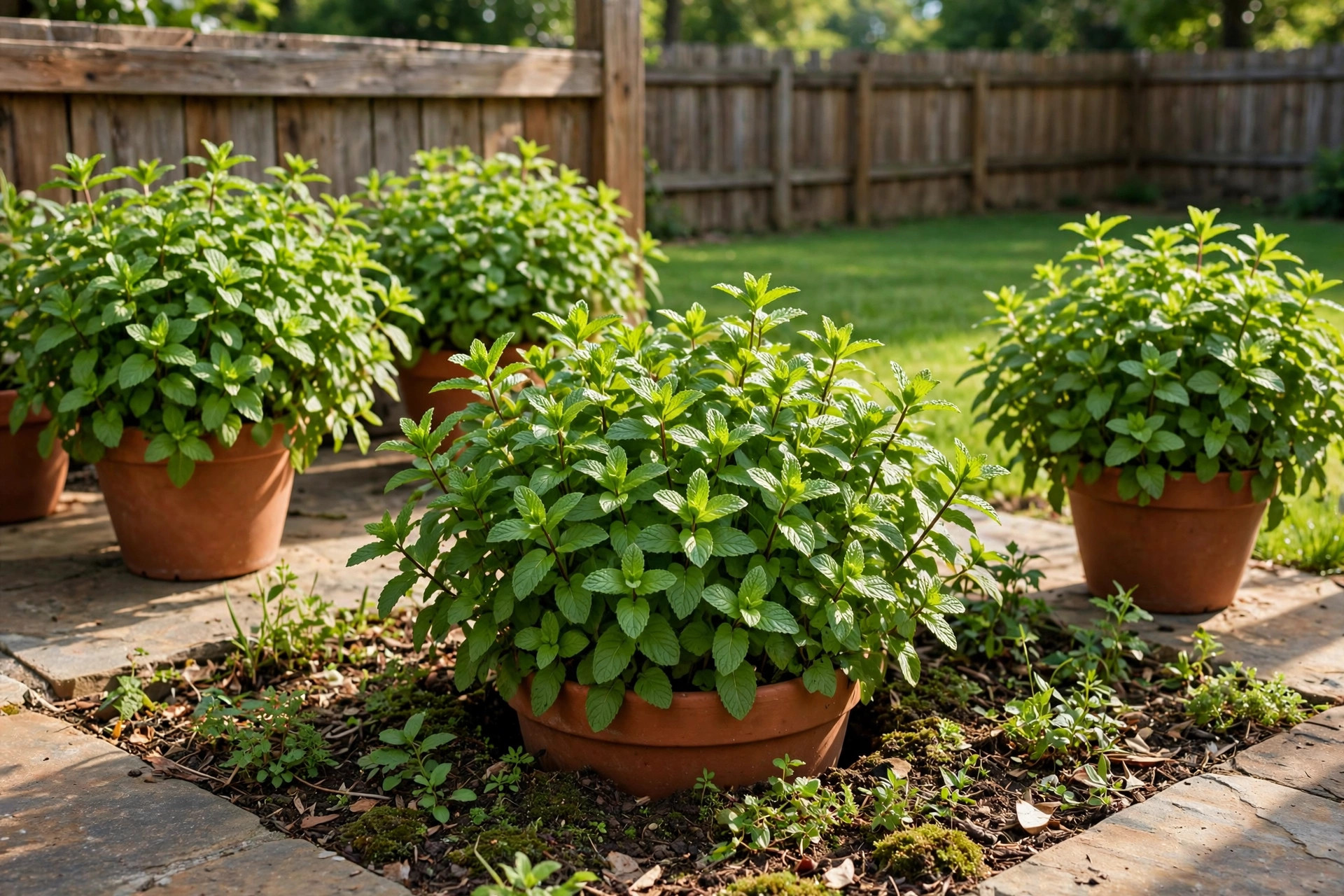
This is the simplest and most reliable method. Plant the mint in a pot and keep the pot on the patio, deck, porch, or in the garden bed itself. Many gardeners sink the pot into the soil so only the rim shows above ground. The pot walls stop the runners from escaping into the bed. Use a plastic or clay pot with the bottom intact, and leave one or two inches of rim above the soil. Roots will not climb over the rim.
Set one plant in a twelve-inch pot, or two or three plants in an eighteen-inch tub. Water when the top inch of soil feels dry. Mint grown in a pot needs a little more food than mint in open ground, because rain washes nutrients out of the pot. A weak liquid feed once a month in the growing season is enough.
Pots also make it easy to move mint out of harsh sun or into shelter for the winter. In cold climates, lift the pots in late fall and keep them in an unheated garage or shed. In warm climates, mint in pots can stay out all year.
Sinking a Root Barrier in the Garden Bed
If you want mint in the ground, you can still keep it contained. Dig a hole about eighteen inches deep and wide enough for a large plastic pot or a bottomless bucket. Place the container in the hole so the rim stands one or two inches above the soil surface. Fill it with soil and plant the mint inside.
The solid walls act as a root barrier. Runners hit the wall and turn back. The raised rim stops runners that creep along the surface. This method gives mint the feel of open ground while keeping it in its place. Check once a year that no root has slipped over the rim or under the wall. If you spot an escape, cut it back at once.
Keeping Mint in a Raised Bed
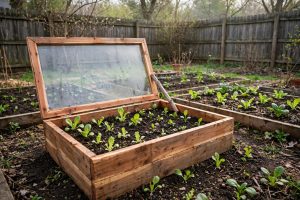
Mint does well in a raised bed, and the tall sides of the bed make containment easier. A bed that is twelve to eighteen inches deep holds the runners in. Still, runners can creep over the edge and root in the soil below. Keep the bed away from open ground, or set it on a patio surface. Trim any stems that hang over the side before they touch the soil. If you are new to building them, the steps for how to build raised bed on slope work well for mint beds too, since good drainage keeps the roots healthy.
Growing Mint Indoors
Mint grows happily on a sunny windowsill. Use a pot with drainage holes and a saucer. Turn the pot a quarter turn each week so the plant grows evenly toward the light. Pinch the tips often to keep the plant bushy. Indoor mint will not spread anywhere, because there is no open soil for it to reach. It is the easiest method of all for the winter months.
How to Choose the Right Pot
Not every pot is equal for this task. A shallow pot fills with roots too fast and dries out in hot weather. A pot with no drainage holes drowns the roots. Look for these points:
– Size. Twelve inches wide and ten inches deep is a good minimum for one plant. – Drainage. At least three or four holes in the bottom, covered with a piece of broken pot or mesh so soil does not wash out. – Solid walls. Avoid open-weave baskets for mint. Runners slip through the gaps. – Weight. A full twelve-inch pot is heavy. If you plan to move it, pick plastic, or set the clay pot on a wheeled plant caddy.
Terracotta pots breathe, which mint likes, but they dry fast in summer sun. Check the soil each morning in hot weather. Glazed ceramic pots hold water longer and come in many colors for the patio. Whiskey barrel planters hold several mint plants and look fine in a rustic garden. Reading independent product reviews can help you compare brands before you buy.
Cost and Price
Growing mint without spreading costs little. A small mint plant from a garden center runs about three to six dollars. A twelve-inch terracotta pot costs about eight to fifteen dollars, and a plastic pot of the same size costs about five to ten dollars. A bag of potting soil costs about six to twelve dollars and fills several pots.
A root barrier for the ground method costs about the same as a large plastic pot, ten to twenty dollars. Liquid plant food costs about eight dollars a bottle and lasts a season or more. All told, a tidy contained mint planting can be set up for twenty to forty dollars. After that, the plant gives free leaves for years.
Care and Upkeep Through the Season
Mint asks for steady, simple care. Water so the soil stays evenly damp. In summer heat, pots may need water every day. Mulch the top of the soil with an inch of bark or straw to slow drying.
Pinch or cut the stems often. This is the most useful habit for how to grow mint without spreading. Cutting keeps the plant bushy and stops it from flowering early. When mint flowers, the leaves turn bitter and the plant puts energy into seed. Snip off flower buds as soon as they show. Use the cuttings in tea or cooking so nothing goes to waste.
Feed lightly. Too much food makes soft, weak growth. A weak liquid feed once a month from spring to midsummer is plenty. Stop feeding in late summer so the plant hardens for winter.
In fall, cut the stems down to about two inches above the soil. In cold regions, move pots to shelter or wrap them in burlap. In the ground, a thick mulch over a sunken pot protects the crown. Each spring, lift the plant, divide the root ball, and replant a fresh piece in new soil. Dividing keeps the plant strong and stops the pot from becoming a solid mat of roots. Gardeners who refresh their beds each year often follow guides for how to divide perennials in fall to keep every plant, mint included, in good shape.
Watch for escaping runners. Once a month in the growing season, walk around your pots and barriers. Look for green shoots outside the rim. Pull them up with as much root as you can get. A small escape caught early is a minute of work. A patch left for a season is a weekend of digging.
Pests and Problems
Mint has few enemies. Aphids sometimes gather on the stem tips. A strong spray of water knocks them off. Spider mites like hot, dry air; misting the leaves helps keep them away. Rust, an orange fungus on the leaves, shows up in damp weather. Pick off the sick leaves and give the plant more air.
The biggest problem is neglect. Mint left in a pot for years without dividing becomes root-bound. Growth slows, leaves shrink, and the plant looks tired. A spring division cures it. The biggest outdoor problem is escape, and that is solved by the methods in this guide.
Safety Notes
Mint is safe for most people and pets in normal amounts. Some people with sensitive skin may feel a tingle from the oils in the leaves. Wash your hands after heavy handling.
Keep mint away from the edges of lawns and beds where runners can slip into open soil unnoticed. Do not plant mint directly in the ground unless you use a solid root barrier. One season of open growth can mean years of digging.
If you use a sunken pot, mark its place. A pot buried to the rim is easy to forget, and a shovel can crack it in spring digging. A small plant label or a ring of stones marks the spot.
Frequently Asked Questions
Will mint grow back every year?
Yes. Most common mints, such as spearmint and peppermint, are hardy perennials in much of the United States. They die back in winter and push up new shoots in spring. In very cold zones, give potted mint winter shelter.
Can I plant mint in the ground with a barrier?
Yes, and it works well. Use a solid pot or bucket sunk so the rim stands one to two inches above the soil. Check the rim each year for escaping runners and cut them back.
How deep do mint roots go?
Mint roots mostly run in the top twelve inches of soil. The runners spread sideways more than down. That is why a twelve- to eighteen-inch-deep barrier stops them.
Which mint is least aggressive?
All common mints spread strongly. Some gardeners find that apple mint and orange mint are a little slower than spearmint, but the difference is small. Treat every mint as a spreader and contain it.
Can I grow mint from seed?
You can, but most gardeners start from plants or cuttings. Mint seed grows slowly and does not always come true to type. A stem cutting rooted in water gives you a plant in about two weeks.
How often should I divide potted mint?
Once a year, in spring. Lift the root ball, cut it into two or three pieces, and replant one piece in fresh soil. Share or compost the rest.
A Short Final Word
Mint is worth growing. Few herbs give so much for so little work. The trick is simple: never give the roots an open road. A pot, a sunk barrier, a raised bed, or a windowsill each does the job. Pick your method, plant your mint, and pinch it often. You will have fresh leaves all season, and your garden will stay yours.
References
Bob Vila. (n.d.). Home improvement advice. https://www.bobvila.com Burpee. (n.d.). Seeds, plants, and gardening supplies. https://www.burpee.com Consumer Reports. (n.d.). Product reviews and ratings. https://www.consumerreports.org Family Handyman. (n.d.). DIY home repair and maintenance. https://www.familyhandyman.com Fiskars. (n.d.). Garden and cutting tools. https://www.fiskars.com Lowe’s. (n.d.). Home improvement products. https://www.lowes.com The Home Depot. (n.d.). Home improvement products. https://www.homedepot.com The Spruce. (n.d.). Home and garden advice. https://www.thespruce.com
Was this guide helpful?

About Michael Thompson
The My Garden US editorial team writes practical, in-depth home and garden guides for American homeowners — tested advice, no fluff.
You May Also Like
Best Garden Sprayer for Weed Control: A Practical Buyer’s Guide
April 3, 2026 0 views
Seed Starting Heat Mat Thermostat Reviews: A Plain Guide for Gardeners
January 7, 2026 0 views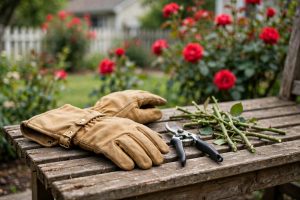
Best Garden Gloves for Handling Roses
September 25, 2026 0 views