
Introduction
A dog water bowl no spill for car travel is a small item that makes a big difference on the road. Dogs need water on long drives, just as people do. A regular bowl sloshes with every turn and stop. Water ends up on the seat, on the floor, and on the dog. A bowl made for travel keeps the water in the bowl and off the car.
This guide explains how these bowls work, what to look for, and which type fits your dog. It also covers cost, cleaning, and safety. By the end, you will know how to pick a bowl that keeps your dog calm and your car dry on every trip.
Why It Matters: Dog Water Bowl No Spill for Car Travel
Dogs lose water faster than many owners think. Heat, stress, and dry car air all add to the loss. On a summer drive, a dog can pant for hours. Panting is how dogs cool down, and it uses up water fast. A dog that does not drink on a long trip may arrive tired and sore.
Vets say water should be on hand for any drive over an hour. For a puppy or an older dog, the need is even greater. But a normal bowl in a moving car is more trouble than help. Water spills on every curve. A wet seat is a small problem. A frightened or sick dog is a bigger one.
A dog water bowl no spill for car travel solves this. It lets the dog drink when it wants. It keeps the water where it belongs. The owner can focus on the road instead of the mess. For families that travel with dogs often, it is as basic as a seat belt.
How No-Spill Bowls Work
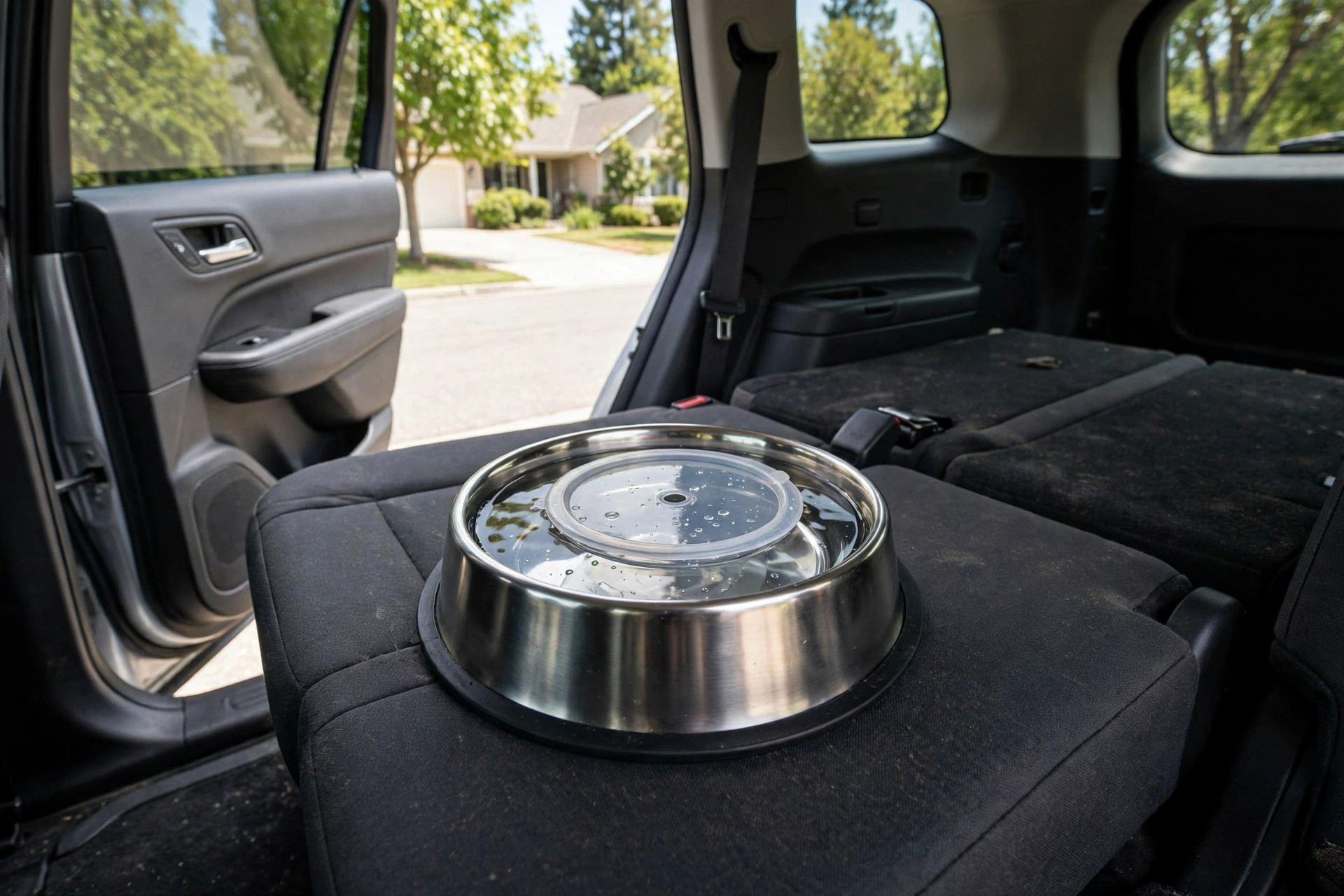
A no-spill bowl uses simple design to stop water from sloshing out. Most use one of two ideas. The first is a lid with a small hole. The dog laps water through the hole. When the car moves, the lid holds the rest back. The second is a floating disk inside the bowl. The disk sits on the water and moves with it. Only a thin layer of water sits on top for the dog to drink.
Some bowls pair both ideas. A splash guard ring around the rim catches the last drops. A heavy or wide base stops the bowl from tipping. Together, these parts cut spills to near zero on normal roads. They will not stop a full tip-over, but they handle bumps, turns, and hard stops well.
Types of No-Spill Travel Bowls
Floating Disk Bowls
Floating disk bowls are the most common type. A plastic disk floats on the water inside the bowl. The dog drinks the small amount of water that sits on the disk. The rest stays below, sealed off. When the car sways, the disk moves with the water and keeps the seal. These bowls are easy to fill and simple to clean. They suit calm dogs of all sizes.
Spill-Resistant Bowls With Lids
These bowls have a lid with a drinking hole in the center. Some lids twist on. Some snap shut. The dog laps through the opening. The small hole limits how much water can escape at once. These bowls are good for rough roads and bouncy cars. They also work well in crates and pet carriers.
Bottle-Attached Bowls
Bottle-attached bowls screw onto a standard water bottle. The dog drinks from a small bowl at the end of the bottle. Water flows only when the dog laps or when the owner tips the bottle. There is almost nothing to spill. These are light and cheap, and they pack flat in a bag. They suit short trips and hikes as well as car rides.
Elevated Splash-Guard Bowls
Some bowls have a tall rim or a splash-guard ring that rises above the water line. Waves hit the rim and fall back in. These bowls need no lid and no disk. They are easy for dogs that dislike lids. They work best on smooth roads and in large cars where the bowl can sit flat.
What to Look For When You Choose
Size and Capacity
Match the bowl to your dog. A small dog needs about one to two cups of water for a long drive. A large dog may need a quart or more. A bowl that is too small runs dry. A bowl that is too large takes up space and spills more easily. Measure the spot where the bowl will sit in the car first.
Stability
A wide base is the best guard against tipping. Bowls with rubber feet grip the car floor or seat. Some bowls fit into car cup holders or clip to a crate. If your car has a dog car seat cover for back seat protection, pick a bowl with a rubber base so it does not slide on the cover.
Material
Stainless steel bowls last long and clean well. They do not hold smells. Plastic bowls are lighter and cheaper but can stain and crack over time. Look for food-grade plastic with no sharp edges. Silicone bowls fold flat for packing but tend to move around in the car.
Ease of Cleaning
Dogs leave slobber and bits of food in water bowls. A bowl that comes apart into a few pieces is easy to wash. Check that all parts are safe for the dishwasher. Bowls with small cracks or rough spots can hold germs, so replace worn bowls.
Ease of Filling
You will fill the bowl at rest stops and gas stations. A wide mouth makes filling easy from a bottle. Lids that twist off with one hand are best. If the bowl is hard to fill, you will stop using it on the road.
How to Choose the Right One for Your Dog
Start with your dog’s habits. A calm dog that drinks slowly does well with a floating disk bowl. A strong, eager dog that paws at things needs a heavy bowl with a lock-on lid. Puppies chew, so pick a tough steel bowl and skip thin plastic.
Next, think about your car. A bowl on the back seat needs a rubber base and low sides. A bowl on the floor of the trunk can be taller. For small cars, a bottle-attached bowl saves space. For trucks and SUVs, a larger floating disk bowl gives more water between stops.
Also think about your travel style. If you take day trips, a small light bowl is enough. If you drive across states with your dog, you want a larger bowl and a spare bottle of water. Families that bring pet stroller for small dogs and cats travel gear for rest stops may want a second bowl for walks.
Owners who research pet travel gear often read guides from groups like the American Kennel Club, which covers safe travel habits for dogs in detail. For health questions about hydration on the road, PetMD offers clear vet-reviewed advice.
Cost and Price
No-spill dog bowls are not dear. Most cost between eight and thirty dollars. Simple bottle-attached bowls are the cheapest, often under ten dollars. Floating disk bowls in steel run from fifteen to twenty-five dollars. Large spill-proof bowls with lock-on lids can reach thirty dollars or more.
Price follows size and material. Steel costs more than plastic. A well-known brand costs more than a store brand. For most dogs, a mid-priced bowl does the job well. Buy one good bowl instead of two cheap ones. A bowl that leaks is money wasted.
Online shops like Chewy, Petco, and PetSmart carry wide ranges of travel bowls, so you can compare prices and read reviews before you buy. Owners who like rugged outdoor gear also check Ruffwear and KONG, which both make sturdy travel products for dogs.
Care and Upkeep
Wash the bowl with soap and warm water after each trip. Rinse well so no soap stays behind. Once a week, soak the parts in a mix of water and white vinegar to kill germs and remove film. Let all parts dry fully before you put the bowl away.
Check the rubber seals and floating disk for wear. Seals that crack will leak. A disk that warps will not float flat. Most parts last a year or more with normal use. Keep a spare set of seals if your bowl model sells them.
Store the bowl dry and out of direct sun. Heat can warp plastic lids. If the bowl sits in a hot car between trips, check it for damage before the next drive. A warped lid is a leaking lid.
Safety Tips for the Road
Water is only one part of safe travel. Never leave a dog alone in a hot car, even with water. The ASPCA warns that car heat can kill a dog in minutes on a warm day. Always keep the car cool with air conditioning or open windows when parked in shade.
Secure the bowl so it cannot fly loose in a sudden stop. A heavy bowl can hurt a dog or a person if it moves fast. Place it low in the footwell or wedge it between bags. Some owners use a dog tie out cable for camping and yard at rest stops so the dog can stretch safely outside the car.
Offer water at each rest stop. Let the dog drink, then close the lid before you drive on. Watch for signs of heat stress: heavy panting, drool, and slow movement. If you see these, stop, cool the dog, and call a vet. The American Kennel Club notes that short-nosed breeds need extra care in heat.
Plan your route with pet-friendly stops. Many highway rest areas have pet zones. A quick search before the trip saves time. Keep a printed list of vet clinics along the route in case of trouble.
Buying Checklist
– Bowl size matches your dog and your car space – Wide, heavy base or rubber feet for grip – Spill-proof lid or floating disk included – Food-grade steel or sturdy plastic – Easy to take apart and wash – Dishwasher-safe parts – Simple to fill from a water bottle – Price in your range, with good reviews
For general buying advice on pet products, The Spruce Pets publishes tested reviews of travel bowls and gear. Home Depot also stocks car travel supplies that pair well with pet gear, such as storage bins and organizers for the trunk.
Frequently Asked Questions
Will a no-spill bowl work on bumpy dirt roads?
It will work better than a normal bowl, but it has limits. On rough roads, pick a bowl with a lock-on lid and a small drinking hole. Fill it only halfway. Place it low in the car where it moves less. On very rough ground, offer water only when you stop.
How much water does a dog need on a road trip?
A healthy dog needs about one ounce of water per pound of body weight each day. On a hot drive, the need rises. A fifty-pound dog may need close to eight cups on a long summer day. Bring more than you think you need. It is better to carry extra than to run short.
Can I use a no-spill bowl at home?
Yes. Many owners use the travel bowl at home too. It keeps water off the kitchen floor, which is handy for dogs that drink with big splashes. Wash it just as often as a normal bowl.
Are plastic no-spill bowls safe for dogs?
Food-grade plastic bowls are safe when new and in good shape. Replace them if they crack, stain, or get rough spots. Some owners prefer steel because it lasts longer and holds no smell. Either choice is fine if you clean it well.
How do I get my dog to drink from a bowl with a lid?
Most dogs learn fast. Put a treat in the bowl at home and let the dog sniff it. Fill it with water and let the dog try. Praise the dog for drinking. Do not force the dog’s nose to the lid. A calm first try at home beats a first try in a moving car.
Should I still stop for water breaks?
Yes. A travel bowl is for sips between stops, not for the whole day. Stop every two to three hours. Let the dog out, offer fresh water, and stretch. Short breaks keep the dog happy and cut down on car sickness.
A Short Final Word
A dog water bowl no spill for car travel is a small buy with a large payoff. It keeps your dog watered and your car clean. Pick a size that fits your dog, a design that fits your car, and a material that will last. Clean it often and secure it well. Then enjoy the road with your dog at your side, both of you comfortable for the miles ahead.
References
American Kennel Club. (n.d.). Dog care and training resources. https://www.akc.org ASPCA. (n.d.). Pet care and animal welfare resources. https://www.aspca.org Chewy. (n.d.). Pet supplies. https://www.chewy.com KONG. (n.d.). Dog toys and travel products. https://www.kongcompany.com Petco. (n.d.). Pet supplies and services. https://www.petco.com PetMD. (n.d.). Pet health information. https://www.petmd.com PetSmart. (n.d.). Pet supplies and services. https://www.petsmart.com Ruffwear. (n.d.). Performance dog gear for outdoor adventures. https://www.ruffwear.com The Home Depot. (n.d.). Home improvement products. https://www.homedepot.com The Spruce Pets. (n.d.). Pet care guides and product reviews. https://www.thesprucepets.com
Was this guide helpful?

About Jennifer Lee
The My Garden US editorial team writes practical, in-depth home and garden guides for American homeowners — tested advice, no fluff.
You May Also Like
A Dog Car Seat for Small Dogs: The Console Booster Guide
January 21, 2026 0 views
Best Pet Stroller for Large Dogs Jogging: A Complete Buying Guide
May 4, 2026 0 views
The Best GPS Dog Collar for Escape Artist Dogs: A Practical Guide
September 25, 2026 0 views