
Introduction
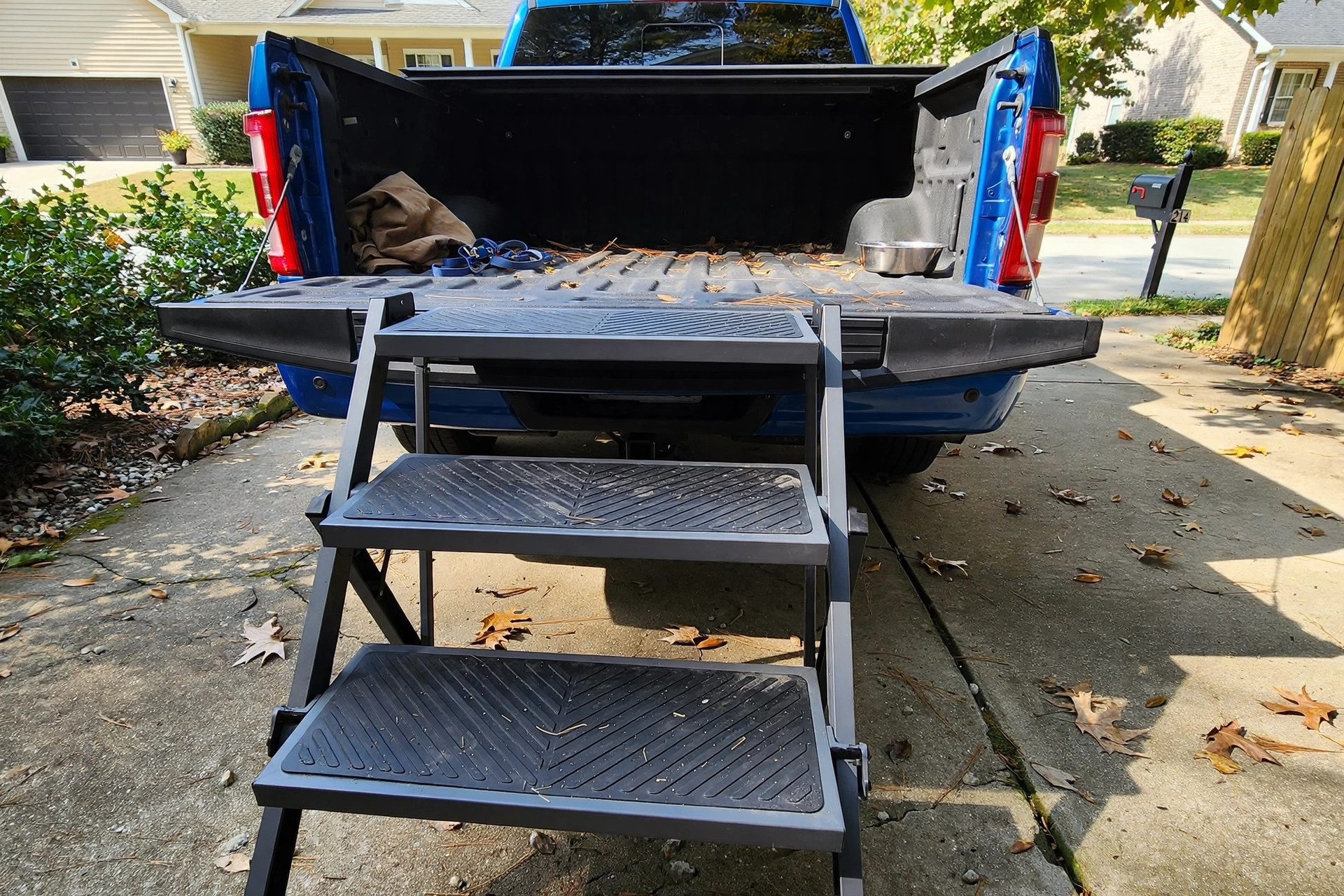
A pickup truck bed sits high off the ground. For a small dog, the owner can lift the animal in one motion. For a large dog, that lift is hard on the back of the owner and hard on the joints of the dog. Pet steps for truck bed access for large dogs give the animal a safe set of stairs to climb on its own. This guide explains why they matter, what to look for, what kinds are sold, what they cost, and how to keep both dog and owner safe.
Why Truck Bed Access Matters for Large Dogs: Pet Steps for Truck Bed Access Large Dogs
Large breeds age fast. A seven-year-old Labrador or German Shepherd often shows stiffness in the hips and elbows. Jumping from the ground to a truck bed is a drop of nearly three feet in reverse. The landing sends a shock through the front legs and shoulders. Done day after day, that shock can wear down cartilage and speed up arthritis.
Veterinarians see joint injuries in big dogs every week. Many come from repeated jumps in and out of trucks and SUVs. A set of steps removes the jump. The dog walks up in steady steps. The load on each leg stays even. Over years of travel to the vet, the lake, or the hunting field, that difference is large.
Owners benefit as well. Lifting an eighty-pound dog into a truck is a fast way to hurt your back. Steps let the dog do the work. Older owners, who may not have the strength they once had, find this change especially welcome.
Ground and Surface Clearance
Steps need firm, level ground to stand on. Gravel driveways shift under load. Soft lawn can let a leg sink. Carry a small square of plywood in the truck if you park on soft ground. Place it under the feet before the dog climbs. Wet pavement is another hazard. Wipe the treads dry before loading when it has rained.
Hinge and Lock Strength
Folding steps rely on hinges and locking pins. Weak hinges bend over time, and the steps start to wobble. A wobbling step frightens a dog and slows training. Before each trip, open the steps and press down hard with your hand. If you feel flex or hear a creak, check the pins and bolts. Replacement pins cost little and take minutes to fit.
What to Look for When Choosing Pet Steps
Weight Capacity
This is the first number to check. A step set rated for fifty pounds will not serve a ninety-pound retriever. Look for a rating at least twenty pounds above your dog’s weight. Heavy-duty models hold up to two hundred pounds. Ratings are tested in the factory, and a margin of safety keeps the steps firm when the dog shifts its weight mid-climb. Independent test results on Consumer Reports can help buyers compare build quality across brands.
Step Count and Rise
Truck beds vary in height. A two-wheel-drive truck may stand lower than a four-wheel-drive with a lift kit. Count the steps and note the rise between them. Each step should rise no more than seven or eight inches for a large dog. Deeper treads give the dog more room for big paws. Shallow treads feel unsure underfoot and can cause a slip.
Surface Grip
Metal steps with no covering turn slick when wet. Look for rubberized treads, carpet-like fabric, or textured plastic. A surface that grips wet paws matters after rain or a swim. Some owners add adhesive grip tape to worn steps. This is a cheap fix that works well.
Fold and Storage
Steps must fit in the truck when not in use. Folding models collapse flat and slide behind the seat or under a toolbox in the bed. Fixed models take up more room but tend to feel more solid. Measure your cab storage before you buy.
Build Material
Steel steps are strong and heavy. Aluminum steps are strong and light. Heavy plastic models cost less but may flex under a very large dog. Wood looks fine for home use but does poorly in rain. For truck work in all weather, coated metal or rigid plastic holds up best.
Types of Pet Steps for Truck Beds
Standard Folding Steps
These look like a small staircase. Most have three to five steps. They fold flat with a hinge. Prices run from modest to mid-range. They work well for daily use and store in a snap.
Telescoping Steps
Telescoping steps slide out to full length and slide back for storage. They often give a gentler slope than folding steps. The trade-off is a longer footprint when open, which needs flat ground behind the truck.
Truck-Side Steps
Some steps hook onto the side of the bed or the bumper. The dog climbs from the side rather than the rear. This helps in tight parking spots where the tailgate cannot open fully. Make sure the hooks fit your truck model before you buy.
Ramp and Step Combinations
A few products mix a short ramp with two or three steps at the top. Dogs that fear steep stairs may accept this shape more readily. Training takes less time, and the dog keeps its footing.
Tailgate Steps Built Into the Truck
Newer trucks sometimes offer a built-in step in the tailgate. This helps a person climb in, but the spacing is made for human feet, not dog paws. A separate pet step remains the safer choice for the animal.
How to Train Your Dog to Use the Steps
Large dogs are often wary of new objects. Place the steps in the living room or yard first. Let the dog sniff them. Put a treat on the first step. Praise the dog for one paw on the step. Work up over a few days.
Move the steps to the truck with the tailgate down. Keep the first sessions short. Never push or pull the dog up the steps. A dog that climbs at its own pace learns fast and trusts the equipment. Most dogs need three to seven sessions. Older dogs may need more time, and patience pays off.
Some dogs freeze on the second step. This is normal. Step back and let the dog decide. Hold a treat just past the top step so the dog stretches forward. Praise every small move. If the dog backs down, end the session on a good note with a treat for one paw on the first step. Forcing the issue creates fear that takes weeks to undo.
Nervous dogs do better with a second person at the side, gently guiding the body without lifting. A calm voice matters more than the treats. Keep sessions under ten minutes. Two short sessions a day beat one long session.
Cost and Price Guide
Prices vary with material and brand. Simple plastic folding steps start near forty dollars. Mid-range aluminum sets run from eighty to one hundred fifty dollars. Heavy-duty steel models with high weight ratings can cost two hundred dollars or more.
A higher price often buys a higher weight rating, better grip, and longer life. For a dog used daily, the mid-range is the sweet spot for most buyers. Cheap steps that flex or wobble will scare the dog and may need replacement within a year. Buy once, and buy well.
Shipping weight matters for online orders. Steel steps can weigh thirty pounds. Check the return policy before you order, in case the size does not suit your truck. Big-box stores such as Lowe’s and Walmart stock several models, which makes price comparison simple.
Care and Upkeep
Rinse the steps after muddy trips. Mud builds up on treads and cuts grip. Check hinge bolts each month and tighten what is loose. Oil metal hinges lightly to stop rust. Replace worn grip tape or fabric covers before they peel.
Store folding steps out of standing water. A damp bed corner breeds rust on steel and mildew on fabric. A dry mat under the steps helps. With basic care, a good set lasts five years or more of steady use.
Safety Tips
Never leave the steps set up while the truck is moving. Always fold and secure them before driving. Check the ground behind the truck for soft soil or ice. Steps can sink into mud and tip.
Watch the dog’s body language. A dog that balks, whines, or backs away may be in pain. Joint trouble can start quietly. If a dog that once climbed with ease now refuses, a vet visit is wise.
Keep the dog leashed during training climbs. A loose dog may jump off the side mid-step. Short leash, calm voice, and steady progress keep sessions safe. The ASPCA offers general pet safety guidance that covers travel routines like these, and stores such as Home Depot carry the small hardware, such as bolts and non-slip tape, used to keep step sets in top shape.
Heat is another concern. Metal steps left in the sun burn hot enough to hurt paws. Shade them, or hose them down before the dog climbs. In summer, touch the treads yourself first.
For owners who also travel with dogs in SUVs, a dog ramp for suv and high bed access may be worth comparing before you decide. Older or sore dogs often rest better on a best orthopedic dog bed for senior large dogs after a long ride, and those with joint stiffness may like a heated pet bed for arthritic older dogs in the cab.
Frequently Asked Questions
How many steps does a large dog need for a truck bed?
Three to five steps suit most full-size pickups. The key number is the rise between steps. Keep each rise under eight inches. Taller trucks may need five steps, while lower two-wheel-drive models do fine with three.
Are pet steps or ramps better for truck beds?
Steps give better footing on steep climbs and take less ground space behind the truck. Ramps suit dogs with severe joint pain who cannot lift their legs over a rise. Many owners find that Chewy and Petco carry both types side by side, which makes comparison easy.
Can pet steps hold a 150-pound dog?
Heavy-duty steel steps can. Check the rated weight and add a safety margin. A step rated for two hundred pounds holds a one hundred fifty pound dog with room to spare. Lightweight plastic models often top out near one hundred pounds, so read the label.
Do dogs really learn to use steps?
Yes. Most large dogs learn within a week. Food rewards and short sessions work best. Guidance from trainers on sites like AKC stresses that patient, reward-based work beats force every time.
What is the safest way to load a dog at night?
Good light is the answer. A clip-on lamp or the truck’s own bed light lets the dog see each tread. Dark steps cause missteps. Stores such as Tractor Supply and Home Depot sell small battery lights that clip to almost anything.
How do I know if the steps are hurting my dog?
Watch for limping after climbs, refusal to use the steps, or crying on a certain step. These signs point to joint pain or a step that is too high. Articles on PetMD describe the early signs of hip trouble in large breeds and when to call the vet.
A Short Final Word
Pet steps for truck bed access for large dogs are a simple tool with a real payoff. The dog climbs without a painful jump. The owner avoids a risky lift. Travel stays easy for both. Choose steps with a strong weight rating, good grip, and the right rise for your truck. Train the dog with treats and patience. Keep the equipment clean and the bolts tight. Years from now, your dog’s joints will thank you.
References
American Kennel Club. (n.d.). Dog care and training resources. https://www.akc.org ASPCA. (n.d.). Pet care and animal welfare resources. https://www.aspca.org Chewy. (n.d.). Pet supplies. https://www.chewy.com Consumer Reports. (n.d.). Product reviews and ratings. https://www.consumerreports.org Lowe’s. (n.d.). Home improvement products. https://www.lowes.com Petco. (n.d.). Pet supplies and services. https://www.petco.com PetMD. (n.d.). Pet health information. https://www.petmd.com The Home Depot. (n.d.). Home improvement products. https://www.homedepot.com Tractor Supply Co. (n.d.). Farm and ranch supplies. https://www.tractorsupply.com Walmart. (n.d.). Everyday low prices. https://www.walmart.com
Was this guide helpful?

About Sarah Mitchell
The My Garden US editorial team writes practical, in-depth home and garden guides for American homeowners — tested advice, no fluff.
You May Also Like

Best Outdoor Dog Bed Waterproof for Patio: A Practical Guide
September 8, 2026 0 views
Pet Stroller for Small Dogs and Cats Travel: A Complete Buyer’s Guide
September 18, 2026 0 views
Cat Window Perch for Sunny Window Lounging
August 7, 2026 0 views