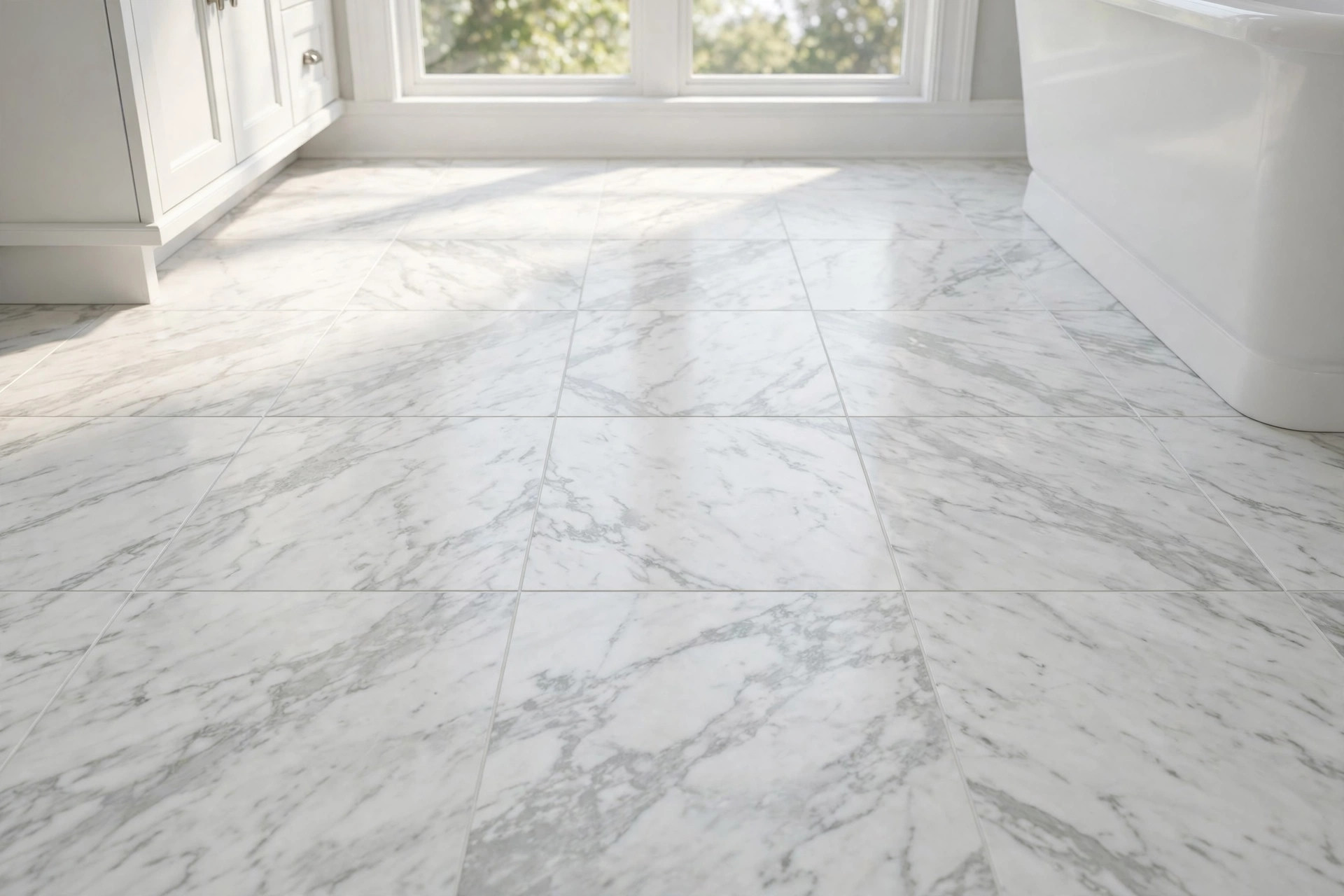

When you search for marble bathroom floor tile pros cons usa, you want a straight answer. Marble looks rich. It feels cool under bare feet. It has graced fine homes for hundreds of years. But a bathroom floor is a hard place for any stone. Water sits on it every day. Soap and cleaners touch it. Warm, damp air fills the room. Before you spend your money, it pays to weigh both sides with a clear head. This guide lays out the good and the bad in plain words, so you can decide with confidence.
Why Marble Still Matters in a Bathroom
Few materials match marble for beauty. Each tile has its own pattern of veins. No two pieces are exactly alike. That natural variety gives a bathroom a sense of luxury that printed tile cannot copy. Real estate agents across the USA note that stone floors in a main bathroom can lift the feel of a whole home. Buyers notice. They step in, and the room feels solid and well made.
Marble also stays cool. In warm states like Florida, Texas, and Arizona, a marble floor feels pleasant on hot days. It pulls heat away from bare feet. Some homeowners even pair marble with radiant floor heat, which is a topic we cover in our guide to heated tile floor for a sunroom. The stone holds warmth from the system and releases it slowly.
Another point in favor of marble is age. A well kept marble floor can last for decades. Many old homes still carry their original marble. Porcelain and vinyl wear out or fall out of style. Marble keeps its place. If you plan to stay in your home for a long time, that long life matters. It is a one time purchase that serves you year after year.
What to Look for When You Choose: Marble Bathroom Floor Tile Pros Cons Usa
Not all marble tile is equal. The first thing to check is the finish. Polished marble shines like glass. It looks striking, but it turns slick when wet. Honed marble has a matte surface. It gives better grip and hides small scratches. For a bathroom floor, most tile setters favor honed tile. The Spruce, a well known home advice site, often makes the same point in its bathroom guides. You can browse their flooring articles at The Spruce for more on finish choices.
Next, look at the grade. Marble tile is sold in grades that reflect how clear and even the stone is. Lower grade tile may have more pits and soft spots. These spots can chip or stain. Ask the seller for the grade before you buy. Reputable flooring sellers such as LL Flooring, Shaw Floors, and Mohawk Flooring list product details on their sites, which helps you compare.
Tile size matters too. Large tiles mean fewer grout lines, and fewer grout lines mean less scrubbing. But large tiles can be tricky on a floor that slopes toward a drain. Small mosaic tiles bend around slopes with ease. Many showers and wet areas use two inch hex or square mosaics for this reason. For the main floor of a full bath, twelve by twelve or twelve by twenty four inch tiles are common in the USA.
Also check water absorption. Marble is a natural stone, and it drinks in water if left unsealed. Ask for the absorption rating. Lower is better. And buy ten to fifteen percent more tile than you need. Marble cuts can chip, and dye lots can vary. Extra boxes from the same lot save you if a tile breaks during the job.
Types and Options on the Market
Carrara marble is the classic choice. It comes from Italy. It has a soft gray background with fine, light veins. It is the most affordable true marble, and it suits both old and new bathrooms. Calacatta is its bolder cousin. It has a white background with thick, dramatic veins in gray and gold. It costs more, and it makes a strong statement.
Thassos marble comes from Greece. It is nearly pure white. It gives a clean, bright look that suits small bathrooms. It can show dirt and stains more than darker stone, so it needs prompt care. Emperador marble is dark brown with light veins. It hides water spots well, but it can make a small bath feel dark. Each type has trade offs, and none is right for every home.
You can also buy marble in different edge styles. A straight edge gives a modern look with tight grout lines. A tumbled edge looks aged and rustic. Tumbled tile has more grip, which helps on a bathroom floor. Our guide to sealing natural stone tile floors explains how edge and texture affect sealing, since rougher stone takes sealer a bit differently.
If real marble feels like too much risk, porcelain tile made to look like marble is a strong option. Tile maker Daltile and others sell porcelain with marble patterns printed on the surface. It costs less, needs no sealer, and resists stains. Trained eyes can tell the difference up close, but from a few feet away it fools most people. Many USA homeowners choose it for busy family baths and save real marble for a powder room that sees less water.
Cost and Price in the USA
Marble bathroom floor tile is not cheap. Material alone often runs from five to twenty dollars per square foot in the USA. Carrara sits at the low end. Calacatta and rare stones sit at the high end. Large format tiles and mosaics can cost more per square foot than basic squares, since they take more work to cut and mount.
Labor adds a large share. Setting natural stone takes skill. Expect eight to fifteen dollars per square foot for installation in most USA markets. Big cities run higher. A stone setter must level the floor, lay the tile with care, and grout without scratching the surface. Ask for a setter with stone experience, not just ceramic tile experience. You can check current tile prices at big box stores like The Home Depot and Lowe’s to set a baseline before you get quotes.
Sealing adds to the bill. A quality penetrating sealer costs thirty to sixty dollars per quart, and a small bathroom may need one or two quarts. Some installers include sealing in their price. Ask. If it is not included, plan for the cost and the time.
Do the math for a typical bath. A fifty square foot floor at ten dollars per square foot for tile is five hundred dollars. Labor at twelve dollars per square foot is six hundred. Sealer, grout, and underlayment add perhaps two hundred more. The total lands near thirteen hundred dollars. A porcelain look alike might cost half of that. Go in with open eyes, and get three written quotes before you commit.
Care and Upkeep
Marble asks for steady, gentle care. The rule is simple. Use a pH neutral cleaner made for stone. Plain dish soap and water also work for light cleaning. Never use vinegar, bleach, or bathroom sprays that contain acid. Acid eats into marble and leaves dull spots called etches. Once etched, the shine is hard to bring back without professional help.
Wipe up spills fast. Toothpaste, mouthwash, and hair dye can stain if they sit. In a busy family bath, a quick wipe after the morning rush keeps the floor looking new. Mop with a damp mop, not a soaking wet one. Too much water works its way into grout and under the tile edge.
Reseal on schedule. Most pros say to reseal a bathroom marble floor every six to twelve months. The shower zone may need it more often. Test the seal with a simple drop of water. If the water beads up, the seal is good. If it soaks in and darkens the stone, it is time to reseal. Resealing is a weekend job for a careful homeowner. Clean the floor well, let it dry fully, apply the sealer in thin coats, and buff off the excess. The site This Old House publishes clear step by step maintenance guides that walk through jobs like this.
Grout needs care too. Even sealed grout can trap soap film. Scrub grout lines with a soft brush and stone safe cleaner every few weeks. Keep the bathroom fan running during and after showers. Good airflow cuts the damp that feeds mildew in grout. These small habits add years to the life of the floor.
Safety in a Wet Room
The main safety concern with marble bathroom floor tile is slipping. Polished marble gets slick when wet. A honed or tumbled finish cuts the risk, but no marble is as grippy as textured porcelain. The coefficient of friction, or COF, tells you how slip resistant a tile is. For a bathroom floor, look for a COF of 0.60 or higher when wet. Ask the seller for the rating in writing.
Place bath mats with non slip backing outside the tub and shower. Choose mats that lie flat and do not slide. Keep the floor as dry as you can between uses. A quick pass with a towel after a shower takes seconds and lowers the risk a great deal.
Think about who uses the bath. Homes with small children or older adults need extra care. A grab bar near the tub, a shower seat, and good lighting all help. Some families put real marble in a guest bath and a grippier tile in the bath the kids use every day. There is no shame in that choice. Safety comes first. If you want to compare softer flooring ideas for other rooms, our look at cork flooring pros and cons for kitchens covers a warmer, more forgiving surface.
Also mind the threshold. Marble tile is often thicker than the hallway floor outside the bath. A smooth transition strip prevents trips. Your installer should plan for this before the first tile is cut.
Frequently Asked Questions
Is marble too slippery for a bathroom floor? It can be. Polished marble is slippery when wet. Honed or tumbled marble is much safer. For the best grip, choose a matte finish, small tiles with more grout lines, and a COF rating of 0.60 or higher. Mats and dry floors help too.
Does marble stain easily? Marble stains more easily than porcelain. It is a porous stone. Coffee, wine, hair dye, and some soaps can leave marks. Sealing helps a great deal, but it is not a shield that lasts forever. Quick cleanup is the best defense. If stains worry you, a marble look porcelain may suit you better.
How often must I seal marble bathroom tile? Plan on every six to twelve months. Bathrooms see daily water, so they sit at the short end of that range. Test with a drop of water now and then. When water soaks in instead of beading, reseal. The job takes a few hours and basic tools.
Is marble worth the cost over porcelain? It depends on what you value. Marble gives real stone beauty and can add to resale appeal. It costs more to buy, install, and maintain. Porcelain costs less and asks for almost no care. If you love natural stone and accept the upkeep, marble is worth it. If you want a carefree floor, porcelain wins.
Can marble go over radiant floor heat? Yes. Marble works well with radiant heat systems. The stone conducts heat evenly and feels warm underfoot. Use a crack isolation membrane under the tile, since heat cycles can stress the floor. Have both the heating contractor and the tile setter agree on the plan before work starts.
Will marble crack over time? Marble can crack if the subfloor moves or if heavy objects drop on it. A stiff, level subfloor is the key. Most installers add cement backer board over wood subfloors to stop flex. With a solid base, marble holds up for decades.
A Short Final Word
Marble bathroom floor tile is a trade. You get timeless beauty, a cool touch, and long life. You pay with higher cost, regular sealing, and careful cleaning. For a calm adult bath or a powder room, it is a fine choice. For a busy family bath with kids and pets, think hard before you commit. Know your habits, know your budget, and choose with both eyes open. The right floor is the one you will be glad to live with ten years from now.
References
Daltile. (n.d.). Ceramic and porcelain tile. https://www.daltile.com LL Flooring. (n.d.). Hardwood, vinyl, and tile flooring. https://www.llflooring.com Lowe’s. (n.d.). Home improvement products. https://www.lowes.com Mohawk Flooring. (n.d.). Flooring products. https://www.mohawkflooring.com Shaw Floors. (n.d.). Flooring products. https://www.shawfloors.com The Home Depot. (n.d.). Home improvement products. https://www.homedepot.com The Spruce. (n.d.). Home and garden advice. https://www.thespruce.com This Old House. (n.d.). Home renovation guidance. https://www.thisoldhouse.com
Was this guide helpful?

About David Wilson
The My Garden US editorial team writes practical, in-depth home and garden guides for American homeowners — tested advice, no fluff.
You May Also Like
Peel and Stick Backsplash Tile Reviews USA: What Homeowners Report in 2026
April 18, 2026 0 views
Machine Washable Runner for Hallway: A Simple Guide
August 24, 2026 0 views
Best LVP Flooring Brands 2026 USA: What Homeowners Should Know
May 29, 2026 0 views