
Long haired cats are beautiful. Their coats are soft, full, and elegant. But that beauty comes with work. Loose hair lands on clothes, chairs, and rugs. Mats form behind the ears and under the legs. Hairballs become a weekly event. The best cat brush for long haired shedding control makes this work much easier. The right brush removes the loose undercoat before it spreads through your home. It also keeps mats from forming in the first place. This guide will help you find the right brush for your cat. You will learn about brush types, prices, safety tips, and daily care. By the end, you will know exactly what to buy and how to use it.
Why Grooming Matters for Long Haired Cats
Long haired cats shed all year. Shedding grows heavier in spring and fall, when cats change their coats with the season. The loose hair does not always fall out on its own. In long haired breeds, loose hair often stays trapped in the coat. It tangles with the rest of the fur and forms mats. Mats are tight knots of fur. They pull on the skin. They trap dirt and moisture. In bad cases, they can cause sores.
Regular brushing is the simplest way to stop this. A brush pulls out the loose hair that is ready to fall. This keeps hair off your furniture and clothes. It also keeps mats from starting. Cats groom themselves with their tongues. When they swallow too much loose hair, they cough up hairballs. Brushing removes that hair first. Fewer hairballs means a more comfortable cat.
Grooming also helps you check your cat’s health. While you brush, you can feel for lumps, cuts, or flea dirt. You can spot skin problems early. Many cats also enjoy gentle brushing once they get used to it. It becomes a calm part of the daily routine. For these reasons, a good brush is not a luxury. It is a basic tool for any owner of a long haired cat.
What to Look for When You Choose a Brush: Best Cat Brush for Long Haired Shedding Control
Not every brush works for long hair. Some brushes are too rough. Some are too weak. The best cat brush for long haired shedding control has a few key traits.
First, look at the pins or teeth. They should be long enough to reach through the top coat to the undercoat. In long haired cats, the undercoat is where most loose hair hides. A brush that only touches the surface will not help much. Stainless steel pins are a good choice. They glide through fur without breaking it. Rounded tips are safer for the skin.
Second, check the handle. You will use this brush often, so it should feel comfortable in your hand. An ergonomic handle with a soft grip will not tire your wrist. If you have arthritis or a weak grip, look for a thicker handle. Some brushes have a self-cleaning button. Press the button and the pad of collected hair pushes off the pins. This small feature saves time.
Third, think about your cat’s skin. Long haired cats can have sensitive skin under all that fur. The brush should not scratch. Start with gentle pressure and watch your cat’s reaction. If the cat flinches or moves away, the brush may be too harsh. Softer pins or wider spacing may work better.
Fourth, consider noise and fear. Some deshedding tools make little sound, which is fine. Electric or motorized tools can scare a nervous cat. Stick with manual tools for most cats. They are quieter, cheaper, and easier to control.
Finally, read reviews from other cat owners before you buy. Look for reviews that mention long haired breeds like Persians, Maine Coons, or Ragdolls. A brush that works on short haired cats may fail on long coats. Resources from groups like the ASPCA and PetMD often include grooming advice that can help you decide.
Types of Brushes That Work Best
Slicker Brushes
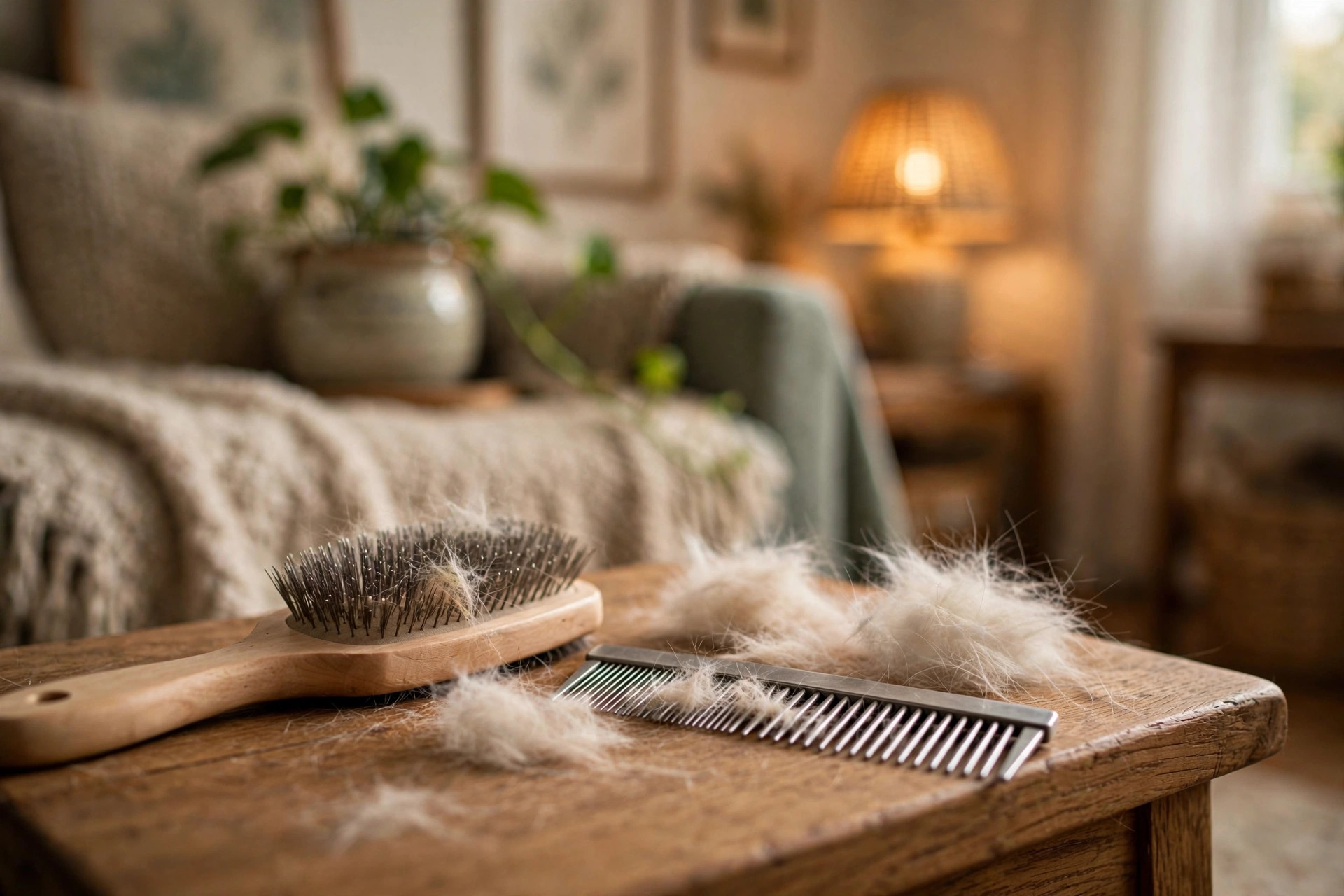
Slicker brushes are one of the most popular tools for long haired cats. They have a flat head covered with many fine, short wire pins. The pins catch loose hair and small tangles. Slickers work well for daily touch-ups. They remove surface hair and smooth the top coat. Use light strokes. Do not press hard. Pressing hard can scratch the skin. Many owners start with a slicker brush and add other tools as needed.
Deshedding Tools
Deshedding tools reach deep into the undercoat. They have a row of stainless steel teeth that pull out loose dead hair. These tools are very good at reducing shedding around the house. Use a deshedding tool once or twice a week, not every day. Daily use can thin the coat too much. Always brush in the direction of hair growth. Keep the tool flat against the body so the teeth do not dig in. If you are unsure how to use one, the Humane Society of the United States offers basic grooming guides for pet owners.
Wide-Tooth Combs
A wide-tooth comb is a must for long haired cats. The wide teeth slide through long fur without pulling. Combs are the best tool for finding mats. If the comb catches on a knot, you have found a tangle to work on. Use the comb after brushing to check your work. It is also good for delicate areas like the belly and armpits. Metal combs with rounded tips are gentler than plastic ones.
Rubber and Silicone Grooming Mitts
Grooming mitts fit over your hand like a glove. They have soft rubber nubs on the palm. You pet the cat while the nubs lift loose hair. Most cats love this because it feels like petting. Mitts do not reach the undercoat as well as metal tools. But they are great for daily use and for cats that fear brushes. They also help during bath time to work shampoo into the coat.
Pin Brushes
Pin brushes look like brushes made for human hair. They have long pins with rounded tips on a soft cushion base. Pin brushes are gentle. They smooth the coat and remove light tangles. They do not remove much undercoat. Pair a pin brush with a deshedding tool or a comb. The pin brush finishes the job and leaves the coat looking neat.
Many owners find that two tools do the trick: a deshedding tool for weekly deep grooming and a slicker brush or mitt for daily care. Stores like Chewy, Petco, and PetSmart carry all of these brush types in one place, which makes it easy to compare them.
Cost and Price Guide
You do not need to spend a lot of money. A good grooming kit for a long haired cat costs less than a bag of premium cat food.
Basic slicker brushes and wide-tooth combs usually cost between five and fifteen dollars. These simple tools last a long time. Rubber grooming mitts fall in the same price range. They are among the cheapest options.
Deshedding tools cost more. Popular brands run from fifteen to forty dollars. The price depends on the size and the brand name. Larger tools for big cats cost more than small ones. Self-cleaning slicker brushes also cost a bit more, usually between twelve and twenty-five dollars.
High-end grooming kits with several tools can reach fifty dollars or more. These kits often include a brush, a comb, and nail clippers in one box. They make good gifts for new cat owners.
Price does not always match quality. Read reviews before you buy. A ten-dollar comb that lasts five years is a better deal than a thirty-dollar tool that breaks in a month. Replace brushes when the pins bend or fall out. Bent pins can hurt your cat.
Care and Upkeep of Your Brush
Your brush will collect a lot of hair. Clean it after every use. Pull the hair off the pins with your fingers. For slicker brushes with a self-cleaning button, press the button and wipe the pad clean. Hair left on the brush can trap dust and oil.
Wash your brushes once a month. Fill a bowl with warm water and a drop of mild dish soap. Soak the brush head for ten minutes. Then rinse it well and shake off the extra water. Let the brush air dry with the pins facing down. Do not use hot water. Hot water can loosen the glue that holds the pins.
Store brushes in a dry place. Keep them away from damp bathrooms. Moisture can cause rust on metal pins. A small basket near your cat’s favorite resting spot works well. If you have more than one cat, consider a separate brush for each. This lowers the spread of skin problems.
Check your brushes now and then for damage. Look for bent pins, cracked handles, and loose heads. A damaged brush can scratch your cat. Throw away worn tools and buy new ones. The American Veterinary Medical Association, or AVMA, reminds owners that gentle grooming tools in good condition are part of basic pet care.
Safety Tips for Brushing
Brushing should never hurt. Follow these safety tips to keep grooming calm and safe.
Start slow. Let your cat sniff the brush first. Give a treat when the cat stays calm. Brush one or two strokes, then stop. Add more strokes each day. Most cats accept brushing within a week.
Brush in the direction of hair growth. Going against the grain pulls the fur and hurts. Use short, gentle strokes. Spend extra time on areas where mats form: behind the ears, under the chin, in the armpits, and around the back legs. Be very gentle on the belly. Many cats are sensitive there.
Never cut out a mat with scissors. Cat skin is thin and loose. It is easy to cut the skin by accident. If you find a tight mat, work it out with a wide-tooth comb or a dematting tool. Start at the outer edge of the mat and work inward. If the mat is too tight, see a professional groomer or a vet. They have safe tools for the job.
Watch your cat’s body language. A relaxed cat may purr or lean into the brush. A stressed cat will flatten its ears, twitch its tail, or try to leave. Stop when you see stress signs. Try again later. Short sessions beat long battles.
Keep grooming sessions away from loud noise and other pets. A quiet room helps a nervous cat relax. If your cat has skin wounds, rashes, or bald spots, stop brushing and call your vet. Brushing over damaged skin makes it worse. The AKC and The Spruce Pets both publish guides on reading pet body language during grooming.
Frequently Asked Questions
How often should I brush my long haired cat?
Brush your long haired cat at least three times a week. Daily brushing is even better during spring and fall shedding seasons. Daily sessions of five minutes prevent most mats. If you can only brush a few times a week, use a deshedding tool on those days to remove more hair at once.
What is the difference between a slicker brush and a deshedding tool?
A slicker brush has fine wire pins that smooth the top coat and catch surface hair. A deshedding tool has a row of steel teeth that reach into the undercoat and pull out loose dead hair. Slickers are for daily use. Deshedding tools are for deeper weekly grooming. Many owners use both.
Can I use a dog brush on my cat?
You can, but it is not ideal. Cat brushes are made for smaller bodies and thinner skin. Dog brushes can be too large and too rough. Small deshedding tools made for cats are safer. If you already own a gentle dog slicker, test it with very light pressure first.
My cat hates being brushed. What should I do?
Switch to a rubber grooming mitt. Most cats accept a mitt because it feels like petting. Brush for only one minute at a time. Give a small treat after each session. Over time, most cats learn that grooming brings treats. If your cat still fights, ask your vet for advice. Some cats need a groomer to handle heavy coats.
How do I remove mats without hurting my cat?
Never pull a mat. Never cut it with scissors. Hold the fur at the base of the mat so you do not pull the skin. Use a wide-tooth comb to work from the edge of the mat inward. A little cornstarch on the mat can help loosen it. For large or tight mats, visit a professional groomer. They can shave the mat out safely.
Does brushing really reduce shedding around the house?
Yes. Most loose hair ends up on furniture because it falls off the cat on its own. When you brush, you collect that hair in the brush instead. Owners who brush daily often see a clear drop in hair on clothes and sofas. Pair brushing with a good vacuum, such as a best pet vacuum for dog hair on furniture model that also handles cat hair, to keep the whole home clean.
A Final Word
Finding the best cat brush for long haired shedding control is a small task with a big payoff. Less hair on your couch. Fewer hairballs. A cat with a soft, mat-free coat. Start with a deshedding tool and a wide-tooth comb. Add a slicker brush or mitt for daily care. Brush gently and often. Your cat will thank you in its own quiet way.
Good grooming goes hand in hand with a comfortable home. A best cat tree for large cats sturdy tall gives your cat a place to rest after grooming, and a self cleaning litter box for busy cat owners keeps the rest of the house tidy. Major retailers like Home Depot also carry pet grooming supplies alongside home goods, which is handy for one-stop shopping.
References
American Kennel Club. (n.d.). Dog care and training resources. https://www.akc.org American Veterinary Medical Association. (n.d.). Pet care resources. https://www.avma.org ASPCA. (n.d.). Pet care and animal welfare resources. https://www.aspca.org Chewy. (n.d.). Pet supplies. https://www.chewy.com Petco. (n.d.). Pet supplies and services. https://www.petco.com PetMD. (n.d.). Pet health information. https://www.petmd.com Petsmart. (n.d.). Home and garden information. https://www.petSmart.com The Home Depot. (n.d.). Home improvement products. https://www.homedepot.com The Humane Society of the United States. (n.d.). Animal protection and care. https://www.humanesociety.org The Spruce Pets. (n.d.). Pet care guides and product reviews. https://www.thesprucepets.com
Was this guide helpful?

About Jennifer Lee
The My Garden US editorial team writes practical, in-depth home and garden guides for American homeowners — tested advice, no fluff.
You May Also Like

Outdoor Cat Enclosure for Safe Garden Roaming: A Complete Guide
September 12, 2026 0 views
The Best GPS Dog Collar for Escape Artist Dogs: A Practical Guide
September 25, 2026 0 views
The Best Dog Kennel Cover for Crate Training Privacy
June 20, 2026 0 views