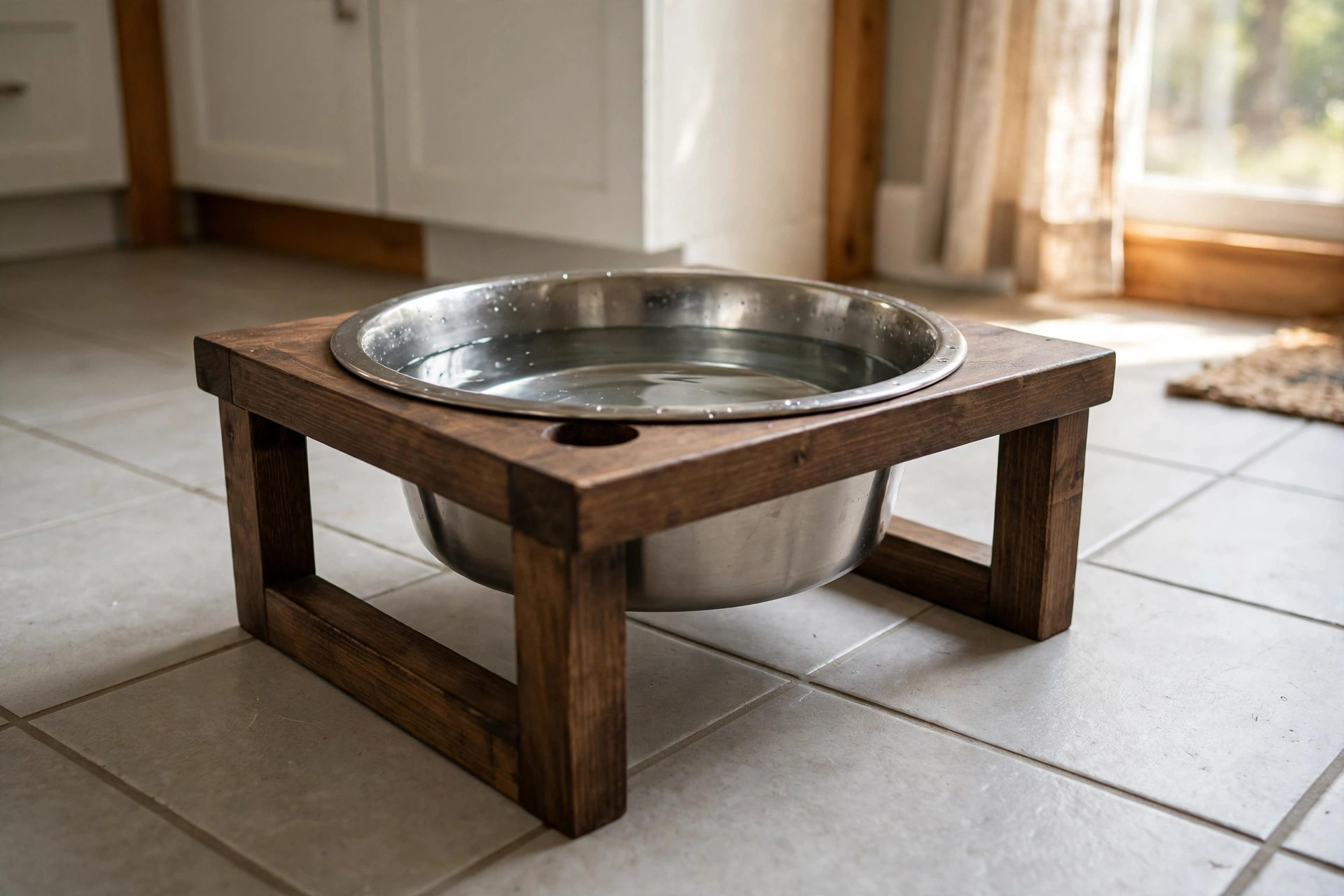

A big dog drinks a lot of water. He drinks it fast, and he makes a mess doing it. Water lands on the floor, the bowl slides across the tile, and the dog must bend his long neck to the ground for every drink. A pet water bowl stand for large breed dogs solves these problems in a simple way. It holds the bowl at a comfortable height, keeps it from moving, and catches the water that would have ended up on your floor.
Why a Raised Stand Matters for Large Dogs
A small dog can drink from a bowl on the floor with no trouble. A large dog is built differently. A Great Dane or a German Shepherd stands two or three feet at the shoulder, so a floor bowl forces a long reach down. For a young, healthy dog this is just a chore. For an older dog with a stiff neck or sore joints, it can be a daily strain.
A stand raises the water to the height of the dog, so he can stand tall and drink with his neck in a natural line. Many owners find their dogs drink more water from a raised bowl, and good water intake is one of the simplest ways to support a dog’s health.
There is also the matter of mess. Large dogs drink with force. They push the bowl, they slop water with their jowls, and they walk away dripping. A stand with a wide tray or a lip around the base catches much of that water. It protects wood floors, which can stain or warp from standing water.
A third reason is stability. A bowl on the floor is light, and a fifty-pound dog can push it across the kitchen in one drink. Stands weigh more, and many have non-skid feet or hold the bowl inside a fixed ring. The bowl stays where you put it.
Some owners also use a stand for food. Many stands hold two bowls, one for food and one for water. The same comfort applies. If your dog is old and stiff, he may find it easier to eat from a raised position too. A best orthopedic dog bed for senior large dogs is another tool that eases the life of an aging big dog, and a raised bowl stand fits the same plan: small changes that add up to real comfort.
How to Choose the Right Stand: Pet Water Bowl Stand for Large Breed Dogs
Choosing a stand is not hard, but a few details matter. A stand that is too short helps no one, and one that is too tall forces the dog to reach up, which is just as bad as reaching down.
Height and Size
The top of the water bowl should sit about at the height of your dog’s lower chest, or about six inches below his shoulder. Measure your dog while he stands. Put the tape at the floor and read the height at the point of his shoulder. Then subtract about six inches. That is a good target height for the rim of the bowl.
Most stands for large breeds sit between eight and twelve inches tall. A Great Dane may need twelve inches or more. A Labrador or a Golden Retriever usually does well with eight to ten inches. Adjustable stands are a fine choice for a growing puppy or for two dogs of different sizes.
The bowl itself must be large enough. A big dog may drink a quart of water in a sitting. A two-quart or three-quart bowl suits most large breeds. Check the diameter too. The bowl must fit inside the stand’s ring or tray, and it should fit with a little room to spare so you can lift it out for washing.
Material
Wood, metal, and heavy plastic are the three common materials. Each has strengths.
Wood looks nice in a home. Many wooden stands are made from pine or bamboo. Wood is heavy enough to stay put, but it soaks up water over time, and a stand that is always wet can swell, crack, or grow mold. If you choose wood, look for a sealed finish and wipe up standing water daily.
Metal stands are usually stainless steel or powder-coated iron. They are strong, easy to clean, and do not soak up water. Stainless steel is the best choice for the bowl itself as well. It does not rust, it does not hold smells, and it lasts for years.
Plastic stands are the cheapest option. A light stand is easy to move, but a big dog can also push it. Look for heavy-duty plastic with a wide base. Plastic can scratch, and deep scratches can hold bacteria, so check the surface now and then.
Stability and Spill Control
Big dogs are strong and clumsy. Test any stand for wobble before you buy it. A good stand has a wide base, thick legs, and feet that grip the floor. Rubber feet help on tile and wood floors. Some stands have a tray or a rim that catches spilled water. This feature is worth the extra money if your floors are wood or if your dog is a known slopper.
Also look at how the bowl sits in the stand. A ring that the bowl drops into is the most common design. The bowl’s rim should rest on the ring without rocking. If the bowl rocks, it will splash more water with every drink.
Types of Bowl Stands
Stands come in a few basic designs. Knowing the types helps you shop with confidence.
Single-Bowl Stands
A single-bowl stand holds one bowl, usually for water. It takes up little space and costs less, and it is handy as a second water station in another room.
Double-Bowl Stands
A double stand holds two bowls side by side. Most owners use one for food and one for water. This keeps the feeding area tidy and gives the dog one station for everything. Double stands take more floor space, so measure the spot where you plan to put it. They are the most popular type sold by stores like PetSmart, Home Depot, Chewy, and Petco.
Adjustable Stands
Adjustable stands let you change the height with legs that slide and lock, or with stacked sections you add or remove. They cost more, but they are useful for a growing puppy, or for a home with two dogs of different heights.
Elevated Feeders with Storage
Some stands include a bin under the bowls for dry food. These are larger and heavier. They keep the food close to the bowls and cut down on clutter. The bin must stay dry and sealed so the food stays fresh.
Gravity and Filtered Water Stands
A few stands are made to hold gravity-fed water dispensers. These refill the bowl on their own as the dog drinks. They are handy if you work long hours, but they need more cleaning, because still water can grow slime in the tank and the valve.
Cost and Price
A pet water bowl stand for large breed dogs is not an expensive purchase. Prices run from about ten dollars to about eighty dollars, and most good stands fall between twenty and fifty dollars.
Simple plastic stands are the cheapest, often ten to twenty dollars. They do the job, but they may not last. Wooden stands usually cost twenty to forty dollars, depending on the finish and the size. Metal stands run from twenty-five to sixty dollars. Stainless steel sets with two bowls often sit near the top of that range.
Adjustable stands and storage feeders cost the most, from forty to eighty dollars. The extra money buys longer use and more features. A puppy that will grow for two years may earn back the cost of an adjustable stand. A calm adult dog may do fine with a simple fixed stand.
Bowl quality matters more than most buyers think. Many cheap stands come with thin bowls that dent or rust. It is often better to buy a sturdy stand and add your own heavy stainless steel bowls. A good bowl costs eight to fifteen dollars and lasts for years. Buying guides from The Spruce Pets compare stands side by side, which can help you judge value before you buy.
Shop around. Prices move with sales, and the same stand can cost ten dollars more or less from one store to the next.
Care and Upkeep
A water stand is simple to care for, but it does need regular attention. Still water grows bacteria fast, and a dirty bowl can make a dog sick.
Wash the water bowl every day with hot water and dish soap, and rinse well. Once a week, run the bowl through the dishwasher if it is dishwasher safe. Stainless steel bowls can take this treatment for years. Plastic bowls wear out faster and should be replaced when they get scratched or cloudy.
Wipe the stand itself once a week with a damp cloth and mild soap, then dry it fully. This matters most for wood stands, which can soak up water and grow mold in hidden corners. If you find mold, scrub with a mix of water and white vinegar, then dry the stand in open air.
Change the water at least once a day, twice in hot weather. Dogs drink more when it is warm, and warm water grows germs faster. If you use a gravity dispenser, take it apart and wash every part once a week. Slime builds up inside the tank and the valve where you cannot see it.
Check the stand for wear every month. Tighten loose screws, replace worn rubber feet, and look for rust or cracks. A stand that wobbles can tip, and a tipped stand can scare a dog away from his water.
Safety
A bowl stand is a safe product, but a few points deserve care.
First, talk to your vet if your dog has a health condition. There has been debate about raised feeders and a serious stomach problem called bloat, which strikes deep-chested large breeds. Some older advice said raised bowls prevent bloat, but newer studies link raised feeding to higher risk in certain breeds. The AKC and the American Veterinary Medical Association both advise owners to discuss feeding practices with their own vet. If your dog is prone to bloat, ask the vet before you switch to a raised stand.
Second, keep the stand away from stairs and slick spots. A dog that rushes to his water can slip on a wet tile floor. Put a washable mat under the stand to catch drips and give the dog footing.
Third, keep cords and small objects away from the feeding area. Dogs, and puppies most of all, chew what they find. A stand with a storage bin should have a lid that closes firmly so a curious dog cannot nose it open and eat too much dry food at once.
Fourth, watch the height for puppies. A very young large-breed puppy does not need a tall stand. Start low and raise it as he grows. A dog ramp for suv and high bed access follows the same idea: fit the tool to the dog’s size and age.
Finally, keep the water fresh and the area clean. A stand does not replace daily care. It only makes the care easier.
FAQ
How tall should a pet water bowl stand for large breed dogs be? Measure your dog’s shoulder height and subtract about six inches. The rim of the bowl should sit near your dog’s lower chest. For most large breeds this means a stand eight to twelve inches tall.
Are raised water bowls good for large dogs? For most healthy large dogs, a raised bowl is comfortable and cuts down on mess. It can ease strain on the neck and joints of older dogs. If your dog is a deep-chested breed prone to bloat, talk to your vet first, since research on raised feeding and bloat is mixed.
What is the best material for a large dog bowl stand? Stainless steel and sealed wood are the most popular. Stainless steel is easy to clean and does not rust. Wood looks good and is heavy enough to stay put, but it needs wiping to keep water from soaking in. Heavy plastic is fine on a budget if the base is wide and stable.
How often should I clean my dog’s water bowl? Wash it every day with hot water and dish soap, and run it through the dishwasher once a week if the bowl allows it. Change the water daily, and twice a day in hot weather. Wipe the stand itself once a week.
Can one stand hold both food and water? Yes. Double-bowl stands are made for this. They keep the feeding area tidy. Just make sure the bowls are large enough for a big dog, usually two to three quarts each, and that the stand is stable enough not to tip when the dog eats with force.
Should I put the stand indoors or outdoors? Indoors is best for the main water station. If you want an outdoor station too, choose a stand made for outdoor use, and pair it with a best elevated dog bed for outdoor patio use if your dog rests outside. Outdoor bowls need more frequent cleaning because dirt, leaves, and insects get in.
A Final Word
A pet water bowl stand for large breed dogs is a small purchase that pays off every day. It spares your dog’s neck, keeps your floors dry, and gives your dog a steady place to drink. Choose the right height, pick a stable material, and keep the bowls clean. For more on your dog’s general care, groups like the ASPCA, PetMD, and the Humane Society offer free guides on feeding, water, and everyday health.
References
American Kennel Club. (n.d.). Dog care and training resources. https://www.akc.org American Veterinary Medical Association. (n.d.). Pet care resources. https://www.avma.org ASPCA. (n.d.). Pet care and animal welfare resources. https://www.aspca.org Chewy. (n.d.). Pet supplies. https://www.chewy.com Petco. (n.d.). Pet supplies and services. https://www.petco.com PetMD. (n.d.). Pet health information. https://www.petmd.com PetSmart. (n.d.). Pet supplies and services. https://www.petsmart.com The Home Depot. (n.d.). Home improvement products. https://www.homedepot.com The Humane Society of the United States. (n.d.). Animal protection and care. https://www.humanesociety.org The Spruce Pets. (n.d.). Pet care guides and product reviews. https://www.thesprucepets.com
Was this guide helpful?

About Robert Taylor
The My Garden US editorial team writes practical, in-depth home and garden guides for American homeowners — tested advice, no fluff.
You May Also Like

Best Orthopedic Dog Bed for Senior Large Dogs: A Complete Buyer’s Guide
May 30, 2026 0 views
Dog Agility Set for Backyard Training Fun: A Complete Guide
June 29, 2026 0 views
Cat Stroller for Two Cats Jogging Walks: A Practical Guide
September 2, 2026 0 views